









The key is to transport as efficiently as possible
Transport is the order of the day
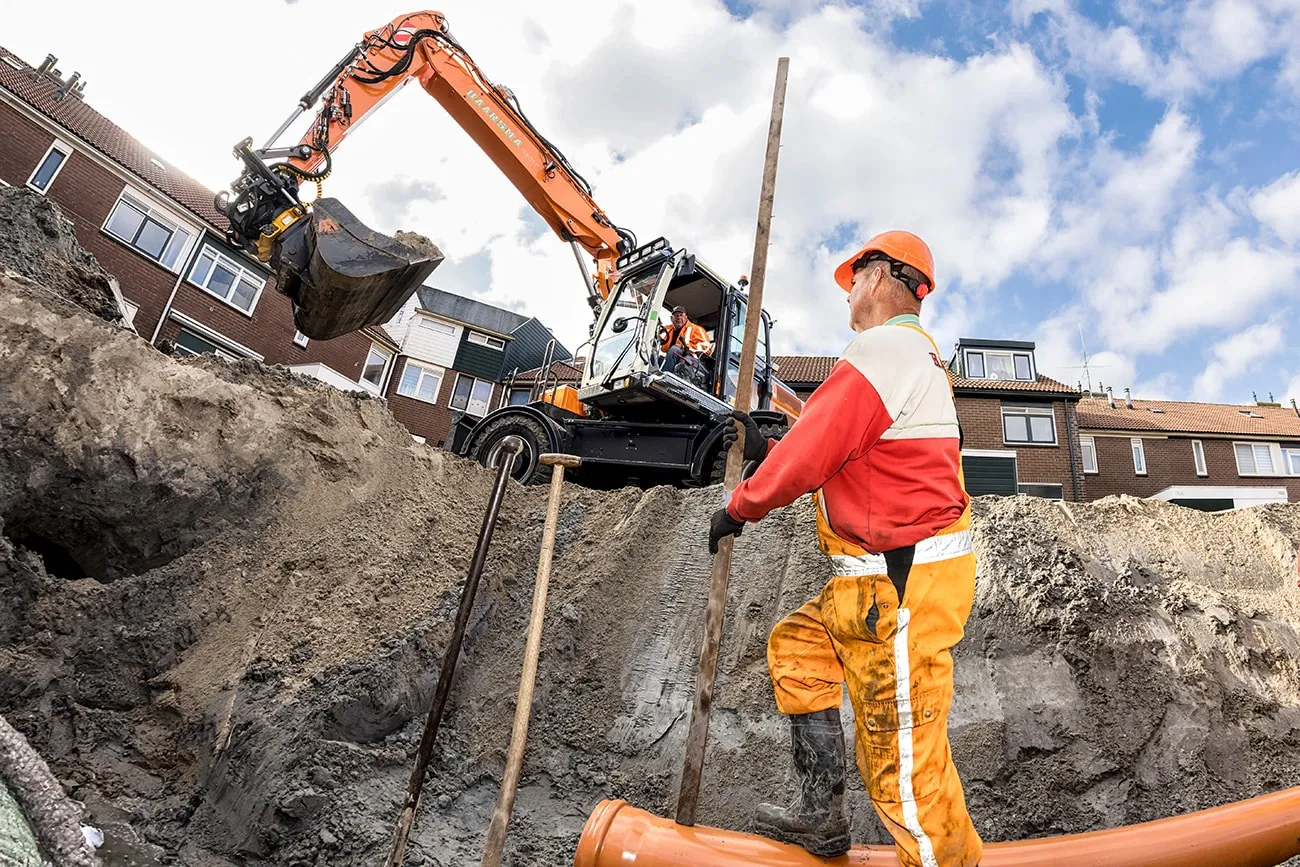
The reinforcement and renovation of the Afsluitdijk by Rijkswaterstaat requires a lot of materials, but also generates a lot of surplus material. Large quantities of sand, clay, gravel, crushed and uncrushed rubble and asphalt have to be transported from A to B. That is when Haarsma Groep steps in. On behalf of construction consortium Levvel, it handles the delivery and removal, as well as the loading, unloading and transhipment, of all the different materials.
“We’ve been driving back and forth on the Afsluitdijk for three years now,” says Tjeerd Haarsma, director of Haarsma Groep and a second-generation member of the Haarsma family. Five years ago, he took over the company from his father, who had spent the previous 48 years building it up. “We work across a wide range of sectors, from earthworks, nature development and infrastructure to civil engineering, transport and plant hire. We also develop projects ranging from residential areas to nature development.”
The order of the day
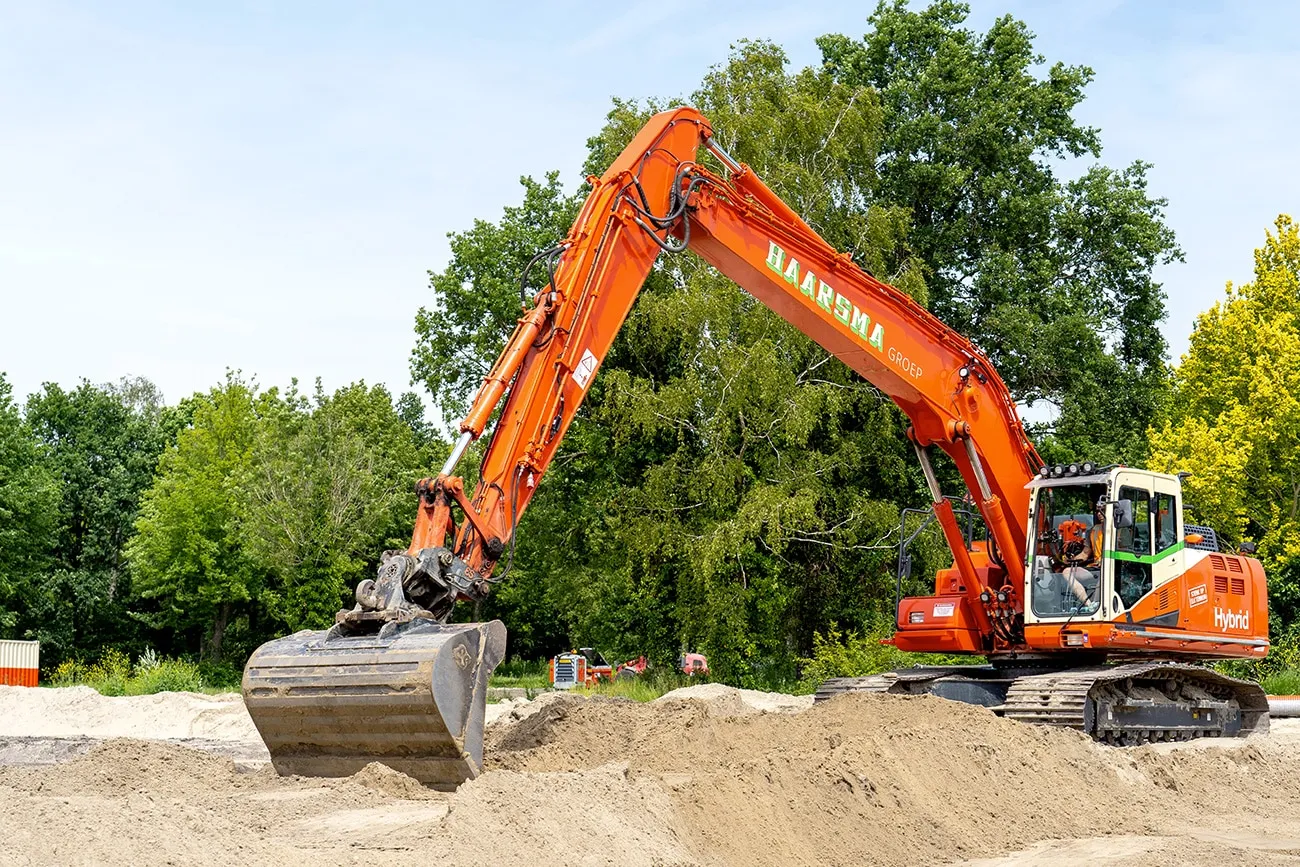
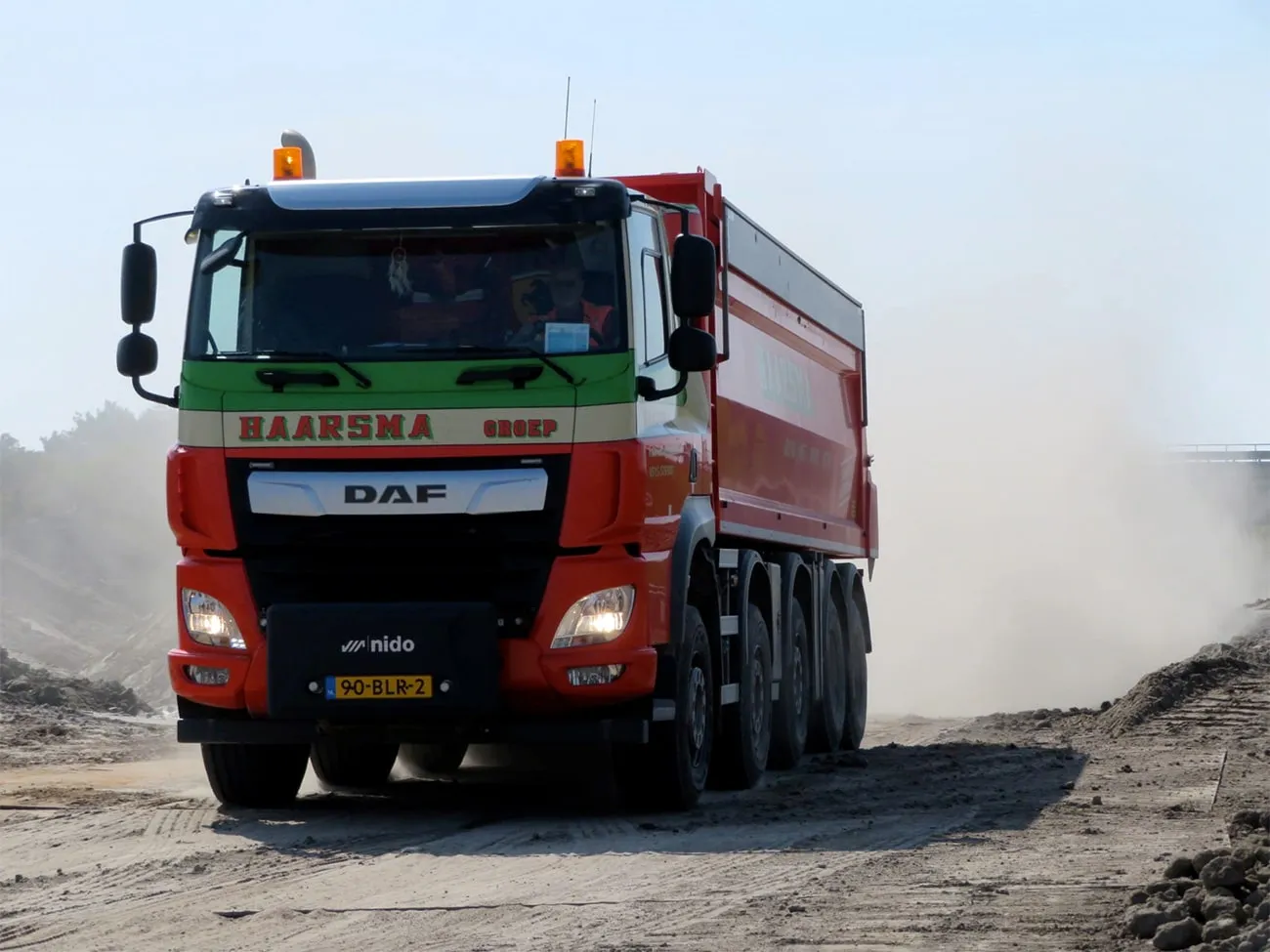
They made their first two deliveries of clay for the Afsluitdijk in 2019. “At the time, we were working with Natuurmonumenten on the redevelopment of the Hegewiersterfjild near Harlingen. The site was being redeveloped as a resting and breeding ground for meadow and coastal birds. The clay we excavated there was reused on the Afsluitdijk. In total, we transported just under 450,000 tonnes of clay to the Afsluitdijk.” Haarsma also transported elsewhere the sand and clay excavated from the construction pits at Den Oever. “We’re called in wherever earth materials need to be brought in or taken away along the route. One day eight lorries are on the road, the next there may be as many as twenty. We try to look ahead and plan as much as possible with Levvel. But ultimately, it all comes down to the day’s schedule.” Another area in which Haarsma excels is processing recovered asphalt and concrete waste. Through its Wegen Bouw Recycling division, Haarsma processes this into certified materials for road construction. In Franeker, it has its own loading and unloading quay, where it can receive vessels up to 110 metres long with a carrying capacity of around 2,000 tonnes.
Quick to adapt
Transport for a project such as the Afsluitdijk calls for quick decisions, coordination, collaboration and planning. “That’s one of our strengths. We honour our commitments, keep our administration in good order and record all journeys accurately in digital format. The key is to transport materials as efficiently as possible and combine loads.” Working with a family business such as Haarsma Groep has the advantage of short lines of communication, according to Haarsma. “Levvel has a single point of contact, and our planner is in direct contact with the site manager. That gives the client peace of mind.”
Question about this story? Ask your question
Keep following this
Get an email when a new story is published. No account needed.
- SubjectWater infrastructure







