









The deployment of workboats, signage and waterway traffic management
For maritime services provider ESB Group, the IJsseldelta project stands out on every level. It all starts with the project’s location.
“We are based in Elburg, so the IJsseldelta is practically in our backyard,” says Pieter de Jong, director and owner of ESB Group. “You naturally end up working with people who speak the same language. It feels like a home fixture.”
But there are other factors that make the maritime work in the IJsseldelta special. ESB Group is involved in almost every discipline, from raising dykes and dredging to building locks, giving it the opportunity to deploy its fleet across a wide range of activities. ESB was also involved in the project from the outset. “Clients often only start looking for maritime support when half the work has already been allocated. This time, we were involved from the very start. That is another thing that makes this project special.”
New vessels with crews
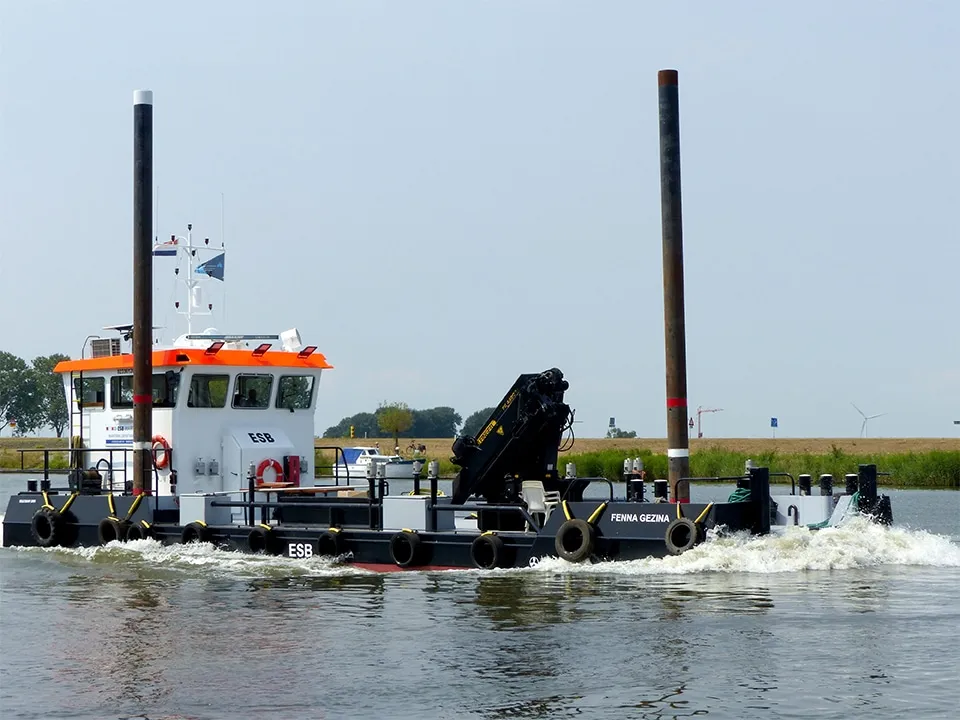
ESB Group deploys its workboats with a crew on board. The crew know the vessel and understand what is expected of them. The IJsseldelta project even prompted the company to purchase two new vessels. De Jong says: “They had been in the pipeline for a while. This was the opportunity to make the decision. We could put them to profitable use straight away.”
Fenna Gezina and Anne Mathea
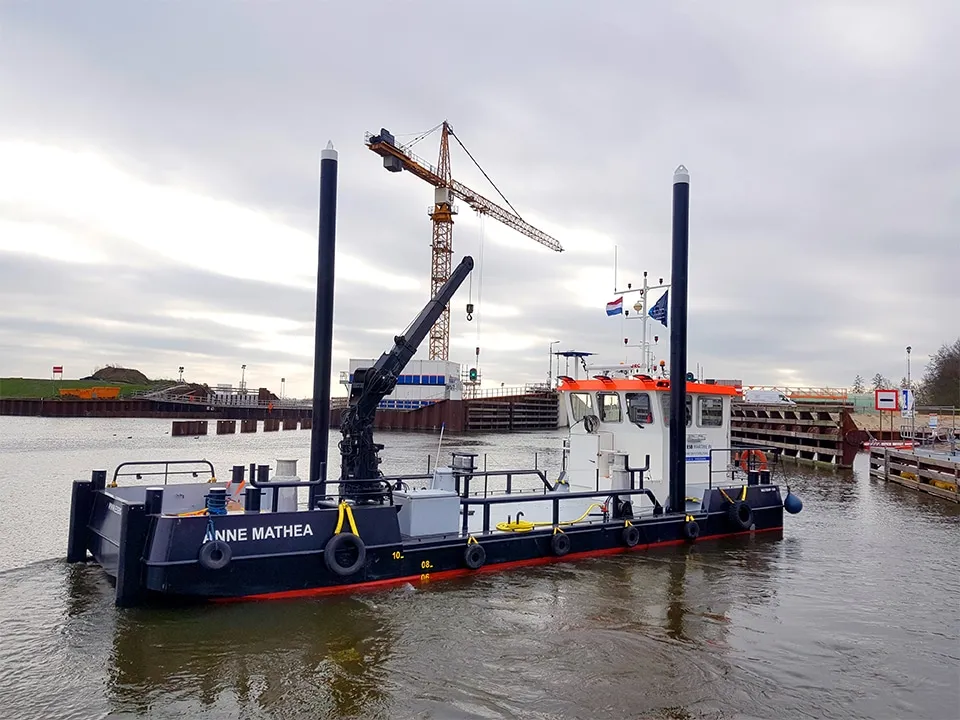
The Fenna Gezina was built and launched in 2017. This multi-purpose vessel is equipped with a crane, spud poles and heavy-duty generators. ESB Group deployed it on the IJsseldelta project in 2018, primarily to support piling work, transport concrete pumps and carry out all kinds of work around the structure. The Anne Mathea is also a multi-purpose vessel and can be used for the same tasks, but is a lighter version.
Working together
ESB Group’s input was consistently valued during the execution of the work. De Jong appreciates this. “For example, several concrete pumps had to be transported by water. We worked with the contractor to find the best way to do this. After discussing it together, we decided to place the pumps in the middle of the lock first and use a RORO system, so they could easily be driven on and off the vessels. And then there is one final factor that makes this work special. We were among the first to pass through the lock. That gives you an incredible buzz!”
Question about this story? Ask your question
Keep following this
Get an email when a new story is published. No account needed.
- SubjectWater infrastructure







