









Terneuzen Lock: DCN Diving deploys divers where needed, remote equipment where possible
Text Suzanne van Gaale Beeld DCN Diving
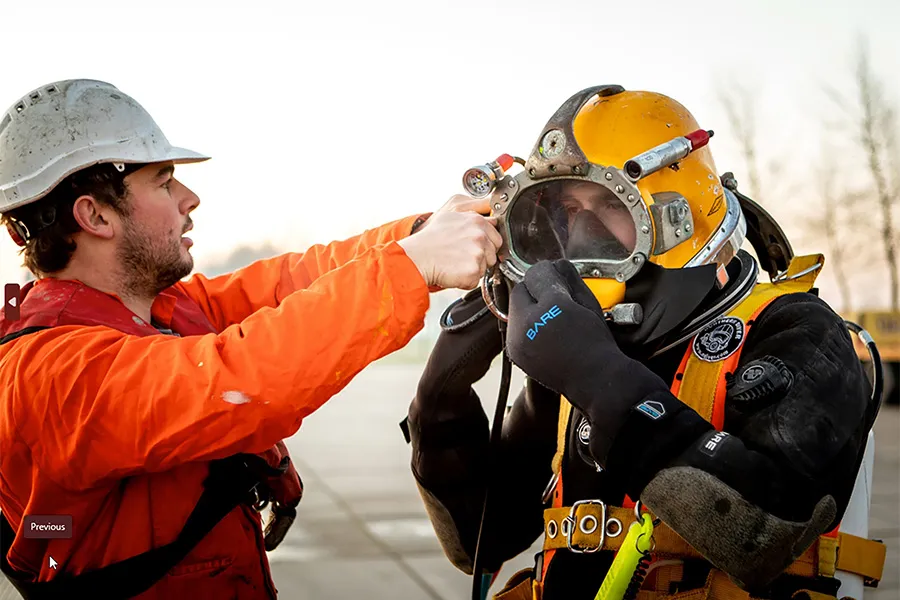
Safety comes first in the construction of the Nieuwe Sluis Terneuzen, both above and below water. That is why DCN Diving makes a carefully considered choice between deploying divers and using remote equipment for underwater work.
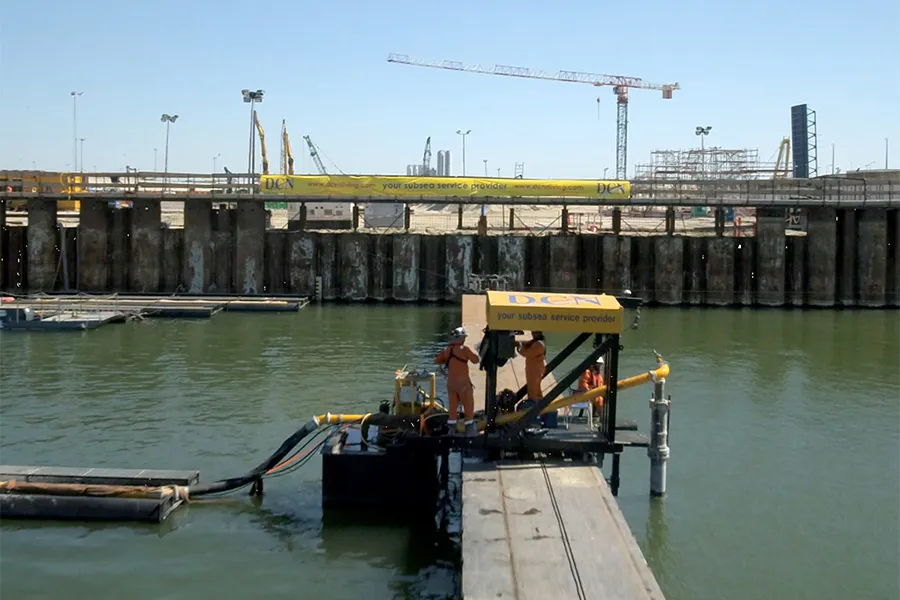
The Nieuwe Sluis Terneuzen is characterised by the wide variety of work involved, much of it carried out underwater. “We are not a standard diving company, and the work on the Nieuwe Sluis Terneuzen was so varied that almost our entire range of services came into play,” explains Maikel Fierloos, project engineer at DCN Diving. “We have literally and figuratively gone deep. Our work has ranged from pouring underwater concrete and installing cathodic protection to developing a new machine and inspecting quay walls. We have been involved from the outset. The first request was to pour underwater concrete floors and carry out the preparatory work. This is also an area in which we are experts. In total, we poured around 40,000 m3 of concrete, a substantial quantity. As the project progressed, we were called in for a range of tasks, including burning off sheet piles, inspecting new quay walls, cleaning underwater contact surfaces, checking that the bed protection fitted correctly, sinking and assembling and dismantling bed grids, and removing equipment from a ship’s propeller.”
Person or machine?
Depending on the work and the client’s preferences, DCN Diving chooses whether to deploy divers or remote equipment. “Clients are increasingly asking for underwater work to be carried out without divers, because of safety perceptions and technological developments,” says Mick van den Bergh, inshore manager at DCN Diving. “Our experience and expertise in both inshore and offshore work tell us that working with divers can be safe. We have demonstrated this on this project too. However, it is essential to work in accordance with strict regulations. Even so, we also choose to use remote equipment for certain tasks. For example, for the work for Sassevaart, we developed a special sawing machine to cut reinforced concrete underwater. As a diving company, we have the major advantage of knowing exactly what is and is not possible underwater. We also have the engineering expertise in-house, which makes us an interesting partner for our client. This means that, when needed, we can develop bespoke equipment for a specific part of the work. In other words, we can always carry out underwater work safely, with or without divers.”
Test, test and test again
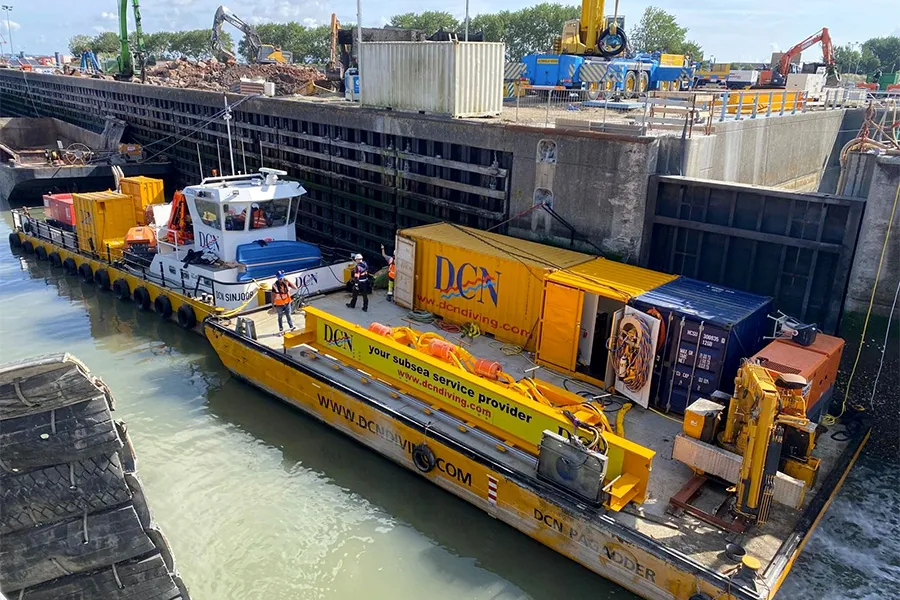
In the final phase of the project, the family-owned company from Bergen op Zoom is closely involved in the cathodic protection of the lock components, and in the maintenance and installation of the lock gates. “A great many tests have to be carried out, for example, to demonstrate that the locks work as intended,” explains site manager Ties den Oever. “To give an example of one such test: the lock gates are fitted with bottom roller bogies at a depth of 18 metres, which in turn are fitted with quite a lot of measuring equipment. If these have to be replaced in the event of an incident at the lock, we need to be sure that we can carry out the maintenance within the allotted lock closure hours, so that shipping traffic is disrupted as little as possible.”
Worthy of praise
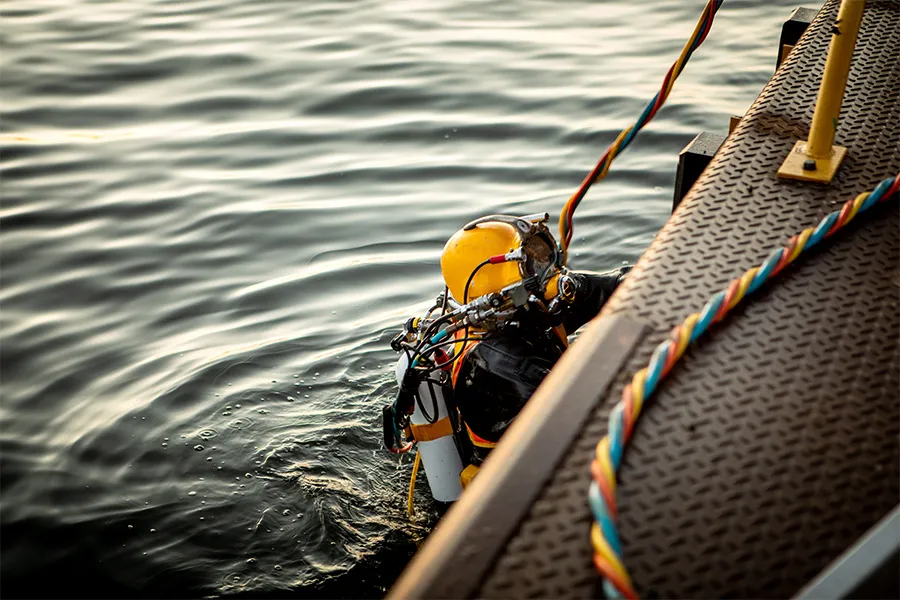
What all three of them personally find particularly special about the project is that they have been able to witness the entire development of the Nieuwe Sluis Terneuzen at close quarters. “It is fantastic to be involved. The scale is impressive, as is the number of parties involved. Given the importance of safety too, we are certainly proud that we have worked so many hours over the past seven years without any accidents. Sassevaart deserves credit for ensuring that coordination across the entire project works well in practice.”
Question about this story? Ask your question
Keep following this
Get an email when a new story is published. No account needed.
- SubjectWater infrastructure







