









Temporary bypass for construction of new surface water pumping station flown in using 3D drone survey
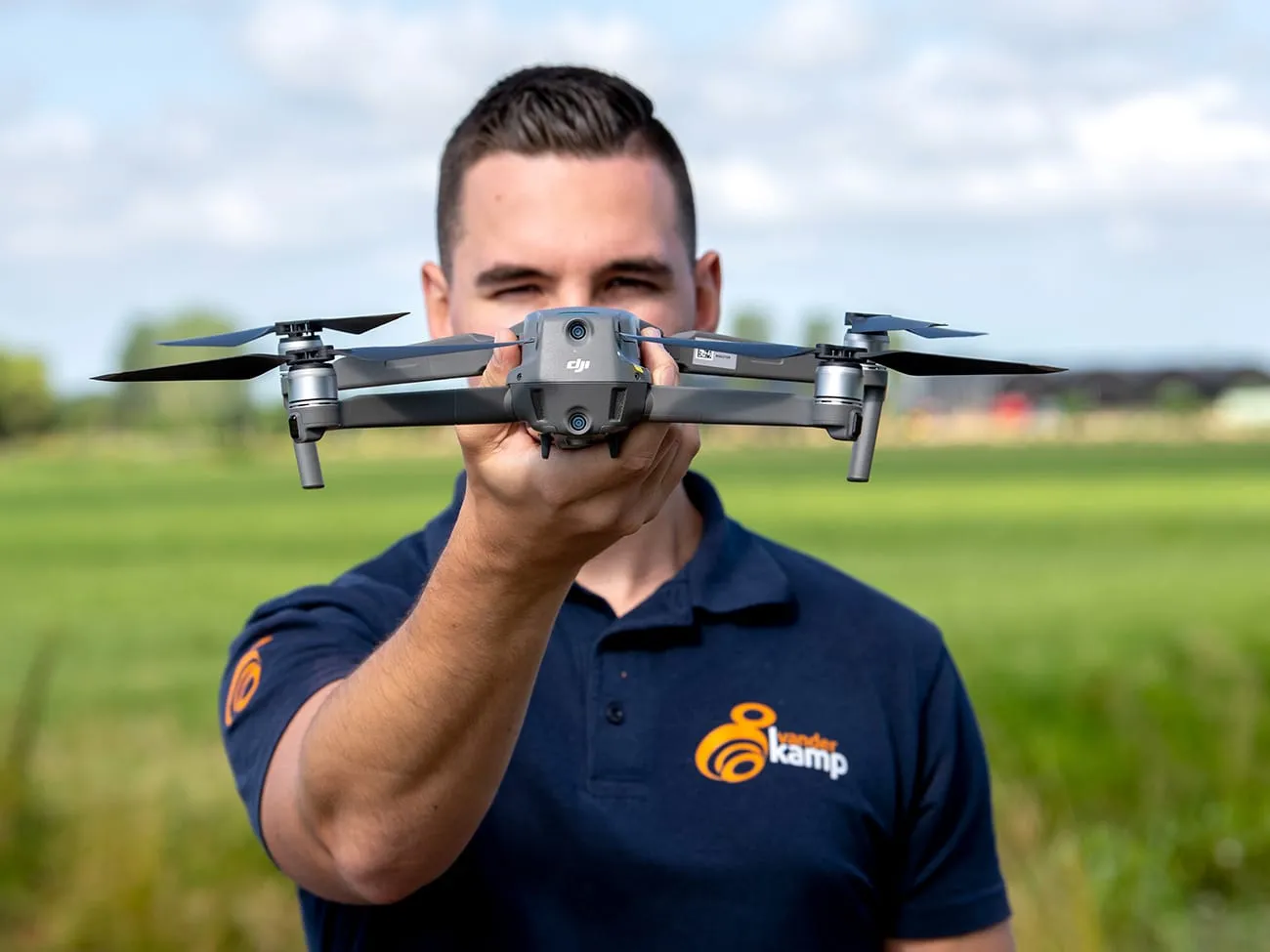
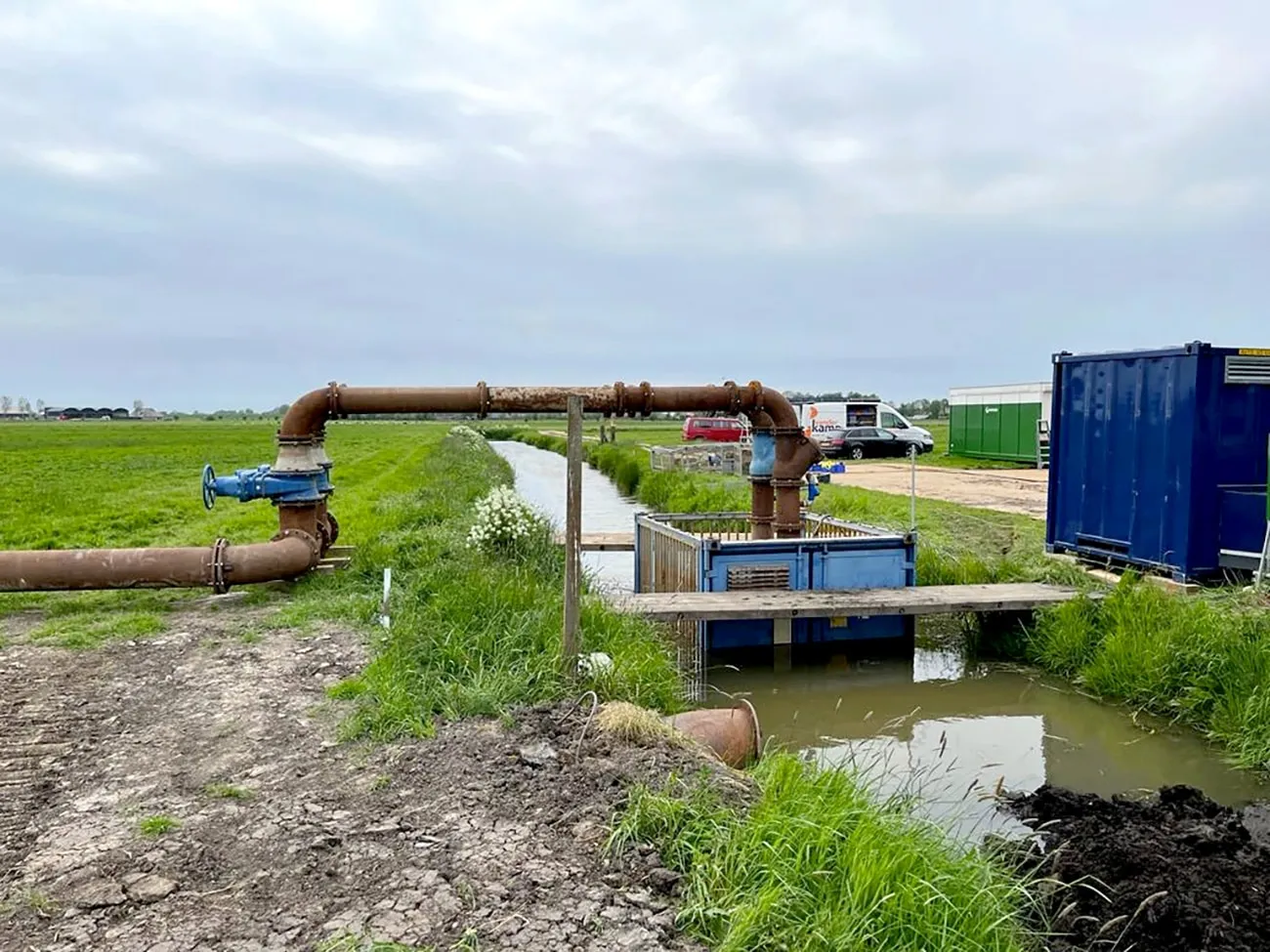
To safely replace the existing Stins surface water pumping station with a new, modern one, Van Heteren Weg- en Waterbouw called on Vanderkamp Pompen. The temporary pumping installation specialist delivered an efficient bypass, with its route surveyed in advance using a drone to create a 3D model. Vanderkamp Pompen is using this technique increasingly often, including on relatively small projects.
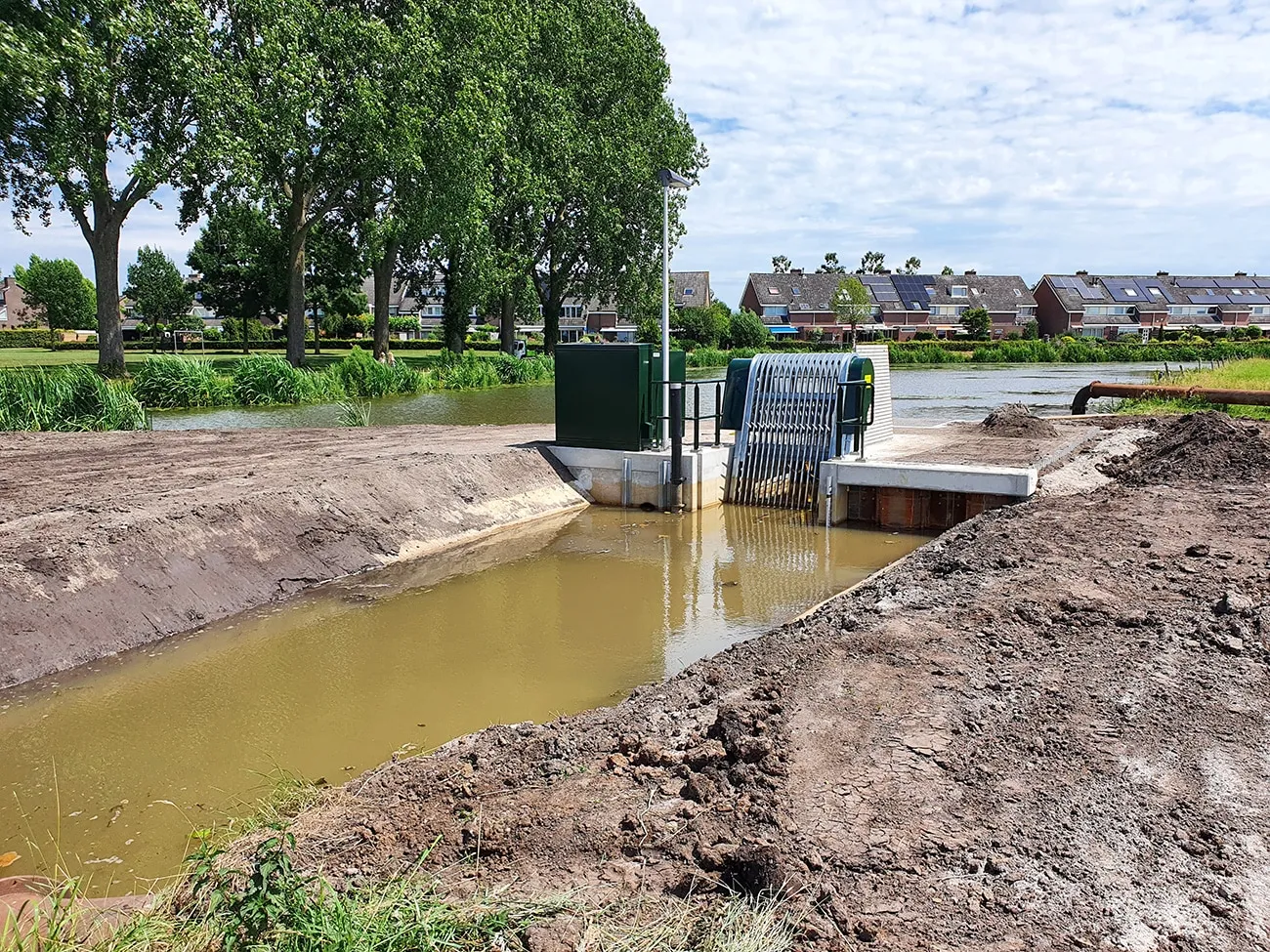
Stins surface water pumping station is managed by Waterschap Drents Overijsselse Delta and is located in the meadows of the Westenholte district of Zwolle. “The old pumping station was outdated, could no longer be operated remotely and was actually over-dimensioned for its application,” says Ewout Aman, project manager at Van Heteren Weg- en Waterbouw. “The pumping station had been earmarked for replacement for some time and was part of the framework contract we have with the water board for the renovation and replacement of existing weirs and pumping stations in its asset portfolio.”
Water level management and more
The design of the new Stins surface water pumping station was a joint effort, carried out as a construction team by Waterschap Drents Overijsselse Delta and Van Heteren Weg- en Waterbouw. “During the design phase, we also look at how to divert the water as efficiently as possible during the works,” says Aman. “For this, we call on our regular supplier of temporary pumping installations (TPI), Vanderkamp Pompen. They have not only the right equipment available, but also extensive expertise. The water board, too, has had good experiences with Vanderkamp Pompen, which also manages water levels for them. The temporary pumping installation supplier has a platform that the water board’s water level managers can log into to monitor operations and initiate any necessary actions. With this direct line between the water level managers and Vanderkamp, we as the contractor do not need to worry about it. We are fully supported in this area.”
Drone technology and photogrammetry
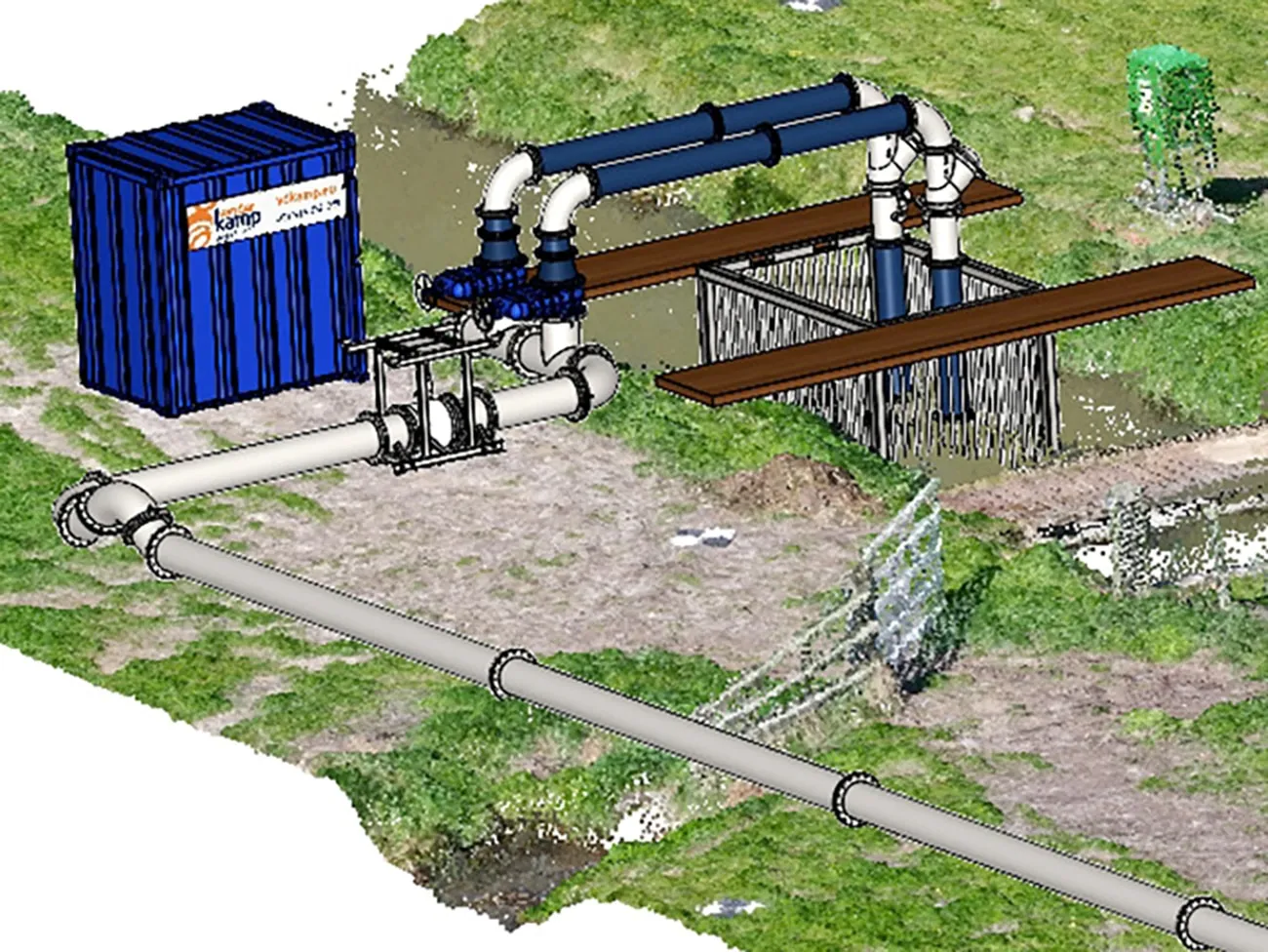
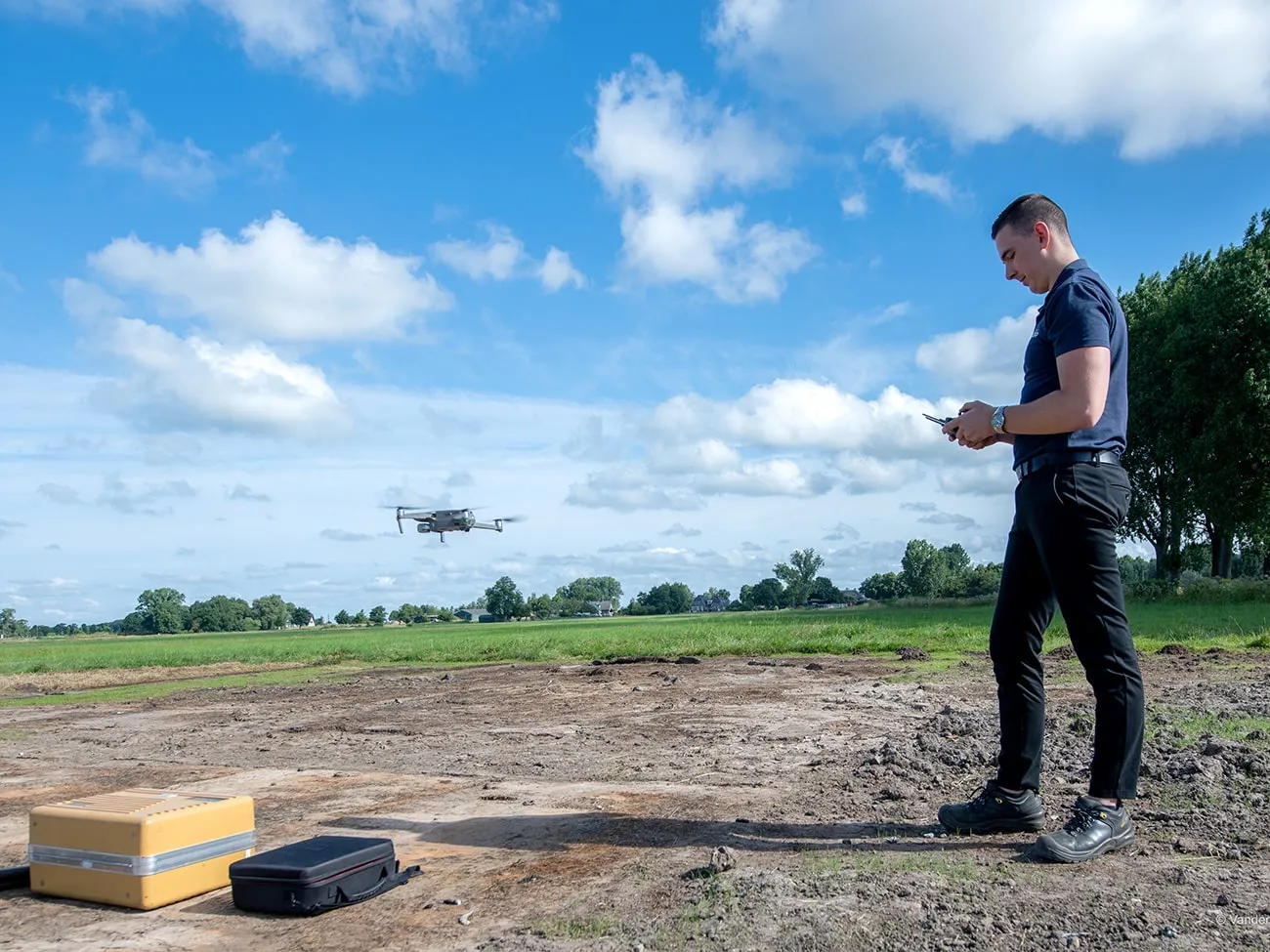
Van Heteren Weg- en Waterbouw is also well supported when it comes to designing the temporary bypass. Vanderkamp Pompen is making increasing use of drone technology. “We fly over the site and survey it digitally using photogrammetry,” explains Marco Wesseling, draughtsman and drone pilot at Vanderkamp Pompen. “This involves using specialist software to stitch the photographs together to create a 3D model accurate to within 1 to 3 centimetres. The temporary pumping installation in question is then drawn and visualised in the 3D model.
The ‘pick list’ is also generated from this 3D model, so we have everything we need on site without taking too many components. We are using this drone technology on projects increasingly often. It is simply very efficient, and gives all stakeholders a clear picture of the TPI in advance.”
Telemetry
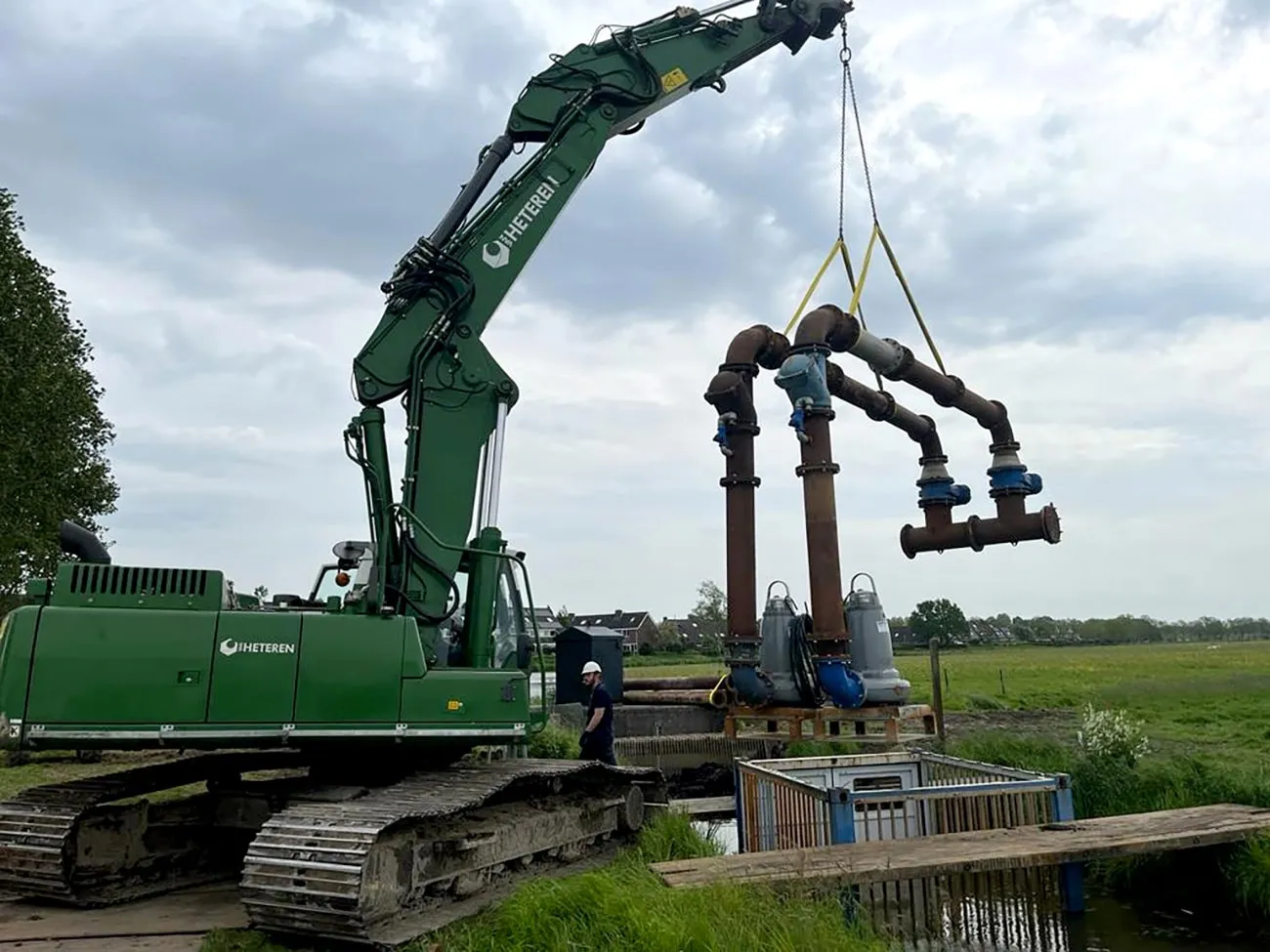
The capacity of Stins surface water pumping station has been reduced from 17.5 m3 per minute to 10.5 m3 per minute. In terms of size, Aman says it is a relatively average pumping station. Even so, the works were no easy task, largely because of the site’s accessibility. The pumping station is in an extremely boggy peat area with little load-bearing capacity, and is also surrounded by meadows. “We had to lay a haul road more than 700 metres long to get our equipment to the site,” says Aman. “We then built a cofferdam using steel sheet piles, within which we could construct the new pumping station. Vanderkamp Pompen’s TPI was set up outside it. In this case, the bypass was relatively straightforward because there was plenty of space around the cofferdam.” Wesseling agrees and adds: “We had no disruptive obstacles in the way of the pipework. The temporary installation consisted of two pumps that could be switched on and off remotely using telemetry. Water levels were shared in real time via our own digital platform, and our fault response team was, of course, on call 24/7 in case of any problems.”
The project manager at Van Heteren Weg- en Waterbouw looks back on a project that went extremely smoothly and efficiently. “The construction phase took around ten weeks in total. Vanderkamp Pompen’s temporary bypass remained operational throughout the works. A TPI is, after all, the first thing to be installed and the very last to be dismantled, once the new pumping station has passed all its tests with flying colours.”
Een zakelijke vraag aan Vanderkamp – The Dutch Water Engineers? Get in touch
Companies in this story

Keep following this
Get an email when a new story is published. No account needed.
- SubjectWater infrastructure
- CompanyVanderkamp – The Dutch Water Engineers







