









Taking care to protect heritage
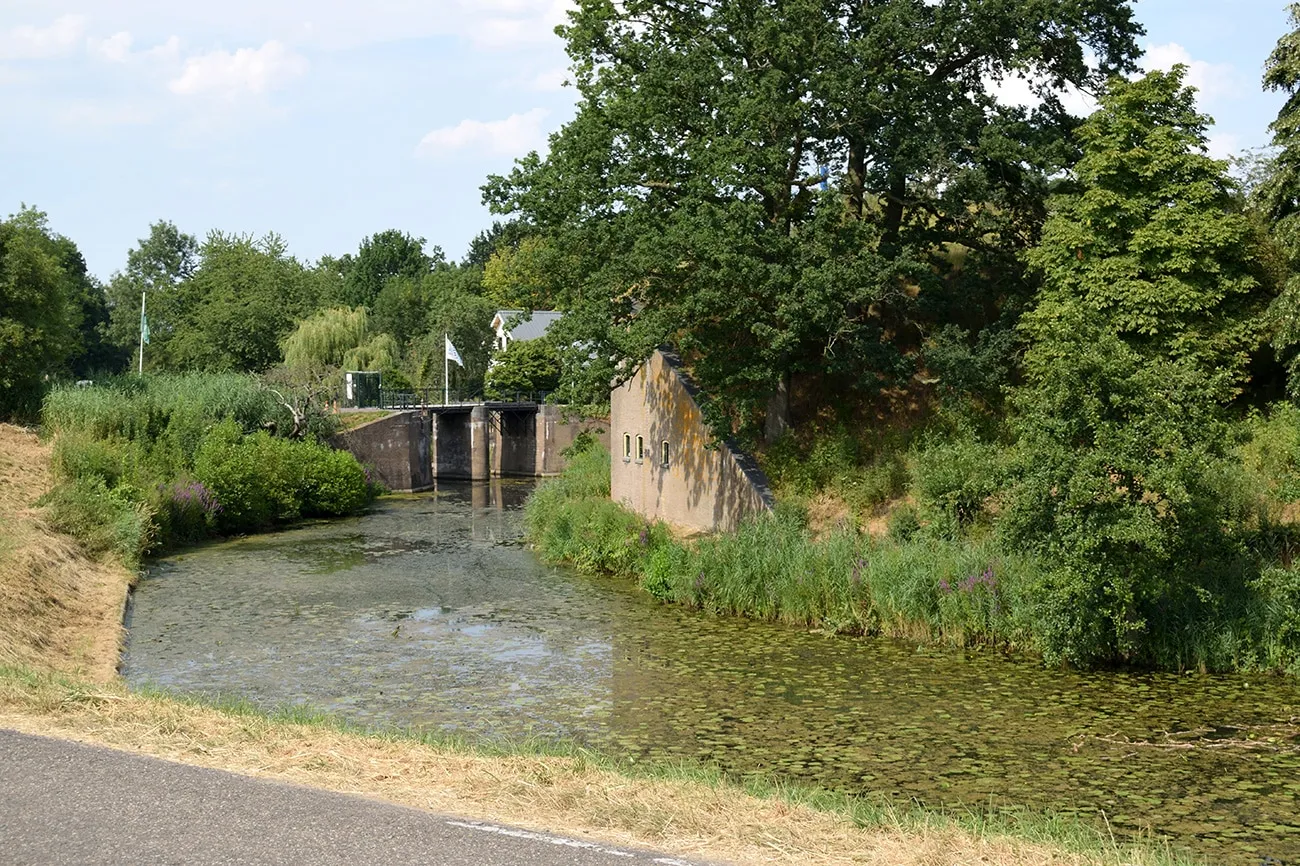
The Gorinchem-Waardenburg dike reinforcement project includes various visible and buried cultural heritage features, including Fort Vuren, the Dalemse sluice, Gorinchem Fortress and the New Dutch Waterline. How can these be treated with care, and how can they be taken into account throughout the process? The heritage engineers at Vestigia BV have mapped them in an innovative and sustainable way.
“The current dike reinforcement is a logical part of the dike’s history,” says Jeroen Flamman, senior KNA (Dutch Archaeology Quality Standard) archaeologist at Vestigia BV. “It has happened several times over the centuries. However, it becomes a different matter if, for example, you realign the dike or widen its toe, as this could disturb archaeological remains.” To map the latter, the Graaf Reinaldalliantie engaged Vestigia BV. Vestigia is a research and consultancy firm specialising in archaeology and cultural heritage. Its heritage engineers are passionate about the past and work closely with their clients. “We are brought in at an early stage of a construction or development project. We identify the risks to heritage above ground, underground and underwater. Our role is twofold. First, we look at the points of intersection between cultural heritage and the natural landscape and, in this case, the dike reinforcement plans. These may be direct intersections, such as an archaeological site. There may also be potential intersections, for example project plans that could harm the historic landscape’s character. Once we have identified these points of intersection, we can determine what follow-up steps are needed and when.”
High archaeological potential
In their analysis, Vestigia’s heritage engineers divided the entire Gorinchem-Waardenburg route into zones. Some have high archaeological potential, while others have low potential. “A zone with high archaeological potential is an area that was suitable for habitation in the past, so we may find historic features there. If work is carried out in these zones, we conduct borehole surveys and excavate trial trenches to establish where archaeological remains may be present. This allows us to take a closer look at what we might find.”
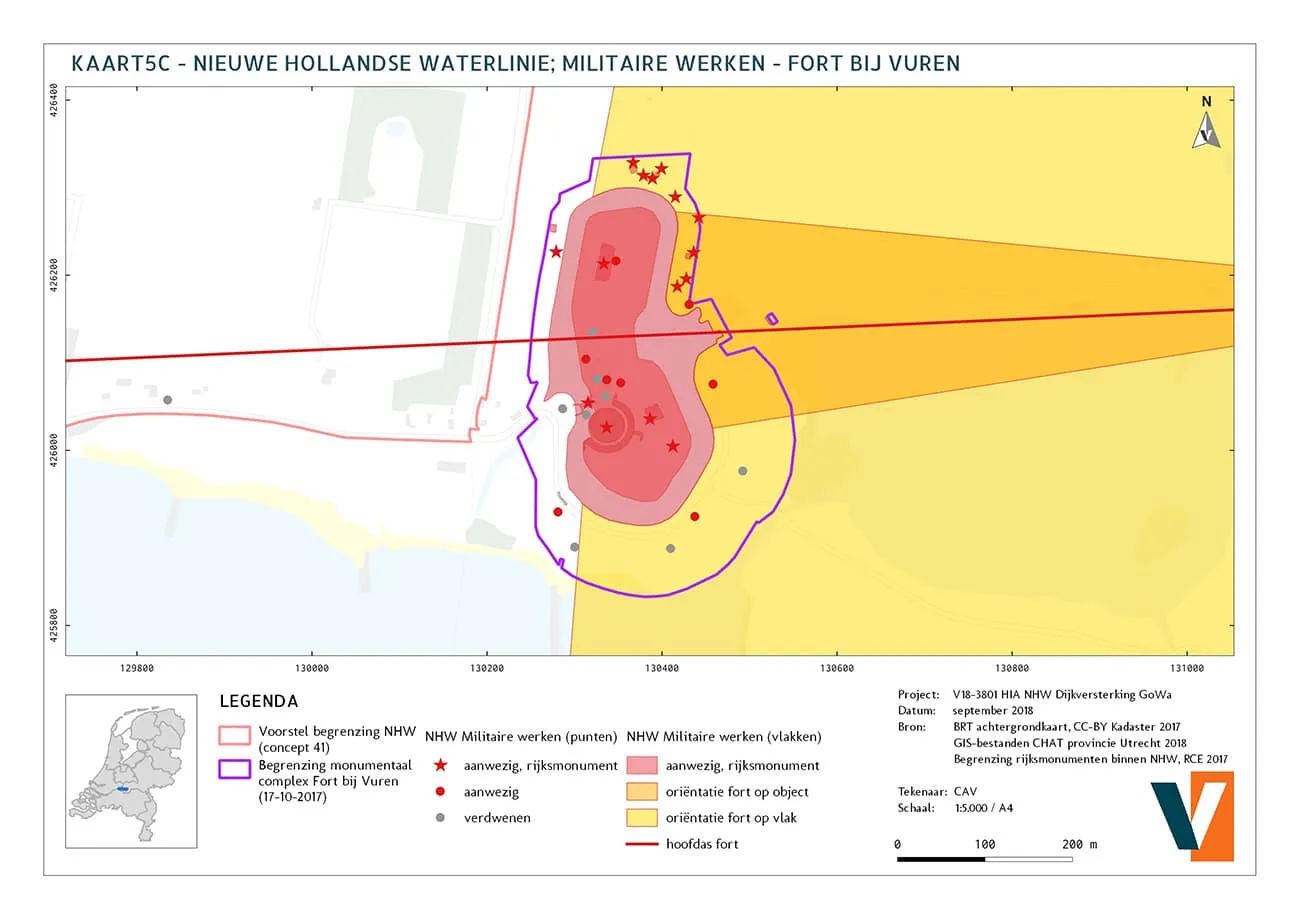
New Dutch Waterline
A good practical example is the New Dutch Waterline, which was added to the UNESCO World Heritage List last year. What impact will the dike reinforcement have on this former line of defence? Vestigia has mapped this in an innovative way. “The environmental impact assessment does not focus sufficiently on this type of heritage. That is why we carried out the first-ever Historical Impact Assessment (HIA) in the Netherlands, a cultural heritage impact assessment in the format preferred by UNESCO. Through its clear visual presentation and its collective and individual descriptions of the historic features of the New Dutch Waterline and their points of intersection with the dike reinforcement, the HIA gives a very clear picture of the impact of the plans on the individual features of this part of the UNESCO World Heritage Site, as well as on the connections between them. Sustainability is also an important consideration. Heritage is sustainable by definition. After all, it has lasted for several decades or centuries. Wherever possible, we preserve it in situ and incorporate it sustainably. If that is not possible, we make the information accessible and preserve it in the archive.”
According to Flamman, the heritage engineers add considerable value. “If you start a major project without being prepared for what you might encounter along the way, the impact is all the greater. By identifying in advance where the plans intersect with heritage, you can anticipate rather than react.”
Question about this story? Ask your question
Keep following this
Get an email when a new story is published. No account needed.
- SubjectWater infrastructure







