









‘Sustainable design need not cost more’
Text Roel van GilsImage Den Boer CCI
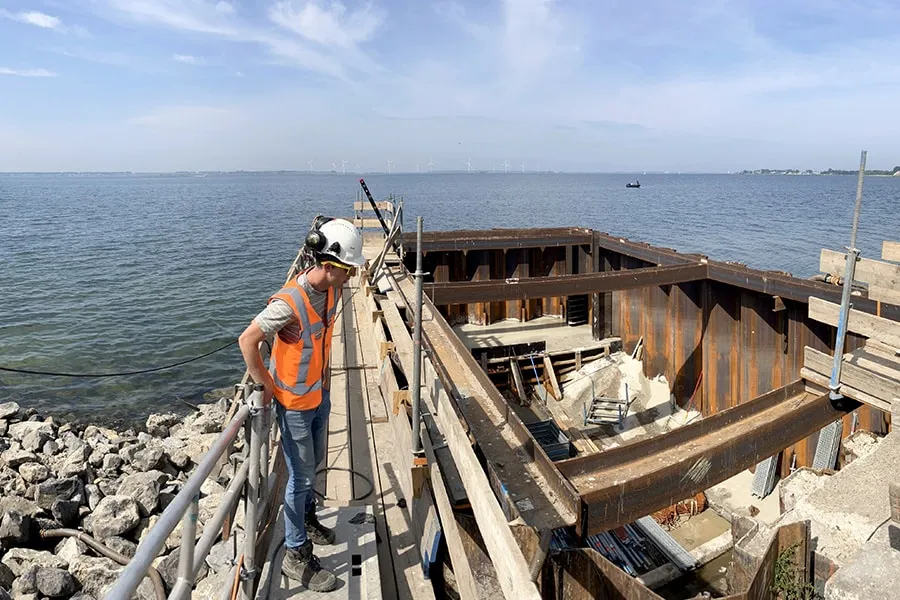
The new Oudenhoorn pumping station will soon be the most sustainable pumping station operated by waterschap Hollandse Delta. The design target was to achieve a 50% reduction in CO2 emissions, but the design team from Van Hattum en Blankevoort and structural engineering consultancy Den Boer CCI managed to achieve a reduction of no less than 82%. “Sustainability is in our DNA. We know how to turn a vision for sustainability into practical measures. And that does not necessarily have to cost more,” says Wessel Nauta, director of Den Boer CCI.
The new Oudenhoorn pumping station is being built sustainably, using materials that can be reused in the future. Existing materials from the old pumping station are also being reused. “The days of taking the old out and putting the new in are over,” says Wessel. “We are not going to do that any more. Our country has wonderful structures built with high-quality materials. They may have been written off financially, but structurally they can often last for many more decades. Our approach focuses on preserving and reusing valuable materials.”
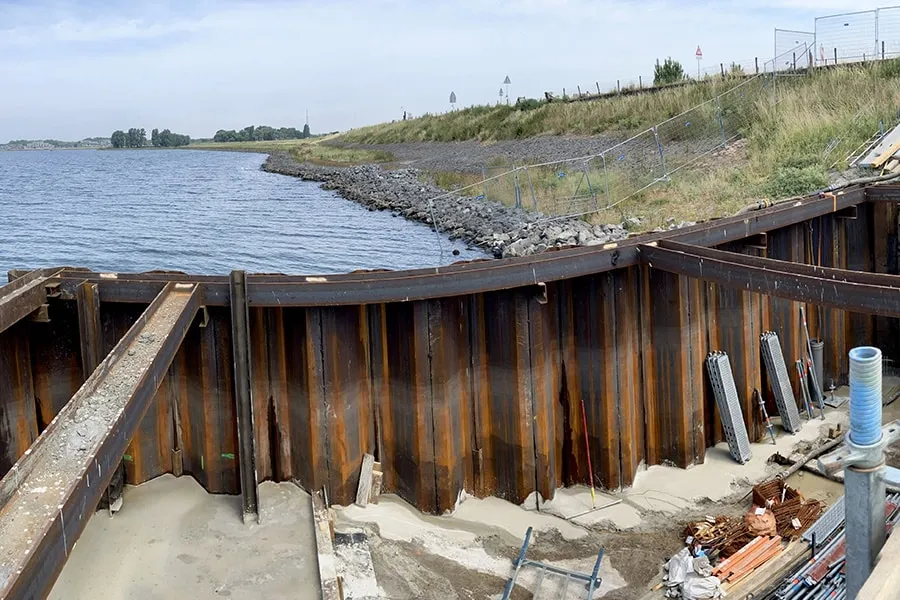
Preserving the rising main and existing substructure
At the Oudenhoorn pumping station, Den Boer CCI and the contractor have made significant progress on sustainability, including by preserving the existing rising main and the existing substructure on both the inlet and outlet sides. “We started by working as a construction team. That means working together to develop the best plan within the requirements for policy, budget and the structure,” says Kees Meulman, Technical Manager at Den Boer CCI. “In this case, that meant taking stock of what was there and its remaining service life. Steel or cast-iron pipework usually has a long service life. That proved to be the case here too. By implementing a Safety Management System, we can identify the optimal time for replacement, meaning the rising main can be used safely for many years to come. So replacing it now would be a waste. It also eases the pressure on the budget. It is not only more sustainable, but also cheaper over the asset’s entire service life. We considered every part of the existing pumping station together to assess its potential for reuse.”
Sustainable superstructure
All the components in a pumping station work together. “By considering the different materials as a whole, while taking account of their varying service lives and durability, you can save on materials and costs,” says Wessel. “For example, a timber-frame superstructure is more sustainable and cheaper than building the entire structure in brickwork. And by incorporating a large roof hatch, there is no need to install a complex and expensive overhead crane runway, which would also require periodic inspections. We have optimised every aspect in this way. The key is to look a little further ahead and have all the (sustainability) objectives and requirements clearly set out before we start engineering. That also fits with our aim to calculate once and draw once. We have a great deal of knowledge, but limited capacity, and that capacity must add maximum value. Above all, you should not have people doing the same work twice.”
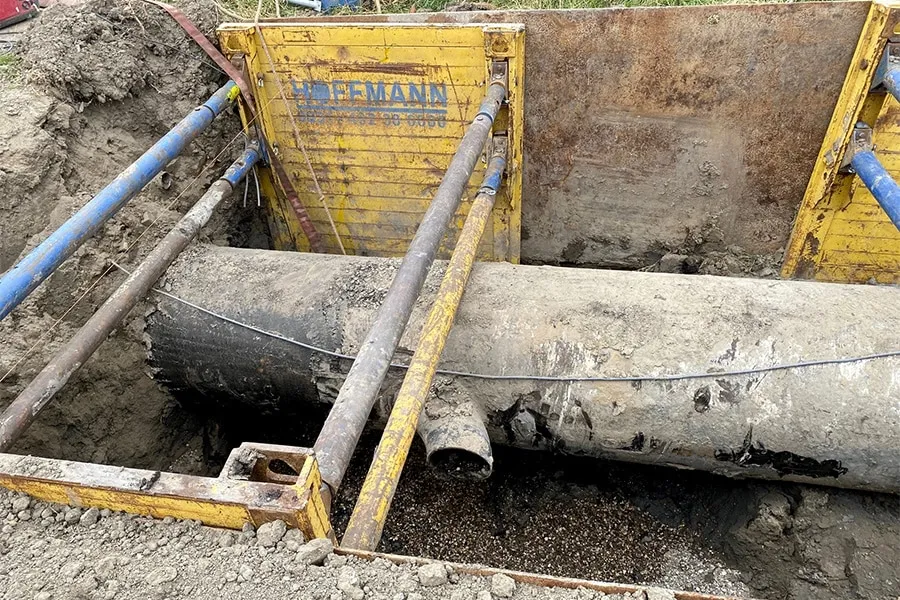
Thinking twice about the requirements and wishes at the outset also fits with the wider sustainability challenge. “That automatically leads to the best design and ultimately lower costs. Sustainable design need not cost more. If you do not have to replace a pipe, that saves money.” Den Boer CCI achieved similar optimisations on the ‘Optimalisatie wateraanvoer Peelkanalen’ project, which we cover later in this edition of GWW Magazine. Den Boer CCI continues to look for new opportunities. Kees concludes: “Our ambition for the next pumping station is to retain the existing hydraulics, the steel casing in which the pump impeller rotates. And so we will continue to reuse existing components and upgrade them to meet the latest standards.”
Question about this story? Ask your question
Who worked on Gemaal Oudenhoorn
- superstructureTimmer- en Aannemingsbedrijf Albert van de GraafMentioned in Sustainable and circular superstructure
- steel auxiliary and support structuresBroeze NijverdalMentioned in Steel auxiliary and support structures
- structural engineering consultancyDen Boer CCIIn this story
Keep following this
Get an email when a new story is published. No account needed.
- ProjectGemaal Oudenhoorn
- ThemeFlood protection and climate-resilient water management
- SubjectWater infrastructure
- CompanyDen Boer CCI







