









Storing 36 million cubic metres of water: how do we do it?
Text and images Waterschappen Aa en Maas en De Dommel
Extra measures needed for the ’s-Hertogenbosch delta to prevent flooding
Flooding like that seen in Limburg in summer 2021 is also possible around ’s-Hertogenbosch. What is being done to prevent it? The Aa en Maas and De Dommel water authorities are joining forces. Together with partners, they are working on a package of measures. A strategy has been drawn up, including practical solutions. This article explains what is at stake and what is being done about it.
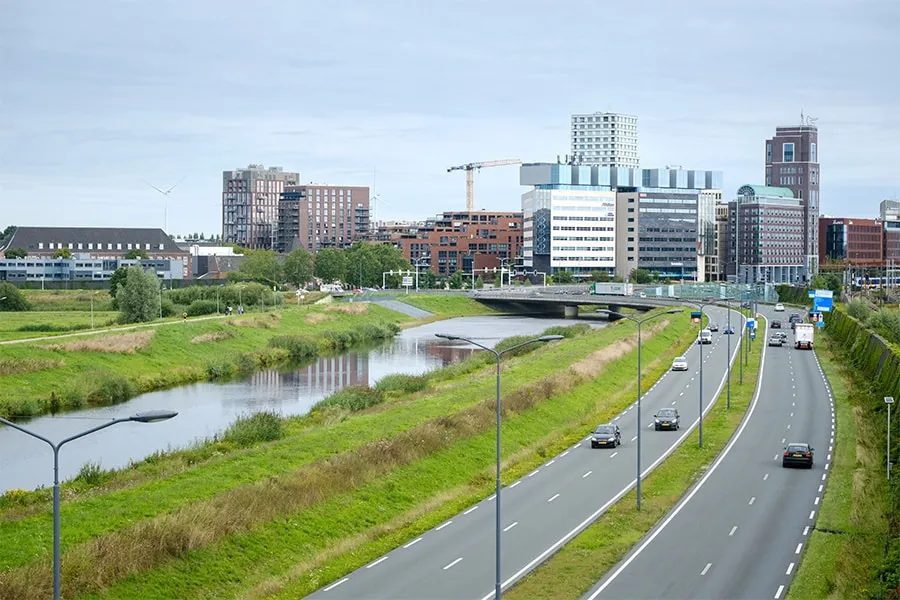
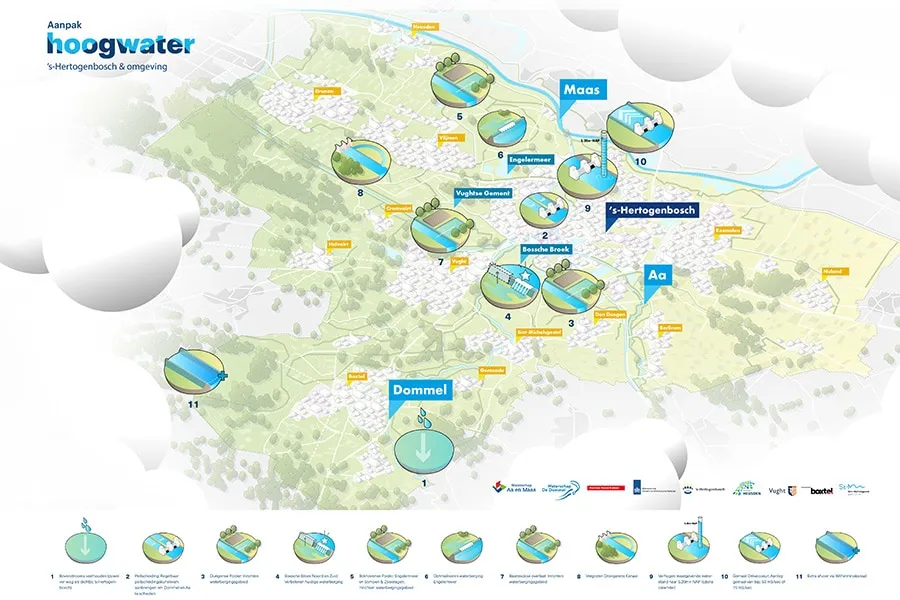
The two water authorities’ area of responsibility covers around 240,000 hectares in total, spanning much of Central and Eastern Brabant. ’s-Hertogenbosch is the lowest point, around 40 metres lower, and acts as a ‘drain’: all the water from streams and rivers flows in this direction.
Marit Borst, director of Waterschap De Dommel: “Looking at a map of the catchment area, it is clear that ’s-Hertogenbosch lies in a delta. All the main and tributary streams converge here and then discharge into the Meuse (via the Crèvecoeur sluice and the Bovenlandse sluice, ed.). Under normal circumstances, this happens without any problems. Water can also be discharged into the Meuse during heavy rainfall. Problems arise when heavy rainfall, and consequently high flows from the regional water system, coincide with high water levels in the Meuse. In these circumstances, water cannot be discharged, or not in sufficient quantities, and water levels around ’s-Hertogenbosch rise too high, causing flooding. In extreme situations, this leads to inundation.”
Flooding in Limburg: a clear warning
What happened in Limburg in 2021 could also happen around ’s-Hertogenbosch. Because of the high water level in the Meuse, the Geul stream could no longer discharge excess water into the river in 2021 and burst its banks, with all the tragic consequences that followed. Marit: “A similar situation occurred around ’s-Hertogenbosch in 1995. After a wet December, steady rain continued through January. The Meuse rose sharply, as did water levels in the Dommel and Aa catchment areas. Excess water could no longer be discharged via the Meuse, and the ground was saturated. This led to major flooding, which inundated the A2, one of the country’s main traffic arteries.”
The HoWaBo project (Hoogwateraanpak ‘s-Hertogenbosch) was subsequently launched. The Aa en Maas and De Dommel water authorities began working on solutions in close consultation with the surrounding municipalities (Sint-Michielsgestel, Boxtel, Heusden, Vught and ’s-Hertogenbosch), the province of North Brabant and Rijkswaterstaat.
Large flood storage areas were created, with a total capacity of 14 million cubic metres for emergencies.
New climate calculations show that current flood storage capacity in the Aa and Dommel catchment areas is insufficient. The joint project was therefore revived two years ago. The main task now is to find space for an additional 30 to 40 million cubic metres of water. Capacity requirements are even expected to rise to 50 million cubic metres by 2050. This means measures are needed not only around ’s-Hertogenbosch and neighbouring municipalities, but also further upstream in the higher-lying areas. That is why HoWaBo now stands for Hoogwater Aanpak Brabant Oost.
We can no longer engineer everything
Climate change means we are increasingly facing intense cloudbursts and sudden flooding. Marit on the measures: “We have to prepare for unprecedented deluges. Look at Limburg. Doing nothing is not an option. We need to adapt our water system through a mix of measures. For example, by storing water upstream, where the rain falls. Everything stored there does not have to be stored downstream. This delays the flooding heading towards ’s-Hertogenbosch. This could address around 10% of the problem. Many more measures will therefore be needed.”
The task is substantial and complex. This is due not only to the serious consequences of potential flooding and the many competing interests involved, but also to the nature of the measures required. For example, additional storage areas are needed, three times the size of the current ones. The costs are also enormous, including for potential additional pumping capacity.
Marit says we need to abandon the idea that everything can be engineered. “Over the past century, we have increasingly regulated the water system, ensuring neither too much nor too little water in each season. Together with our partners, we have tried to bend nature to our will by controlling water. Climate change makes clear that this approach is no longer sustainable. We will have to work more with nature and learn to live with water. For example, we will have to accept that certain areas may be flooded. We need to follow the logic of the landscape much more closely. Is an area low-lying? Then it makes sense for it to be wet more often. Working with natural processes is essential for a water system that is resilient for the future.”
HoWaBo project manager Ingrid Rijkers stresses that flood measures cannot be viewed in isolation from other urgent issues such as nitrogen reduction and the housing shortage. “That means making difficult choices, because many measures require space, and space is scarce. We also want to build homes, roads and nature areas. This calls for smart combinations and close cooperation. However different the interests may be, we need to find ways to connect them wherever possible.”
A different perspective on water
Ingrid says we need to think about water differently. “This is not about a few technical solutions and then the job is done. It is a complete transition. But calling it a transition makes it sound as though the change could take decades. That is obviously not an option when there is a risk of flooding. Action is needed in the short term too.”
Ingrid on the complexity: “The task spans several scales and focuses on the long-term challenge, but it also affects short-term developments. The benefits of measures and the resulting disruption do not occur in the same place. The task must be integrated with and aligned to other spatial challenges and developments, such as Water en Bodem Sturend (WBS), NOVEX and NPLG, initiatives launched by the national government.”
Marit adds that the delta around Den Bosch will make it very clear that water and soil must guide planning. “This approach is relatively new. What we do in this area could set an example for the rest of the Netherlands. However, shifting to a more natural system takes time; it cannot be achieved overnight. And we do not have that time. We cannot wait. Alongside measures that will help in the longer term, we must also implement measures that deliver immediate results.”
A broad search for possible solutions
In 2022, a wide-ranging search for solutions was carried out. Ingrid: “As water authorities, we worked with the surrounding municipalities, the province and Rijkswaterstaat to identify opportunities and options. Among other things, we organised workshops to make it as easy as possible to share ideas. All kinds of water management measures were discussed: small-scale and large-scale, technical or spatial in nature, designed for a single purpose or multifunctional. We considered whether it made sense to concentrate measures or spread them across the whole area. Some solutions focused on water, while others could be combined with other developments. We also looked at effectiveness and feasibility.”
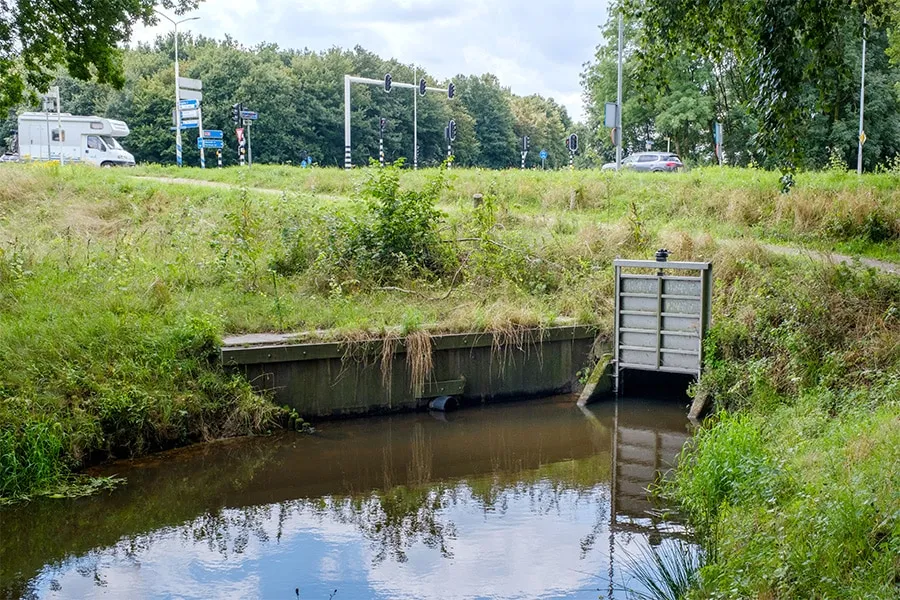
An adaptive strategy
An adaptive strategy has been developed for the current challenge (2023) and future needs (2050 and 2100), in collaboration with the Integraal Rivier Management programme. Ingrid: “The adaptive, future-proof strategy focuses on maximising water retention, maintaining an optimal water level, and combining storage areas and discharge measures intelligently.” The strategy provides a framework for all possible solutions and focuses on 4 categories of measures:
1. Retaining water upstream
To prevent runoff, the water system upstream of ’s-Hertogenbosch needs to be redesigned. As much water as possible would then be retained and allowed to infiltrate in the area. This would ease the burden on the regional water system around ’s-Hertogenbosch. It also aligns with the long-term trend towards an integrated approach to nature restoration and drought mitigation. To have an effect in the longer term, preparations should begin immediately. This means incorporating opportunities to retain water into area developments. The impact on the water challenge would then grow over time.
2. Higher water levels
Raising the water level that is ‘acceptable’ in emergency situations can create additional storage capacity locally: ‘vertical storage’. However, higher water levels affect all infrastructure, including the heights of flood defences and embankments, weirs and sluices, stream valleys and bridges. It would also allow more water to be discharged via the Drongelens Kanaal. This measure would have a long-term effect if preparations start now.
3. Storage
A controlled storage area is one that is deliberately inundated during extreme conditions. It is designed for this purpose, for example with an inlet in an embankment. Storage areas can be combined effectively with nature and recreation, but they also require space in areas facing urban development, nitrogen reduction and energy transition challenges.
4. Discharge
Increasing the discharge capacity of waterways and/or installing pumping stations can help move water to the Meuse more effectively and quickly during periods of extreme flow. This approach is scalable and easy to control, so it can be deployed very precisely. It is also one of the quickest measures to implement, creates no spatial conflicts and has a significant impact on reducing the scale of the challenge.
A mix of solutions from the categories above is therefore needed to meet current and future needs. Retaining and infiltrating water, and raising water levels, are measures that will only have an effect in the long term. However, they are the preferred approach, following the principle of retain, store and discharge. To deliver results in the short term, technical measures are also needed to increase discharge capacity. Work must begin on all categories straight away to prevent serious flooding in the future.
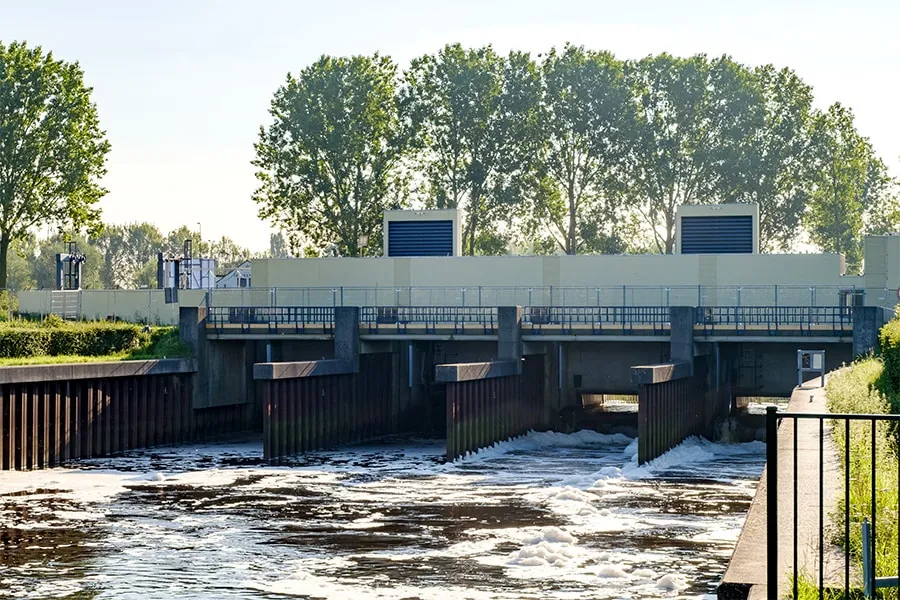
Potential solutions are being developed
Potential solutions have been identified for each of the strategy’s four components, focusing on those that appear most realistic and feasible. These are now being investigated further. The governing boards will decide on the exact measures only after consulting those involved.
Ingrid: “We are now developing all the proposed solutions in greater detail. This will give us insight into their practicality, feasibility and affordability. It will also show us whether the high-water problem can be solved by taking measures, or whether we will have to accept living with water nuisance. Ultimately, there are limits to what can be achieved. Those limits are partly determined by what we are collectively willing to invest. There is certainly enough here to get on with, together with our partners and the local community. That collaboration is essential. Ideas from the market are also very welcome!”
Question about this story? Ask your question
Keep following this
Get an email when a new story is published. No account needed.
- SubjectWater infrastructure







