









Smart solution prevents flooding and offers plenty of recreational opportunities
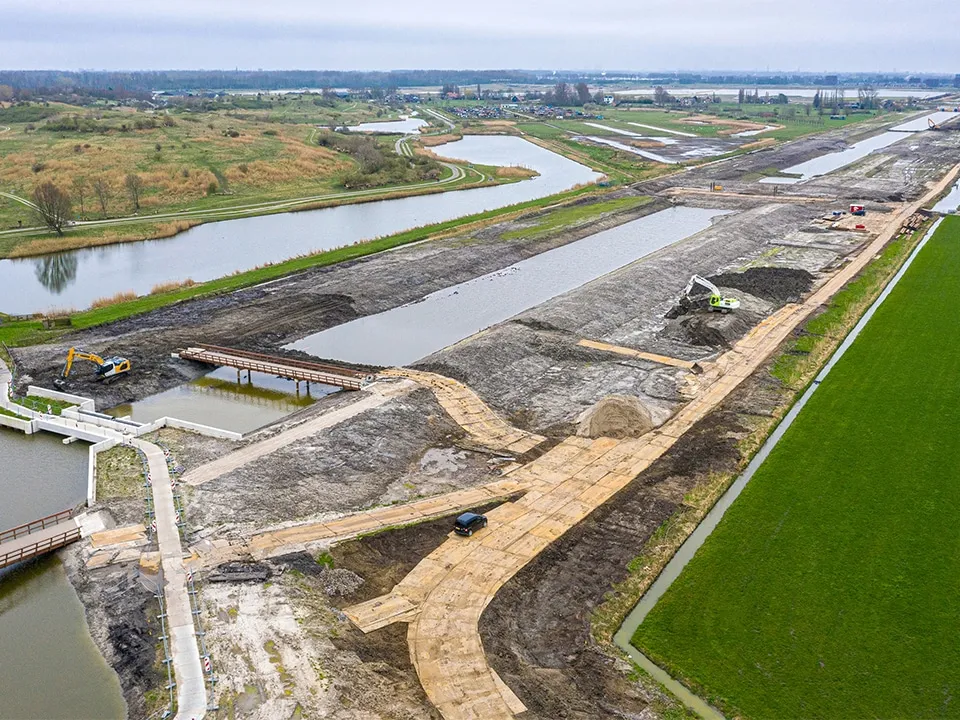
With the climate constantly changing, our country is increasingly experiencing torrential downpours that cause flooding. Fortunately, the Netherlands has more than one way of tackling water. For example, the Nieuwe Driemanspolder was developed by contractor joint venture Vissers Ploegmakers B.V., F.P.H. Ploegmakers B.V. and Van de Wetering Cultuurtechniek B.V., together with the Hoogheemraadschap van Rijnland, as a temporary storage area for excess water.
Jan Meerkerk, project manager at the contractor joint venture, explains: “The Nieuwe Driemanspolder is an area between Zoetermeer, The Hague Leidschenveen and Leidschendam-Voorburg. Since the project was completed, people have been able to walk, cycle, ride horses or go boating here in a varied landscape of water and greenery. During extreme rainfall, the area is used to store peak flows, greatly reducing the risk of flooding from the regional water system.”
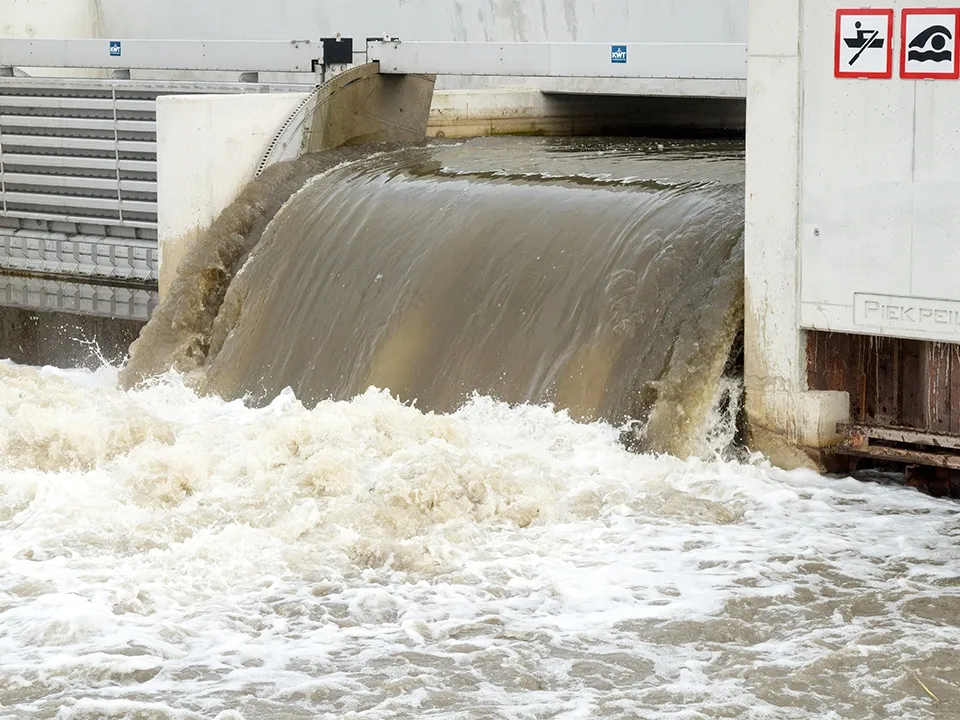
Storing two billion litres of water
At the time of writing, the Nieuwe Driemanspolder is complete. “The peak storage area can hold two billion litres of water that can no longer be drained away by other means,” Meerkerk continues. “When it is not being used for peak storage, the area serves recreational and ecological purposes. The Nieuwe Driemanspolder is one of the lowest-lying polders in the Netherlands. It lies around 4 to 5 metres below NAP, and the situation is typically Dutch when it comes to draining water.”
Paul Hollander, project manager at the Hoogheemraadschap van Rijnland, adds: “The polders are equipped with pumping stations. Around 350 pumps in our area of responsibility transfer water to the main water system. The four main drainage pumping stations then discharge it into the rivers, the Noordzeekanaal or directly into the sea. Heavy rainfall can overload the main water system. You are then forced to switch off polder pumping stations to prevent the dikes from overtopping or even failing. This causes damage, and the costs quickly mount up. The challenge was to make the main water system, the boezem, more resilient. The solution was to increase the capacity of the main drainage pumping stations so that we could discharge more water, bringing the total capacity to 200 cubic metres of water per second. But at a certain point, you reach the limits of how much water the boezem can convey to the pumping stations. The next step is to create peak storage areas where water can be held during wet periods. It is then discharged later through the same system.
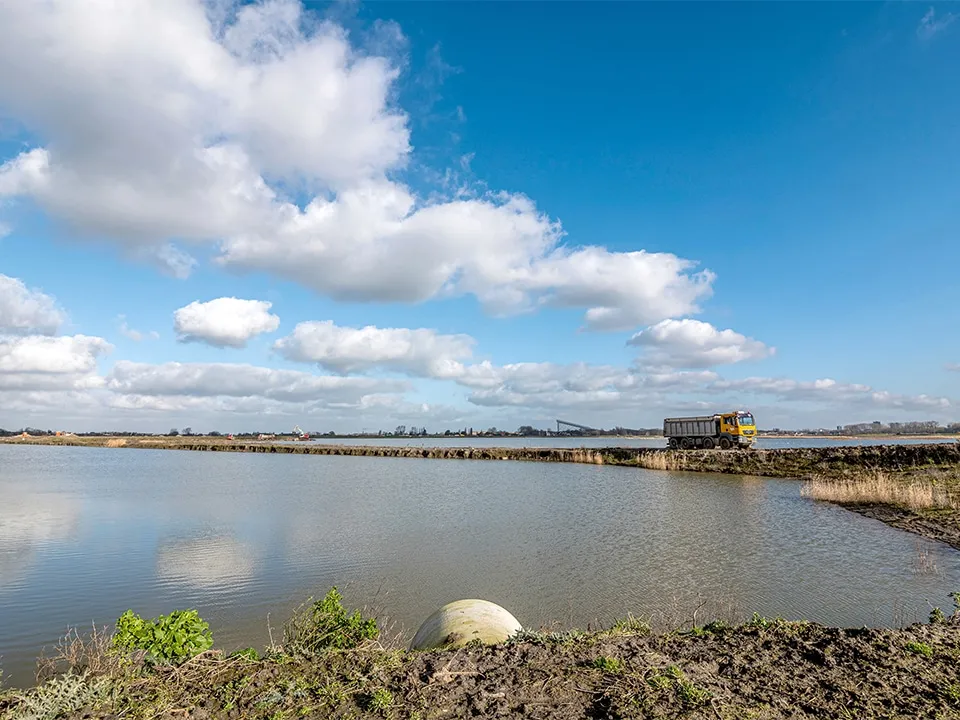
Water safety, nature and recreation
Hollander outlines the run-up to construction: “The first plans date back to the end of the last century. The final plan was drawn up in 2013, and over the following years it was developed in greater detail together with local residents and other stakeholders
before being put out to tender in 2015. That was when contractor joint venture Vissers Ploegmakers / F.P.H. Ploegmakers / Van de Wetering Cultuurtechniek came into the picture. They won the tender on the strength of their price-quality ratio, with quality playing a major part. They got to work immediately after the contract was signed. Trial sections were created at several locations, where the response of the soil and groundwater to the work was tested. This was essential to carrying out the work safely and achieving stable embankments. From the outset, the contractor joint venture focused on the greatest risks.”
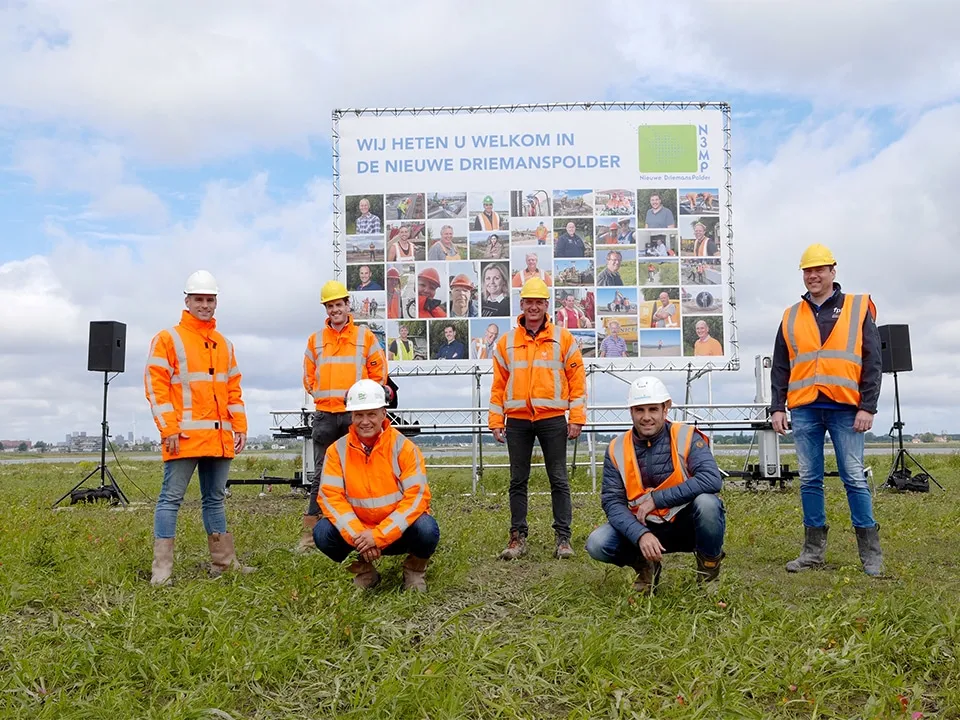
Most of the area opened to the public on 1 July 2020, and the Nieuwe Driemanspolder was completed on 30 October 2020, although finishing work is still under way. Since the area opened, there have always been people around. Meerkerk and Hollander note that there are many riding schools nearby and that the area is popular for carriage driving. People also go canoeing, cycling and walking. Hollander concludes: “We originally expected to need the peak storage area only once every 25 years. However, given current climate trends, we have revised that estimate: we now expect to use it once every 10 years, and eventually once every 5 years. As a water authority, we are already seeing the effects of climate change, so it is good to take action now!” Both men agree on the partnership between the contractor joint venture and the Hoogheemraadschap van Rijnland: after a turbulent start, a special working relationship developed. “Reality inevitably drives you towards the best possible cooperation,” says Hollander.
Question about this story? Ask your question
Who worked on Driemanspolder
- contractors' joint ventureDijkencombiMentioned in More data in less time, without compromising quality
- contractors' joint ventureVissers Ploegmakers B.V.In this story
- contractors' joint ventureF.P.H. Ploegmakers B.V.In this story
- contractors' joint ventureVan de Wetering Cultuurtechniek B.V.In this story
Keep following this
Get an email when a new story is published. No account needed.
- ProjectDriemanspolder
- ThemeFlood protection and climate-resilient water management
- SubjectWater infrastructure
- CompanyVissers Ploegmakers B.V.
- CompanyF.P.H. Ploegmakers B.V.
- CompanyVan de Wetering Cultuurtechniek B.V.







