









Sand and gravel: the two essential ingredients for the ‘blocs’
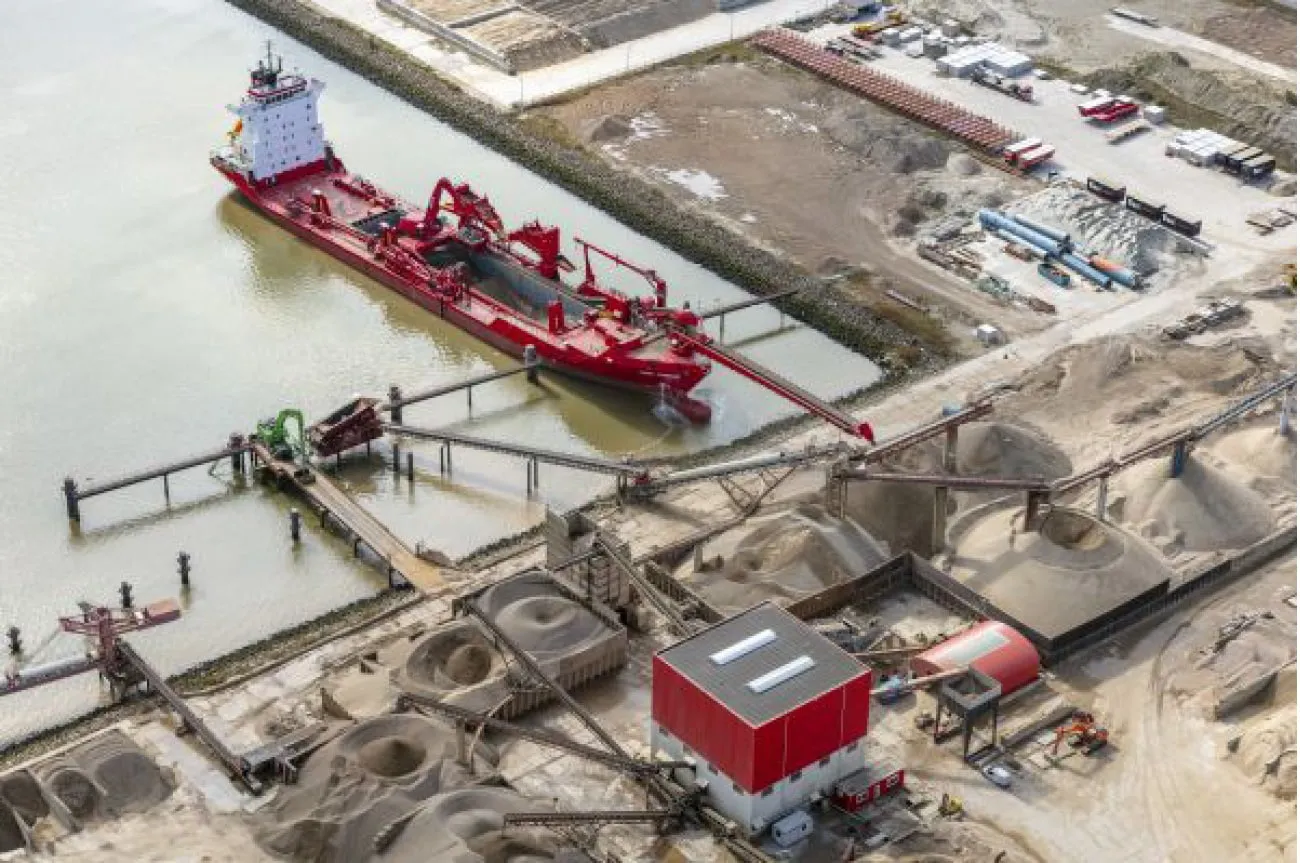
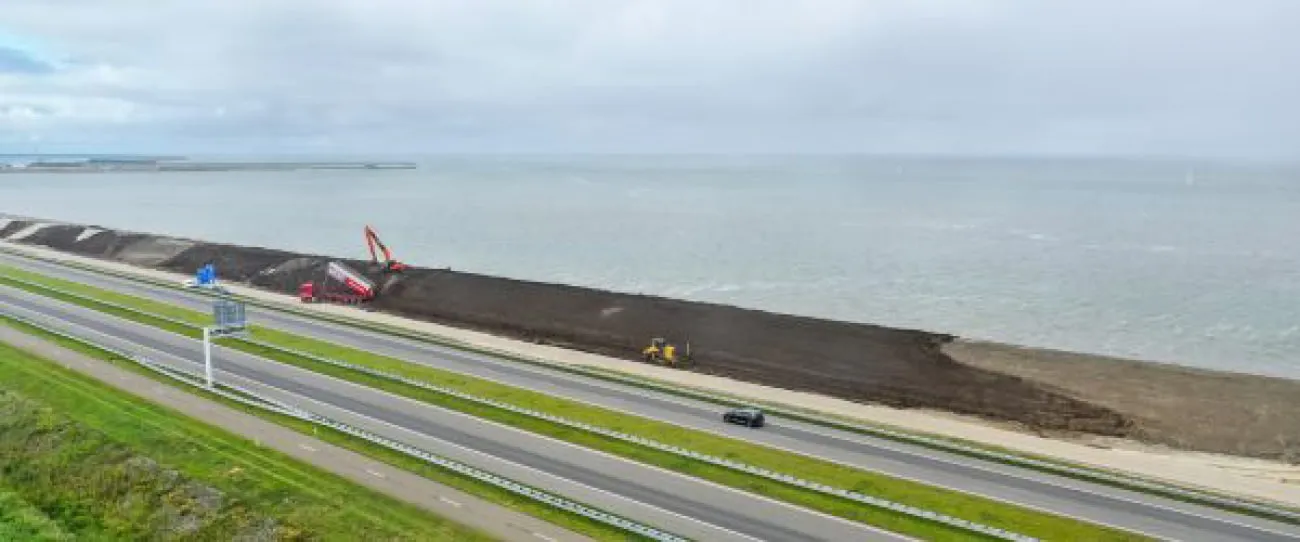
On the Wadden Sea side, the dike is being raised by almost 2 metres and reinforced with Levvel-blocs. These innovative, exceptionally strong concrete blocks interlock like Lego bricks and break the waves when storms hit. Spaansen Industriezand en Grind supplied two key ingredients for the Levvel-blocs: sand and gravel.
Producing the 70,000 Levvel-blocs requires large quantities of sand and gravel: 140,000 tonnes of sand and 240,000 tonnes of gravel, to be precise. “The sand has a coarser texture,” explains Johan Spaansen, director of Spaansen and the third generation to lead the family business. “We extract this so-called concrete sand from the North Sea. Among other vessels, we use the YED PRIOR, the largest in our fleet, to extract gravel and sand. We wash and screen the material we dredge, then grade it into different sizes. The same applies to the gravel we supplied.”
Efficient delivery
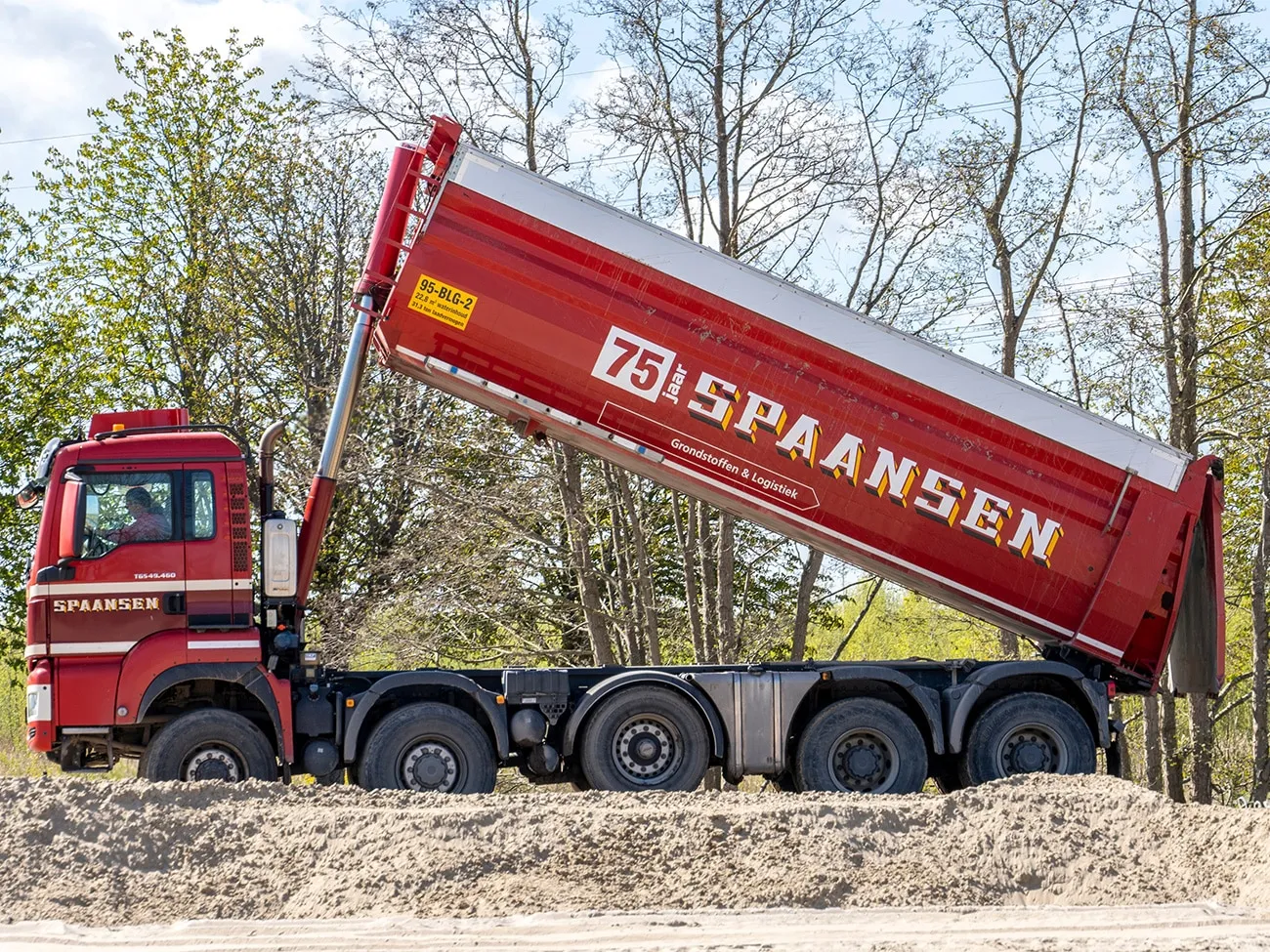
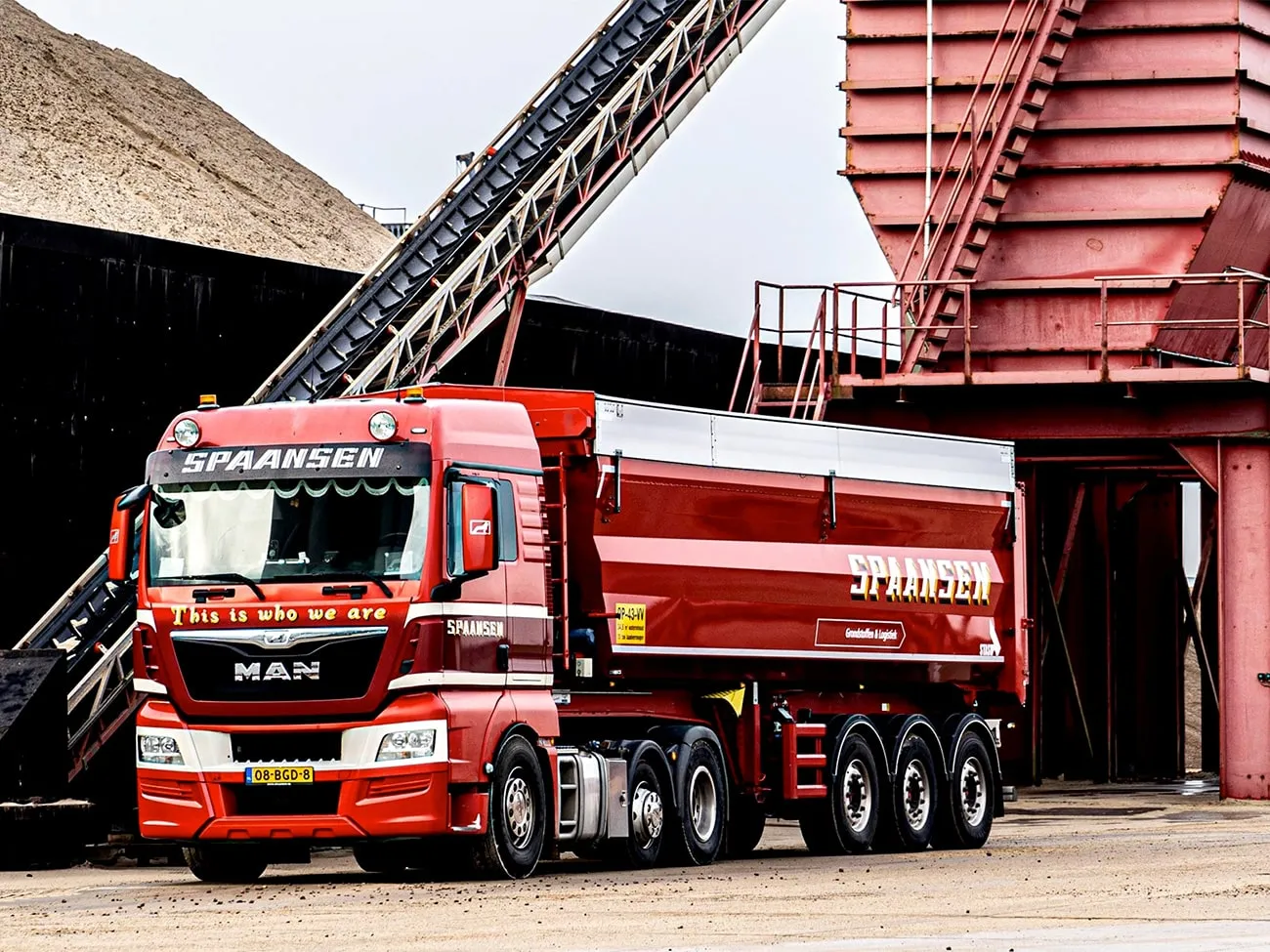
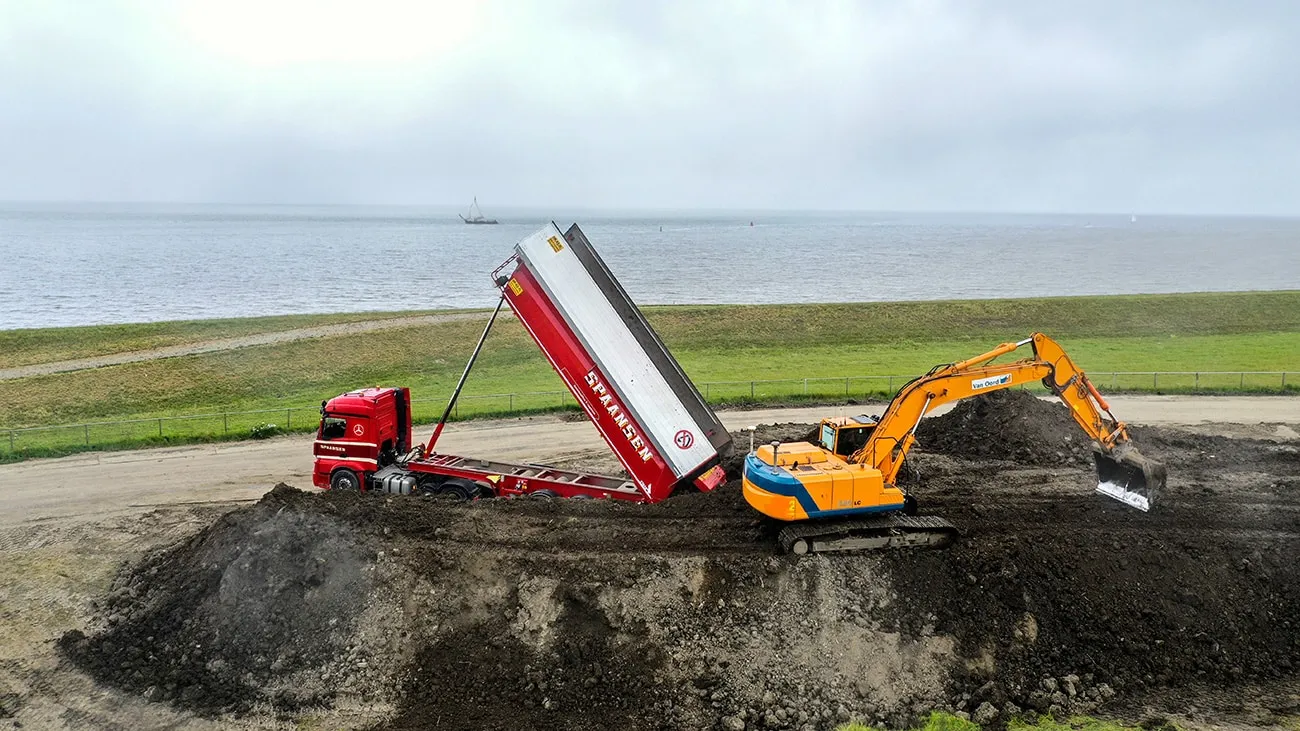
The Levvel-blocs were produced at a temporary factory built specifically for the purpose in Harlingen, at a rate of around 100 blocks a day in a fully automated process. Spaansen Industriezand en Grind is based on the site next to the factory. “We transport the sand and gravel from the sea to our own site. There, we grade it before trucking it to our neighbour, the Levvel factory. In total, around 11,000 truck journeys were needed, over a very short distance. Another advantage is that we are unaffected by low water levels in the rivers. All our vehicles are powered by Euro 5 or Euro 6 engines, and we have been a leader in payload capacity for years thanks to our in-house bodywork manufacturing. To ensure the concrete block production process could run continuously, we maintained a dedicated stockpile on our site.” Spaansen’s sand and gravel are used not only in the Levvel-blocs, but also as a firm, stable bed of coarse gravel for the underwater concrete. “This gravel has a coarse texture, so it provides good support on the gravel.”
Concrete for construction
Alongside its sand and gravel storage facility in Harlingen, Spaansen built a new concrete plant here in 2018. Under the name Spaansen Bouwsystemen, the family business manufactures, supplies and installs precast walls and structural shells for housing. “Our family business has grown over 75 years through enterprise and connection. Our expansion into building systems is a recent example of this. The concept is called Gevelklaar, and robots are used to make ready-to-install house façades
.”
Question about this story? Ask your question
Keep following this
Get an email when a new story is published. No account needed.
- ThemeMaterials and techniques for infrastructure
- SubjectWater infrastructure







