









New Lock in Terneuzen officially opened
Text and images Nieuwe Sluis Terneuzen
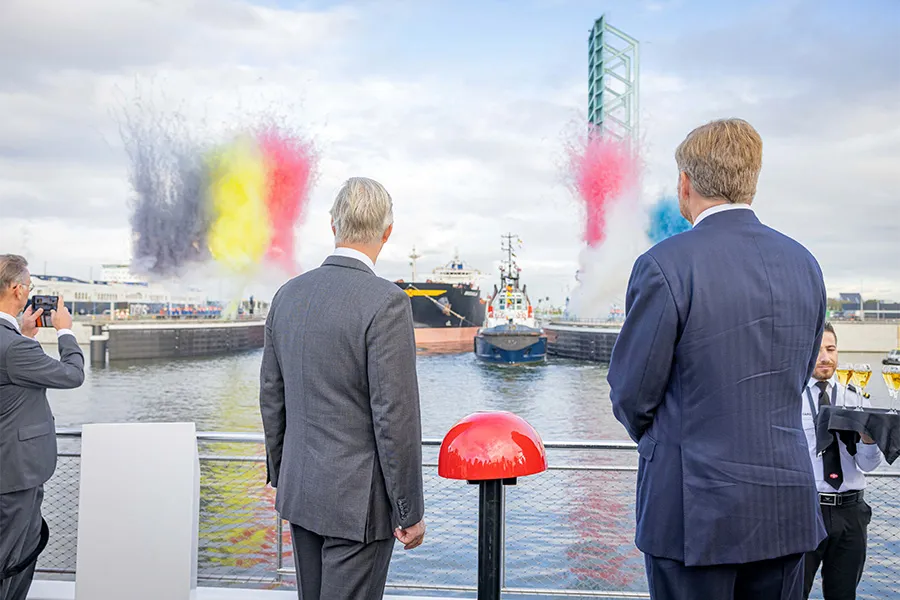
On Friday 11 October, the New Lock in Terneuzen was officially opened by His Majesty King Willem-Alexander and His Majesty King Filip. At the press of a button, they signalled to the MV Bregaglia to become the first ship to pass through the New Lock. The bulk carrier sailed out of the New Lock to the sound of drums and amid smoke flares in the colours of the Dutch and Belgian flags, bound for Ghent. It is the largest ship ever to sail towards Ghent.
Both kings performed the official opening ceremony together aboard the Z9, an electric events vessel, in the presence of invited guests involved in the New Lock project. The Z9 and a flotilla of boats accompanied the MV Bregaglia for its first few metres on the Ghent-Terneuzen Canal.
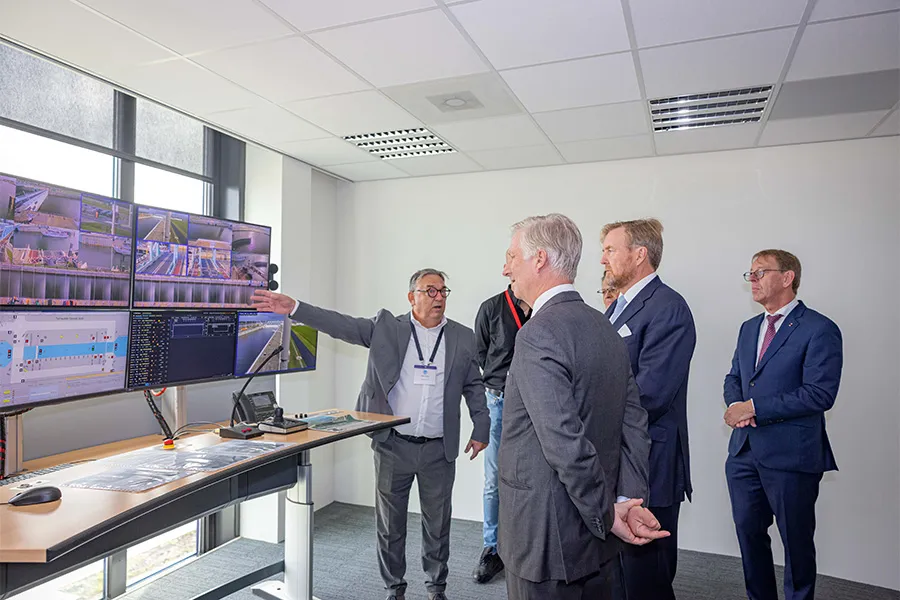
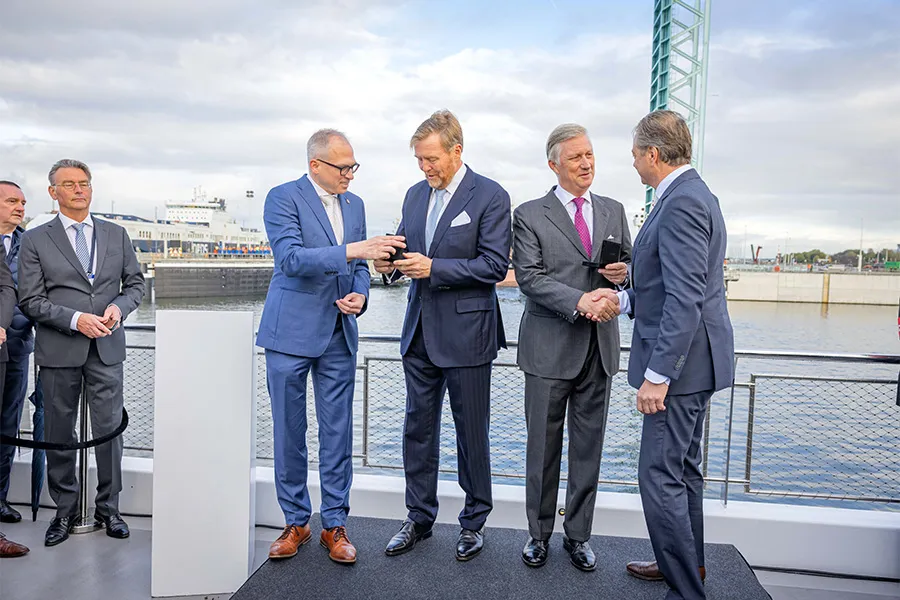
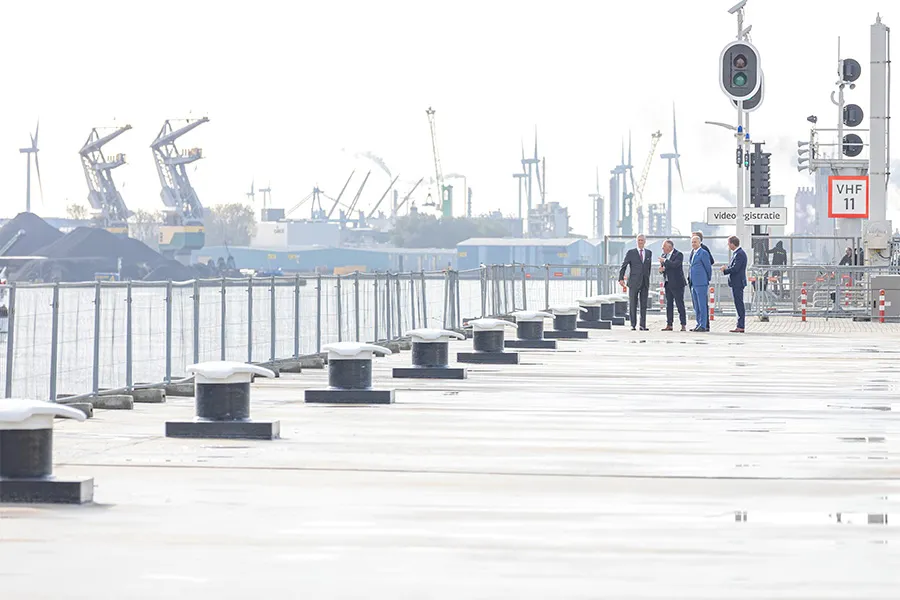
The kings then spoke aboard the Z9 with representatives of some of the companies that use the locks in Terneuzen. They subsequently moved to the New Lock’s lock apron, where Eric Marteijn, project director for Nieuwe Sluis Terneuzen, and Gerben Turkstra, project director for the Sassevaart contractor consortium, briefed them on the New Lock and its construction. After visiting the control room in the New Lock’s control building, the kings spoke informally with local residents, volunteers from Portaal van Vlaanderen (the information centre about the port area), and several designers and builders.
New Lock
The New Lock is 427 metres long, 55 metres wide and 16.44 metres deep. It can accommodate large seagoing vessels up to 366 metres long, 49 metres wide and with a draught of 14.5 metres. The New Lock was built within the existing lock complex in Terneuzen, in the North Sea Port area. The Middensluis, which had been in service since 1910, made way for the New Lock.
Access and traffic flow
The New Lock provides better access and smoother passage for vessels travelling from the Western Scheldt to and along the Ghent-Terneuzen Canal. The lock is part of the navigation route between Rotterdam and Paris. The number of vessels using the North Sea Locks, the lock complex in Terneuzen, is increasing, as is vessel size. The New Lock is the same size as the new locks in the Panama Canal, preparing it for the global trend towards larger ships. Larger seagoing vessels will be able to reach Terneuzen and Ghent. This will generate new economic activity in both the Zeelandic Flanders and Flemish regions, and make better use of the economic potential of the canal zone in both regions. The capacity of the North Sea Locks will also increase, reducing waiting times for inland vessels.
North Sea Locks
Together with the West Lock and East Lock, the New Lock forms part of the North Sea Locks. In 2023, 56,000 vessels passed through this lock complex. This figure is expected to rise to 96,000 by 2040. The lock complex is close to Terneuzen city centre. As well as serving passing vessels, it is an important road link. The New Lock also forms part of the primary flood defence. It stands 9.5 metres above NAP, making it ready for rising sea levels. The New Lock is also used to discharge surplus water from Flanders via the Ghent-Terneuzen Canal.
Construction
Construction of the New Lock began in 2017 and will be completed in 2024. Road and waterway traffic was largely able to continue during construction. Thanks to the temporary Kapitein Rooiboskanaal, the capacity of the lock complex was maintained until October 2021. Road users encountered various diversions and speed restrictions during construction, but otherwise experienced little disruption. Residents of Terneuzen city centre experienced noise and vibration nuisance as a result of the work. The use of explosives in March 2022 to demolish the Middensluis caused damage to buildings in the city centre and led to around 100 compensation claims from residents. Following a thorough review of the incident, the method for demolishing the Middensluis was revised. The damage claims have now also been settled.
Testing and training
Following the official opening of the New Lock, a period of testing and training will take place before the lock enters service. This ‘familiarisation’ period is expected to take several months.
Client
The New Lock was built for the Flemish-Dutch Scheldt Commission (VNSC), a partnership between the Dutch Ministry of Infrastructure and Water Management and the Flemish Department of Mobility and Public Works. The VNSC commissioned contractor consortium Sassevaart (comprising BAM Infra, Stadsbader Contractors, DEME, Van Laere and Equans) to build the lock. Sassevaart will also be responsible for maintenance for the next two years. The total construction cost of the New Lock is approximately €1.2 billion. The Netherlands is contributing approximately €295 million, including a regional contribution. Flanders is paying the remaining costs. The port company North Sea Port is contributing to the Flemish share. The project received €48 million in co-financing from the European Union’s CEF (Connecting Europe Facility) fund.
Question about this story? Ask your question
Keep following this
Get an email when a new story is published. No account needed.
- SubjectWater infrastructure







