









Julianakanaal upgrade treated as a military operation by Van den Herik and Rijkswaterstaat
Text Susan Peek Beeld LimburgDrone voor Van den Herik Sliedrecht, Paul van Baardwijk voor Rijkswaterstaat
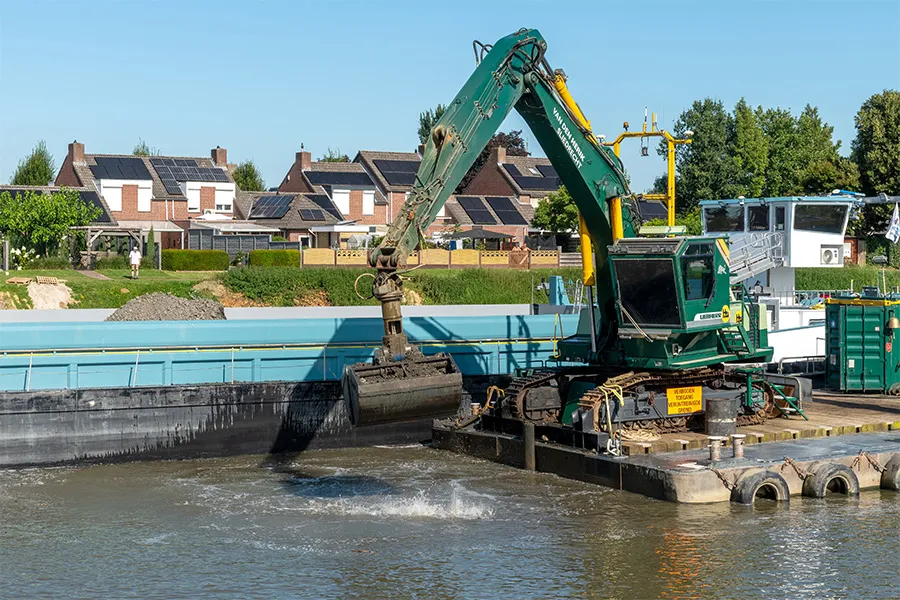
Van den Herik Sliedrecht is working with Rijkswaterstaat to upgrade the Julianakanaal, part of the Maasroute, an important shipping route to ports in Belgium, Germany and the Netherlands. The canal is being upgraded to accommodate two-barge push-tow traffic (Class Vb vessels) measuring 190 metres long and 11.4 metres wide, with a maximum draught of 3.5 metres.
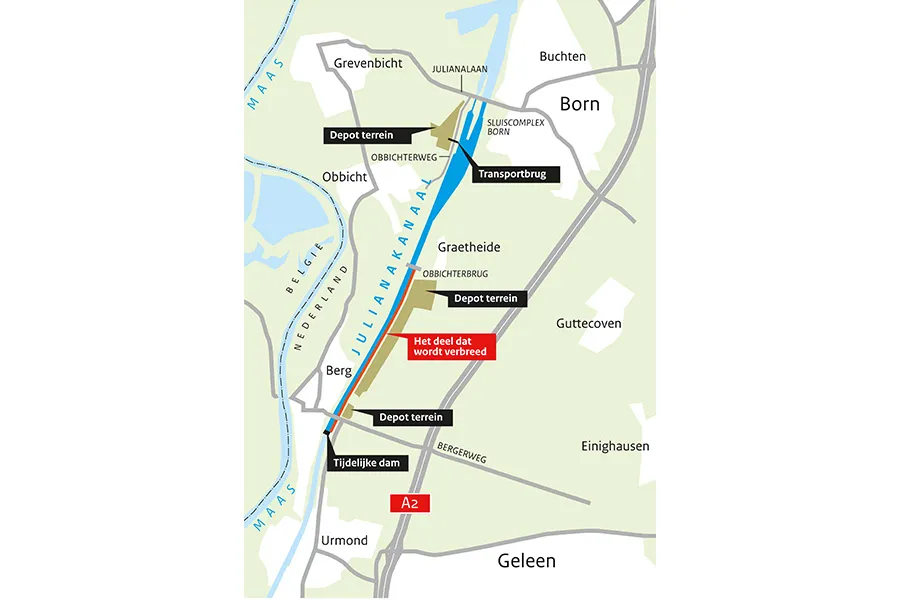
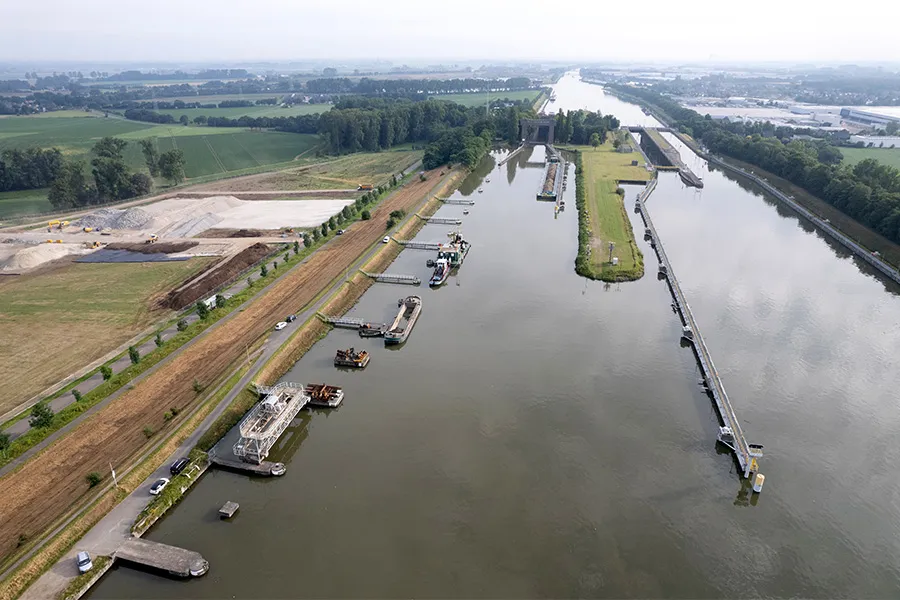
The Julianakanaal has been widened and deepened at various points along a 26-kilometre stretch. “The final 4-kilometre section between Berg and Obbicht is now up next,” says Jacques Timmermans of Rijkswaterstaat. As environmental manager, he represents the interests of various stakeholders and monitors progress on the project. “At times it feels like playing chess on several boards at once,” says Jacques. “You have to deal with local residents, businesses, Rijkswaterstaat itself, the construction contractors involved and shipping. It’s good to be able to rely on the knowledge and expertise of main contractor Van den Herik.”
A military operation
Robin Koorengevel, project manager at Van den Herik, says: “Together with Rijkswaterstaat, we looked at solutions as part of a construction team to carry out the work to a high standard, safely and with as little disruption as possible. Our approach is almost like a military operation, given the precision and attention to detail and stakeholders it requires. Working closely with Rijkswaterstaat is crucial to the success of this project.” The Julianakanaal is unusual and requires a tailored approach. Jacques explains: “Built in the 1930s, the canal has a complex subsoil containing a lot of gravel and large glacial boulders. It runs along and across the escarpment, close to the unique Kingbeek nature reserve. The upgrade is needed to accommodate the Maasroute’s upgrade to Class Vb shipping, the increasing size of vessels and the route’s more intensive use.”
Working in the dry
The work must be done now, and it must be done properly. This is especially important after an earlier attempt was halted in 2023, leaving shipping subject to speed restrictions and additional rules in the area. In view of the safety risks, Minister Harbers made a final decision in March 2024 allowing Rijkswaterstaat to close the canal to shipping and carry out the work in the dry. A few
days after the decision, Van den Herik began preparations, including design work and permit applications.
Careful preparation and minimising disruption
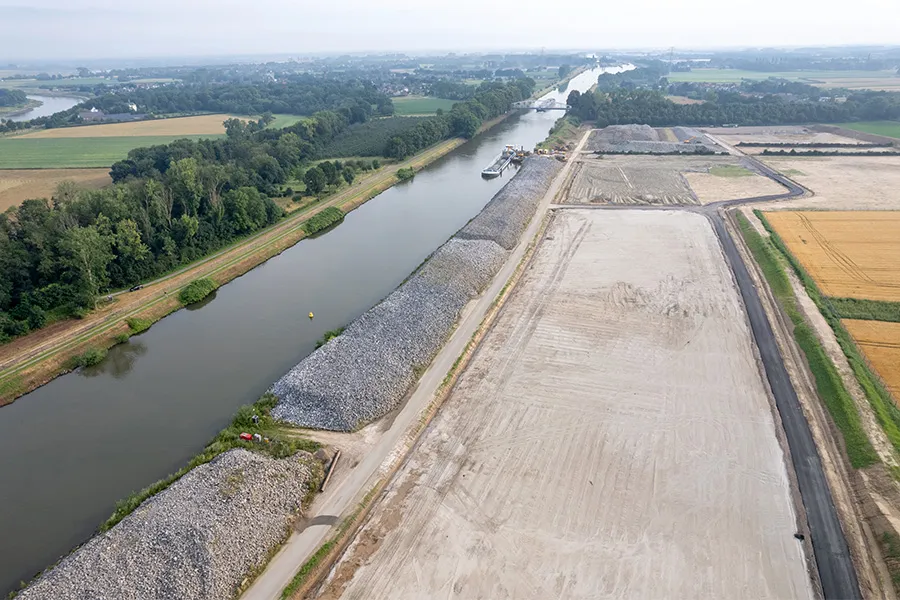
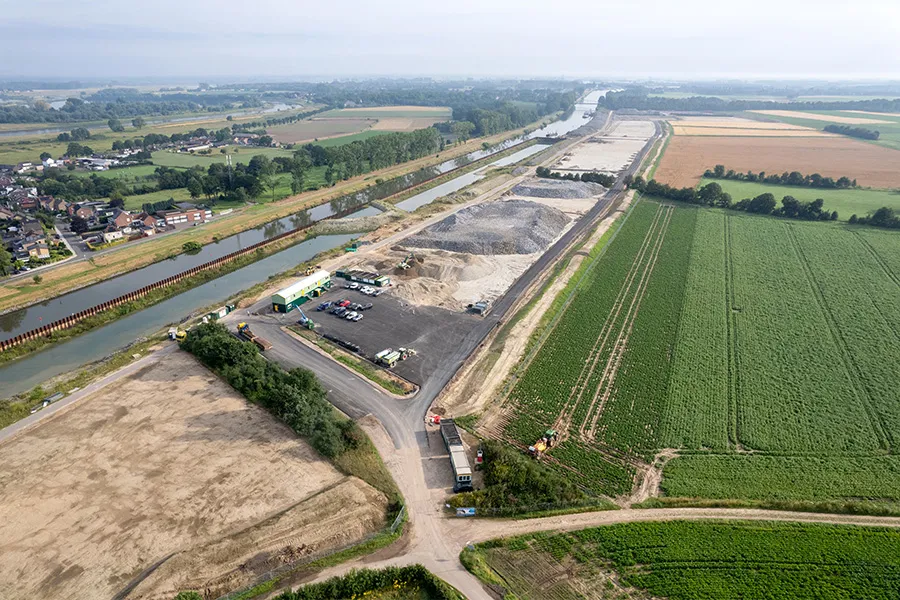
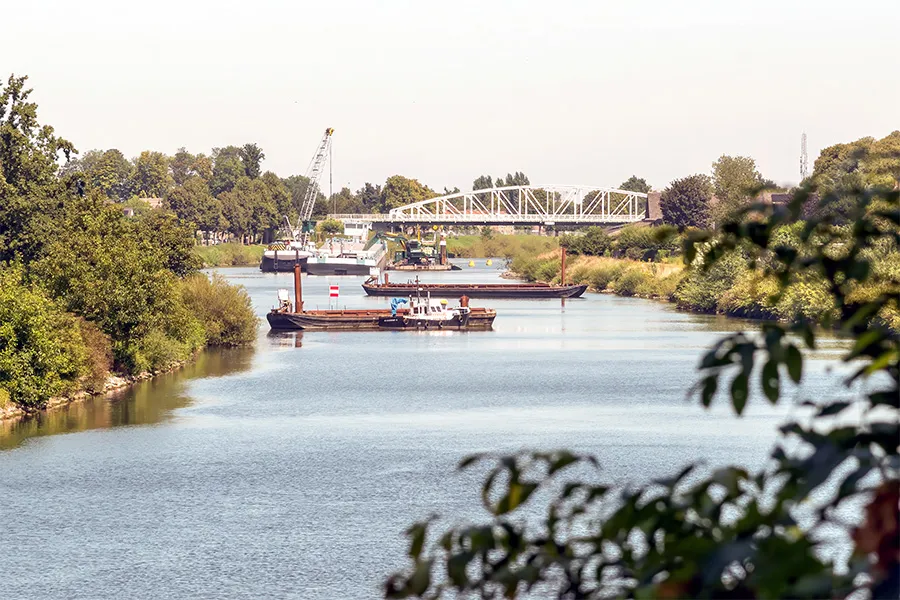
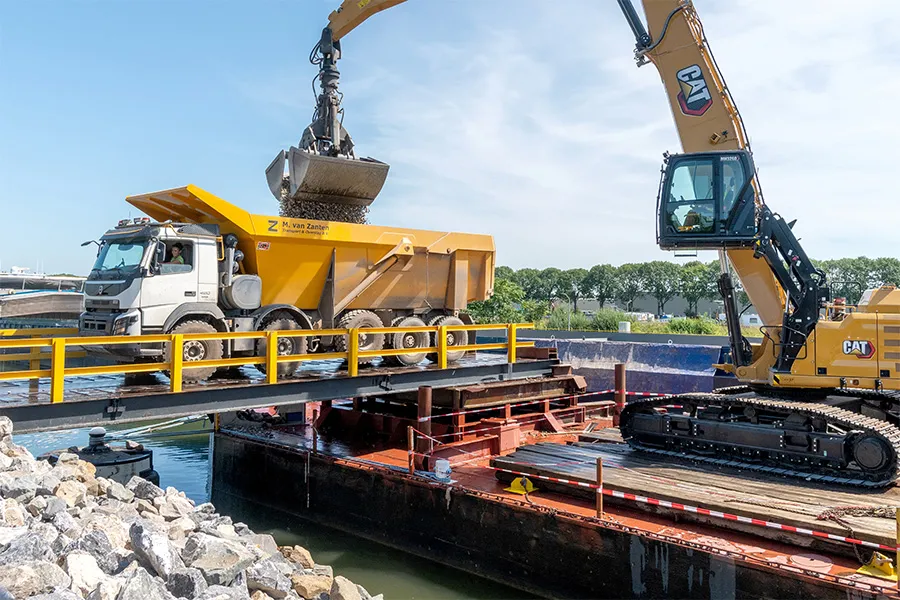
“In preparation for the closure, we carried out as much work as possible under a well-considered work plan, to minimise disruption and keep the closure as short as possible,” Robin explains. “We dredged near Born lock so that a hopper barge could moor alongside the dredging equipment and carry away the sediment.” Jacques says that deepening and widening the canal will produce 1.2 million tonnes of excavated soil. “We have also set up the worksite and storage area, and built temporary access roads and bridge structures to reduce pressure on the public road network.” Robin adds: “In March, we began bringing in 400,000 tonnes of rock armour, which will be placed on top of around 180,000 tonnes of gravel. This is how we aim to mitigate any risks during the construction period as far as possible, and respond to the strong request from the local community to minimise disruption. By then working safely and quickly in the dry, we can get shipping back on its route soon.”
Construction and safety
To drain the canal, Van den Herik built a dam. The fish will then be moved to a safe environment. The widening and deepening work can then begin, including excavating soil and installing a new water-retaining layer of bentonite mats. This will be covered with gravel and large rocks. The robust construction reflects the aim of doing the job properly and thoroughly, so the canal will be fit for purpose for another hundred years. “We are working with three crews at the same time in three work zones,” says Robin. “It’s quite an operation to have so many people and machines working in a narrow 60-metre-wide section.” Jacques adds: “It’s like having five plasterers plastering a toilet, so you have to work very carefully. Fortunately, Van den Herik has worked on this canal before, and we have every confidence that the project will be completed successfully.”
Robin notes that a project this complex would normally require a year and a half to two years of preparation. “We can do it in four months only because we are working with Rijkswaterstaat and can rely on several partners.” Jacques understands that the temporary canal closure and the disruption, particularly to shipping and local residents, are very unpleasant, but stresses that the Julianakanaal will once again be fit for the future.
Question about this story? Ask your question
Keep following this
Get an email when a new story is published. No account needed.
- SubjectWater infrastructure







