









High voltage for the largest temporary pumping installation ever
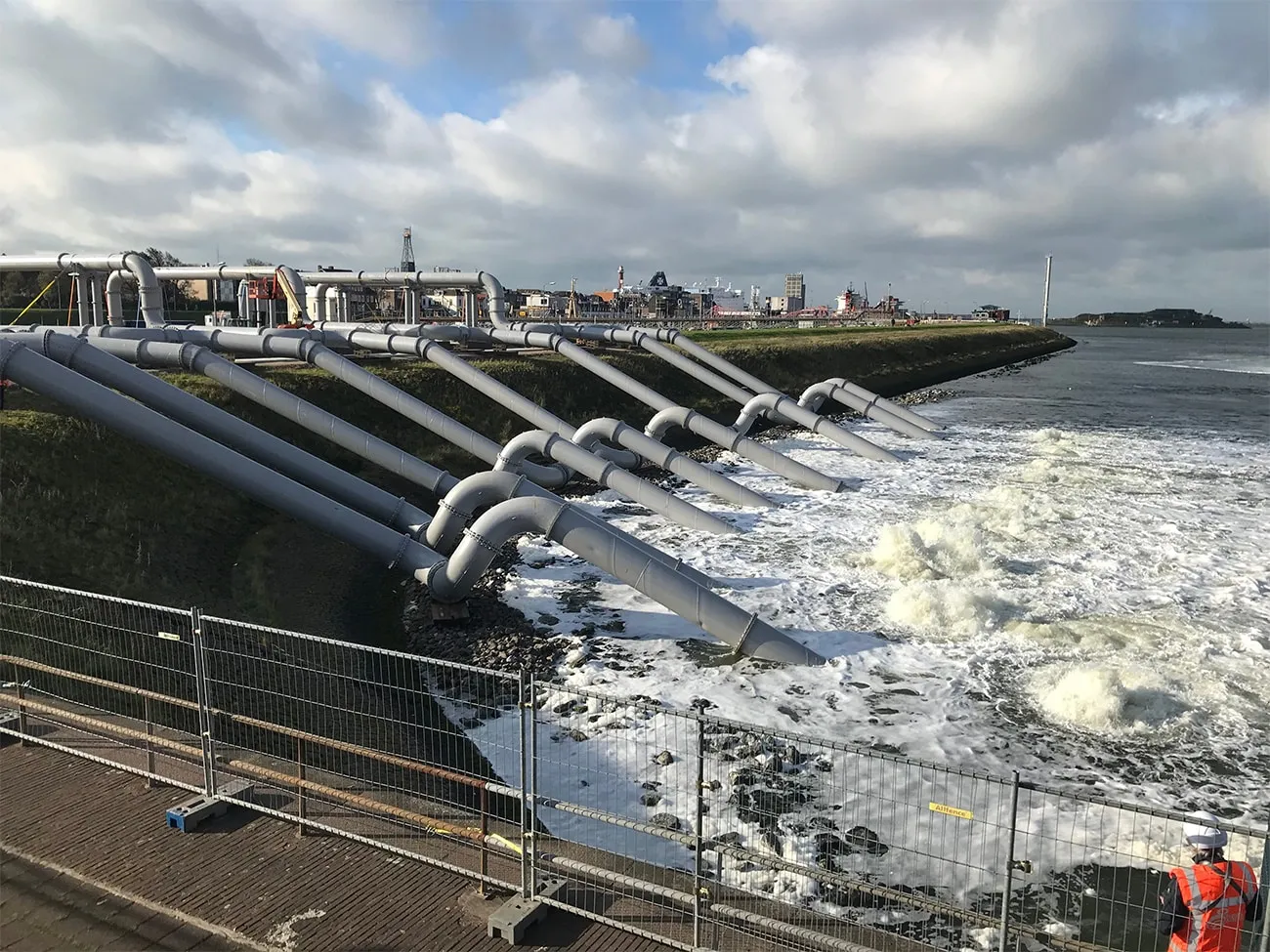
In April last year, one of the six giant pumps at IJmuiden pumping station, each with a capacity of 50 cubic metres per second, failed. A second pump was also found to be in poor condition. Overhauling both pumps would take at least a year. To make up for the loss of capacity, an emergency installation was set up, comprising a whole bank of pumps powered by diesel generators. Thanks to a temporary high-voltage installation supplied by Bredenoord, the generator sets could be located at a distance, preventing noise and exhaust fumes from affecting the neighbouring residential area.
IJmuiden pumping station is the largest in Europe and can discharge no less than 260,000 litres of water per second from the North Sea Canal into the sea. “During the storm season, when water levels are high and the wind is blowing inland, the sluices are closed and the pumping station pumps water over them, keeping the Westland dry,” says Gert-Jan Elfrink of Bredenoord. “To take over the function of the two faulty pumps, Van der Kamp built an emergency installation at two locations, each with a pumping capacity of 36,000 litres of water per second.”
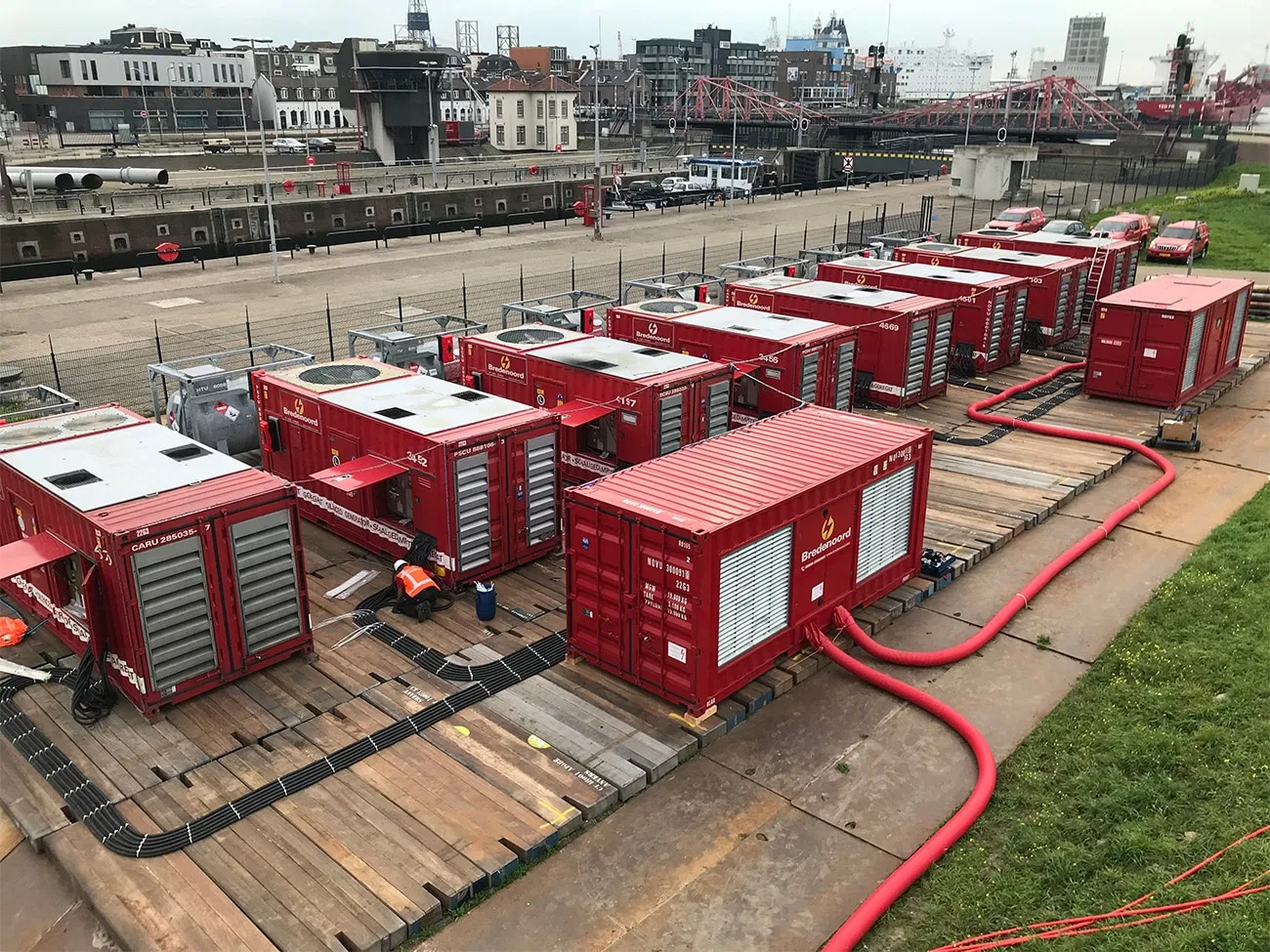
8 MW through the air
The pumps in the emergency installation are driven by electric motors. Elfrink explains: “The initial idea was to position diesel-powered generators right next to the pump sets. Given the required capacity of 8 MW, this would have caused considerable disruption to the neighbouring residential area in the form of noise and exhaust fumes. The only solution was to move the generator sets elsewhere. However, this meant that the 8 MW supply would have to cover a distance of around 400 metres. The amount of copper required for this would be prohibitively expensive, quite apart from whether it was desirable. To avoid this, the solution was to use high voltage. The higher the voltage, the lower the current. Transformers raise the voltage from 400 V to 22,000 volts, after which, 400 metres away at the pumps, transformers reduce it back to 400 V.” The high-voltage cable was routed through the air at a height of 5 metres, supported by a scaffolding structure. “We also considered burying it, but the ground was already too congested. Routing it through the air proved to be the safest option.”
The emergency installation was in operation for just over six months, from October 2020 to June 2021 to be precise. During that period, both pumps were overhauled in England and reinstalled at the IJmuiden pumping station.
Bredenoord is a well-known supplier of emergency power and grew its business in wellpoint dewatering. “We hire out generators of all sizes, in every conceivable configuration, powered by diesel, hydrogen, gas or electricity. Thanks to a specialised exhaust gas treatment system combined with battery storage, we can even generate power in Natura2000 areas subject to strict environmental requirements,” Elfrink concludes.
Question about this story? Ask your question
Who worked on Gemaal IJmuiden
- temporary high-voltage installationBredenoordIn this story
- emergency systemVan der KampIn this story

Keep following this
Get an email when a new story is published. No account needed.
- ProjectGemaal IJmuiden
- ThemeFlood protection and climate-resilient water management
- SubjectWater infrastructure
- CompanyBredenoord
- CompanyVan der Kamp







