









From energy consumer to energy producer
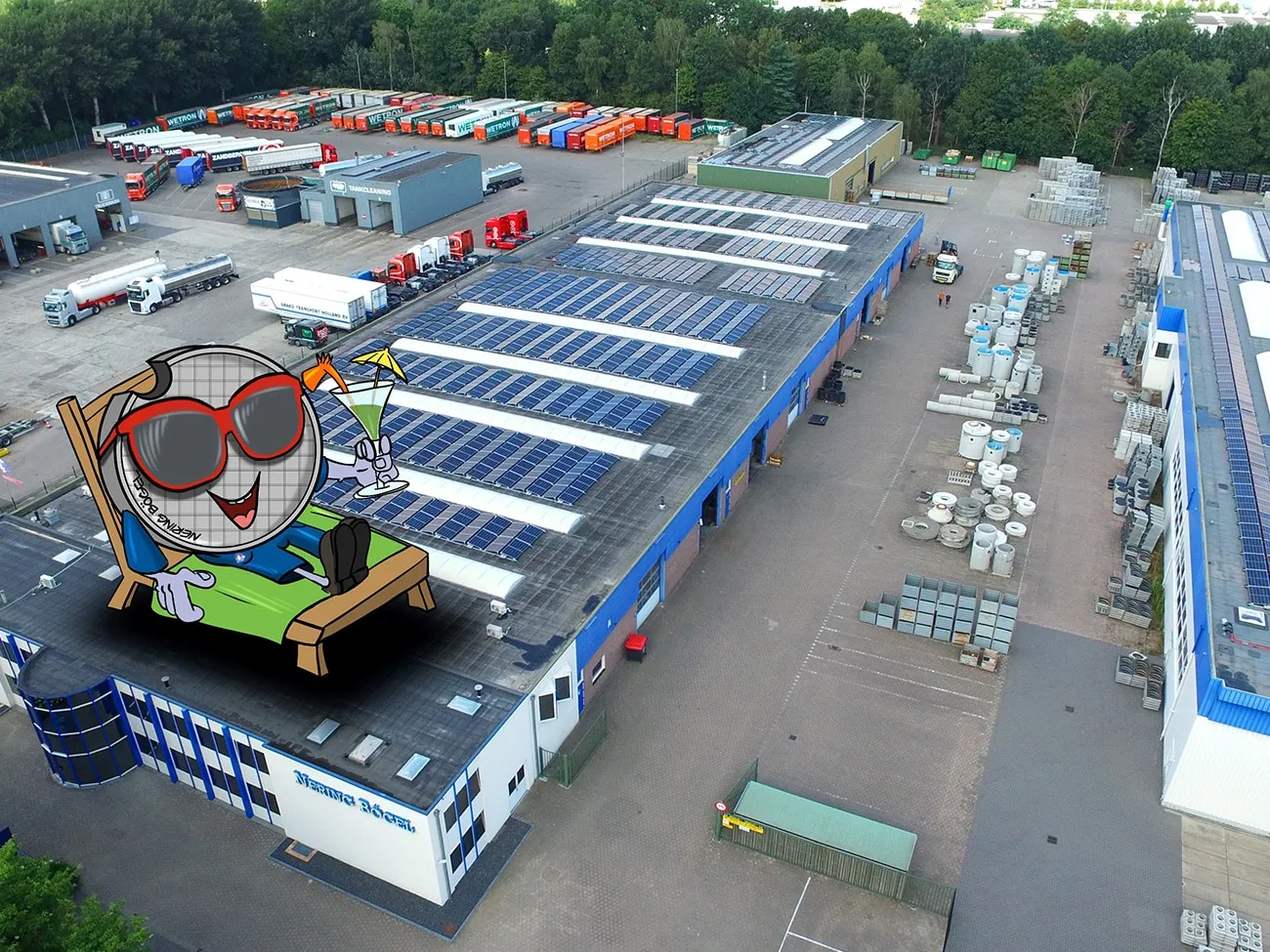
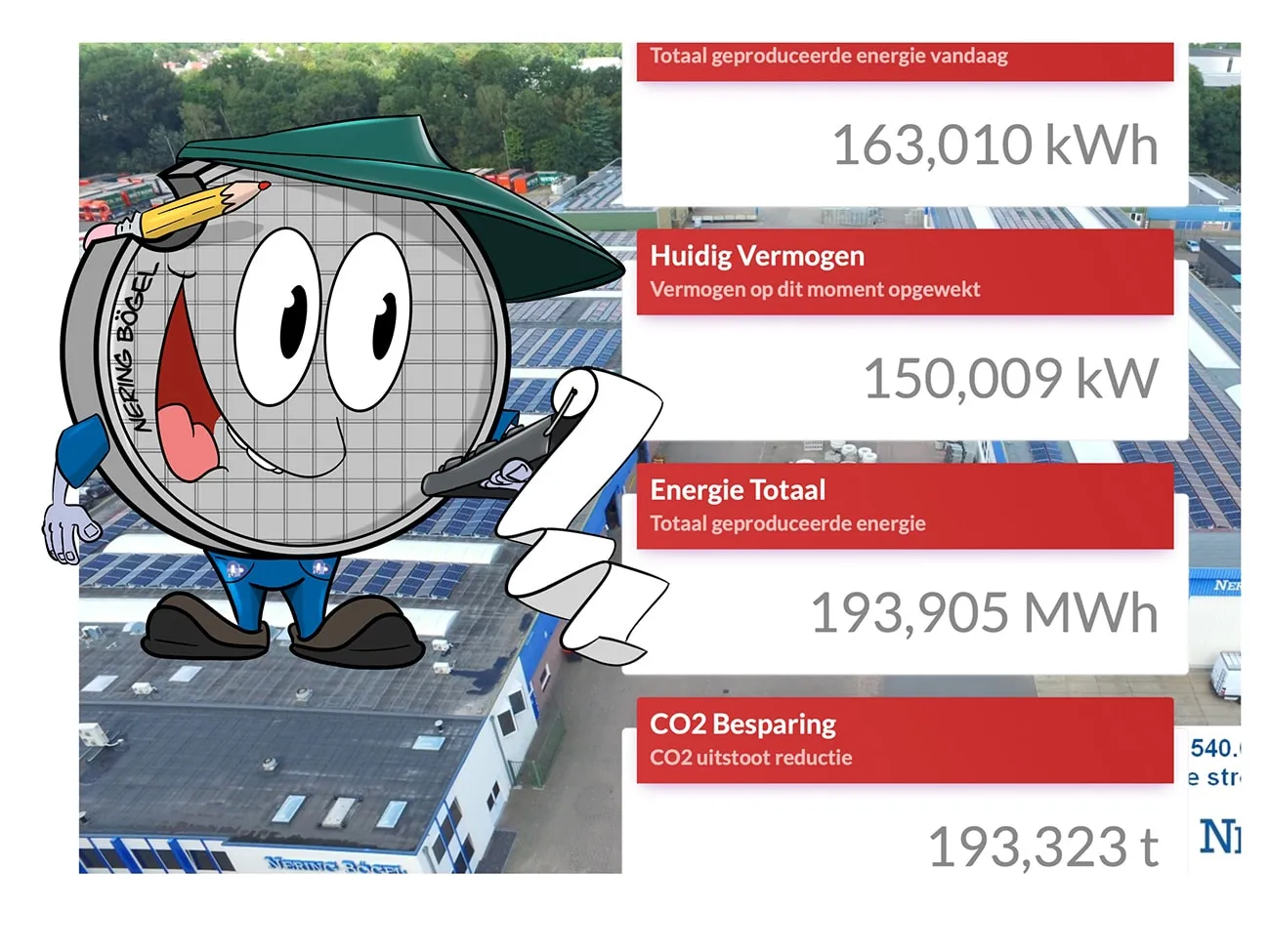
Generating 600,000 kWh of electricity on site might sound almost utopian. Yet it is now a reality at Nering Bögel in Weert. Thanks to the installation of 2,000 solar panels on the roofs of the country’s largest supplier of drainage, water storage and water treatment solutions, director and owner Richard Janssen can now also call himself an energy producer. With a negative CO2 footprint of around 200 tonnes (!), we could not help wondering why Janssen decided to create this surplus capacity. He takes a down-to-earth view: “Who says there’s such a thing as surplus capacity? You can never generate enough electricity in a society that needs more and more energy, not less.”
Doing it because we can
Janssen considers it the most natural thing in the world, but adds: “We see generating more electricity than we need ourselves as our contribution to the future. But… we can do this because we have the means. In our case, it is an investment that will pay for itself in 8 years, although I am allowing for 12. The reason I want to publicise it at all is that I hope it will inspire companies in the same privileged position as Nering Bögel to do the same. What I would advise against, though, is borrowing money for an undertaking like this. You do not want to create that kind of dependency.”
With its 200-tonne negative CO2 footprint, Nering Bögel can therefore offset the emissions of third parties in full without compromising its own net-zero status. Alongside the compelling aim of creating a cleaner planet for future generations, there is also a ‘political’ motivation behind installing the 2,000 solar panels. Janssen says: “I agree with the national government that we must not become dependent on other countries for our energy supply. Just look at how vulnerable you become when the gas supply is cut off. Russia did this to Ukraine in 2014. We therefore need to drastically curb our use of fossil fuels. That is what led to the desire and the plan to generate energy not only for our own business, but enough to supply it to others as well.”
A good plan needs a good team
With such ambitious plans, Janssen’s next step was to assemble a good team to help see the project through. “We needed advice and high-quality materials. When you are working on the scale involved here, you would rather build a partnership than enter into a customer-supplier relationship. I made that clear to the companies we decided to work with,” says Janssen. “When you have a shared goal as partners, it keeps you focused and motivated. That prevents disputes and means you always think in terms of solutions. Our partners in this major energy venture are Weert Energie, Soltronergy and Lumeneus. Naturally, they are all based in the Weert area, because working locally also saves CO2 emissions.”
The process
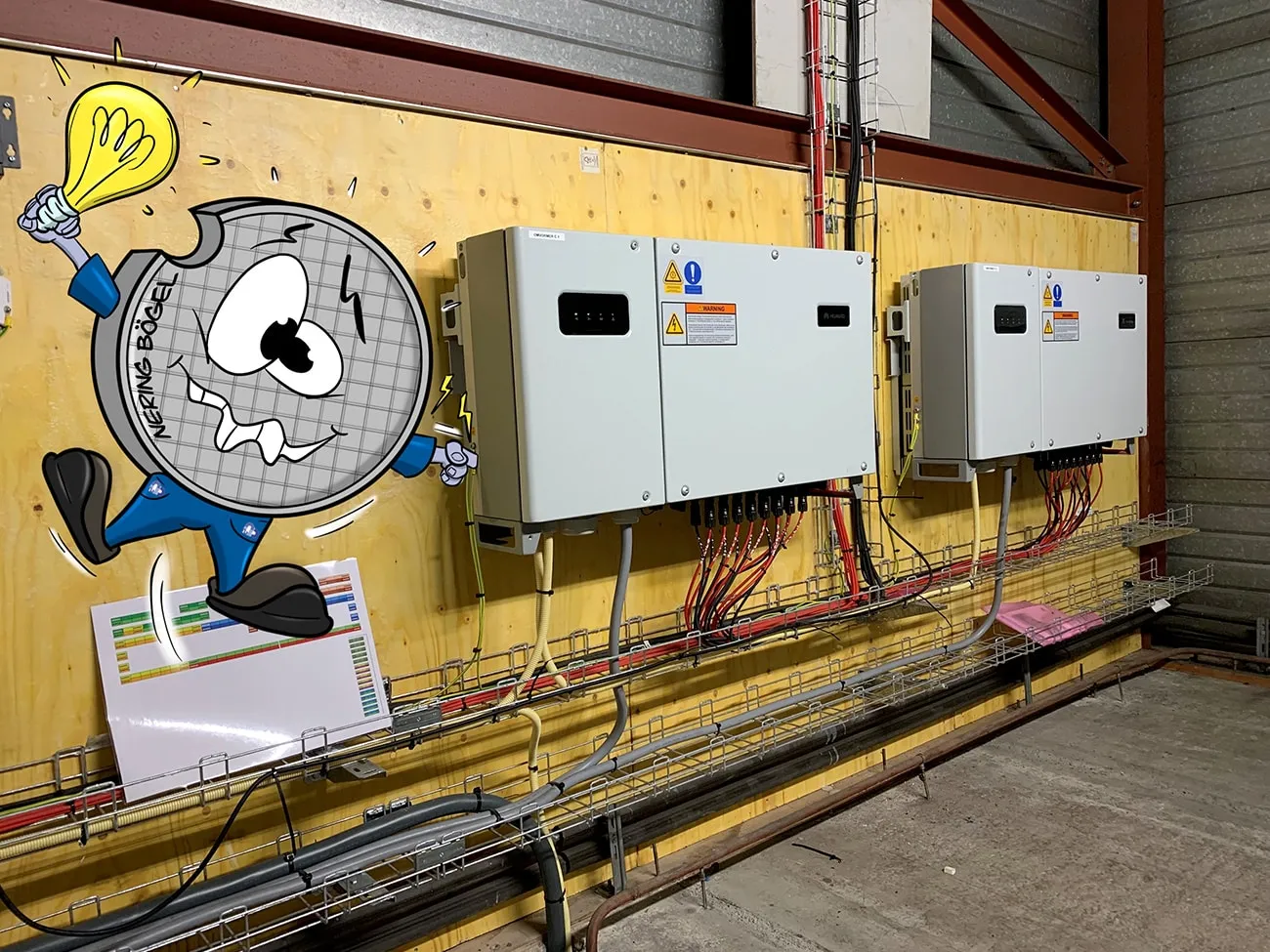
What exactly does the € 350,000 investment set in motion? Janssen explains: “The solar panels are, of course, on the roof, while the inverters are inside the building. The panels generate direct current, which then passes through an inverter that converts it into alternating current. This renewable electricity first supplies our own power consumers, while the rest goes to other users by being fed back into the grid. On Lumeneus’s advice, all the lighting at Nering Bögel has been converted to LED and fitted with motion sensors. That means the lights only come on when needed. The staff have already come up with a one-liner about it.
‘Richard doesn’t even have to turn the lights off himself any more.’”
Janssen likes vivid comparisons. To conclude, he explains what the installation offsets, using a few examples: “We’re talking about 100,000 litres of diesel, 1.8 million kilometres driven by car, 2,100 flights to Paris, 1,000 trips around the world on an electric bike, 150,000 days of breathing and around 80,000 Big Macs…”
Question about this story? Ask your question
Keep following this
Get an email when a new story is published. No account needed.
- SubjectWater infrastructure







