









Floating solar farms
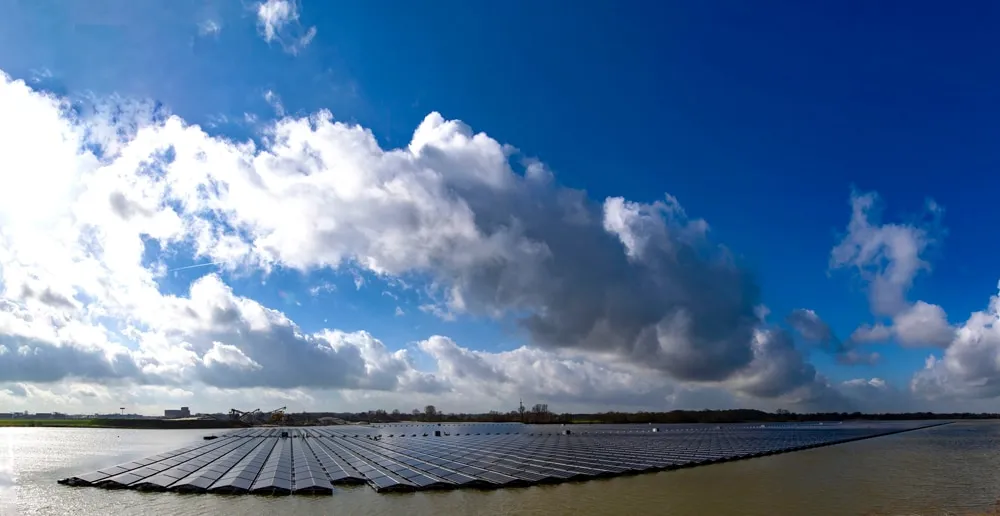
Solar energy is essential to achieving climate targets, with the Netherlands needing to be almost carbon-neutral and energy-neutral by 2050. But the energy transition is progressing slowly, so it is important to deliver even more solar energy projects. However, space for solar panels is limited. GroenLeven is making solar power generation at sites with a dual purpose the new norm, creating sources of solar energy on rooftops, greenhouses, car parks, landfill sites, industrial estates and water.
We spoke to Willem Biesheuvel, Floating Solar project manager at GroenLeven, about the opportunities and benefits of floating solar farms. “The Netherlands has thousands of disused sand extraction lakes, inland waterways and silt depots. These are particularly suitable for floating solar panels.”
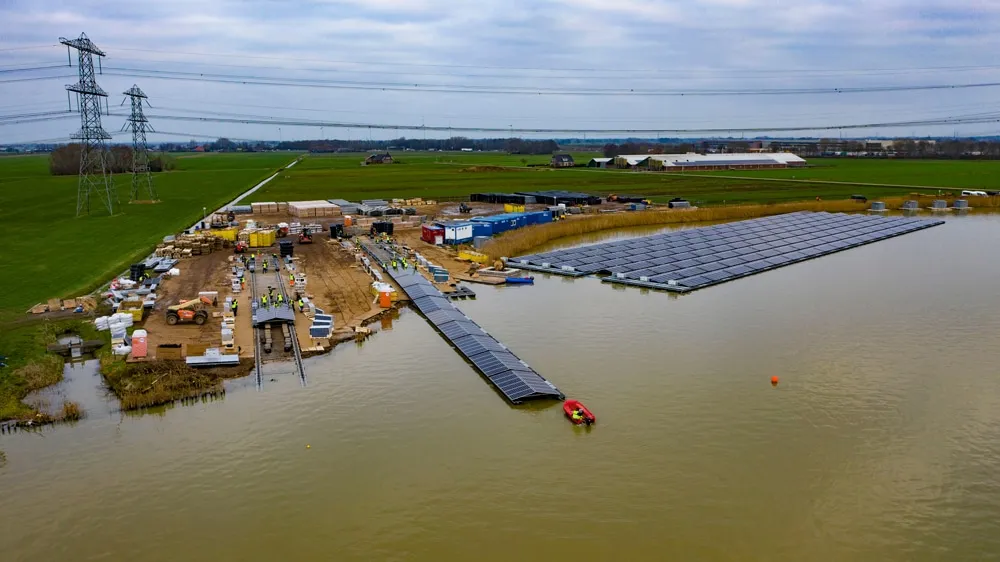
Large floating solar farm
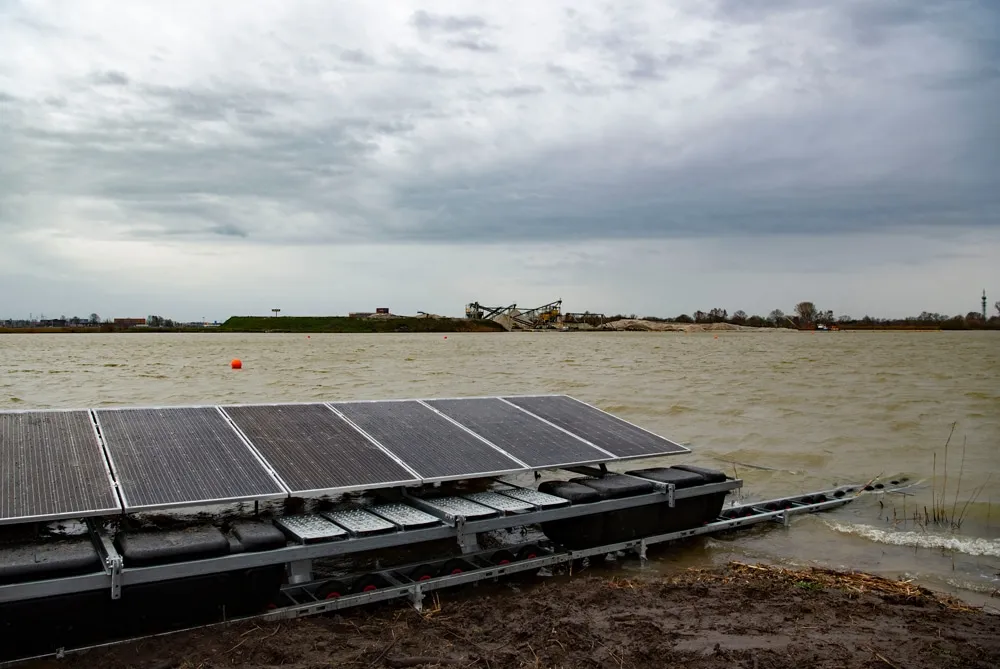
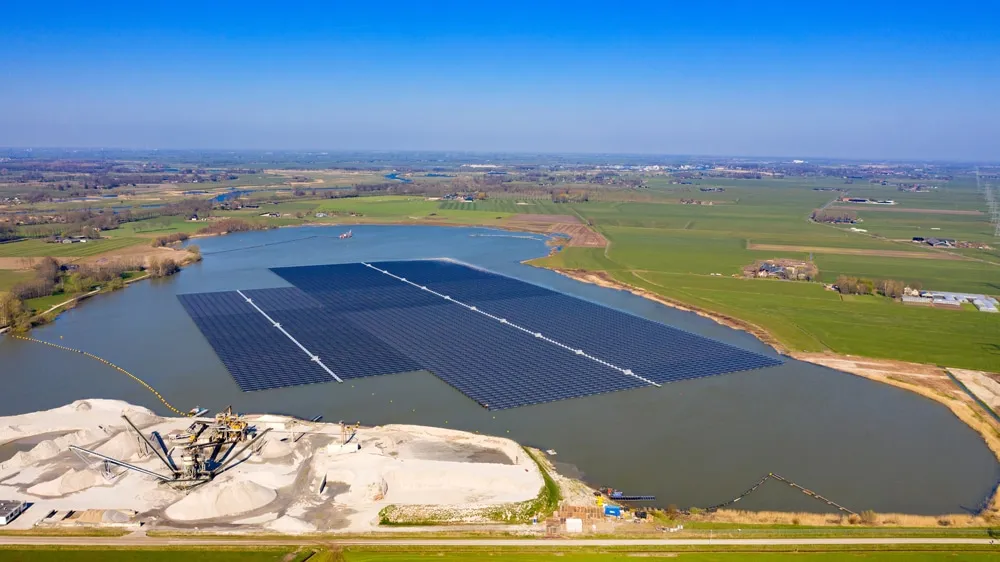
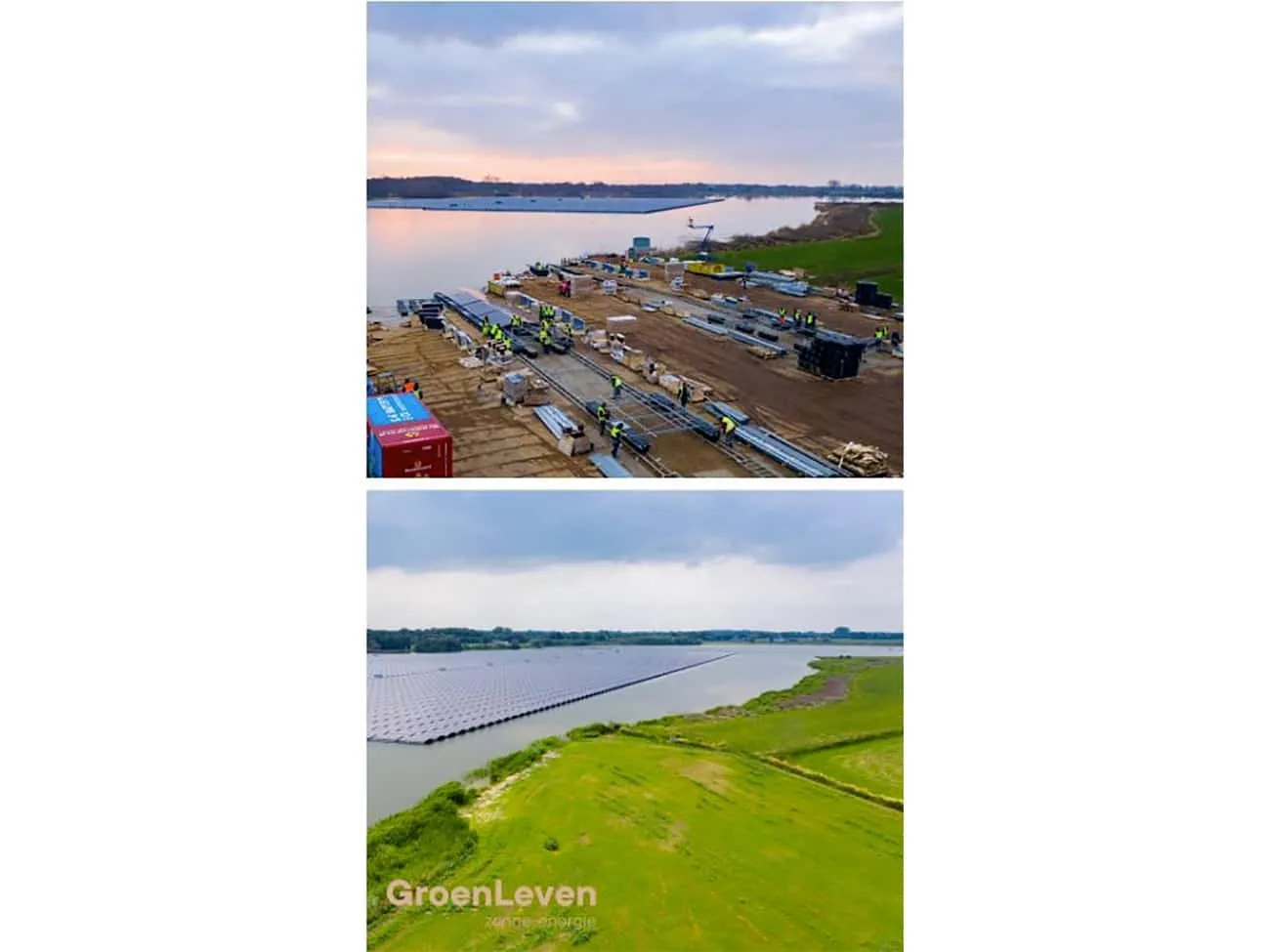
In 2020, GroenLeven built what was then Europe’s largest floating solar farm on the Bomhofsplas in Zwolle (18 hectares, 27.4 megawatts). Together with the Sekdoornse plas in Zwolle (14.5 megawatts), it supplies sustainably generated electricity to no fewer than 12,000 households. Biesheuvel is proud of the efficiency and speed with which a solar farm like this can be built: “On site, the farm is assembled step by step, almost like an assembly line. Each solar boat has four floats, around which the steel frame is clamped. The solar panels are clamped into the frame at an angle of 12 degrees, making them easy to maintain or replace. We install 2,000 panels a day. It is not just the pace at which it is built and installed, but also the scale of a project like this that means you really make a contribution.”
Ecology plays an important role
Ecology plays an important role in GroenLeven’s floating solar farms. “The farm must not only fit into the landscape, it must also avoid disturbing the ecology. We gave this careful consideration when designing the structure. A special anchoring system in the bed keeps the solar farm in place. This allows us to avoid the banks, where most of the ecological activity is found. To ensure the panels let through enough light and air, they sit slightly higher above the water, with extra space between them so heat can escape. Sand extraction lakes are quite deep, and the water stays fairly cool even in summer. This has a positive effect on output, so you get more yield from your panels. The east-west orientation also helps distribute output more evenly throughout the day.” GroenLeven is working with ecological consultancy Buro Bakker on a long-term study to assess the solar farm’s impact both above and below water. “We are very conscious and careful in how we address all kinds of ecological considerations.” Biesheuvel mentions the biohuts. “These are woven baskets filled with wood or shells, attached underwater to the sides of the farm. They shelter young fish, encourage fish populations to grow and act as nurseries. Hanze University of Applied Sciences Groningen also spent a year studying our solar farm, using sensors in the water beneath its centre and along its sides. The findings were surprisingly positive. Because the system sits relatively high above the water, the water can flow freely, light and air can pass through, and the effect on water temperature and oxygen levels is limited.”
Integrated system
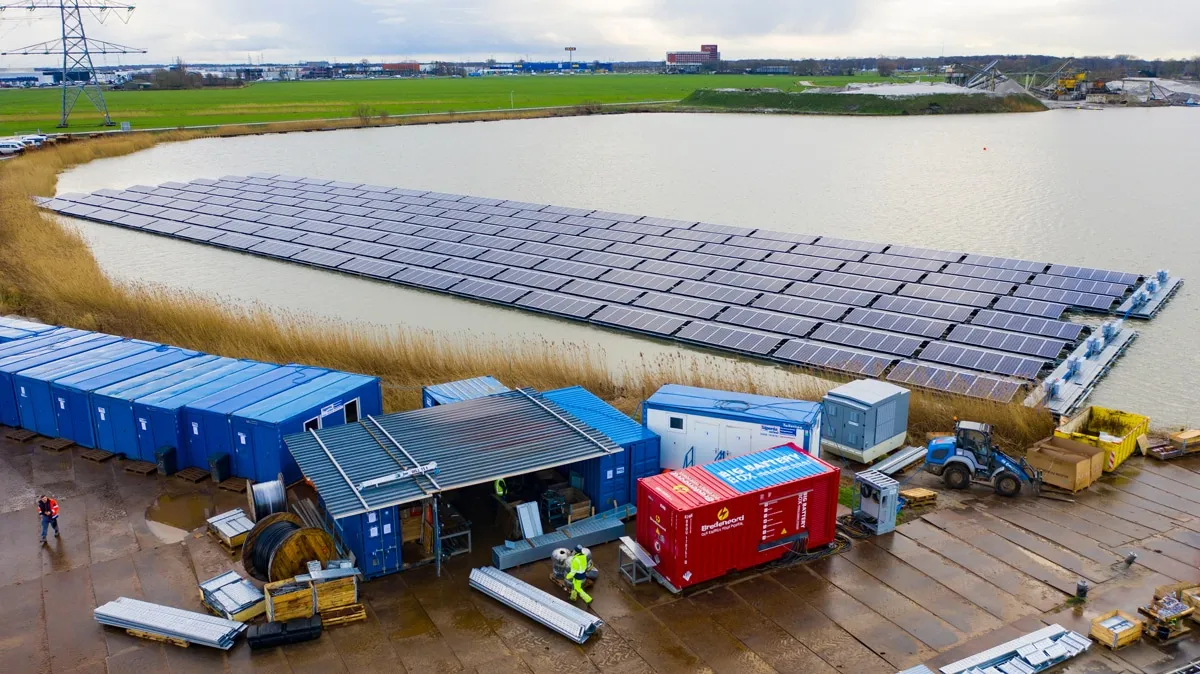
Building floating solar farms requires careful planning and coordination. “It is also important to bring the electricity safely ashore and optimise this process. A solar farm also needs inverters and transformers. What makes our system unique is that these also float on the water. We have designed a standard system in which everything is integrated. Only one cable is needed to connect the solar farm to the land and feed electricity into the grid. The entire construction process can also be carbon-neutral, as some of the solar boats provide power from the outset. This is highly environmentally friendly, and efficient too, as sand extraction lakes are often very remote. The solar boats used during construction are the final piece of the puzzle for the complete solar farm.”
Fantastic innovation
“These innovative systems, our floating solar farms with a dual purpose, are fantastic projects through which GroenLeven is making a significant contribution to the energy transition and the Netherlands’ climate agreement. As experts in solar power on water, we continue to research the field and see enormous potential. With our vision and the technology behind it, while keeping the ecological considerations in view, we are working towards a cleaner, better world.” Biesheuvel concludes: “Floating solar farms are functional, sustainable and essential.”
Een zakelijke vraag aan GroenLeven? Get in touch
Companies in this story
Keep following this
Get an email when a new story is published. No account needed.
- SubjectWater infrastructure
- CompanyGroenLeven







