









Engineering and consultancy services for Swedish lock project
Text WSP Nederland/Chris Elbers Beeld WSP Nederland
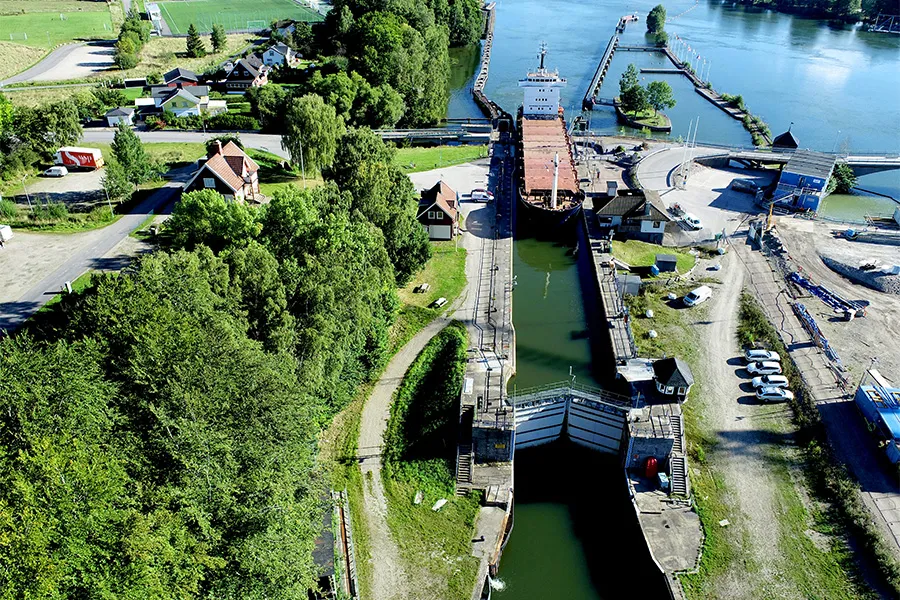
With the locks now 100 years old, it has been a long time since the Swedes last built this kind of hydraulic engineering structure on the Trollhättan Canal. To replace six old locks with new ones, lock expert Fokke Westebring and his team are being brought in on behalf of WSP Nederland to provide consultancy and engineering expertise tailored to Swedish culture, environmental conditions and ground conditions.
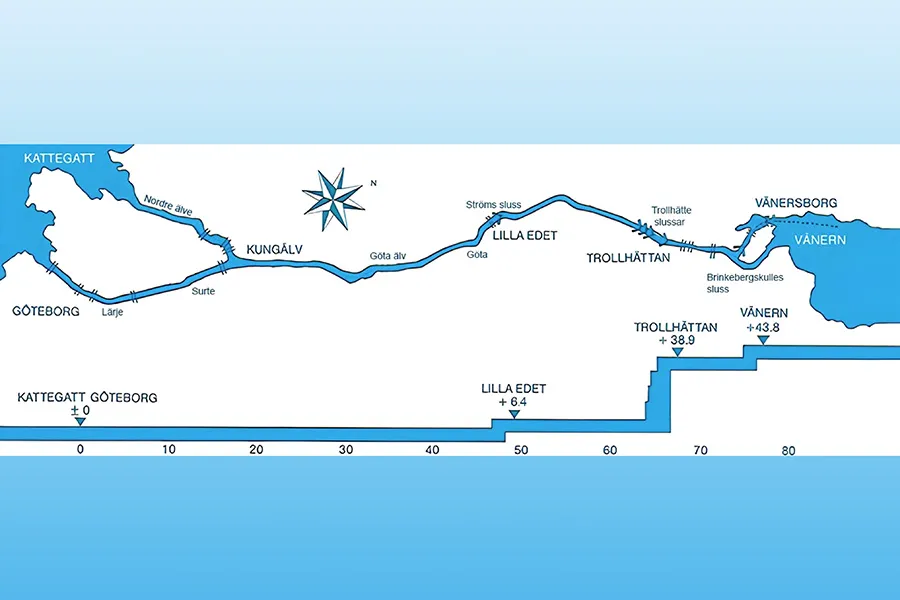
As a global provider of engineering and consultancy services in Transport & Infrastructure, Property & Building, Earth & Environment and Power & Energy, WSP, which has operated in the Netherlands since 2021, has expertise across a wide range of sectors. One project currently drawing on the company’s extensive and varied expertise is a major lock project in Sweden. The contract covers the replacement of six old locks on the Trollhättan Canal, between the Kattegat near Gothenburg and Lake Vänern. Replacing the existing lock structures with new ones will make the route from the sea to the lake ‘future ready’. At the same time, businesses on the lake will retain access by water, anticipating growing demand for more freight to be transported by water. This will prevent a great deal of freight traffic by land.
Lock expert
WSP in Sweden has won the contract from Trafikverket (the Swedish Transport Administration) to design the new locks and navigation channel. It is also planning and carrying out environmental surveys, applying for permits and drawing up contracts for the contractors. The aim is to provide ships with safe and smooth passage, while minimising negative impacts on the environment and the existing locks. This means building the new locks alongside the old ones and widening the river along that stretch. As the Swedes have not built a new lock for decades, they are drawing on the extensive knowledge and expertise of Dutch lock expert Fokke Westebring. He is involved in the project full-time and travels to Sweden a few times a year.

Dutch expertise
“We use our experience in the Netherlands to guide the design process,” says Fokke. “What is the best location? How do you design a new lock? Which decisions do you make first, and which need to be made together? Selecting a location is the first step, but after that it is important, for example, to decide on the gate type and the filling and emptying system together. If you choose one type of gate first, you may rule out a number of filling and emptying systems. These decisions need to be made early in the design process, whereas choices such as the type of bollards and lighting columns are made much later.”
Alongside the structural design for the lock at Vänersborg, Westebring and his team are designing the navigation channel at all the sites. This raises further questions. “How wide, deep and spacious should the bends be to ensure ships reach their destination safely?” Fokke continues. “We determine this in part on the basis of the Dutch RWS Navigation Channel Guidelines, which also provide guidance on, for example, the dimensions of berthing and guide structures for each type of ship and waterway. Sweden has no specific guidelines of its own.”
Three locations, three challenges
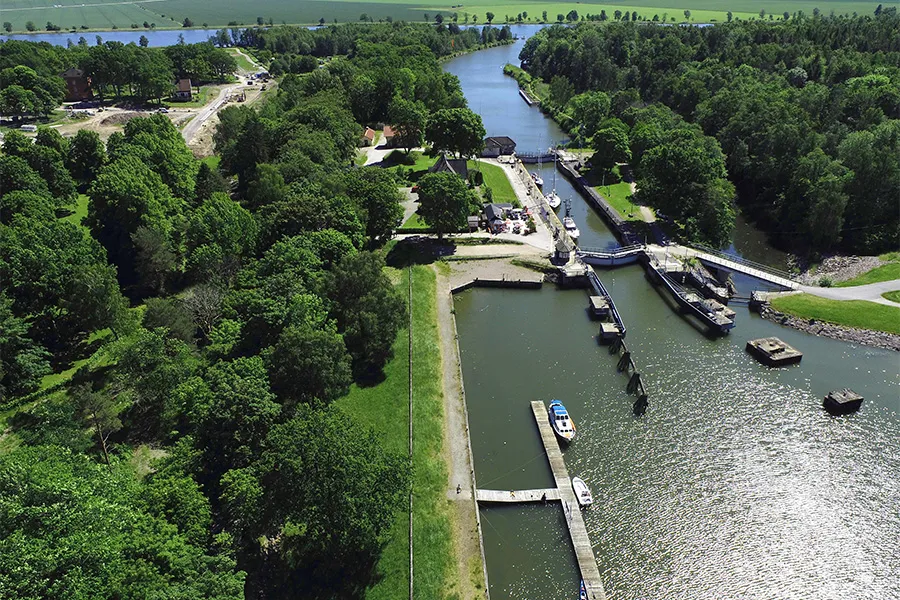
Each of the three lock sites along the route presents its own challenges. At Trollhättan, the greatest height difference, 32.5 metres, has to be overcome. This will be achieved by linking three new locks together.
At Vänersborg, the height difference of 7 metres is less challenging, but the new lock must be fitted into a historically and culturally significant, environmentally sensitive setting. Here, selecting the right location and designing the approach basins well are important to ensure ships can pass smoothly and safely.
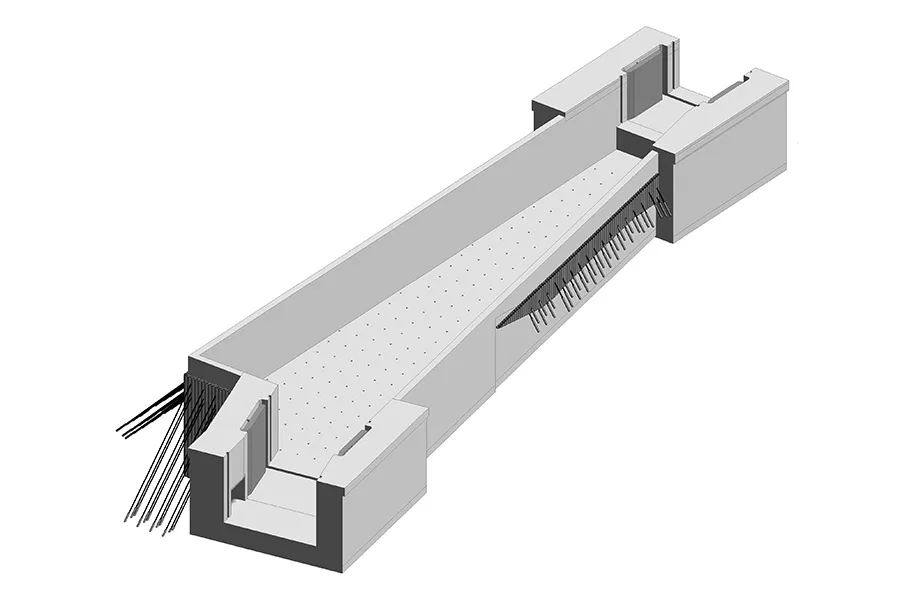
At Lilla Edet, fitting in the new lock is also challenging because of unstable clay slopes, a nearby hydroelectric power station and a strong current on the north side, just before the lock. “This makes it difficult for ships to enter the lock safely,” says Fokke. “The solution chosen is an innovative triangular lock. Ships normally pass through a lock in a straight line, but the triangular lock allows them to enter and leave in different directions, saving a lot of space in the approach channels. As far as we know, this principle has not been used anywhere in the world for commercial shipping.”
The future
The three sites (six locks in total) are each following their own schedule. “Most of the decisions at Lilla Edet have already been made. At Vänersborg, a decision is still needed on which side the lock will be built, and at Trollhättan there are still a number of design decisions to make. We will then apply the insights gained from our experience at the first two sites. Construction is scheduled to start in 2027. Everything should be completed by 2033,” Fokke concludes.
Waterbouwdag 2024
WSP will be taking part in Waterbouwdag at Jaarbeurs in Utrecht on 17 October 2024. This annual event showcases the latest developments and new projects in the water engineering sector. This year, Waterbouwdag focuses on water engineering for the future. The topic is a good fit for the Swedish lock project. Would you like to find out more about this project or WSP’s other work in the Netherlands? Visit the stand or come and listen to WSP’s presentation about the project.
A business enquiry for WSP? Get in touch
Companies in this story

Keep following this
Get an email when a new story is published. No account needed.
- SubjectWater infrastructure
- CompanyWSP







