









Cost-effective sewer diversion and upsizing
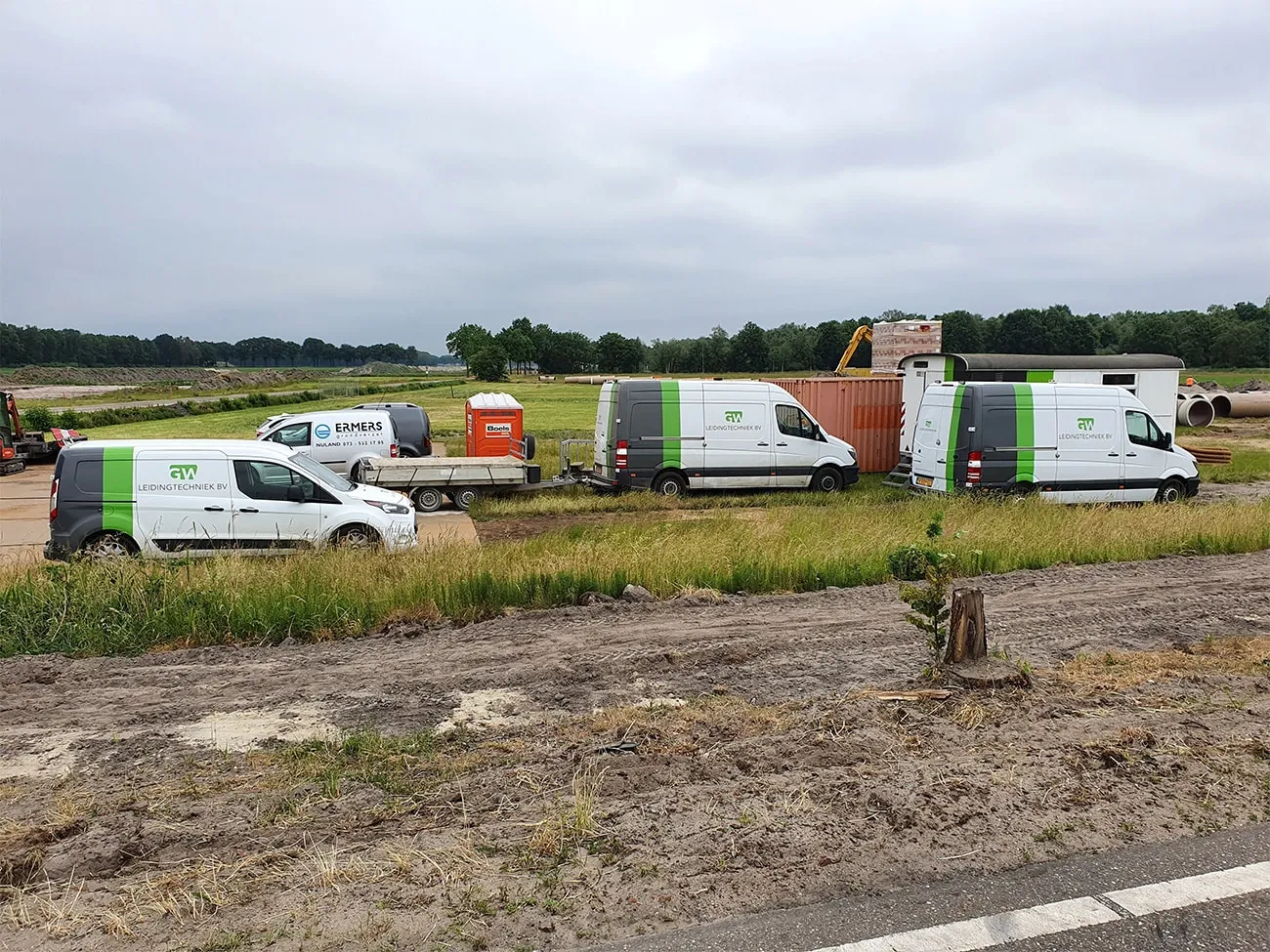
The route of the new N69 crosses two existing wastewater pipelines belonging to Waterschap De Dommel, dating from the 1970s.
Part of Boskalis’s contract was to divert and upgrade a section of the pipelines. During the tender, GW Leidingtechniek devised a cost-effective alternative to the initial requirements.
GW Leidingtechniek is a familiar name to many water authorities, drinking water companies and infrastructure contractors in the Netherlands. “We specialise in pipeline engineering, particularly for wastewater and sewage,” says Rense de Keijser, project manager at GW Leidingtechniek. “We carry out our work almost always as the main contractor, and in recent years increasingly as part of a construction team. In this particular case, we were a subcontractor. In addition to construction, we are also very strong in consultancy and (3D) design. That is why Boskalis involved us from the tender stage for the design and construction of two existing pipeline routes on the new N69.”
Substantial savings
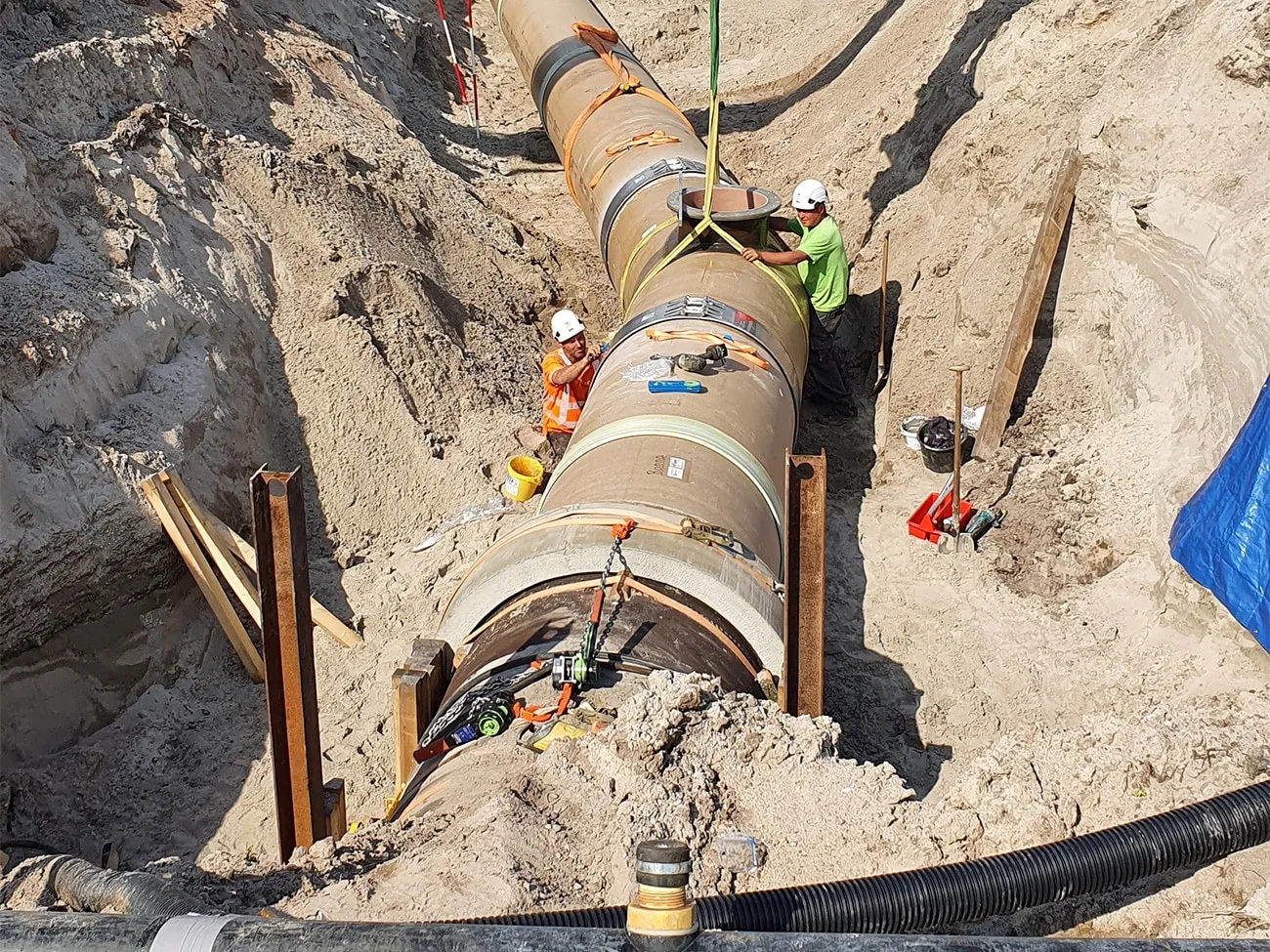
Construction of the new N69 affected the existing sewer network of Waterschap De Dommel at two locations. “At Riethoven, at the Takkers junction, we had to replace around 80 metres of the existing route with a sustainable alternative. At the junction with the N397 near Westerhoven, the existing route had to be diverted,” explains De Keijser. “Under the water authority’s initial requirements, temporary pumping installations would have had to operate for seven weeks to allow the work to be carried out. We devised an alternative: first, we prefabricated as much of the new pipelines as possible and pressure-tested them, then switched over to the new routes in a single 12-hour working day. This meant the old pipeline remained in service for as long as possible. We were able to cut costs considerably and reduce the environmental impact. The temporary pumping installations only had to be hired and operated for a limited number of days, rather than for many weeks.”
Prefabrication
At the Takkers junction near Riethoven, GW Leidingtechniek replaced the existing PVC pipeline with a new PVC gravity sewer pipe in a protective casing. De Keijser says: “The old sewer pipeline had become deformed, more oval than round.
“We first prefabricated the entire new route, comprising 80 metres of 315-millimetre-diameter PVC pipe, 60 metres of which was inside a GVK casing with a diameter of around 530 millimetres. The whole assembly, including the manhole, was put together on site, tested and pressure-tested. Then, in a single day, we took the existing system out of service, cut through it, pumped it empty and connected the new route. The sewer was back in operation within eight hours.”
Ingenuity
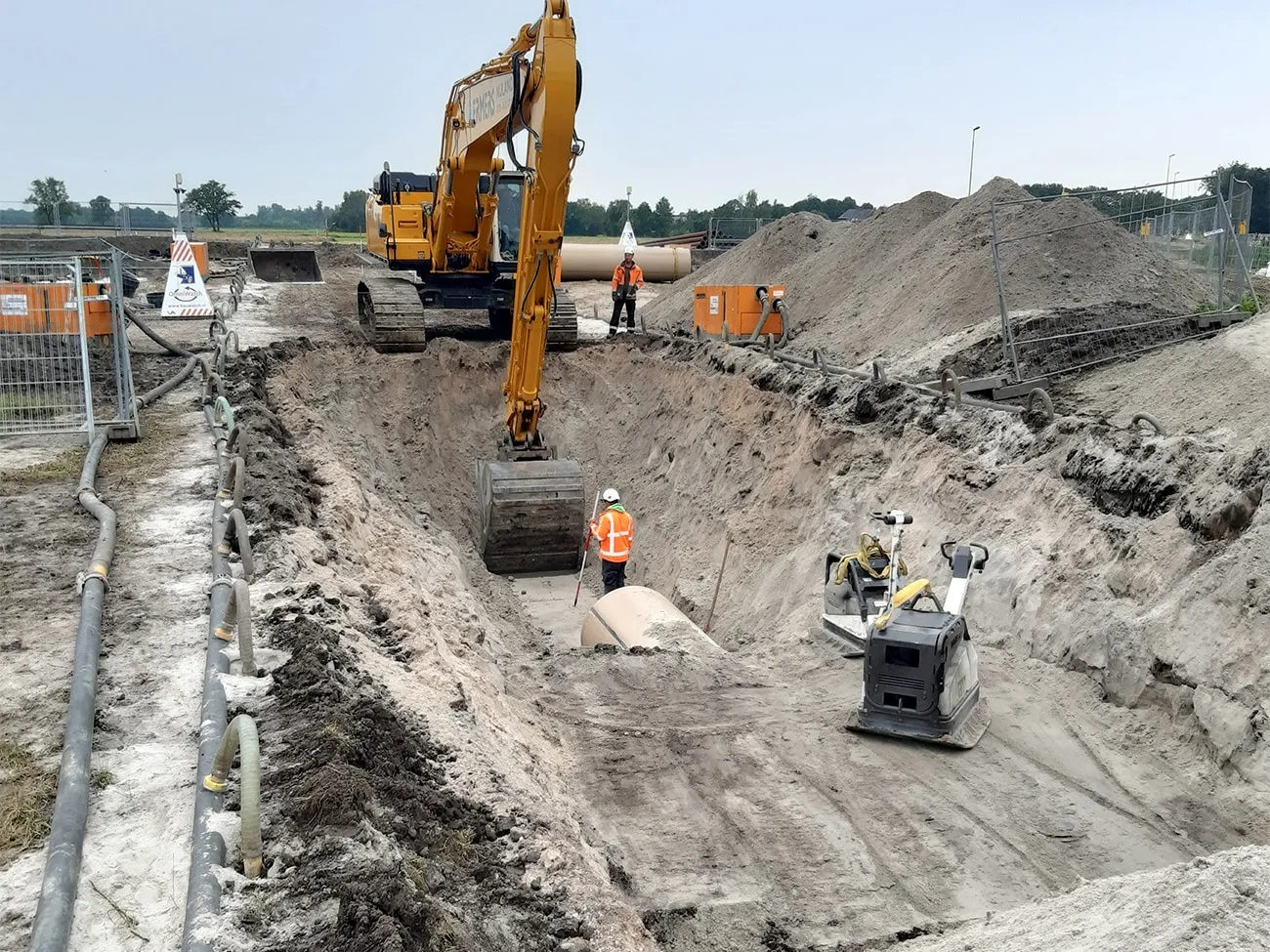
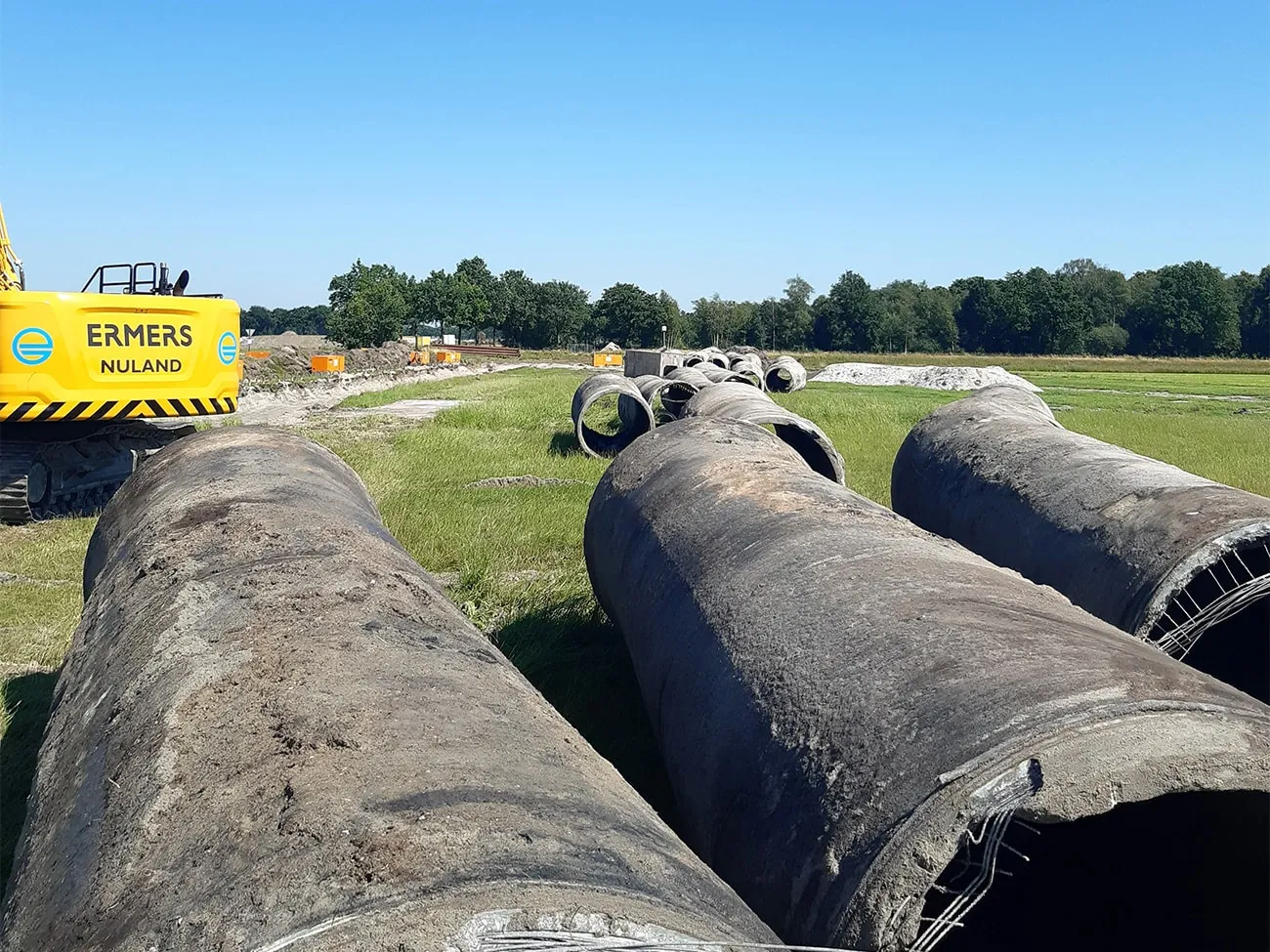
The work at the bottleneck near Westerhoven was somewhat more complex. De Keijser says: “Here we installed a 1,200-millimetre GVK pipeline along a new route, including four manholes and several ditch crossings. We then installed a temporary pumping system so we could connect the new route, around 350 metres long, to the existing system at both ends. After that, we removed the old concrete pipes. Connecting the new route to the existing, 70-year-old network calls for considerable ingenuity, particularly as materials of this kind are no longer available new. That is where our strength lies, backed by a huge store of in-house knowledge and expertise. We always work thoroughly and leave nothing to chance. This commitment and solutions-focused approach are embedded throughout our company, not just among the project managers but also with our teams out in the field.”
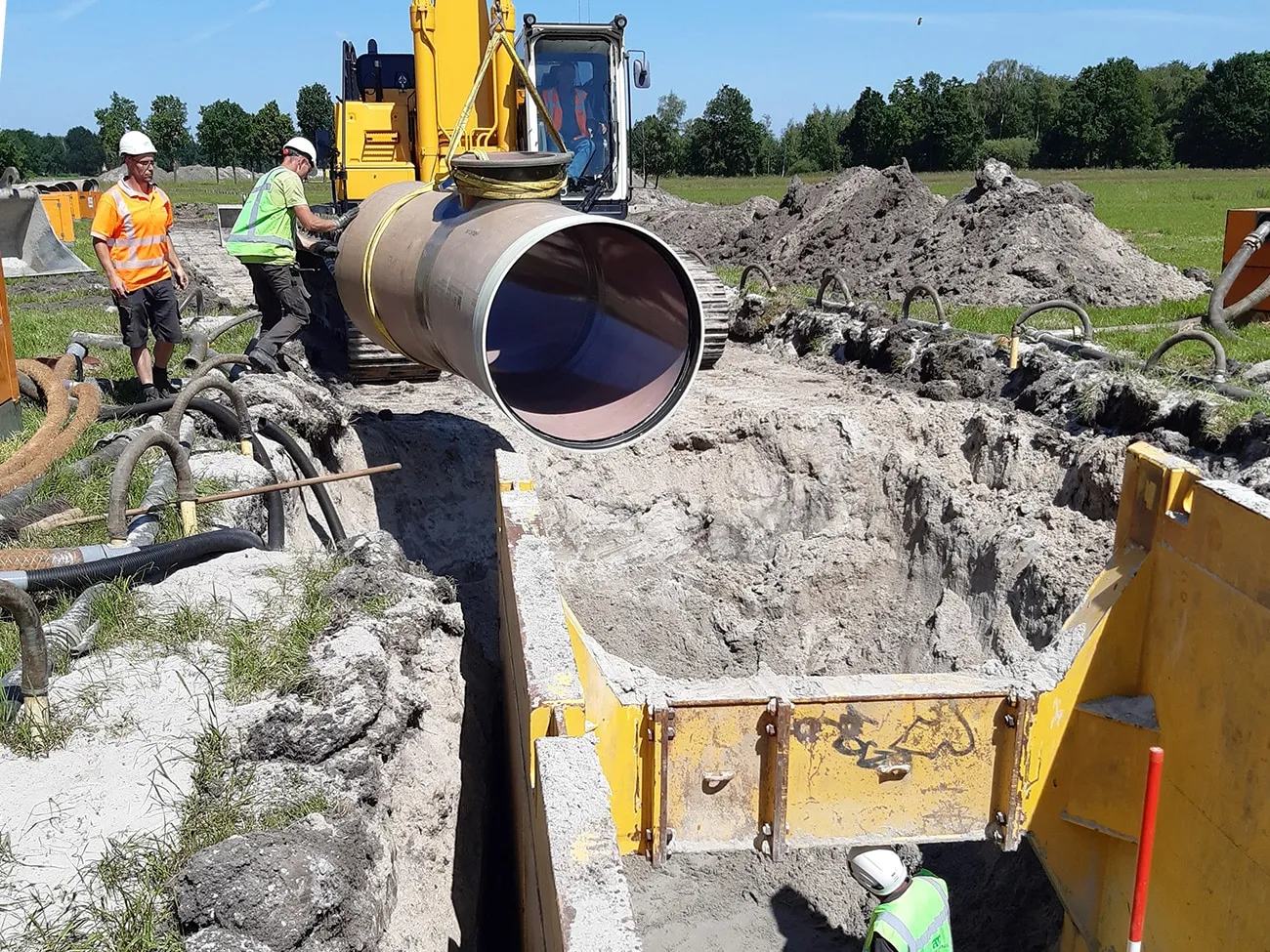
Fully self-sufficient
Conditions in the field on the N69 were very wet. “Groundwater levels were very high during the period when we carried out the work in 2020,” recalls De Keijser. “We also had to provide dewatering. There were as many as ten pumps running along a stretch of just 100 metres.” GW Leidingtechniek is fully self-sufficient. “We have our own dewatering pumps, road plates, dragline mats, lighting towers and HDPE welders with welding equipment. We are also certified, among other things, to install GRE pipes, that is, fire-retardant GVK pipes, and fire mains. In recent years, we have also become increasingly active in sewer network rehabilitation, for which we have developed specific solutions, such as a rehabilitation method that avoids having to excavate the entire network. At intervals, we create access points from which we can insert GVK liners into the existing system with very little disruption. The liners are grouted around the circumference, restoring the network for at least another 50 years.”
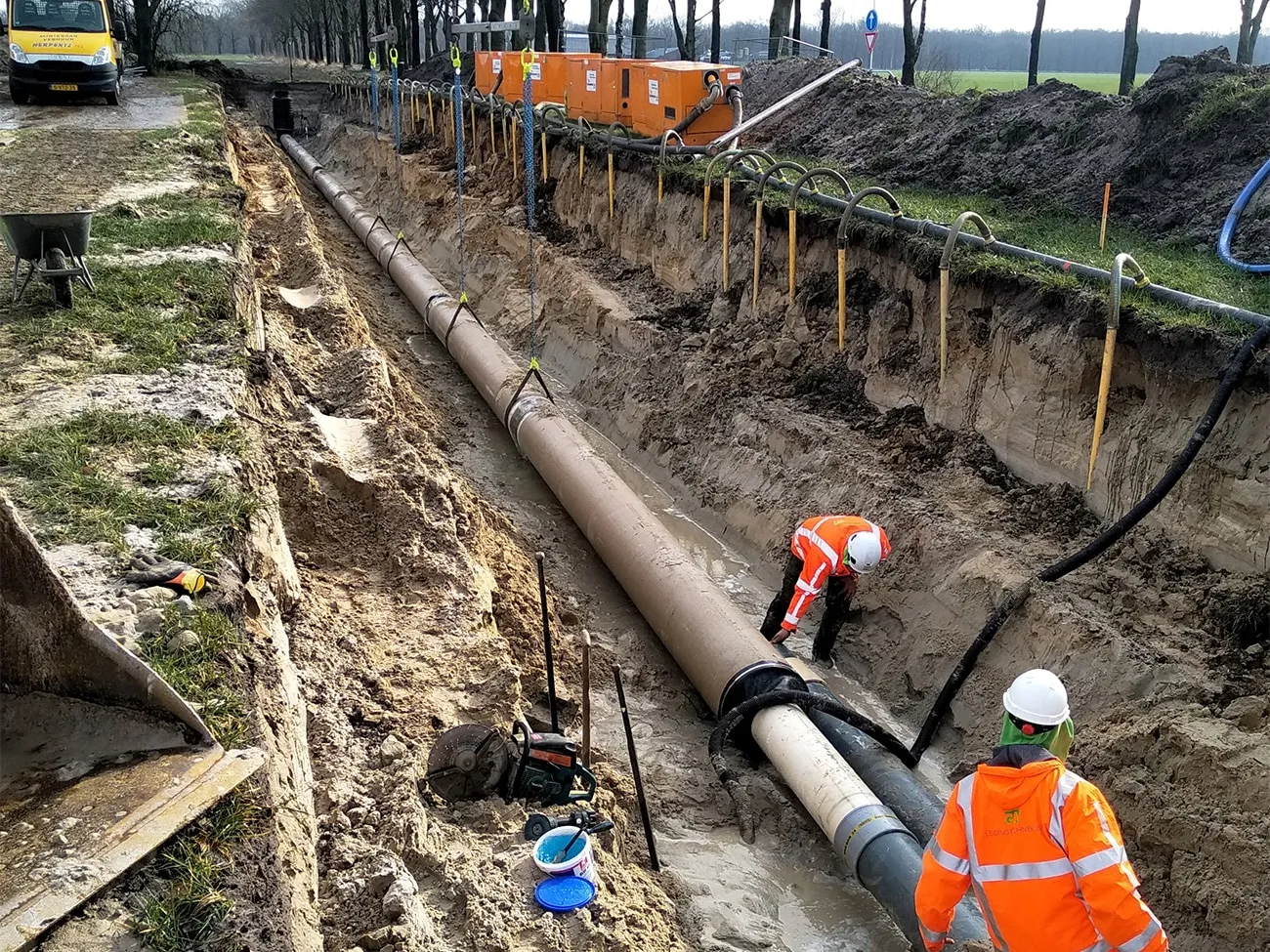
“Coming up with innovative techniques or alternative methods is in our DNA,” concludes De Keijser. “We proved that on the N69 too. Since infrastructure contractors, water authorities and drinking water companies are all among our clients, we always communicate directly with the stakeholders. In this case, Boskalis did not have to act as an ‘intermediary’. That allows us to skip several steps in the design process, which works very well. We were able to take full responsibility for our scope on the N69 and relieve Boskalis of the associated work.”
Een zakelijke vraag aan GW Leidingtechniek BV? Get in touch
Who worked on N69
- clientProvince of North BrabantMentioned in Broad support as the foundation of Brabant’s greenest road
- traffic management measures
 BUKO InfrasupportMentioned in Traffic flow and safety key to construction of Grenscorridor N69
- reinforced earth structures
 Voets Gewapende GrondconstructiesMentioned in Temporary and permanent reinforced soil structures
- mixing plantGebroeders Van den Brand en Van OortMentioned in 40,000 tonnes of bound asphalt granulate (AGRAC)
- transport company and soil bankVan Grunsven en Langenhuijzen TransportMentioned in Guaranteed supplies of earthworks materials
Keep following this
Get an email when a new story is published. No account needed.
- ProjectN69
- SubjectWater infrastructure
- CompanyGW Leidingtechniek BV
- CompanyBoskalis Nederland







