









Storing and controlled discharge of rainwater
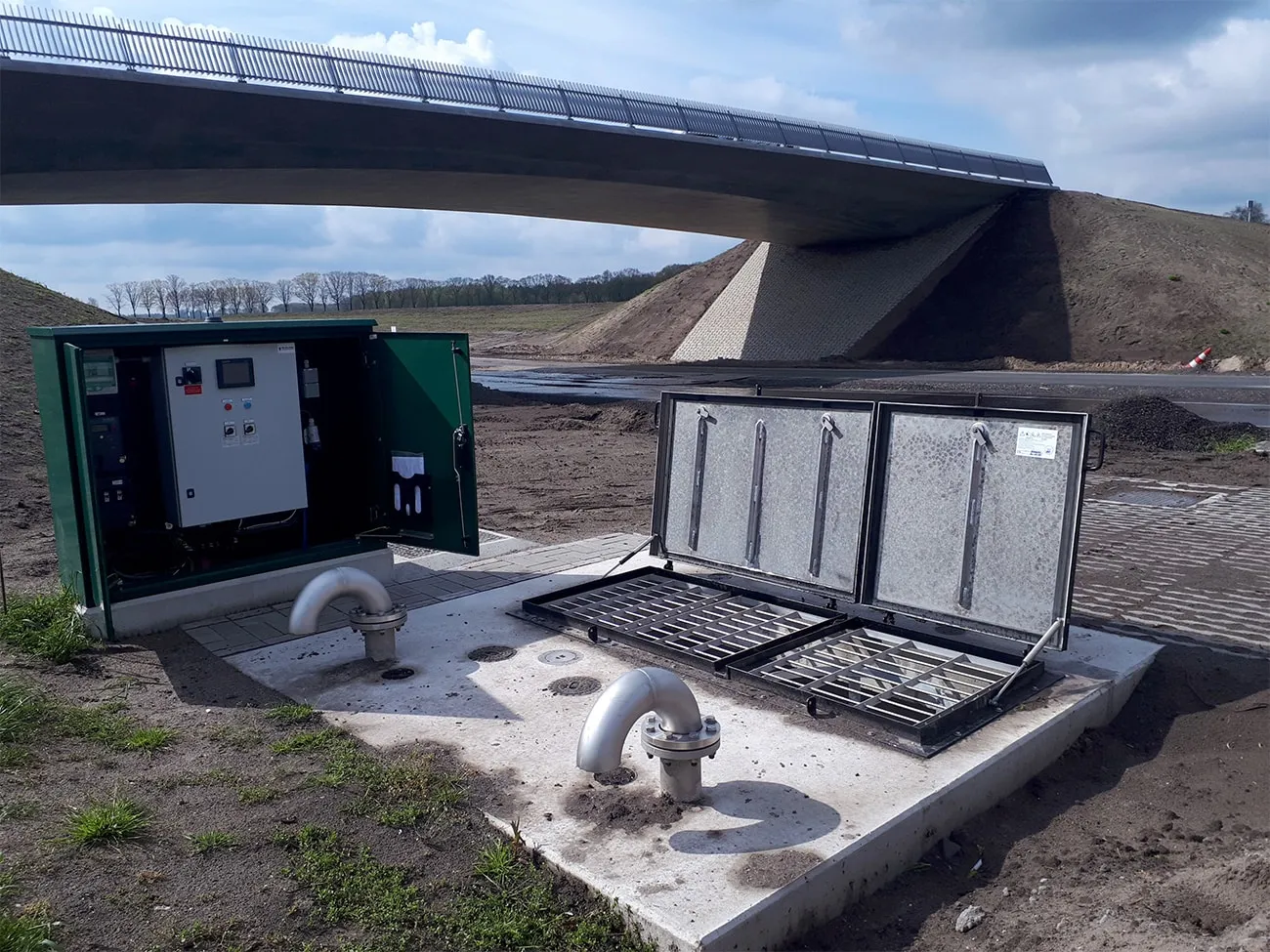
Because the new N69 runs partly below ground level, it acts as a ‘rainwater sump’ for the surrounding area. To prevent the rainwater from causing problems, the design includes a number of storage systems and pumping stations.
Remondis Smart Infra ’s-Hertogenbosch, based at its ’s-Hertogenbosch branch, formerly Van der Linde Pomptechniek, is responsible for the design, engineering and construction of the installations.
With eight branches in the Netherlands, Remondis Smart Infra specialises in designing and building pumping stations to discharge rainwater and wastewater into surface water or convey it to a wastewater treatment plant. Its clients include municipalities, provinces and water authorities. “On the N69, we are building two installations that will ultimately be transferred to the province of North Brabant, and one to the municipality of Valkenswaard,” says Frank Olijrhook of Remondis Smart Infra ’s-Hertogenbosch. “This is because the municipality of Valkenswaard is responsible for managing a cycle tunnel beneath the N69, which includes storing rainwater.”
Optimisation calculations
The new N69 includes two sections that run partly below ground level, as well as several underpasses. “Rainwater always finds its way to the lowest point. That is why storage systems and pumping stations are planned at carefully selected locations to collect the rainwater and pump it in a controlled manner into nearby surface water,” Olijrhook explains. “Using optimisation calculations and rainfall simulations, we worked with Boskalis to find the right balance at each location between storage volume and pumping capacity. By incorporating a temporary buffer, peak flows can be reduced and the rainwater discharged using a relatively ‘standard’ pump. Three installations are planned: on Broekhovenseweg, on Molenstraat and at the underpass on Monseigneur Smetstraat. The municipality will manage the last one, while the other two will be managed by the province.”
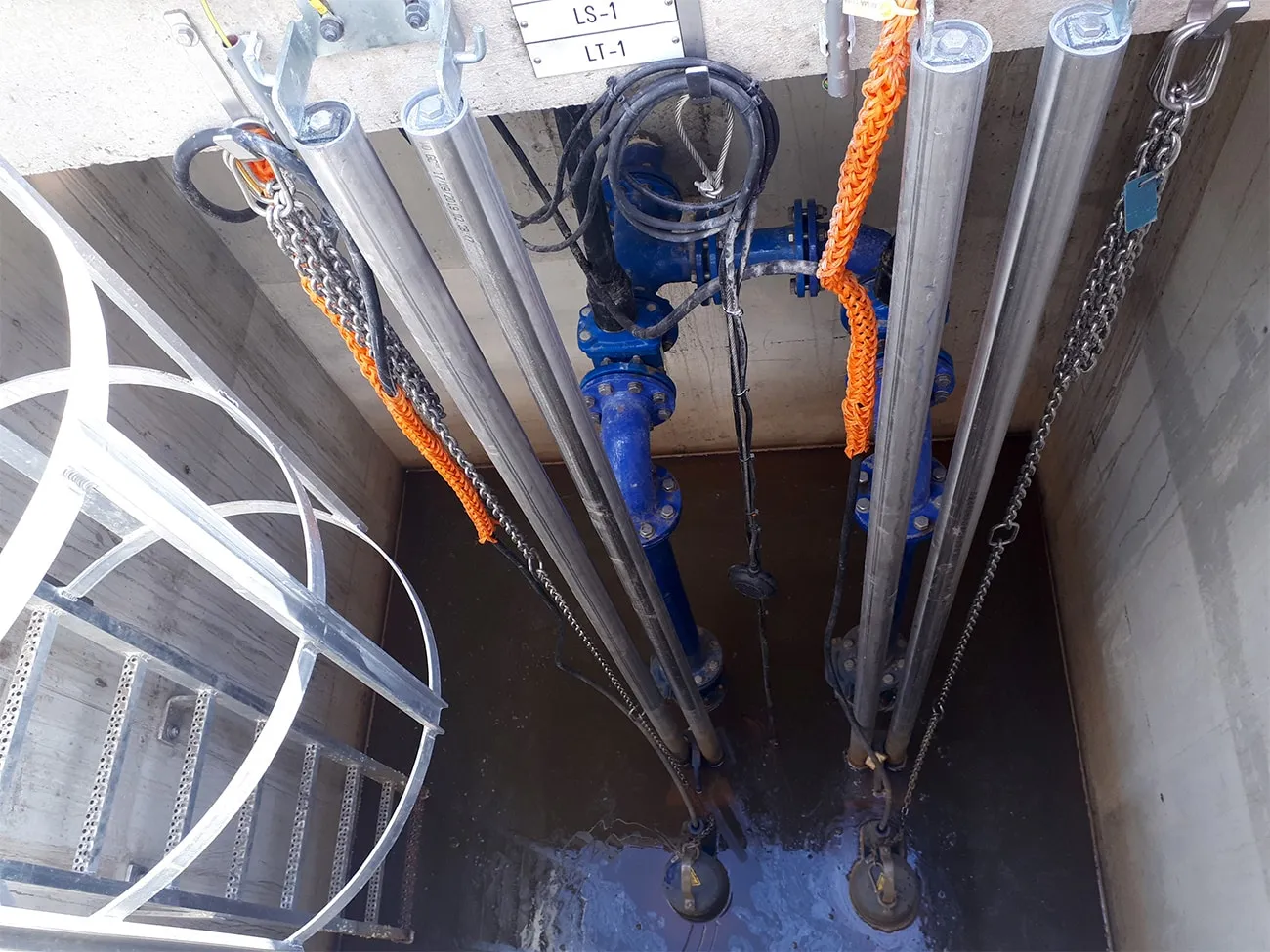
In all three cases, the rainwater is stored beneath the road. Olijrhook explains: “At Broekhovenseweg and Molenstraat, the system consists of pipes combined with chambers, with pumping capacities of 45 and 55 m3 per hour respectively. On Monseigneur Smetsstraat, a 40 m3 concrete chamber is being built beneath the road, running across it, and will also form part of the concrete structure of the work above. A pump with a capacity of 32 m3 per hour is sufficient here. All the installations will use alternating pumps in line with the N+1 principle. If one pump fails, there is always a back-up. The pumps will also be evenly loaded. Because we are often brought into a project at an early stage, storage systems can be integrated seamlessly into the civil engineering design.”
Have a business enquiry for Boskalis Nederland? Get in touch
Who worked on N69
- clientProvince of North BrabantMentioned in Broad support as the foundation of Brabant’s greenest road
- traffic management measures
 BUKO InfrasupportMentioned in Traffic flow and safety key to construction of Grenscorridor N69
- reinforced earth structures
 Voets Gewapende GrondconstructiesMentioned in Temporary and permanent reinforced soil structures
- mixing plantGebroeders Van den Brand en Van OortMentioned in 40,000 tonnes of bound asphalt granulate (AGRAC)
- transport company and soil bankVan Grunsven and Langenhuijzen TransportMentioned in Guaranteed supplies of earthworks materials



Keep following this
Get an email when a new story is published. No account needed.
- ProjectN69
- SubjectNews
- CompanyBoskalis Nederland







