









Building with nature
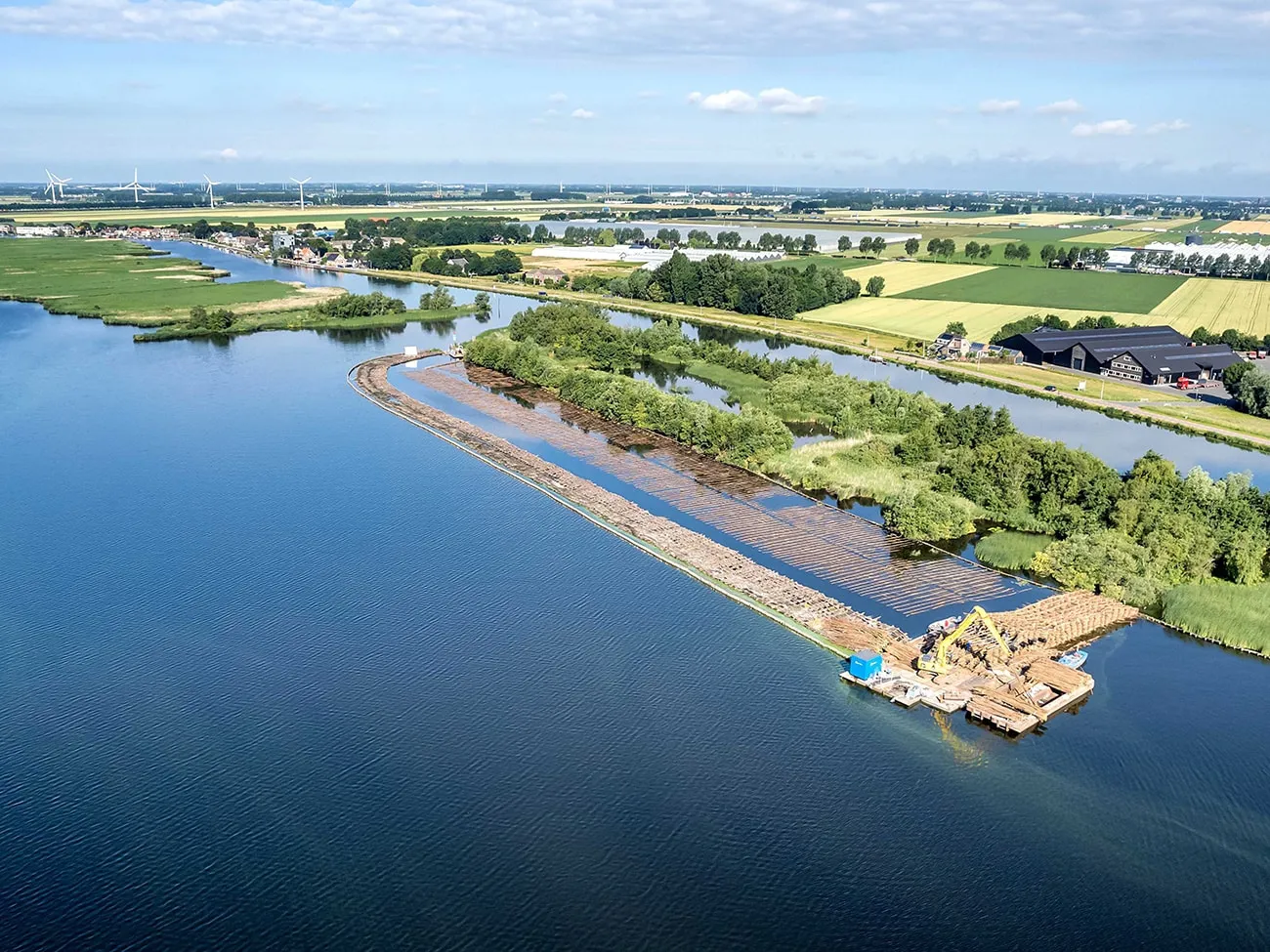
The Netherlands is a land of water, a living landscape of ditches, lakes, waterways, canals and rivers. All that water has
shaped our country. The Dutch delta, with its vast, beautiful nature reserves and endless waterscapes, is hugely important to Europe. So it is at least just as important to care for our natural environment and manage it properly. And that is precisely where Van Aalsburg excels. This leading company is working towards the future with its vision of ‘Building with nature’.
Sustaining nature with nature, in a nature-friendly way!
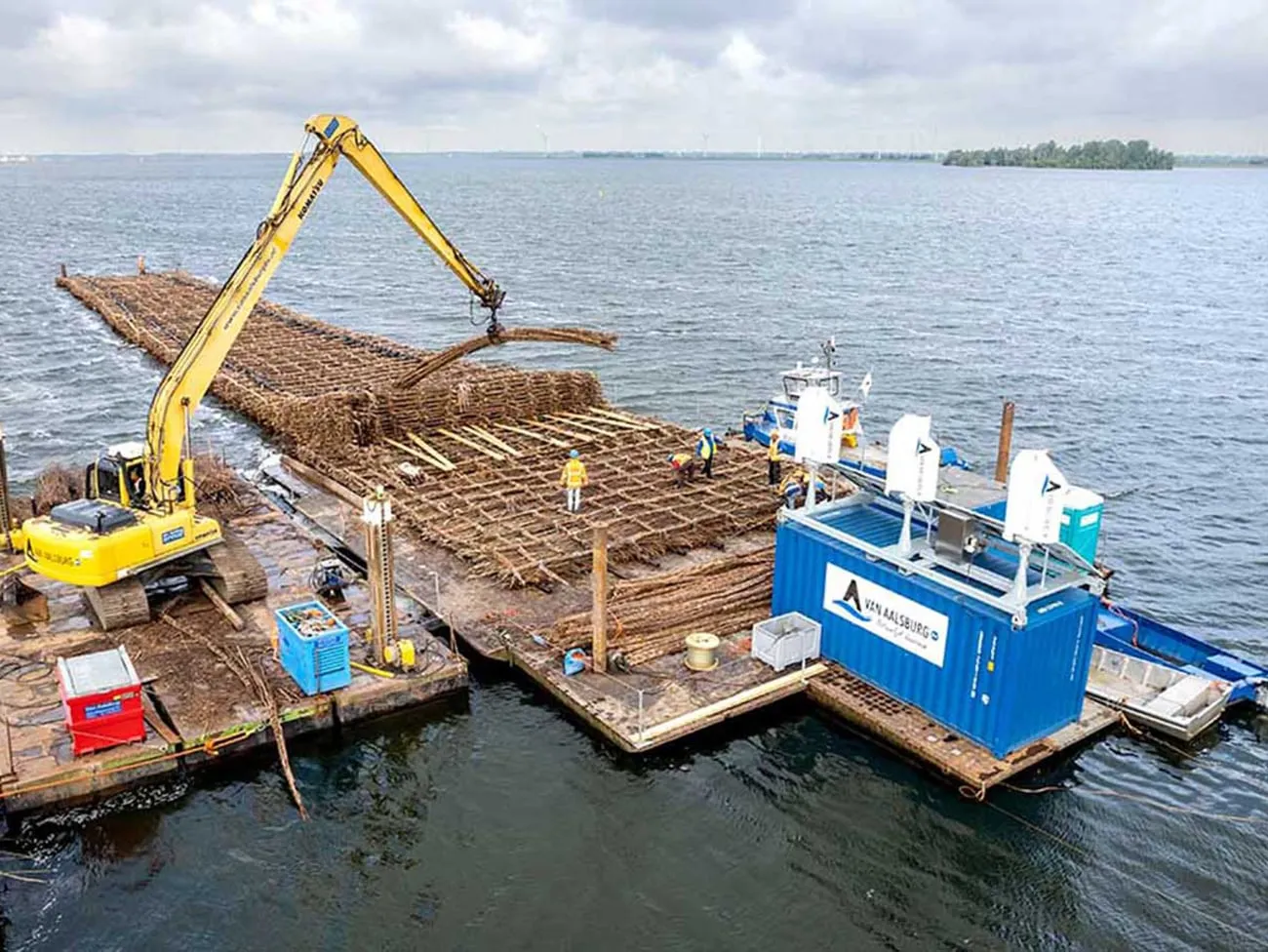
“Protecting and sustaining nature with nature, in a circular way. In short, that is what we are all about,” says Dick van Aalsburg. “We do this by developing the traditional craft of the willow worker in a revolutionary way, using today’s techniques. With a focus on the environment, efficiency and costs.”
Family business
Van Aalsburg B.V. is a third-generation family business producing high-quality willow products. It is a leading company in the Netherlands and well beyond. The business is run by six brothers and two cousins. In every respect, it has the feel of one big family. The first members of the new generation, the cousins, are already very much involved too. “They are enthusiastic and determined, all with the same goal in mind and constantly innovating. We’re delighted with our wonderful team of around 100 dedicated people,” says Dick.
Natural materials
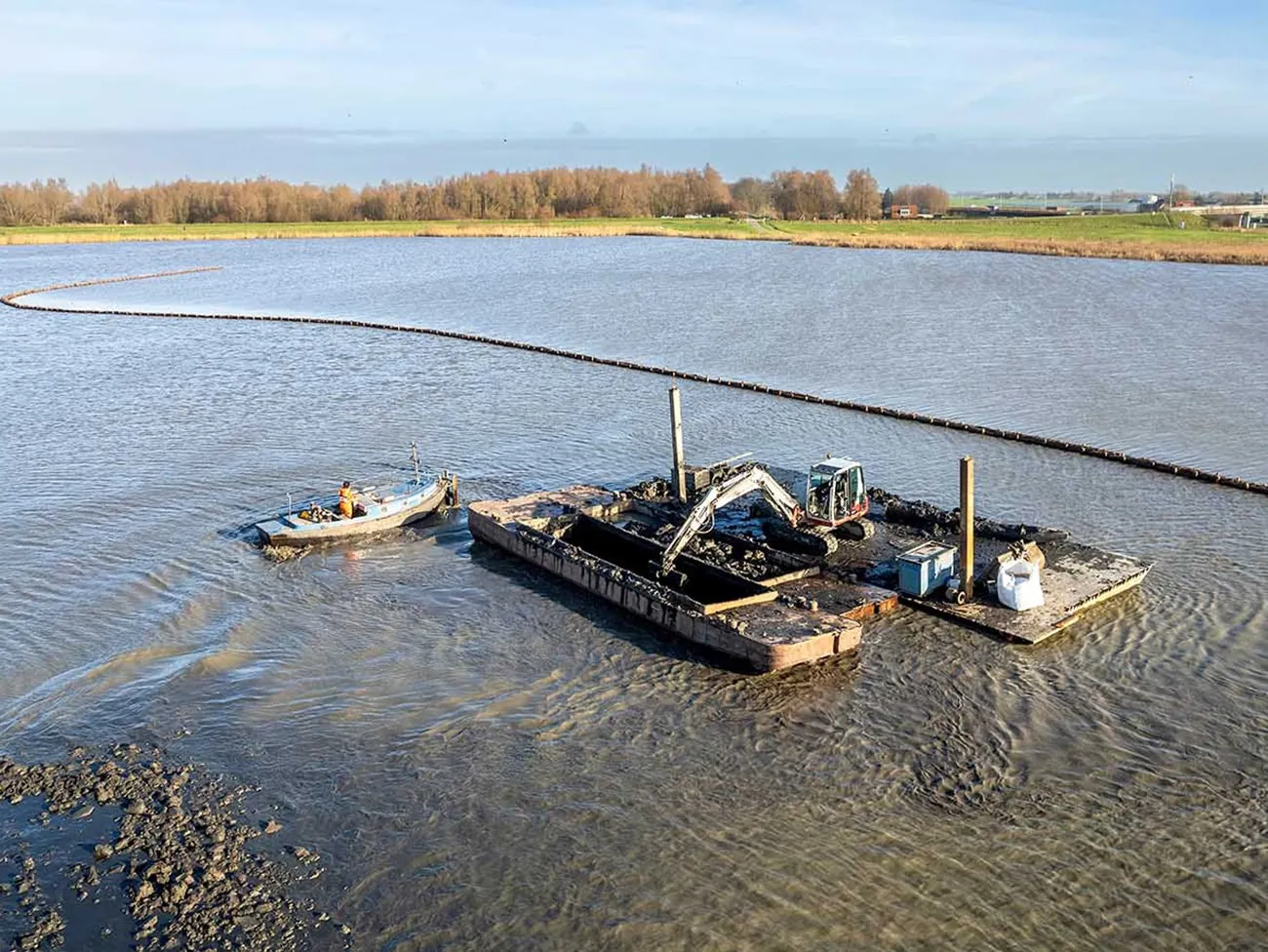
At Van Aalsburg, fascines provide the ideal basis for bank protection, reedbed islands, fish habitats and brushwood mattresses. Fascines are bundles of woven willow, made from quality willow grown in the company’s own nursery. Willow combined with jute and corn-based fabric is already an excellent alternative for brushwood mattresses and bank protection. Using natural materials of this kind for reedbed islands produces as much as 77% less CO2 emissions than using Geotubes. For brushwood mattresses, the company aims to reduce plastic use by 90% within 10 years, from 1,000,000 m2 of geotextile to 100,000 m2. “Where possible, we like to use entirely natural materials. Where necessary, we look for a sound combination.”
From pollarded willow to low-CO2, circular bank protection
Bank protection and brushwood mattresses provide highly reliable protection for riverbeds and banks, as well as retaining soil and keeping our feet dry. Van Aalsburg installs more than 30 kilometres of bank protection every year, using hardwood, willow and recycled plastic. “Or a surprising combination of them,” says Dick. “Good bank protection reduces the maintenance costs of waterways, and willow bank protection has the lowest CO2 emissions.” In recent years, Van Aalsburg has further developed its willow bank protection and used it in entirely new settings, with surprising results. “As natural and circular as possible, of course. This fully circular way of building, and its ecological benefits, have clearly proved their worth. The same goes for the reedbed islands, developed to give ecosystems a natural boost, and the fish habitats built to help restore fish and bird populations. All these projects demonstrably contribute to the objectives set out in the Water Framework Directive. We’re quite proud of that.”
Sustainable, innovative machinery
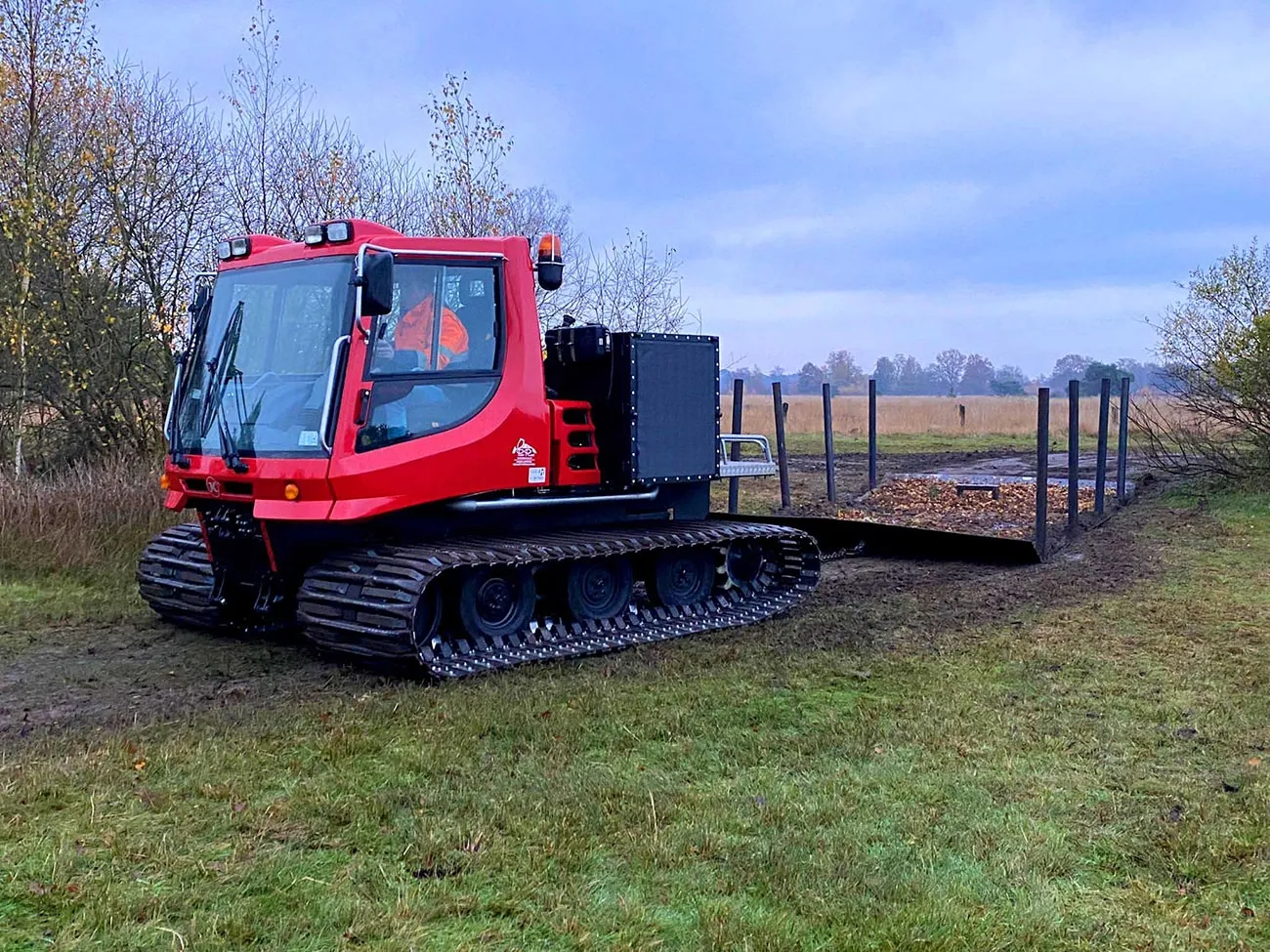
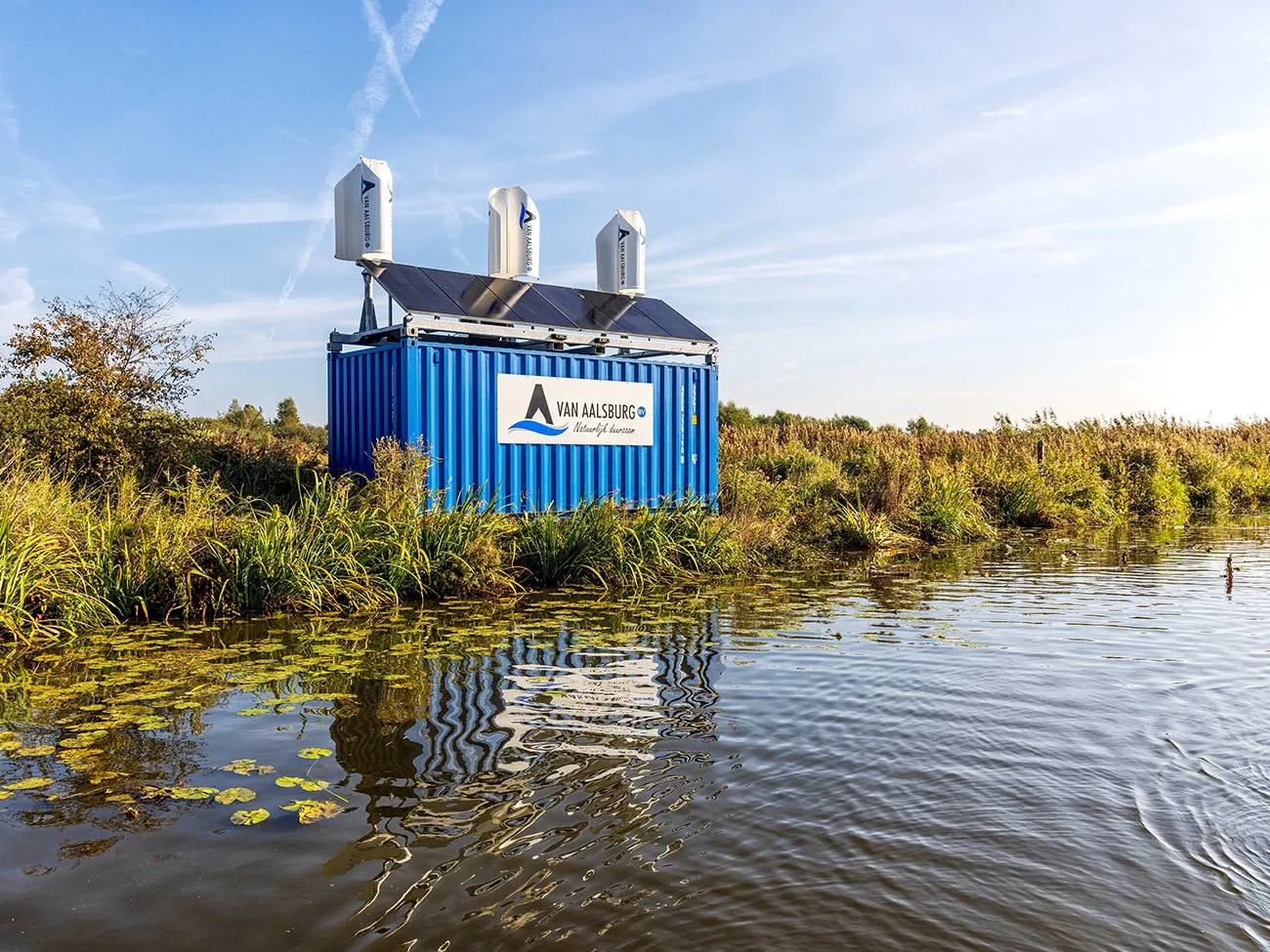
“Building with nature, in a nature-friendly way, calls for sustainable, innovative machinery,” says Dick. “That’s why we invest so heavily in it. We don’t just deliver sustainable projects, we also pay unlimited attention to the entire system around them. For example, we minimise waste, have a large number of solar panels on our premises and our own transformer station, as well as charging points for our electric cars and vans.” These are essential for all the electrically powered equipment used by Van Aalsburg. The company operates, among other things, three floating cranes and two uniquely modified swamp cranes, two Pistenbullys and various converted crawler dumpers. “Our boats, battery-powered saws and drills all run on green electricity too. At project sites, we use an EnergyHub: a container with a built-in 40 kW lithium battery storage system, fitted with three wind turbines and six solar panels to generate energy. We also use our battery trailer, with a storage capacity of 60 kWh, charged by the solar panels on the roof of our premises.” Van Aalsburg recently brought a fully electric 9-tonne midi excavator and a unique 16-tonne floating crane into service. The crane is fully certified to work safely on inland waterways and rivers, thanks in part to its additional ES-TRIN certification. No other company in the Netherlands has so many uniquely modified ‘wetland’ machines. “With our projects, we aim to sequester more CO2 than we emit. Alongside protecting riverbeds and banks, that is our goal.” It is no surprise that Van Aalsburg has achieved level 5 on the CO2 Performance Ladder, the highest level for quality, safety, sustainable timber and the environment.
Working together on outstanding projects
Van Aalsburg works closely with, and on behalf of, organisations including Natuurmonumenten, Staatsbosbeheer, Stichting Het Groninger Landschap, Stichting Het Zuid-Hollands Landschap and Stichting Het Utrechts Landschap on outstanding projects. “For example, at the Westeinderplassen near Aalsmeer, we created a nature island measuring no less than 10×340 metres, built entirely from natural materials. Water quality and ecology have both improved, and this was also the first project calculated to be CO2-negative: a wonderful achievement! We are currently working on a new island at Vogelplas Starrevaart in Leidschendam, giving nature a boost.”
In Giethoorn’s maze-like network of canals, Van Aalsburg installed kilometres of bank protection. The work was carried out using a unique pontoon with an internal crane lift, so that all 177 bridges could remain untouched. For Rijkswaterstaat, Van Aalsburg built two large reedbed islands in the Wolderwijd. The company’s own designs were woven from weathered willow on a pontoon, with no overlapping joints, and finished inside with natural fabric and sisal rope. The result? A large, beautiful fish hotel! In the Natura 2000 area Brandemeer, Van Aalsburg restored the reedbed islands on behalf of Staatsbosbeheer. The project was carried out using electric boats, and the EnergyHub was deployed. “That means we have power for our electrically powered equipment, even in the most remote and hard-to-reach locations.” One project that stood out for its complexity and was successfully completed thanks in part to Van Aalsburg’s expertise was the Belgian Fort Sint-Filips. A new groyne was built in the Scheldt, creating an area of 20 hectares of valuable tidal habitat, which is hugely important for biodiversity in this river region. “These are all great examples of how protecting nature with nature really works. And that is only possible if you work well together and share the same goals.” Dick also mentions a project in Zuidlaren, where the company is restoring and enhancing nature in a nature-friendly way for Stichting Het Groninger Landschap and Waterschap Hunze en Aa’s. “But more on that in a future article…”
Certifications
Van Aalsburg knows all about starting from scratch: the company began with nothing and has since grown into an international business with a strong identity. It is vibrant and dynamic, with a clear vision and mission. Step by step, it has been built by outstanding, loyal employees, all skilled craftspeople who attach great importance to environmental and quality management. The company has earned a host of valuable certificates. We have already mentioned the ES-TRIN certification for the electric floating crane and level 5 on the CO2 Performance Ladder. Of course, ISO 9001, ISO 140001 and VCA** certification are also part of the picture. “And recently, in addition to our existing FSC certificate for hardwood, we also obtained PEFC certification for softwood. This further strengthens our commitment to sustainable timber procurement.”
Vision for the future: 100% natural
Asked about future plans, Dick is clear: “We will always continue to build in nature, with nature, in a way that is responsible towards the natural environment. Our vision for the future is to aim for 100% naturally biodegradable materials. We want to use as little plastic as possible, such as polypropylene, because it causes microplastics and leads to high clean-up costs at the end of its service life.” Dick is convinced that, with the right specifications and expectations, natural materials are equal in quality. “And if you look at costs over the whole life cycle, they are equal to or lower than those of plastic geotextiles. So that can no longer be a reason not to choose natural materials,” Dick concludes.
A business enquiry for Van Aalsburg BV? Get in touch
Companies in this story
Keep following this
Get an email when a new story is published. No account needed.
- SubjectWater infrastructure
- CompanyVan Aalsburg BV







