









A history of water management
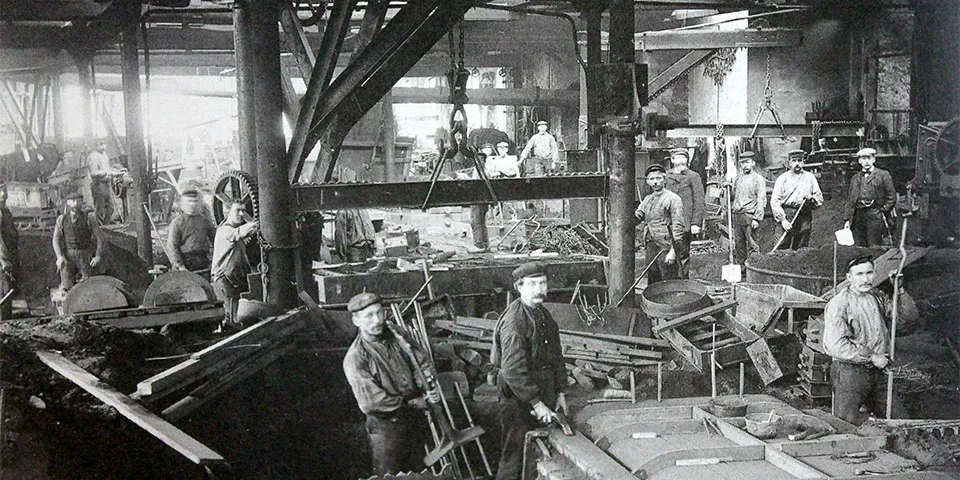
King Willem-Alexander announced in 1997 that he wanted to learn more about water management. Although the term was not yet widely known at the time, most people in the Netherlands had a sense of what it meant: after all, the Netherlands has dealt with water throughout its history, by holding it back, diverting it or removing it.
When we talk about water management, the name Nering Bögel inevitably comes up. It is hard to find a street in the Netherlands without a cast-iron road gully or manhole cover bearing the name Nering Bögel. A good reason to talk to the company’s owner and director, Richard Janssen, about its history.
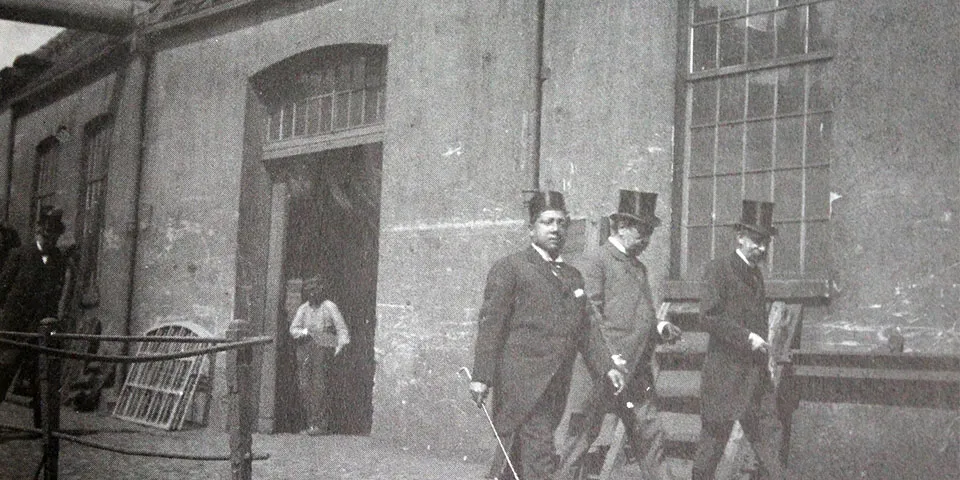
The Nering Bögel family moved in the highest circles of government. Here, the Sultan of Djokjakarta (Hamangkoe Boewono VII) is visiting the foundry with Johan Laurents Jr. and Willem Nering Bögel. Circa 1900.
The story begins in 1696…
We come across Nering Bögel absolutely everywhere. “You’re even more Dutch than the Dutch flag,” we remark. Janssen laughs and replies: “In fact, we’re older than the red, white and blue Dutch flag. At the end of the 17th century, a certain Hendrik Lindeman was born in Deventer. He proved to be a highly versatile entrepreneur, and built, among other things, an iron mill, laying the foundations for what would later become Nering Bögel.”
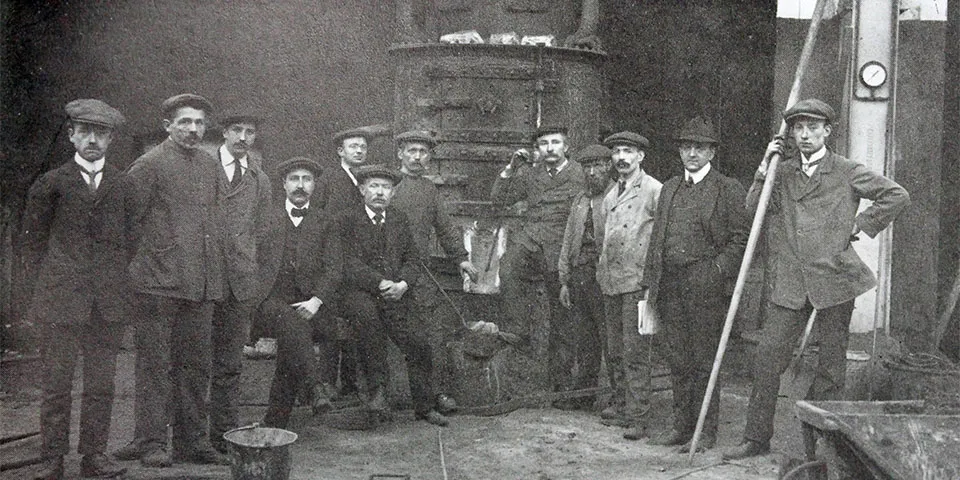
Foundry workers beside a cupola furnace, around 1900.
“De Ysermoole” in Deventer, in 1755, acquired by Nering Bögel in 1829
Under Lindeman, the iron foundry had a history as turbulent as the man himself. But in 1829 it was acquired by Herman Adriaan Nederburgh, a judge from Zutphen, and his son-in-law, Johan Laurents Nering Bögel. The latter took charge of day-to-day operations, while his father-in-law used his impressive network to secure international contracts.
“That’s when the name Nering Bögel first enters the picture,” says Janssen. “Johan Laurents Nering Bögel had iron casting in his blood. The German Nering Bögel family originally consisted of officers, senior civil servants and entrepreneurs.”
The third generation takes the helm
In 1865, after three generations of ‘Nering Bögels’, the company passed to his sons, Johan Frederik and Willem Frederik. In 1877, Johan Frederik withdrew from the business and handed over the baton to his own son, Johan Laurents junior. He had studied at the Polytechnic in Hannover. Under his leadership, the Deventer factory site was greatly expanded, culminating in its connection to the railway in 1879. The company’s reputation was impeccable, and everyone was keen to do business with Nering Bögel. At the time, the ‘Nering Bögels’ moved in the highest circles. The directors’ residence welcomed distinguished visitors, including King Willem III and the Sultan of Djokjakarta, Hamangkoe Boewono VII.
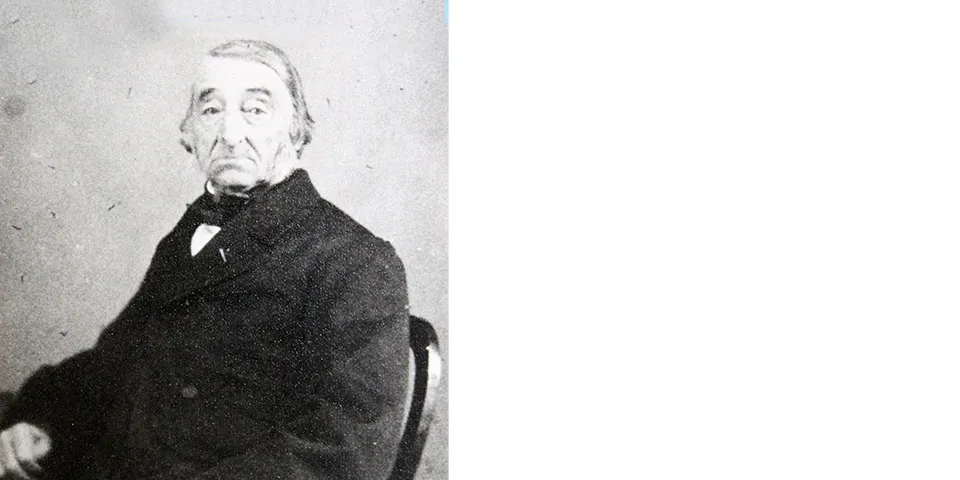
Johan Laurents Nering Bögel, founder of the Nering Bögel empire.
The move into road gullies and manhole covers…
When Johan Frederik junior died at the age of 35 in 1909, the company passed to Johan Laurents junior. His son, Jacobus Albertus Constant Nering Bögel, graduated from the University of Sheffield and took over the running of the Deventer Iron Foundry. His nickname was Mr Coos. “From 1911, he was the sole director, remaining in the role until the company went bankrupt in 1932 as a result of the economic crisis. Coos Nering Bögel moved to Wassenaar, where he set up a technical consultancy at home,” says Janssen. “His specialism? Cast-iron single and multiple covers for sewer manholes. These were cast to his specifications at NV IJzer- en Metaalgieterij De Globe in Tegelen.”
It is now 8 July 1950. Nering Bögel’s technical consultancy becomes a wholly owned subsidiary of De Globe. “The name Nering Bögel was retained. Coos worked from Wassenaar until 1955, when Technisch Bureau J.A.C. Nering Bögel moved to Weert,” Janssen explains. In 1960, Prime Minister Den Uil closed the State Mines. The Oranje Naussau Groep was set up to curb the resulting unemployment by acquiring and expanding promising companies. Nering Bögel was among those acquired. The company changed hands several more times after that: it was a turbulent period.
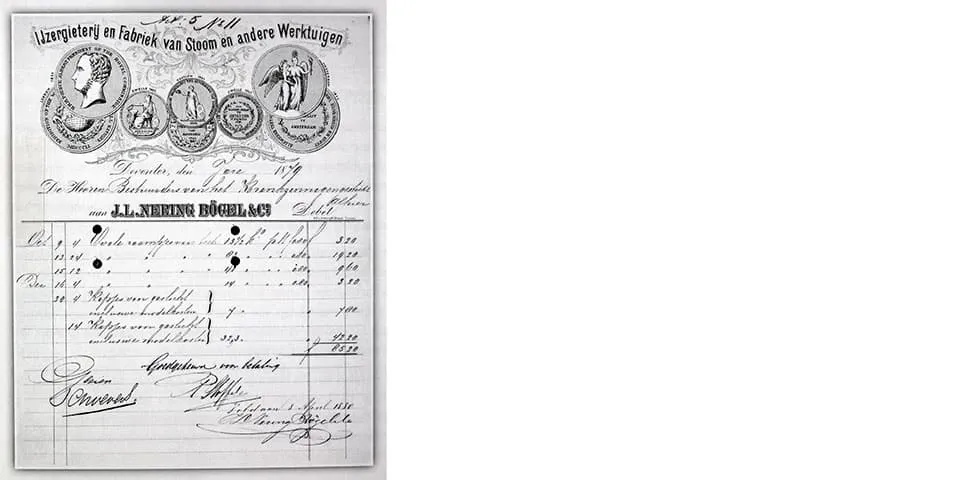
An invoice from Nering Bögel dated 1879, addressed to the Krankzinnigen Gesticht, later known as Brinkgreven, in Deventer. The delivery comprised small gaslight valves and oval windows, for the sum of Hfl. 85,20.
The road to the present day
In the early 1990s, the market for separators in the Netherlands was highly attractive, and Nering Bögel was the market leader. This prompted the German company Buderus to acquire Nering Bögel in 1995. “I joined the company as sales director shortly before the takeover,” Janssen explains. “With a track record in developing systems for the offshore industry, I was in my element as an engineer. My first priority was product improvement and innovation. We quickly secured our certification, then focused on what the market was asking for, especially certified gullies and manhole frames. Through smart outsourcing and intelligent stock management, Nering Bögel was soon back to full strength.”
Janssen’s efforts paid off for the company. Buderus took notice and promoted him to managing director in 2002. “Our turnover doubled in 10 years, reaching around 13 million euros. But there was no respite: in 2003, the Buderus Group was taken over by the Robert Bosch Group, which was really only interested in Buderus’s heating division. Nering Bögel was put up for sale again and sold to the investment company Orlando, based in Munich. They too planned to offload Nering Bögel quickly.” Janssen realised it was a case of ‘now or never’. To Orlando’s great surprise, he came forward as a private buyer of ‘his’ company. He explains: “I managed to convince Orlando that the takeover would succeed, and I also managed to raise the money. Since 2 June 2006, I have been the 100% owner of Nering Bögel. We have firmly established ourselves in the Netherlands, and there is a sense of stability in the company.”
The stability Janssen refers to is mainly about creating a pleasant workplace for employees and building good partnerships with suppliers and customers. There will never be any let-up when it comes to development and sales: Janssen is too passionate for that. “Even though I’ve handed over the day-to-day running of the company, I do everything I can to stay one step ahead of the competition. Our products are in every street in the Netherlands, and we have no intention of going anywhere. We also want to see our logo on new streets. Most importantly, our history obliges us to remain at the forefront of keeping the Netherlands dry and safe from flooding.”.
Question about this story? Ask your question
Keep following this
Get an email when a new story is published. No account needed.
- SubjectWater infrastructure







