









‘We all have a role to play in the transition to a circular economy’
“Whether or not you consciously work in a circular way, surely nobody likes throwing things away?” says Onno Sminia, Innovation Manager at Croonwolter&dros. We talk to him about Croonwolter&dros’ vision of circularity in infrastructure. Circularity and sustainability are now so firmly embedded in the organisation that they have become part of its corporate culture.
This puts Croonwolter&dros in a position to act as a ‘catalyst’ for circular working. “We select our partners accordingly, and support those who are not yet fully on board. We all have a role to play in the transition to a circular economy, and thanks to our experience and strong drive to innovate, we can lead the way.”
Working smart and learning to think circularly
As a systems integrator, Croonwolter&dros works with many partners who are also committed to sustainability and circularity. “There is always room to improve when it comes to circularity. We have reached a point where it is not just us and our partners who want to work circularly: more and more clients are now also asking for circular and sustainable solutions. Where there is a will, there is a way. There is a lot to gain, particularly in the field of installations, as they contain scarce components sourced from all over the world. These components often travel long distances and form part of a long supply chain. Working smart and thinking differently can help. One example is reusing components removed from an installation by assessing their remaining serviceable life and using them as replacement parts in another project where the same hardware has been installed. Giving components a second life saves us a considerable amount in costs and CO2 emissions,” says Onno.
Making materials visible in the supply chain
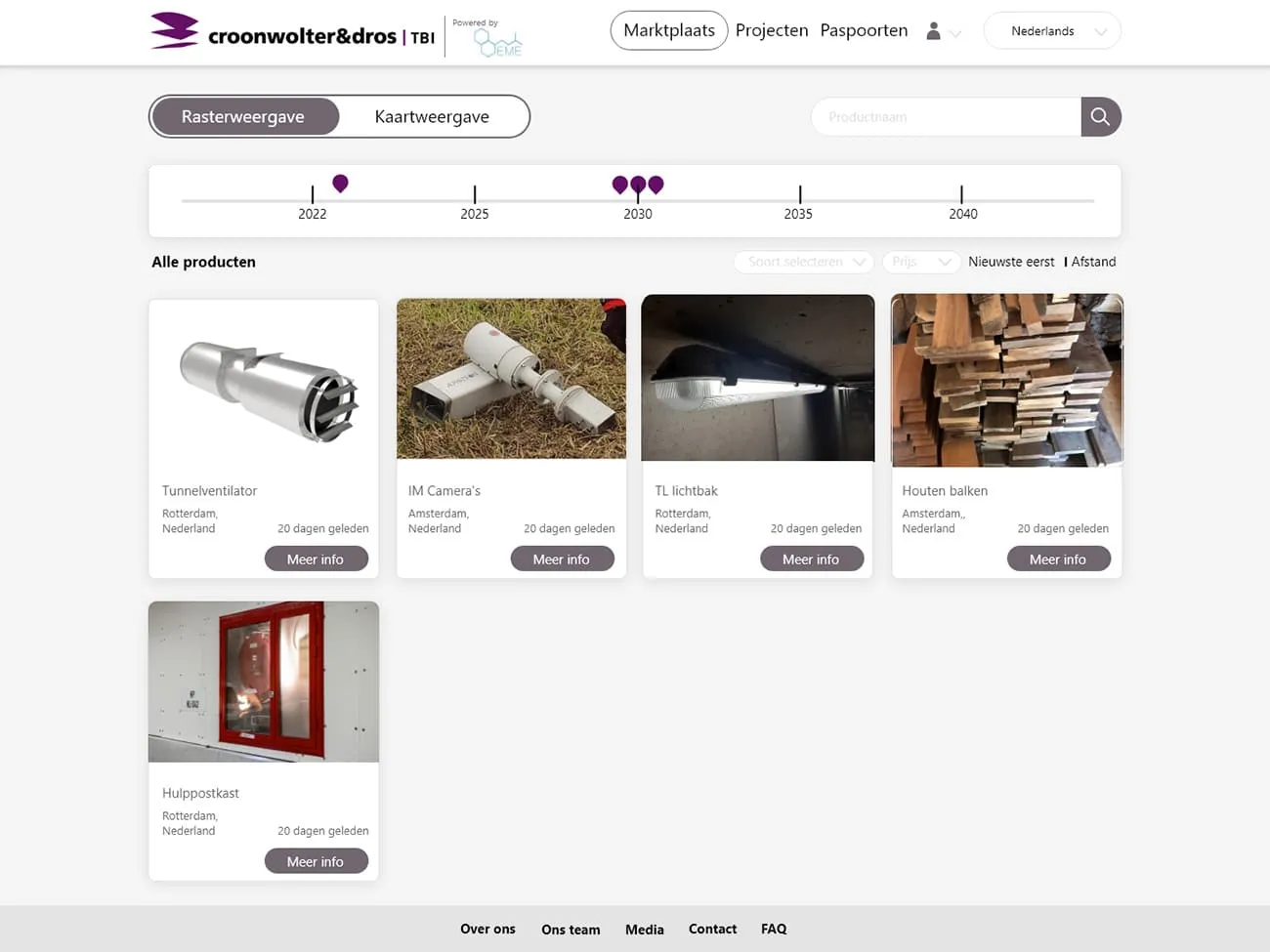
To make materials available for reuse in the supply chain, they need to be visible. “So we look not only at the potential to reuse installations and their components, but also want to put as many materials as possible back into the supply chain. This can be done by introducing so-called materials passports for buildings and infrastructure. These document which materials are present in a structure, in what quantities, and, for example, what their life cycle is. Knowing what you have means you can put it to use when the opportunity arises.” The A16 Rotterdam was the first project to have a materials passport, making it the first tunnel in the world with a passport for its materials and installations. “Innovative pilot projects like this inspire others,” says Onno. “It’s a kind of ‘Tinder for materials’: a platform matching supply and demand for materials that come out of the supply chain and can go back into it.”
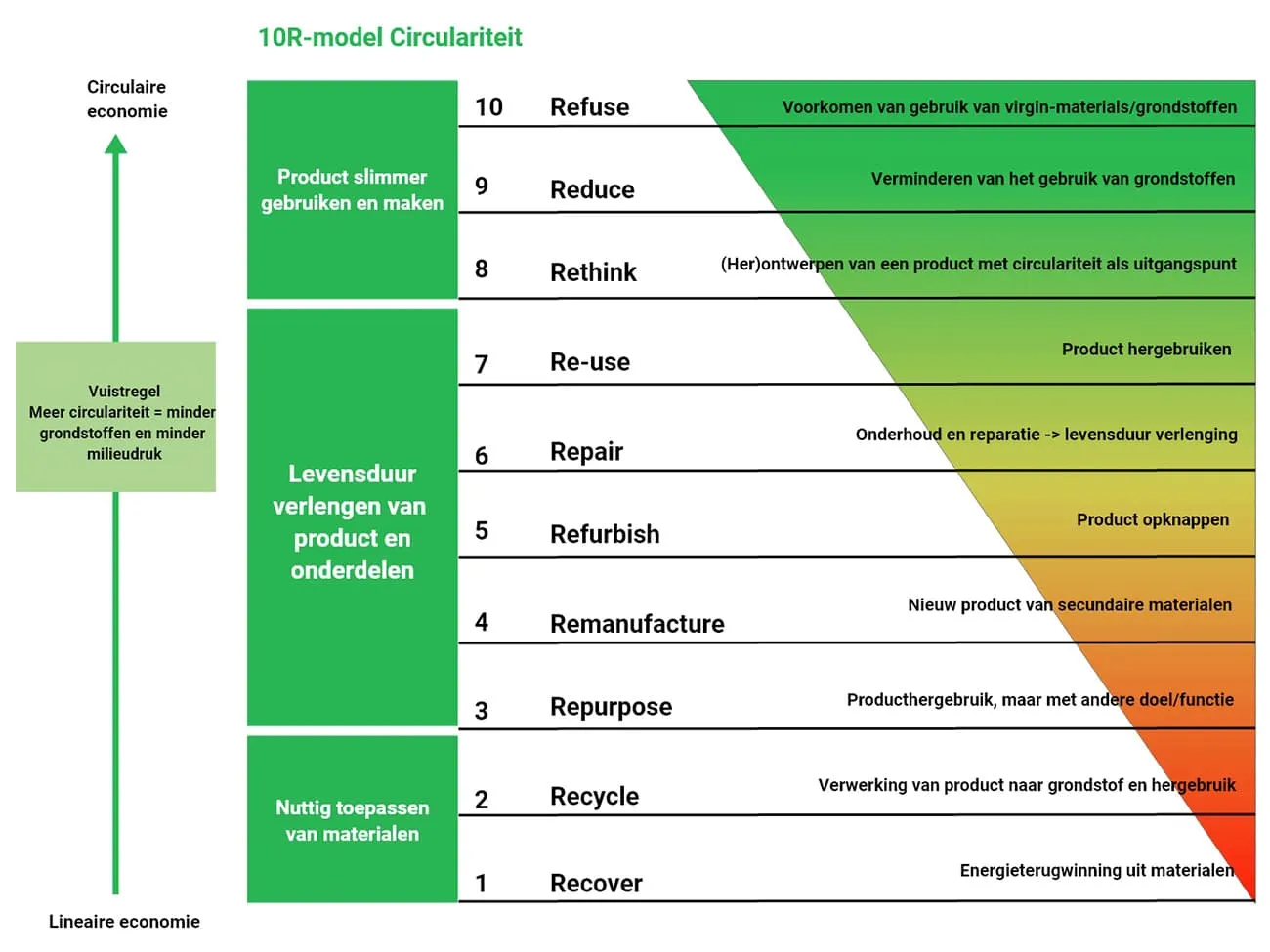
Onno refers to the ten levels of circularity (the 10 Rs, see box) and says: “The higher we climb on the 10 R ladder, the more circular we are. That is our vision. Circularity is not just about recycling or reuse. That is where many people’s thinking gets stuck. It is about the entire process, which starts at the design stage. The same applies to materials and energy. Think ahead. What’s more, when circularity is embedded in your corporate culture, you instinctively know whether something is right or wrong. This requires us to leave old ways of thinking behind on many fronts. Buy something that costs a little more but extends its service life? Do it! The benefits may not come at the start, but further down the supply chain. It will ultimately save money there too, but in a responsible way.”
Modular construction
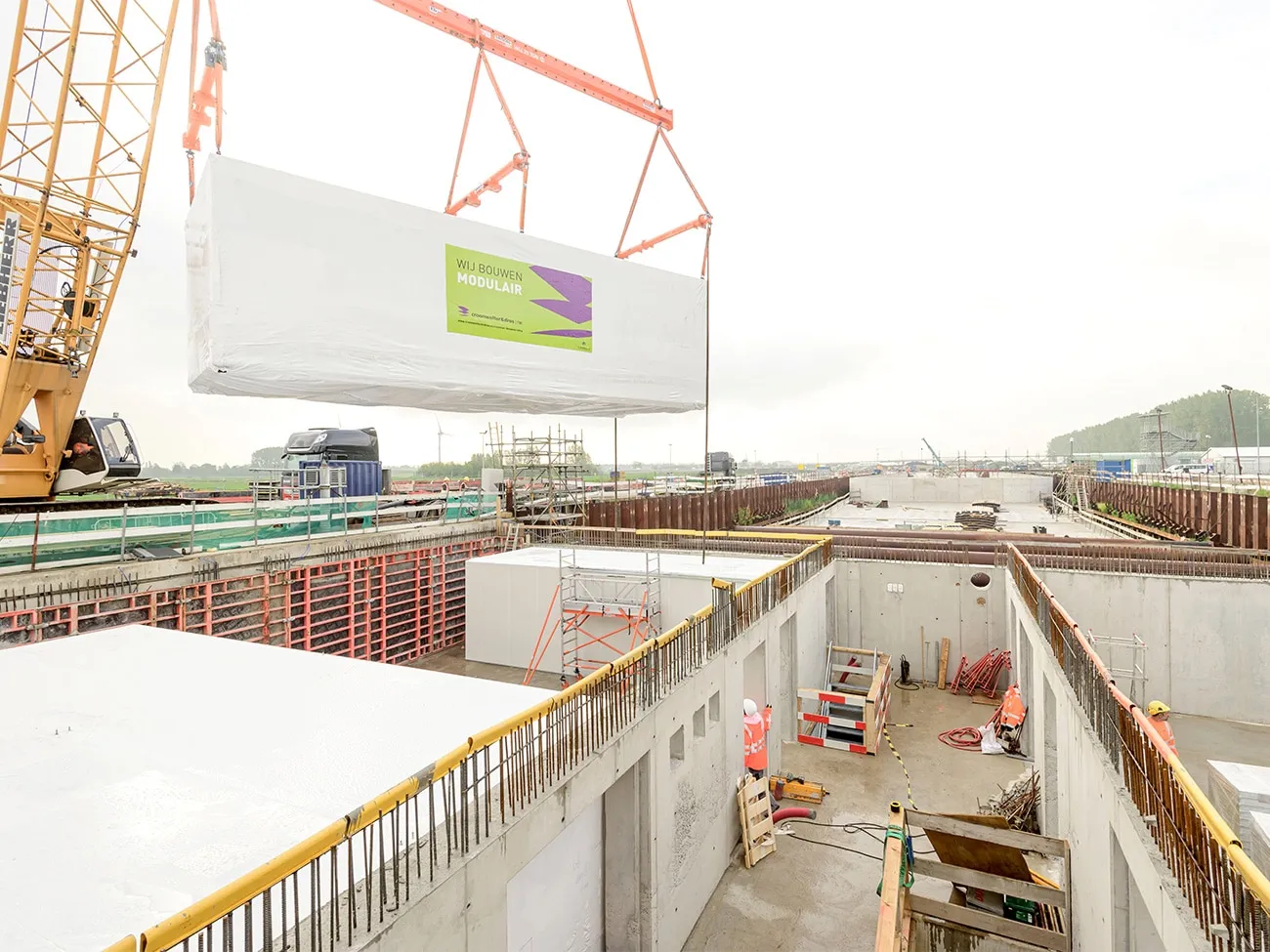
“Modular construction creates more opportunities for circularity. Circularity improves when something can be easily assembled and dismantled. A good example is how the technical tunnel installations for the RijnlandRoute were prepared. All the installations were assembled in Eindhoven, connected and made operational. This even meant they could be tested live. The various units were called out to their locations along the RijnlandRoute, where they were connected on a plug&play basis.”
Focus on energy and materials
“I feel that we are making progress and pushing boundaries. However, we work in the here and now and adapt to what is already possible, while of course trying to raise the bar a little for everyone each time,” Onno says with a smile. “We do need to keep making progress. We don’t necessarily expect to see our most radical developments bear fruit within a year, but we do want to see progress. By joining forces, we are paving the way for important innovations to move from the drawing board into practice. That can only be achieved through collaboration: within our company and across the supply chain.”
Anyone with good ideas is invited to bring Croonwolter&dros on board. “We also bring other parties on board. A good example is the project in which we are installing energy-efficient LED systems in the Westerschelde tunnel. That is already sustainable in itself, but we have agreed with the lighting supplier that we want to create a plastic-free construction site. This requires them to change their logistics process. When they are willing to do that, we score a win together. We have a strong focus on energy and materials, and our own roadmap is based on those two priorities. This is appreciated and taken up by those around us, including Rijkswaterstaat. They deserve praise for facilitating more and more innovations and increasingly entering into intensive partnerships to achieve sustainability goals. Innovative and constructive, in other words.”
A business enquiry for Croonwolter&dros? Get in touch
Companies in this story
Keep following this
Get an email when a new story is published. No account needed.
- ThemeLower emissions and more reuse
- SubjectSpecials
- CompanyCroonwolter&dros







