









Towards a fully reusable road
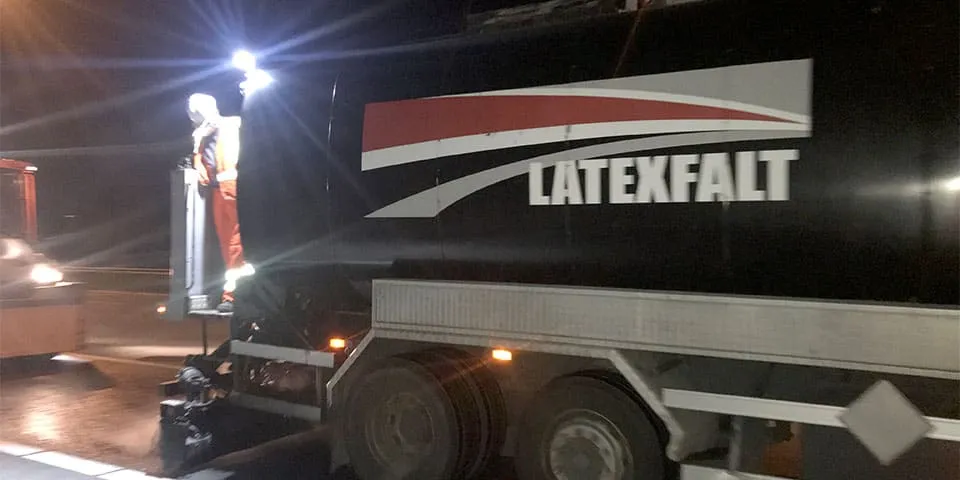
As a link between oil refineries and customers, Latexfalt buys bitumen and processes it into systems and solutions for use in various sectors, including infrastructure. The company, based in Koudekerk aan den Rijn, has drawn up three roadmaps for the infrastructure sector, with the aim of creating a fully reusable road. “It is already technically possible,” says Foeke Elzinga of Latexfalt enthusiastically.
Latexfalt operates in a range of sectors and exports its products to no fewer than fifty countries worldwide. These include products such as tack coat emulsions, concrete protection products and surface treatments. “Specifically for the infrastructure sector, we distinguish between hot and cold binders,” Foeke explains. “A few years ago, we drew up three roadmaps to enable Latexfalt to add value in the infrastructure sector. They involve the joint development of products and systems that contribute to making the infrastructure sector, and society as a whole, more sustainable.”
Better bitumen
The first roadmap focuses on better bitumen. Foeke: “Refineries are able to extract an increasing number of high-value products from crude oil. The composition of today’s bitumen is no longer the same as it was a few years ago. Consistent bitumen quality is essential for a high-quality road surface. We have developed a method for analysing bitumen and, where necessary, modifying it with our products, for example to improve its stability or restore its molecular structure.”
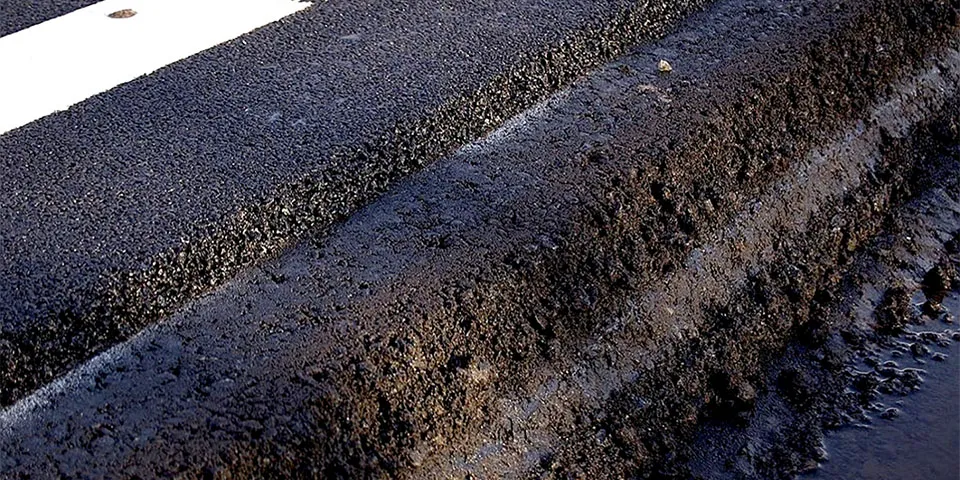
Consistent bitumen quality is essential for a high-quality road surface.
Maintenance to extend service life
In 2010, Rijkswaterstaat launched a competition to develop products that could defer road maintenance. “The Netherlands has an extensive network of porous asphalt, which has a limited service life,” says Foeke. “One of our products has been validated for deferring asphalt maintenance. The rejuvenating component in our Modimuls ZV emulsion has been proven to extend service life by between three and six years.”
Closed-loop recycling
Finally, the third roadmap focuses on recycling old asphalt, completing the cycle. “The properties of the bitumen in old asphalt change over the years due to various influences, including UV radiation, dust and contamination. We have developed a rejuvenator to restore the bitumen in old asphalt to its original condition. This means the asphalt can continue to be reused, and at a lower temperature during production. So it delivers benefits on two fronts. The effectiveness of this rejuvenating component, which is applied in a controlled dose, has been scientifically proven.”
By continuously monitoring bitumen quality, carrying out maintenance to extend service life and ultimately enabling closed-loop recycling, Latexfalt makes a substantial contribution to improving the sustainability of the infrastructure sector.
Question about this story? Ask your question
Keep following this
Get an email when a new story is published. No account needed.
- ThemeExtending the life of roads and civil engineering structures
- SubjectSpecials







