









Sustainable use of timber in the civil engineering sector
In 2020, sustainability is an integral part of all rail, earthworks, water engineering and road construction projects. Combining People, Planet and Prosperity effectively is essential to achieving sustainable development. When considering construction speed, durability and the potential for circular construction, the use of timber is also worth considering.
Timber and timber products are renewable, bio-based and reusable, and are therefore being used increasingly often. In recent years, many timber applications have already proved successful in practice. They have become essential features of the Dutch landscape: bridges, jetties, revetments, sheet piling, safety barriers, fender systems and lock gates, for example.
Encouraging the use of timber
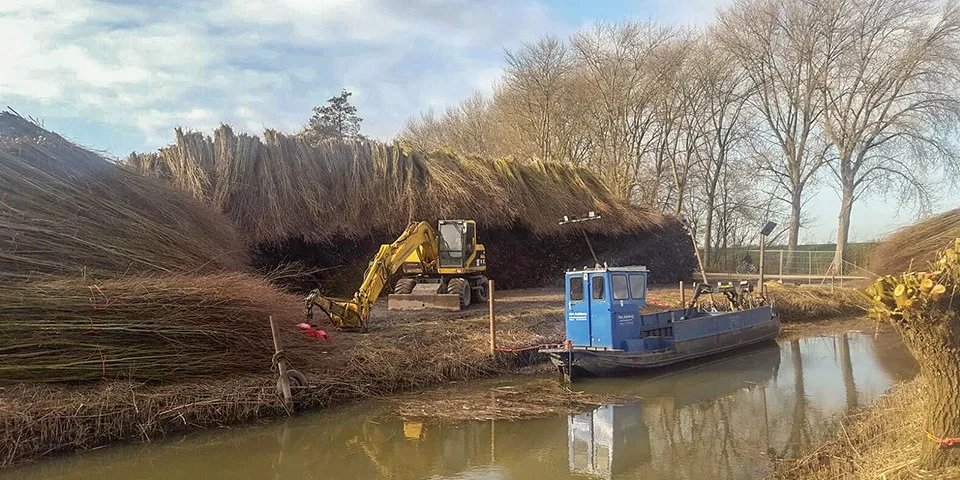
Rijkswaterstaat also promotes the use of timber. In many cases, it is responsible for managing and maintaining these assets. The harvesting, production, transport and processing of timber into new raw materials are often the business of third parties. Staatsbosbeheer has traditionally contributed to timber production in the Netherlands. John van der Haas, project manager at Staatsbosbeheer, explains: “Our forests are managed sustainably, in accordance with FSC guidelines and our own forest vision, ‘Groeiende Toekomst’. We harvest around 3000.000 m3 of timber each year at a sustainable rate: that is, more timber grows in our forests than is felled. Because trees absorb CO2 and continue to store it after harvesting and processing, timber is one of the most environmentally friendly building materials. We ensure that the timber from trees felled in our areas is put to the highest-value use possible.” As an example, Van der Haas mentions the IJsselmonde recreation area, including the Rhoonse and Carnisse Grienden. These are two areas of floodplain coppice full of pollarded willows. The areas are maintained by Van Aalsburg Griendhouthandel. “The pollarded willows are felled or pruned in a multi-year cycle. The timber is used in all kinds of water engineering projects, such as fascine mattresses for bed and bank protection. Completely circular.”
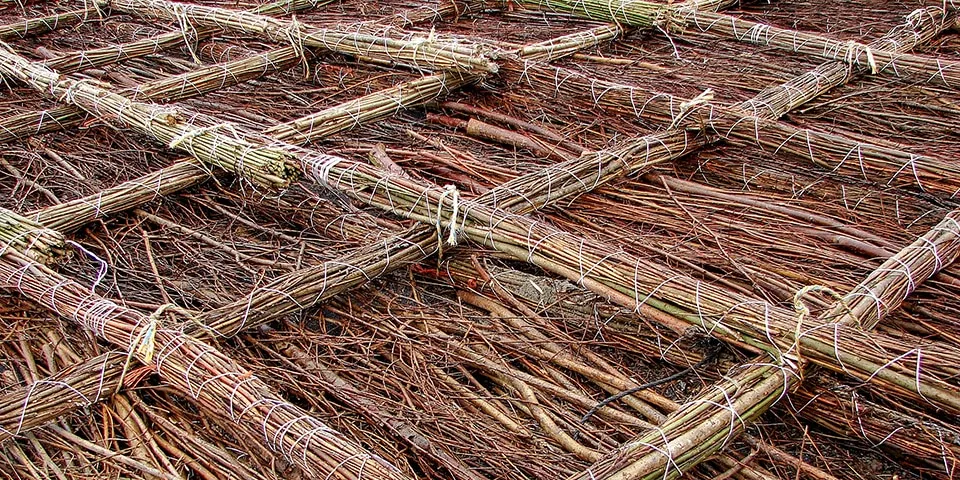
A fascine mattress is a mat made from brushwood (willow), topped with a layer of fascines (rolls of brushwood, mechanically wrapped in sisal rope).
A new trend
Van der Haas: “Whereas everything used to be replaced without question, we are now seeing people consider whether repairs will suffice. Until a year ago, it made no difference. Increasingly, the choice is being made on the basis of sustainability. The costs and environmental impacts over the entire life cycle are taken into account, demonstrating that timber is not only an environmentally friendly product, but does not have to be more expensive than other products either. Using more timber makes a direct contribution to reducing CO2 emissions and making the civil engineering sector more sustainable,” concludes Van der Haas.
A business enquiry for Van Aalsburg BV? Get in touch
Companies in this story

Keep following this
Get an email when a new story is published. No account needed.
- ThemeLower emissions and more reuse
- SubjectSpecials
- CompanyVan Aalsburg BV







