









Sixty tunnel renovations in the Netherlands and Flanders
Text Harry Bijl Beeld COB
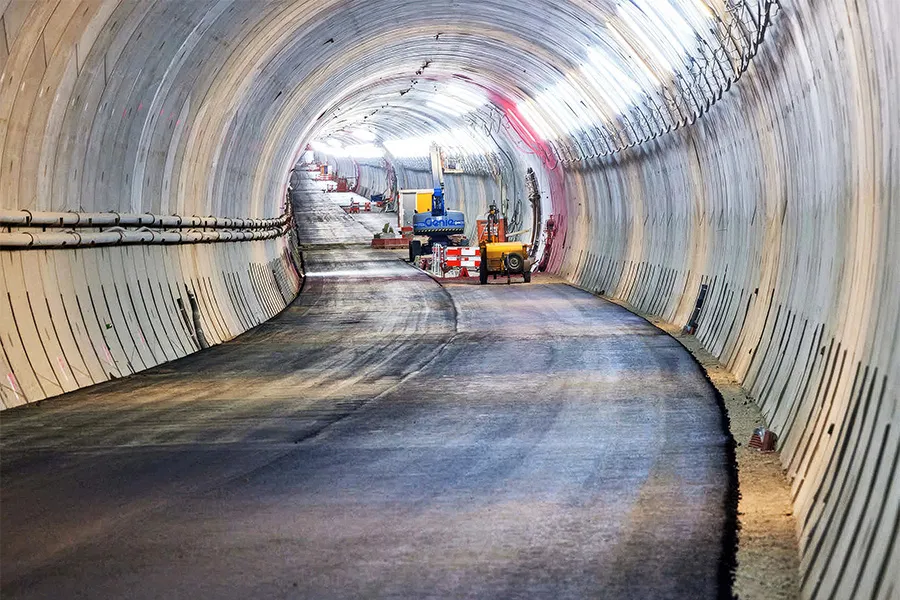
Dozens of road and rail tunnels in the Netherlands and Flanders will need to be renovated in the coming years. This is a huge undertaking. The estimated capacity required for this renovation programme exceeds the capacity of the sector. At the same time, new tunnels are being built and capacity is needed for routine management and maintenance. In short, we need to work more intelligently and effectively. This challenge is the key starting point for the Tunnel Programme 2026-2031 of the Centrum Ondergrond Bouwen (COB).
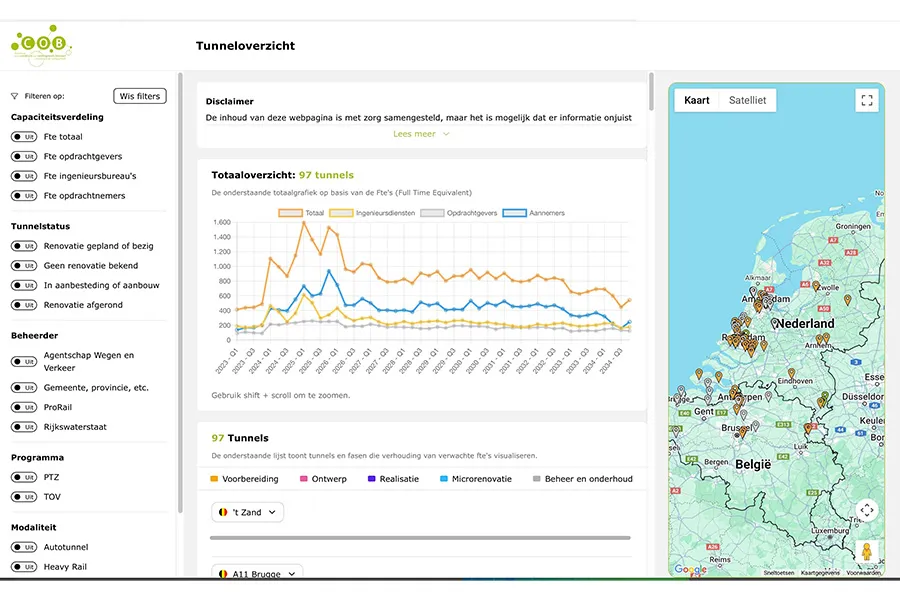
In recent years, much more attention has been paid to the fact that a large proportion of the tunnel stock is beginning to age. A COB survey shows that renovation is under way or imminent at 60 of the 97 tunnels in the Netherlands and Flanders. Through the tunnel programme, the COB and the sector aim, among other things, to adopt a smarter and more effective approach.
Availability
A programme-based approach has been in place for ten years. Following the 2016 future outlook, two Tunnel Programmes (2018-2020 and 2021-2025) were developed and delivered. The fundamental challenge has not changed over the years. The sector wants to build and renovate with minimal disruption, while ensuring that tunnels remain optimally available. This is essential for tunnels that play a crucial role in the main infrastructure network. Mobility continues to grow, and the societal cost of temporary infrastructure closures is increasing.
A joined-up approach
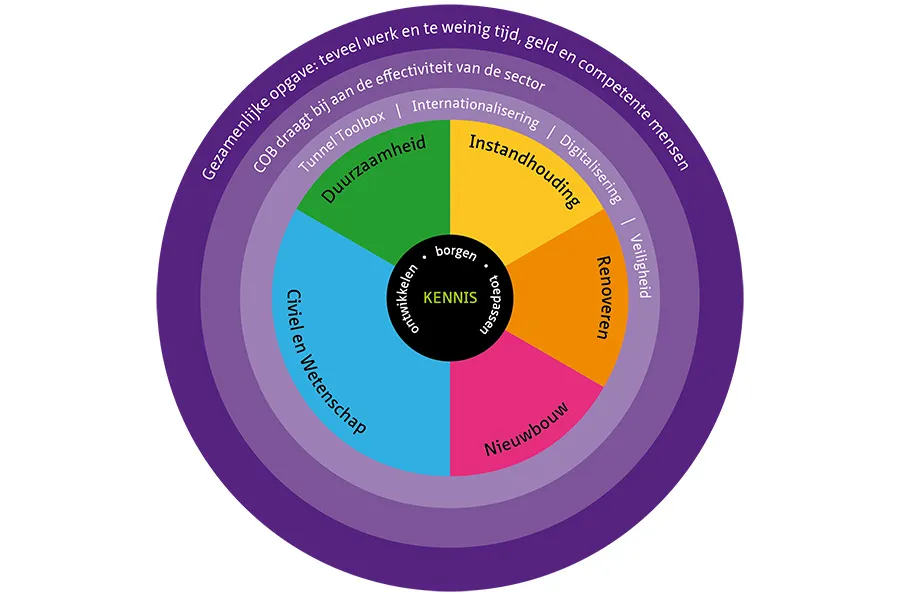
The new tunnel programme identifies all the factors that affect availability. It takes a whole-life-cycle view, with greater emphasis on the asset management and operational phases. Alongside the capacity challenge, future-proofing is a key theme. Much of the technical research under the tunnel programme concerns the remaining service life of tunnels, ways to extend it and, above all, predictability. In short, how can we make sure we know in good time when a tunnel’s availability is at risk?
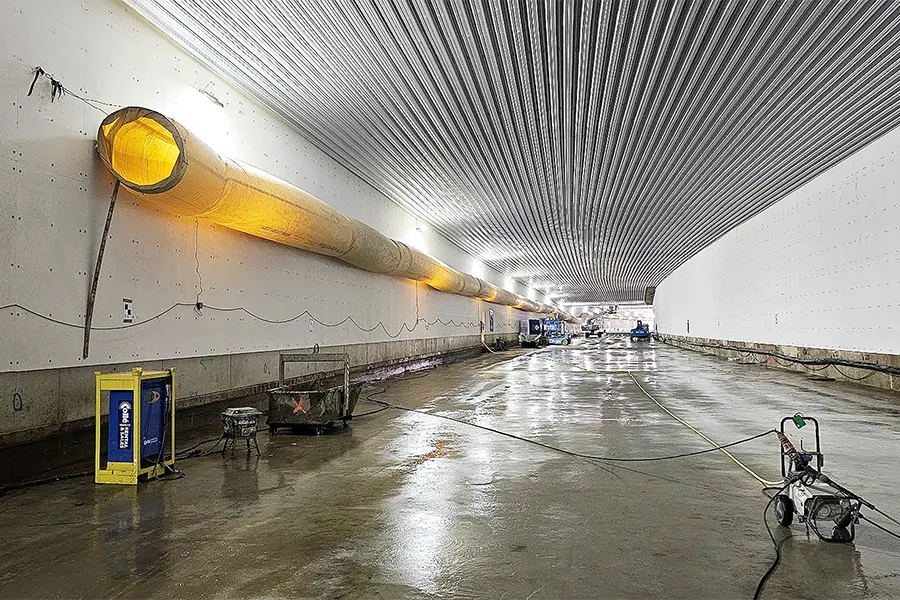
Future-proofing is also reflected in the aim of preventing renovation work from continuing to have a major impact on availability in the future. Can existing tunnels be renovated in such a way that the next renovation can be carried out with minimal disruption? The same applies to new tunnels. Can they be designed to limit future closures for renovation?
Practical tools
In addition to knowledge, previous tunnel programmes have produced a range of practical tools. The coming period will see a major expansion of these tools, not only for construction and renovation, but especially for the asset management and operational phases. These account for by far the largest part of a tunnel’s life cycle. Measures to make more efficient use of people and resources will therefore have the greatest overall impact in these phases. There will be a strong focus on harmonising and standardising processes, procedures and manuals for tunnel management organisations. These efforts come together in the Tunnel Toolbox for tunnel owners and managers, which includes the COB Data Platform, a scientific model for predicting (remaining) service life, as well as calculation models, templates, checklists and manuals. This will support the ambition to ‘do more with fewer people’.
Broad-based support
The Tunnel Programme 2026-2031 was developed following active consultation with a large number of organisations across the sector. More than two hundred professionals contributed their views on what is needed to make the sector smarter and more effective. This includes ensuring that information and knowledge are transferred from professionals leaving the sector to the next generation. The COB hopes to continue involving knowledge holders who will retire in the coming years.
Free and publicly available
The tunnel programme involves collaborative research projects, with dozens of participating public authorities, tunnel owners, engineering consultancies, contractors and knowledge institutes. Together, they provide around six hundred experts who actively contribute to developing and applying knowledge. All results are free and publicly available. In practice, knowledge developed within the COB is applied every day in the design, management, maintenance and renovation of tunnels.
What happens next?
The third tunnel programme is complete on paper. Input from the sector has made it clear from the outset that the programme has broad support in terms of its content. “The tunnel programme reflects the needs in the areas of knowledge development, safeguarding and application. The feedback from our network shows that we have devised an approach that people recognise and consider workable,” says Karin de Haas, COB director and programme manager. “In the coming period, the proposal will be put to potential funders, with the hope and expectation that the plans will find their way into budgets for 2026 and beyond. This autumn, we will start recruiting project leaders, participants and work-package leads so that this programme, too, can get off to a flying start. In February 2026, we will organise a Tunneldag, where the current tunnel programme will be formally concluded and the new one launched.”
Question about this story? Ask your question
Keep following this
Get an email when a new story is published. No account needed.
- ThemeUnderground construction
- SubjectSpecials







