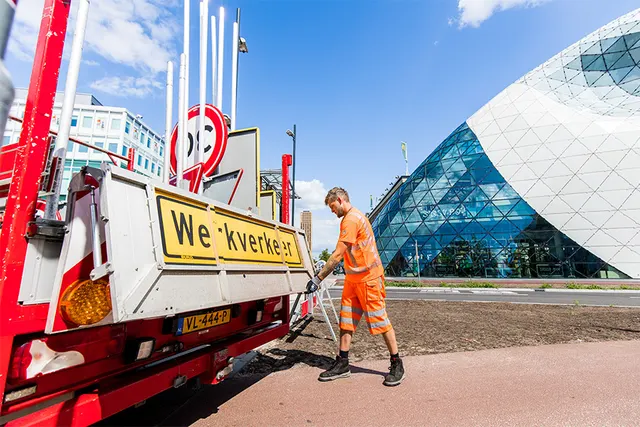
How to make construction transport as safe as possible

Transport for major construction and infrastructure projects typically presents a number of challenges. What is the safest way to move storage containers and site cabins, a dormer window or, for example, sections for a new sewer beneath a road? Any risk of damage to other people’s property or dangerous situations en route must be kept to a minimum.
When planning transport, consider the ground conditions. What risks does the chosen surface present for construction transport in bad weather? For example, could the materials being transported shift during a heavy downpour or strong winds? Also consider the route. Where are the vulnerable or most challenging points along the way? Can these obstacles be avoided during transport? Is it worth travelling at a different time? And so on.
Construction transport safety starts at the loading point
Ensuring that construction transport is carried out safely is not just about the journey itself. It starts when the vehicle is loaded at the building materials supplier or, for example, at your own storage facility. Make it as easy as possible to load heavy building materials by choosing a sturdy loading ramp. A loading ramp means materials do not have to be lifted onto a trailer. A forklift truck can drive the materials onto the trailer via the ramp. This reduces the risk of damage to the loading area, the vehicle and the materials being transported.
A loading platform or, for example, a dock leveller may also be worth considering instead of a loading ramp. These aids can be combined with an access plate to bridge any uneven surfaces. In particular, the use of anti-slip plates on the loading ramp, platform or dock leveller can be useful in autumn and winter. These are 4 mm steel plates, shot-blasted on both sides, which give a forklift truck sufficient grip when moving building materials and prevent it from slipping.
Provide a safe place to unload building materials
Just as safety is important when loading construction transport, it is also important when unloading. At the destination, the use of steel or plastic ground protection mats is strongly recommended. Depending on the weight of the load and the ground conditions, sturdy concrete slabs may also be used. This means the vehicle does not have to travel over sand or, for example, mud, which would present unnecessarily high risks.
More generally, it is important to ensure that the unloading area is accessible. Make sure the person in charge of the construction transport knows where the materials can be unloaded on arrival.
Question about this story? Ask your question
Keep following this
Get an email when a new story is published. No account needed.
- ThemeConstruction equipment and transport in motion
- SubjectSafety