









Rapid pile testing is gaining popularity
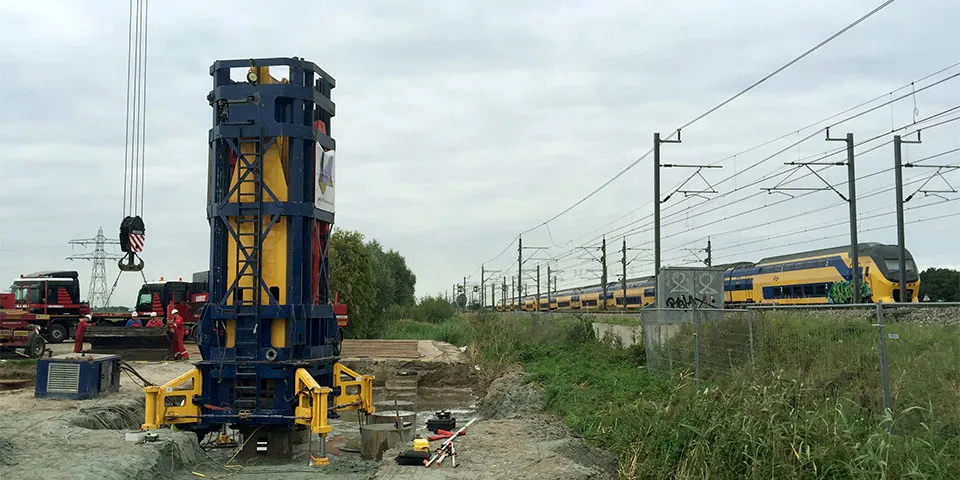
There is growing interest in carrying out load tests as part of foundation design. According to Rob van Dorp of Allnamics, substantial savings can be achieved by designing foundations more efficiently than the prescribed standards require. However, the design must then be verified in accordance with NPR 7201 (Dutch Practical Guideline). Allnamics has developed a unique and efficient method for carrying out rapid pile tests, known as StatRapid.
Allnamics carries out pile tests to establish the quality and suitability of foundation piles. “The tests range from those used to determine load-bearing capacity to those used to analyse pile-soil behaviour or check the pile itself,” says Van Dorp. “We are essentially checking whether what has been devised in theory has also been achieved in practice at that location.”
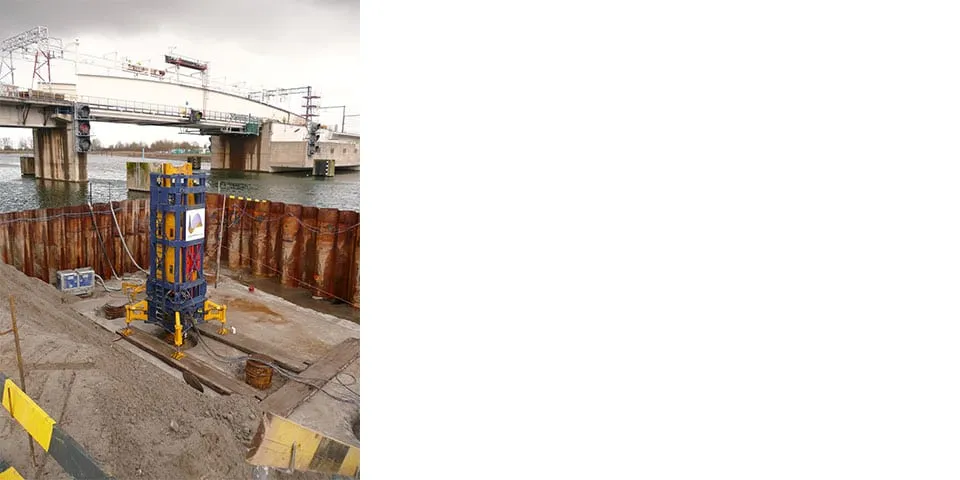
StatRapid load testing
“In addition to static load testing, so-called dynamic load testing was developed in the 1960s,” says Marcel Bielefeld of Allnamics. “At the time, it was used mainly to test large piles for offshore structures. It is now common practice worldwide for all pile types. However, dynamic load testing has a number of limitations and uncertainties. The Rapid Load Test is a quasi-static test that combines the advantages of both methods: the reliability of static load testing with the speed and cost savings of dynamic testing, while providing raw test results directly on site. It is an efficient, scalable method for carrying out rapid pile tests. This testing method has now become accepted worldwide and is incorporated into many codes and standards, including Eurocode and ASTM.” Van Dorp adds: “Some of our StatRapid units are therefore based in Asia. An example project in the Netherlands is Spuikwartier in The Hague, while in Belgium this load-testing method was used during construction of the new road bridge in the port of Zeebrugge.”
NPR 7201 (Dutch Practical Guideline) specifies several classes of load tests. “A Class A test was carried out in The Hague, which means the pile was fitted with a load cell, displacement gauges and strain sensors,” Van Dorp explains. “This made it possible to determine the design factors and produce a foundation structure that was substantially lighter than required by the standard. We tested four trial piles using our StatRapid, demonstrating that the revised design was suitable. This resulted in a foundation structure with fewer and shorter piles. However, the most common pile tests are Types C and D, which check whether the pile’s behaviour meets the design requirements, with or without StatRapid.”
Question about this story? Ask your question
Keep following this
Get an email when a new story is published. No account needed.
- ThemeUnderground construction
- SubjectSpecials







