









On the road to the 2027 edition, INTERMAT publishes its special edition
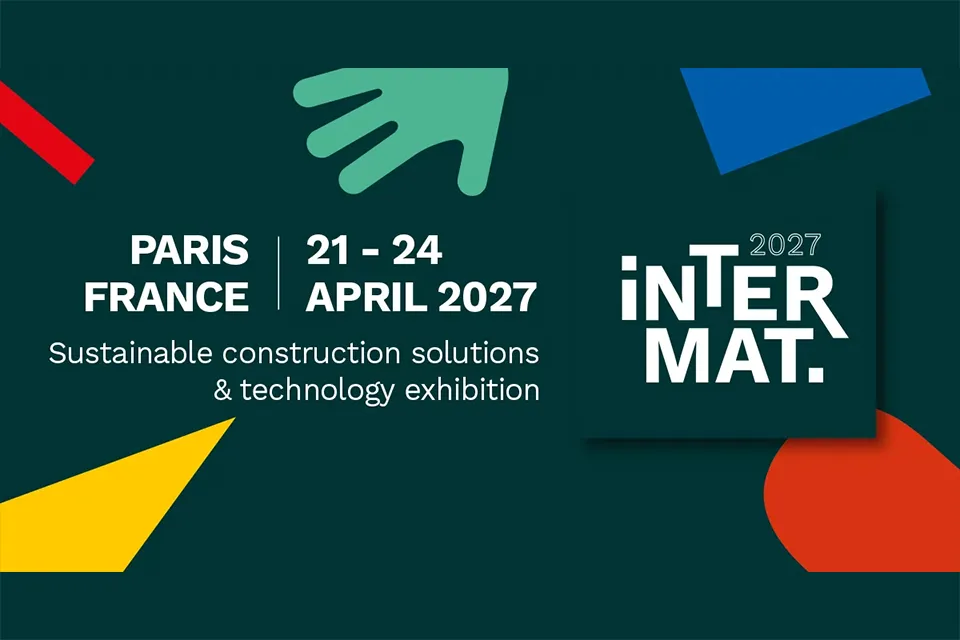
‘The construction sector and the sustainability challenge’, an illuminating account of the economic, environmental and social forces transforming the sector
With less than a year to go until the next edition, international construction equipment trade fair INTERMAT is publishing its special edition, ‘The construction sector and the sustainability challenge’. It examines the three pillars of sustainability, economic, environmental and social, that will shape the event in 2027. It reflects the ambition of the five leading professional organisations C-MAT, EVOLIS, DLR, FFB and FNTP to work together towards the sustainable transformation of the sector while maintaining its competitiveness. It embodies the spirit of INTERMAT: a forum for dialogue and demonstration on a French and international scale. It positions construction companies at THE strategic meeting place for their sector, which aims to make sustainability a lever at the intersection of energy, technology and human issues.
This special edition draws in particular on discussions at the Sector Day held on 29 January 2026, where French and European stakeholders shared their analyses, feedback and perspectives on changes in the construction sector.
Economic sustainability: building and achieving a lasting transition
The sector cannot move to more sustainable models without economic balance. Between European climate targets, rising investment costs and the need to maintain businesses’ competitiveness, economic sustainability now appears to be an essential condition for its transformation.
The EU has set an ambitious course, aiming for carbon neutrality by 2050. But for manufacturers, contractors, rental companies and equipment manufacturers, the question is no longer simply one of support, but of the resources needed to achieve it. The sector must reduce its environmental footprint, comply with increasing regulation and continue to produce, all at the same time. The European regulatory framework is also shifting the sector’s balance, increasing the weight of administrative obligations and highlighting the importance of stability in securing investment.
Demand is another key issue. Zero-carbon equipment remains more expensive than conventional solutions. Public procurement appears to offer a lever for structuring the market by directing tenders towards low-carbon solutions.
Finally, financing equipment remains a crucial issue. After a difficult period, the European market is gradually recovering, but the investment needed for the transition remains substantial. In this context, leasing plays a decisive role in facilitating access to equipment and limiting investment costs. Philippe Cohet, president of DLR, points this out: About 80% of machines are now rented.
INTERMAT makes it possible to compare experiences, highlight existing solutions and, above all, identify the conditions under which they can be rolled out across the sector, with economic models that are viable over the long term, says Guillaume Schaeffer, director of INTERMAT
Environmental sustainability: towards multi-energy projects
Faced with decarbonisation targets and global energy pressures, businesses must adapt their equipment, working methods and energy choices. This shift is now moving towards a multi-energy approach, considered the most realistic way to meet the diverse needs of construction sites.
The electrification of equipment, particularly small machines, is one of the most visible developments. Pilot projects show that these solutions are technically operational and reduce emissions and noise pollution. Biofuels such as HVO (hydrotreated vegetable oil) also appear to be a credible, immediately applicable solution for reducing emissions from combustion engines.
According to Xavier Neuschwander, chair of the FNTP Technical and Innovation Committee: Zero-carbon energy sources remain scarcer than oil. This means choices must be made based on the application.
In this context, the (French) sector has organised itself through the CINERGIC consortium, established at the initiative of C-MAT, EVOLIS, DLR, FFB and FNTP to coordinate discussions on energy use in construction. It has enabled dialogue with the public authorities and helped secure concrete progress, including €20 million in financial support for electric vehicles.
Environmental sustainability is also about changing practices: driver-assistance systems, eco-driving, intensity of use, managing idling, and so on. emphasises Davy Guillemard, president of C-Mat.
INTERMAT is the place to scale up: a forum where solutions and innovations are showcased, compared and discussed collectively, helping to define the conditions for their deployment, says Guillaume Schaeffer.
Social sustainability: attracting talent, training and transforming occupations
The construction sector faces a major challenge: attracting, training and retaining talent. The sector has significant recruitment needs, with more than 210,000 vacancies a year in France, nearly three-quarters of which are difficult to fill. This shortage is not due to a lack of opportunities, but to an image that sometimes bears little resemblance to the reality of today’s occupations. Increasing the number of women in the sector is also a strategic issue that remains largely untapped.
Jean-Claude Fayat, first vice-president of EVOLIS and president of FIM, sums up the challenge: Attracting young people to these occupations means giving them a better picture of how they are changing. Today, they are more modern and less physically demanding, and require initiative while offering autonomy.
This transformation also involves new technologies that are changing working conditions on construction sites in practical ways, particularly AI, which is paving the way for predictive maintenance applications.
In response, the sector is working on several initiatives: training to support changes in occupations, developing more structured support programmes to help people through their first years of experience, and diversifying recruitment.
Sébastien Ramé, vice-president of UMGO-FFB, emphasises: Companies are much more open in their recruitment. We are seeing people retraining, with varied backgrounds, and that is an asset for the sector.
Sustainability also includes the ability to develop occupations, attract new profiles and support skills development. INTERMAT makes these transformations tangible, particularly through the INTERMAT Academy area and its special opening to the general public on Saturday 24 April. This perspective is essential to supporting the sector in the long term, emphasises Guillaume Schaeffer.
INTERMAT Paris 2027, capital of construction and showcase for solutions and sector transformation
With 1,200 exhibitors, 150,000 expected visitors and 130 countries represented, INTERMAT 2027 aims to play a catalytic and central role in supporting the sector’s evolution, bringing all players together around a shared vision: supporting their activities and innovations through an understanding of environmental, social and economic sustainability.
Whether it is putting innovations into practice, sharing feedback or working together to create the conditions for a sustainable, operational transition, INTERMAT aims to create a valuable meeting place for exchange, business and expertise, helping the sector respond to its challenges.
The trade fair will focus on low-carbon and multi-energy solutions, technological and digital innovations, training challenges and making occupations more attractive, live equipment demonstrations, start-ups and emerging innovations, and more.
In addition, a number of forums and demonstrations, including Espace Filière, INTERMAT Innovation Awards, Village Start-up, Espace INTERMAT Academy, INTERMAT Demo, World Of Concrete Europe and a programme of conferences and events, will further enrich the 2027 edition.
See you at INTERMAT 2027, 21 to 24 April 2027, Paris Nord Villepinte
Question about this story? Ask your question
Keep following this
Get an email when a new story is published. No account needed.
- SubjectSpecials







