









On business, motherhood and building bridges between people
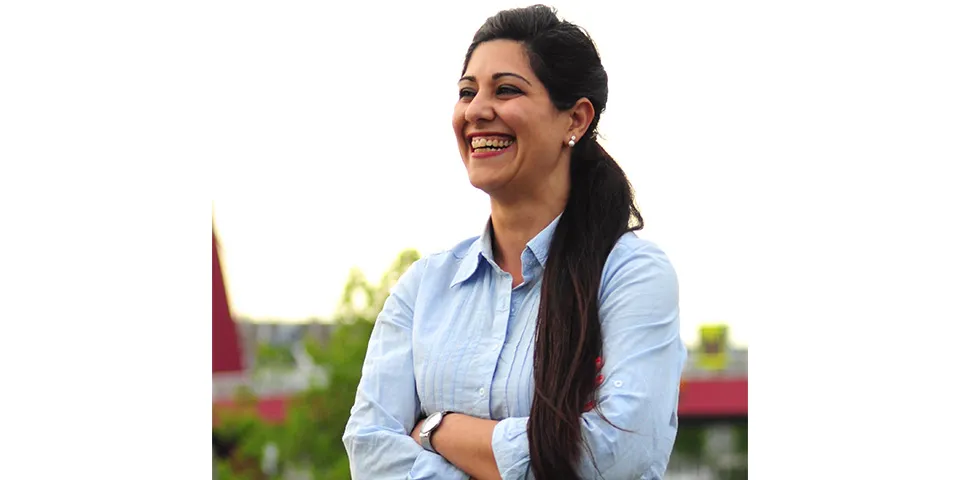
Regular readers of this magazine will know by now that our Top Women feature is dedicated to making women in the civil engineering sector more visible. Our editorial team is assisted by Nina van Arum. She is co-owner of Provades and founder of the Topvrouwen Bouw & Infra networking organisation, a growing network with more than 750 active female members.
When we spoke to Nina about this edition, we were in for a pleasant surprise: this time, she suggested a woman who is not only firmly established in our sector, but also runs her own business. “The boss”, as they say. We are talking about Marsha Goosens, Operational Environment Manager, Infrastructure.
“That’s so cool, Mum!”
Working as a woman in a real man’s world must have an impact on you, surely? Marsha answers with an anecdote: “A while ago, I was driving through the tunnel beneath the Vliet aqueduct with my children in the car. ‘Look, Mum helped build this tunnel when she was younger!’ I exclaimed excitedly. ‘They stared at me wide-eyed from the back seat. My son was very impressed and shouted, “That’s so cool, Mum!” And that’s exactly how it felt. I’m proud of my work and proud of the projects I get to be part of.”
After completing a thesis project on Direct Transhipment Inland Waterway and Rail (DOBIS), Marsha started out as a self-employed contractor in The Hague. “My thesis focused on the construction of the 2nd Maasvlakte, specifically the container terminal there. I’ve now worked in the infrastructure sector for 20 years, including 8 years as a self-employed contractor, and for the last 4.5 years, among other things, on projects commissioned by Havenbedrijf Rotterdam. I was involved in the construction of the Container Exchange Route, bringing things full circle for me. I’m back on the Maasvlakte every day. That area is the economic engine of the Netherlands,” says Marsha.
It runs in the family
Marsha is originally from Iran. Her father had a construction company there, a business with an irresistible appeal. “As a child, I would sit at the drawing board, creating entire designs with a Rotring pen. I grew up with a love of construction. After we had settled here and I had learnt Dutch, I studied Civil Engineering at an HTS. One day I saw the Erasmus Bridge opening and closing in Rotterdam, and fell in love with it on the spot. I knew then where my future lay: in civil engineering. I switched from building engineering to civil engineering and graduated in Rotterdam in 2000.”

Environmental management comes into view
In 1999, while still working on her thesis project, Marsha joined BAM as a project coordinator. “My first assignment was the Aquaduct de Vliet project in Leidschendam, part of the Ringweg Scheveningen national road. Later, I took a detour into housing and non-residential construction in Rotterdam, but that lasted no more than 9 months. It just wasn’t for me,” Marsha says. “I then joined the municipality of Oud Beijerland as Project Leader/Manager in the Public Realm department. I worked there for 5 years and was ready for a new challenge. The private sector beckoned, and in 2010 I moved to a temporary staffing agency, drawn by a vacancy for an Environmental Manager. I took on the role for 1 year as an interim worker.”
The link between the technical and human sides
By the end of 2011, she had become self-employed. “Why? I was about to become a mother. I urgently needed to find a balance between being at home and working. Setting up on my own gave me the freedom to organise my own hours, but in practice you end up with two jobs to manage. As an Environmental Manager, I act as the link between the design team and the surrounding area in the broadest sense. That can mean liaising with a stakeholder company or residents (the human side), as well as dealing with existing cables and pipelines, legislation and regulations, or flora and fauna (the technical side). My goal? To build support and create the right conditions for the project to be delivered.”
A sense of humour and a light touch make all the difference
“I’ve never aspired to a line management or management role anywhere,” Marsha continues. “I work best as part of a team, where I can contribute to the work and to the team itself. As a woman, I find it easier to look at things from a different perspective. The best projects are the ones where there’s humour and a light touch within the team. A day without laughter is a day wasted! Whatever I do, I challenge myself. I simply want to be the best I can be.”
Twenty years ago, 95% of the infrastructure workforce was still male. “Part-time work was very difficult to arrange back then. Everyone was a bit trapped in the typical gender roles of the time. Thankfully, there’s now much more scope for part-time work, which is a positive development. Whatever the prevailing gender roles, I’ve always strived to have it all: to build a career that made me happy and combine it with a rich family life with children. It takes a huge amount of hard work, but I’ve managed it, thanks to my decision to become self-employed.”
No obstacles
Working as a woman in a man’s world has never held Marsha back. She admits, though, that it took her longer to get to where she is now. “Actually, working in a man’s world has led to more awkward situations in my private life than at work. Can you picture me at a party, explaining to my friends what my day was like? Suddenly I’m ‘one of the guys from that man’s world’, in a typically female world,” Marsha says with a laugh. “But everyone in our sector knows that problem. Our industry has enormous social value, yet people outside it rarely understand that. That’s a shame.”
Being willing to show vulnerability drives change
“If you change the way you look at things, things you look at change” is Marsha’s motto. “Women can do that naturally. I’ve never felt hesitant about showing vulnerability. My message to women, and perhaps even more so to men, is to be open. Dare to be vulnerable and make connections. That’s how you build bridges, not just across the landscape, but above all between people.”
Question about this story? Ask your question
Keep following this
Get an email when a new story is published. No account needed.
- ThemeExtending the life of roads and civil engineering structures
- SubjectSpecials







