









Leading the way in systems and technology
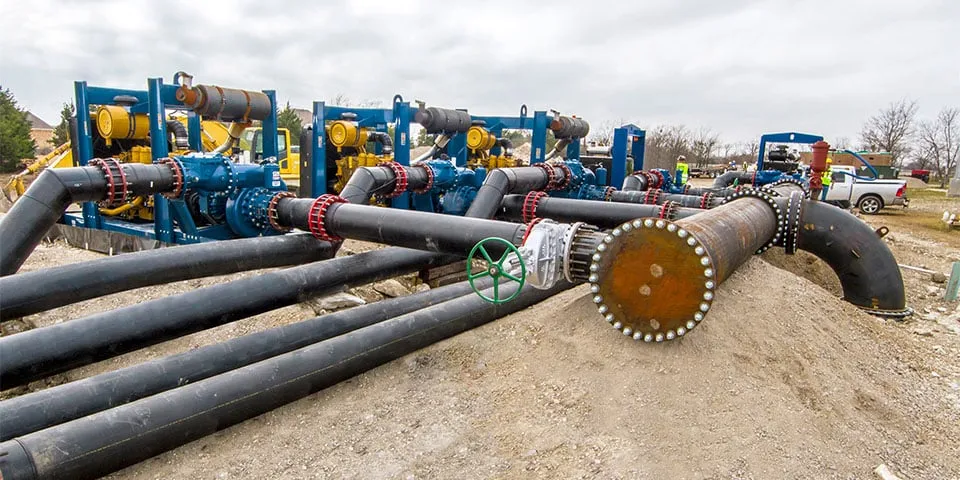
The Netherlands has traditionally placed a strong emphasis on water management, not least because it is located in a delta where several rivers meet. As a result, our country experiences the effects of climate change first-hand, much more than the countries around us. This is why extensive efforts are under way to make the Netherlands climate-resilient, with pumps playing a key role.
Water management in the Netherlands:
“Water management is exceptionally important in the Netherlands,” says Jos Kelderman of Gorman-Rupp Europe. “From the Netherlands, we are responsible for selling products throughout Europe. This gives us a good picture of how water is managed here compared with other countries. There is still progress to be made, particularly in Southern and Eastern Europe. The urgency may not yet be felt as keenly there as in the low-lying Netherlands. We experience the effects of climate change directly, in the form of heavy rainfall as well as increasing drought. That is why there has been substantial investment in our country in measures such as climate-resilient infrastructure, disconnecting rainwater drainage from the sewer system, and widening and/or rerouting waterways.”
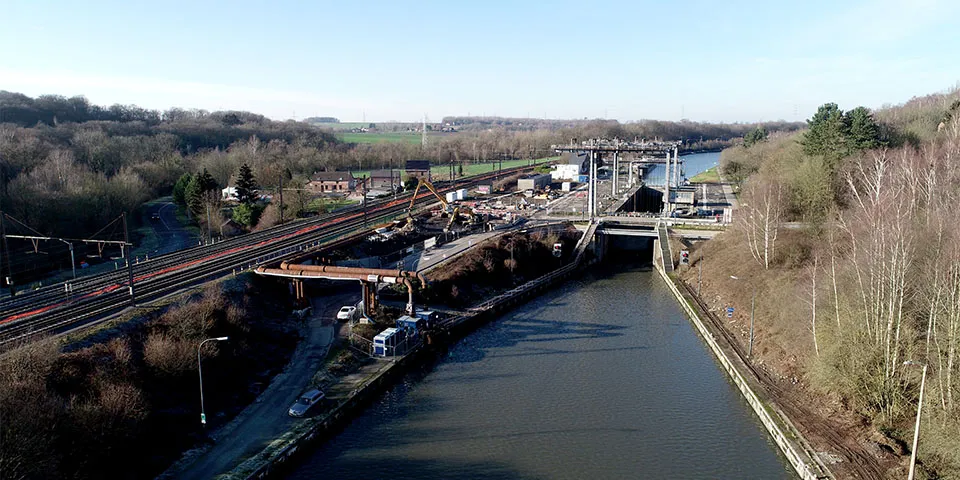
For almost two years, Gorman-Rupp operated a temporary pumping station in Belgium while the permanent pump installation at a lock on the Charleroi-Brussels Canal was being renewed.
Wide range
Gorman-Rupp Europe is a subsidiary of Gorman-Rupp Pumps, with a range of thousands of pumps offering capacities of up to 4,000 m3/hour. Kelderman: “We can also draw on pumps from a range of sister companies, such as Patterson, which specialises in the higher-capacity range. We can provide a suitable solution for every situation, from a small wastewater pump for a sewer contractor to large pumps for work on lock complexes and waterways. We have a strong position in the wastewater pumping market abroad, but are still only active to a limited extent in the Netherlands. We are focusing fully on this market in the years ahead. To that end, we have established a specialist branch where engineers work with clients on sewerage issues and devise smart systems to address them. After all, a pump is part of a complete system.”
Adapting the sewer system
An important part of making the Netherlands climate-resilient is disconnecting rainwater drainage from the sewer system, so that rainwater remains where it falls. “This means sewer systems need to be designed differently,” says Jan Heuvel of Gorman-Rupp Europe. “The pumping stations within these sewer systems also need to be configured differently. Disconnecting rainwater drainage means less water flows through the sewer system, while the concentration of solids is higher. We have developed a number of systems to tackle these challenges. A good example is the above-ground sewage pumping station, a self-cleaning pumping solution that offers an alternative to the conventional submersible pumping station.”
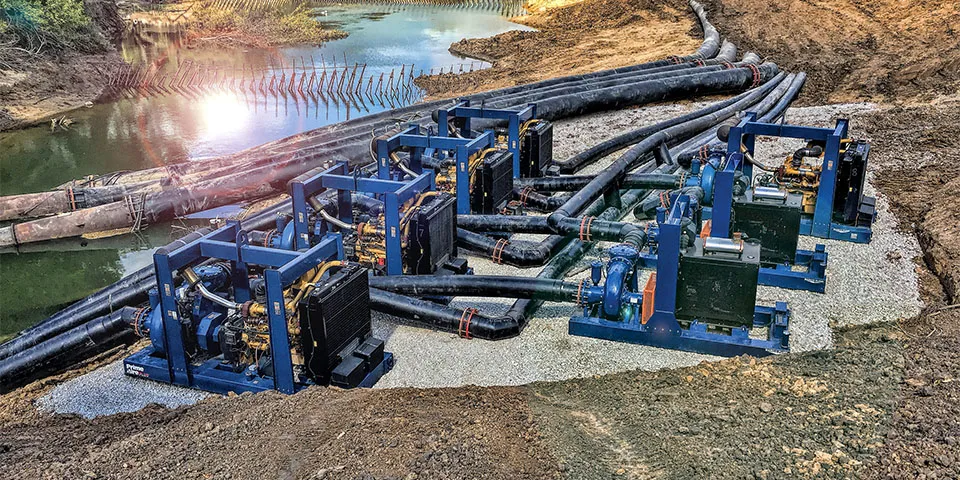
Gorman-Rupp supplies pumps for bypass operations not only in the Benelux. These units are also popular abroad for all kinds of temporary applications.
Self-cleaning pumping solution
To reduce problems caused by the build-up of solids in sewage pumping stations, Gorman-Rupp has developed the Self-Cleaning Sump System. “The SCS System is an integrated technology featuring a sloped mini-collector, which means there is no need to install a sump,” Heuvel explains. “The retention time in the collector is kept to a minimum, significantly reducing sediment settlement and grease deposits on the sump walls. Each pump cycle removes floating debris and sediment without any risk of blockage.
This makes the sewage pumping station self-cleaning. Combined with the ease of maintenance of Gorman-Rupp Reliasource above-ground pumping stations, it is a complete solution that can significantly reduce the maintenance required by Dutch sewer operators, thereby saving operating costs. We have already successfully applied the SCS System several times in Belgium.”
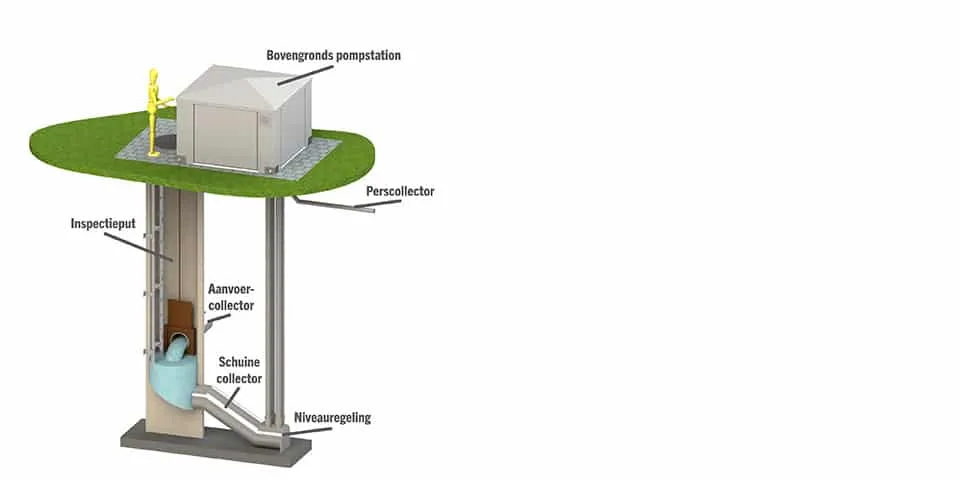
To reduce problems caused by build-up in sewage pumping stations, Gorman-Rupp has developed the Self-Cleaning Sump System.
Agitating and removing solids
Heuvel acknowledges that the SCS System is not suitable for every situation. “For existing sites where it is difficult to use our self-cleaning pumping solution, we also have an alternative to manage the higher concentration of solids. We can install a valve in the rising main which, at regular intervals and depending on the level of contamination, generates turbulence and a swirling flow in the sump, bringing all the solids into suspension so they can be removed. Our engineering branch can develop a suitable solution for every situation. Supplying a pump is one thing, but fundamentally a pump is a simple product that obeys the laws of physics. Our added value lies in applying our expertise to pumping installations and influencing the conditions as much as possible to ensure that a pump operates optimally.”
Changes to sewer systems, waterways and lock complexes are often a direct consequence of climate change, Kelderman concludes. “Our aim is to take care of far more than simply supplying customers with a pump set. We also have a huge rental fleet. For almost two years, for example, we operated a temporary pumping station in Belgium while the permanent pump installation at a lock on the Charleroi-Brussels Canal was being renewed. The temporary pumping station consists of two Patterson pump units with a combined flow rate of 9,000 m3/h, associated 40-inch pipelines, and control and monitoring systems. We do not shy away from a challenge.”
Een zakelijke vraag aan Gorman-Rupp Europe B.V.? Get in touch
Companies in this story
Keep following this
Get an email when a new story is published. No account needed.
- ThemeFlood protection and climate-resilient water management
- SubjectSpecials
- CompanyGorman-Rupp Europe B.V.







