









Keeping work sites accessible on boggy ground while reducing CO2 emissions
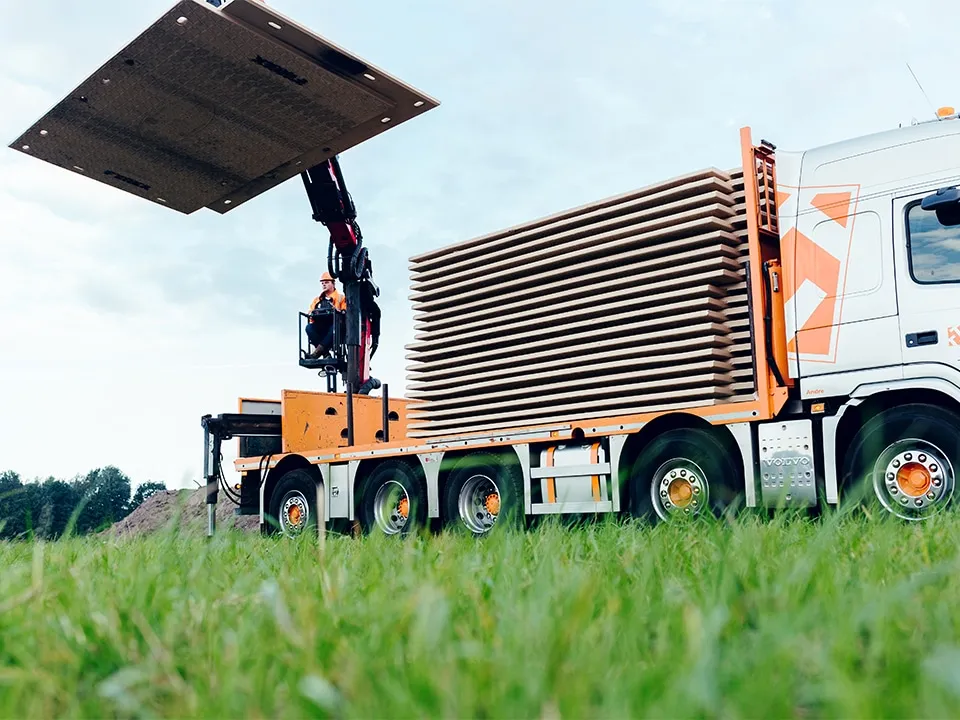
Essential materials in the civil engineering sector include the familiar trackway mats. They allow heavy machinery to reach work sites and carry out its work, even in boggy conditions.
One notable product in this field is the composite trackway mat. It is lightweight, easy to connect to adjacent mats and helps prevent erosion, thereby reducing CO2 emissions
Ferex trackway mats are made from composite, a strong, lightweight material with a long service life. The combination of high strength and low weight makes it possible to produce large-format mats that are still easy to handle. Their large size allows them to follow the contours of the ground, ensuring optimal pressure distribution and load spreading. As a result, the mats can be laid directly on any surface without ground preparation.
Guaranteed buoyancy
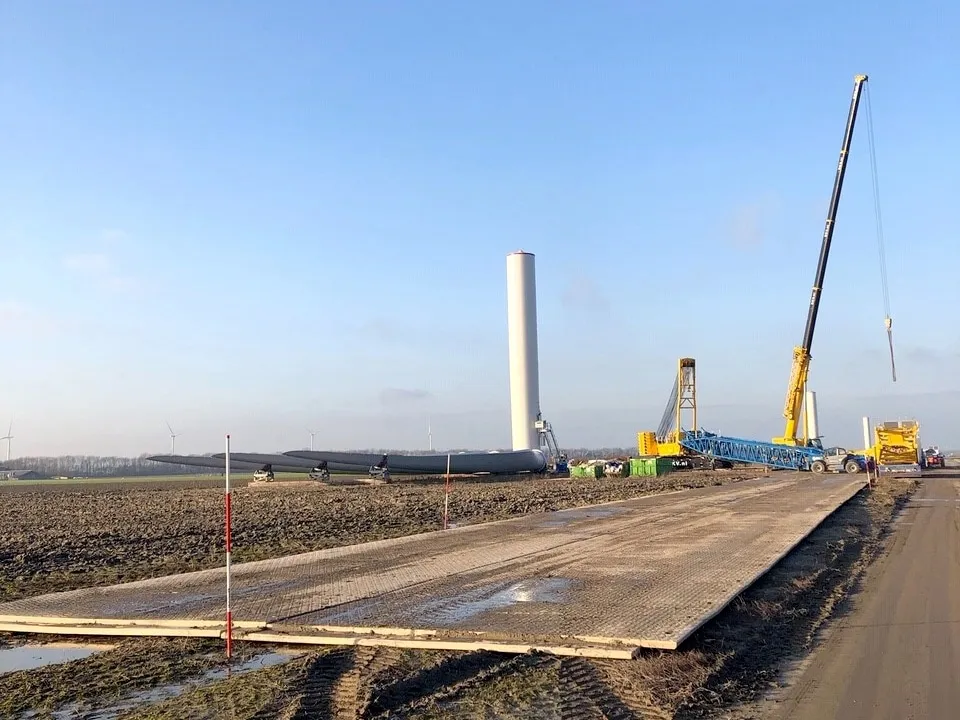
“The mats have air chambers,” explains Sanne Buitenhuis, Ferex marketer. “To stop them filling with water, the chambers are filled with foam. This helps keep the mats lightweight, so they will not sink into boggy ground, but will stay afloat.”
Reducing CO2 emissions
“This last feature is more significant than it might seem,” adds Paul Schmal, Ferex commercial manager. “With traditional solutions, such as steel trackway mats and dragline mats, at least 30 cm of peat must first be excavated in peatland areas and replaced with a load-bearing layer of sand. The peat is then exposed to oxygen, triggering oxidation and releasing around 250 grams of CO2 per trackway mat area.” Schmal regrets that these CO2 emissions are not included when calculating a project’s CO2 emissions. “Using composite trackway mats can save significant amounts of CO2.”
Versatile applications
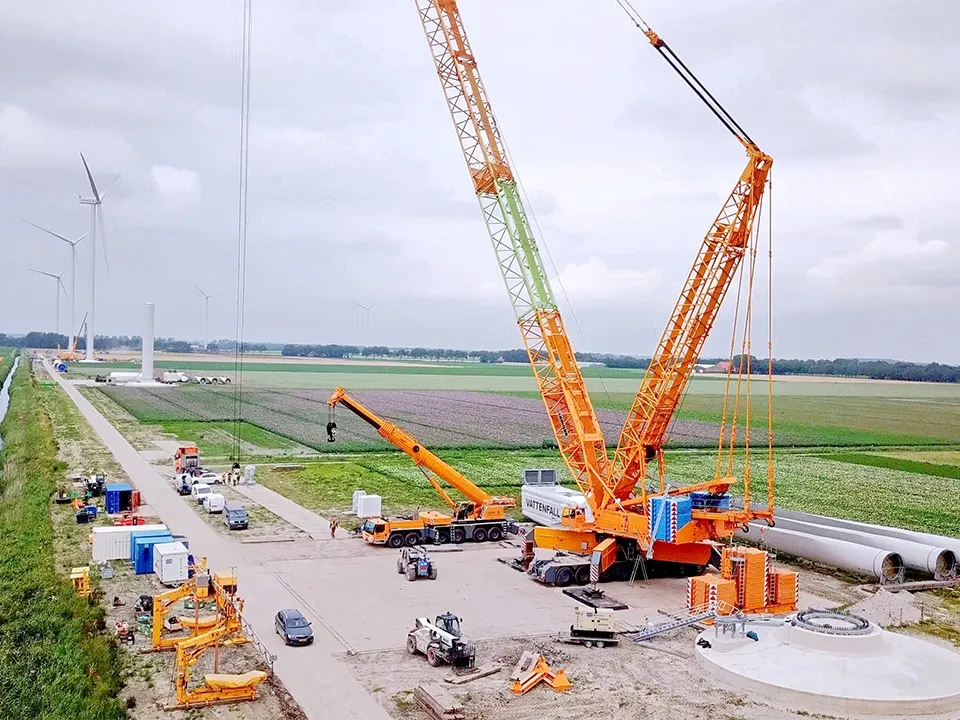
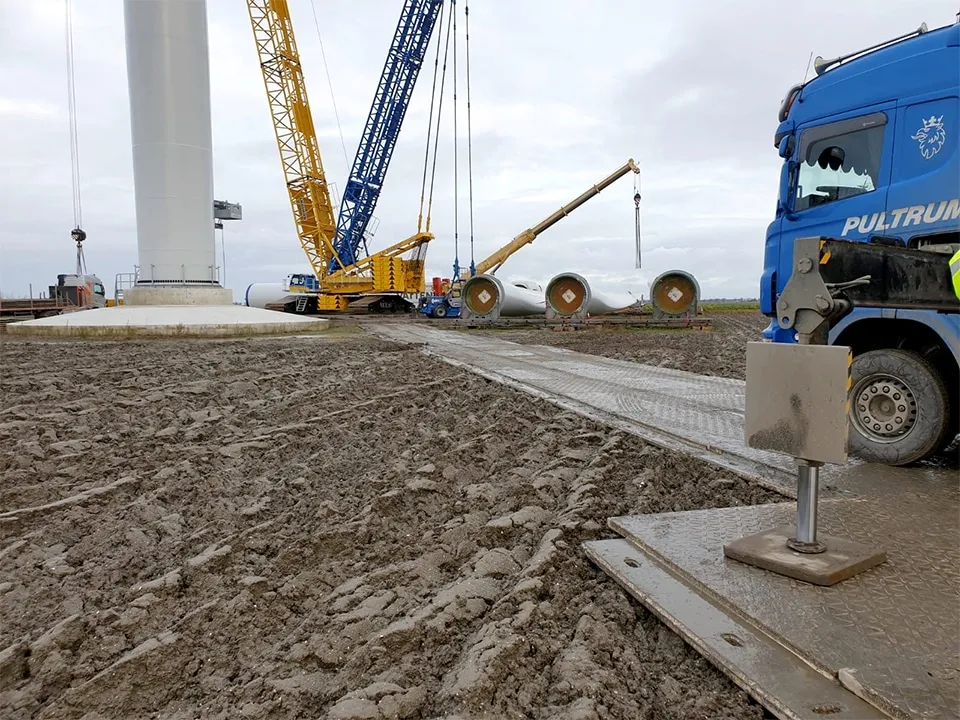
Ferex trackway mats are suitable for a wide range of applications. They were recently used at a wind farm under construction, where access to the work site was becoming increasingly difficult. The temporary road made from dragline mats had subsided, damaging flora and fauna and creating unsafe conditions. “In situations like this, the disadvantages build up,” says Schmal. “The ground offers more resistance, requires more force and increases CO2 emissions. The machinery is put under greater strain and needs more maintenance. The work takes longer, and that costs money.” To restore safe access to the construction site, the temporary road was replaced in stages with Ferex composite trackway mats. Their high buoyancy prevented them from sinking and kept the ground intact.
Success stories
Schmal: “These are just a few of our success stories. Near Delfzijl, a silt depot was made accessible again thanks to Ferex trackway mats. And last summer, a hospitality business in Nijverdal increased its capacity by using our mats to build a terrace on the water. A unique experience for visitors and a welcome expansion for the business
during the coronavirus pandemic.”
After use, the mats are thoroughly cleaned at Ferex, preventing cross-contamination. Ferex is working to fully automate the cleaning process, but a mobile cleaning unit on site is also an option
Question about this story? Ask your question
Keep following this
Get an email when a new story is published. No account needed.
- ThemeLower emissions and more reuse
- SubjectSpecials







