









In the gutter, out of trouble
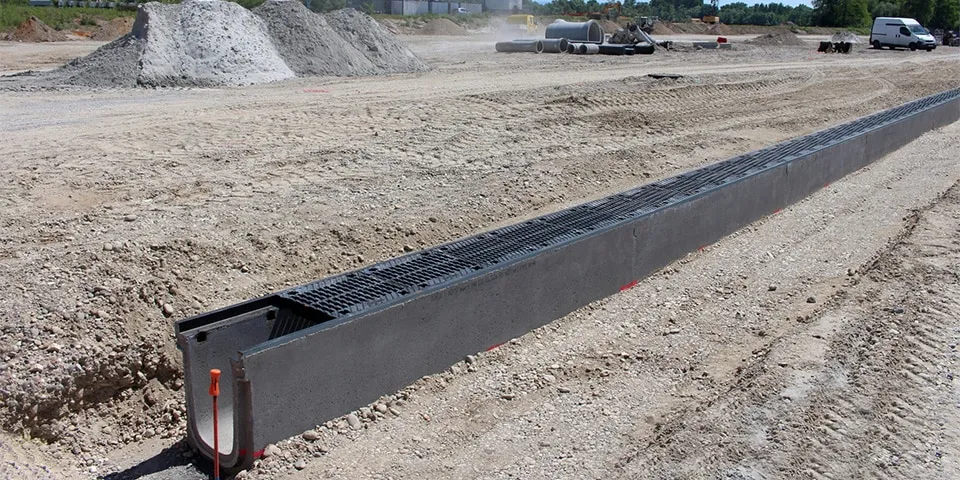
Stormwater drainage, particularly in urban areas, is a hot topic. It is no coincidence that Nering Bögel launched the high-profile ‘Waterquest’, a think tank exploring unconventional solutions to help tackle increasing rainfall in the future. We speak to Toin Bongers, operations director at Nering Bögel.
“Waterquest has given us valuable insights, both into the challenges and into possible solutions. It has generated ideas that deserve further investigation. But ‘normal life’ goes on too, and we also need to look for practical, hands-on solutions for water drainage in the short term. We now have one such solution in our hands!”
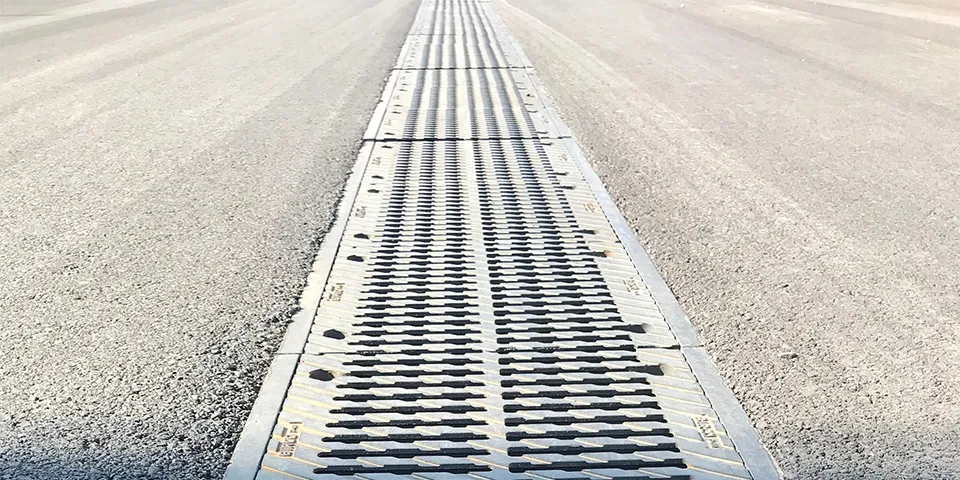
The Max-i channel is EN1433-certified and fitted with cast-iron slotted or mesh grates.
Storing water for later use
“Drainage systems can broadly be divided into two categories: point and linear drainage. Point drainage means a gully, while linear drainage consists of a long, shallower channel with grates. In both cases, the water is carried to a large sump or reservoir. From there, this precious water is transported onwards towards rivers and eventually out to sea,” Bongers explains. “So in effect, we are dealing with two problems: our drainage network was built to an outdated design and was never sized to cope with the volumes of water it has to handle today, resulting in flooding; and all that rainwater is sent out of the country without being put to any useful purpose. That is a waste.”
Nering Bögel spoke to German company Birco, which developed the Max-i channel. Bongers: “We will be introducing the Max-i system in the Netherlands under our own brand. You can think of it as an XXL channel. The concrete channel is much deeper than the linear drainage channels we are used to. Excess rainwater is retained in the channel, which acts as a water buffer. This makes the water immediately available for useful applications when needed, for example during periods of drought such as those we have experienced in recent hot summers. The Max-i enables us to cope with two extreme weather conditions: one in which so much water falls from the sky at once that conventional channels would not have enough capacity to drain it, and another in which extreme drought causes a water shortage.”
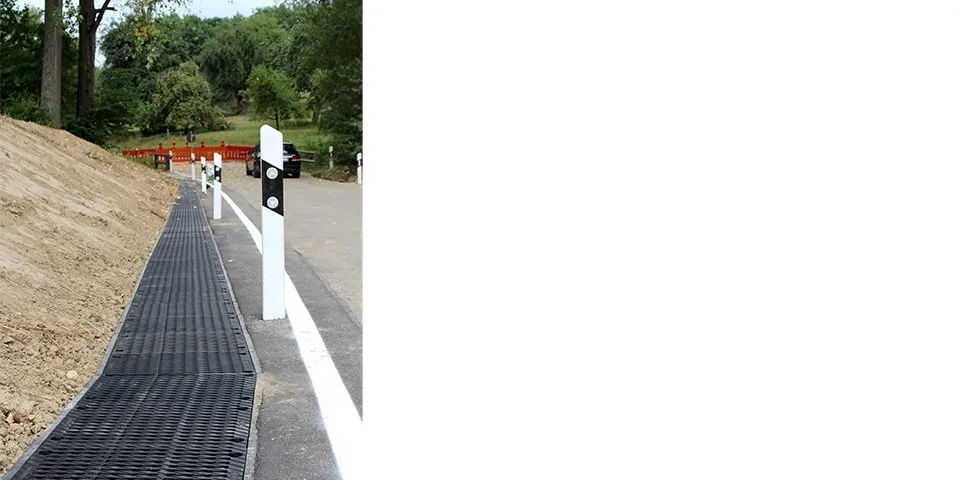
Increased safety in wet weather in Baden-Baden, thanks to Max-i.
Made entirely of concrete and certified
The Max-i channel is made entirely of concrete and is so strong that it can be laid directly. “There is no need for the additional surround required for conventional channels. This saves space, materials and time. The Max-i channel is EN1433-certified and fitted with cast-iron slotted or mesh grates. It makes no difference whether it carries pedestrian traffic or heavy goods vehicles. A Boeing could drive over it without any problem. That is why this channel is already being used at airports.”
According to Bongers, the Max-i is relatively expensive compared with conventional drainage systems, but that is an apples-to-oranges comparison. He explains: “Max-i is already being used in Germany and France, with pilots at airports and in port areas where drainage requirements are stringent. So far, it has been supplied directly to end customers, including specifiers, airports and local authorities. We will initially market Max-i in the Netherlands in the same way, offering the system directly and making it clear that preventive use of Max-i makes sense.”
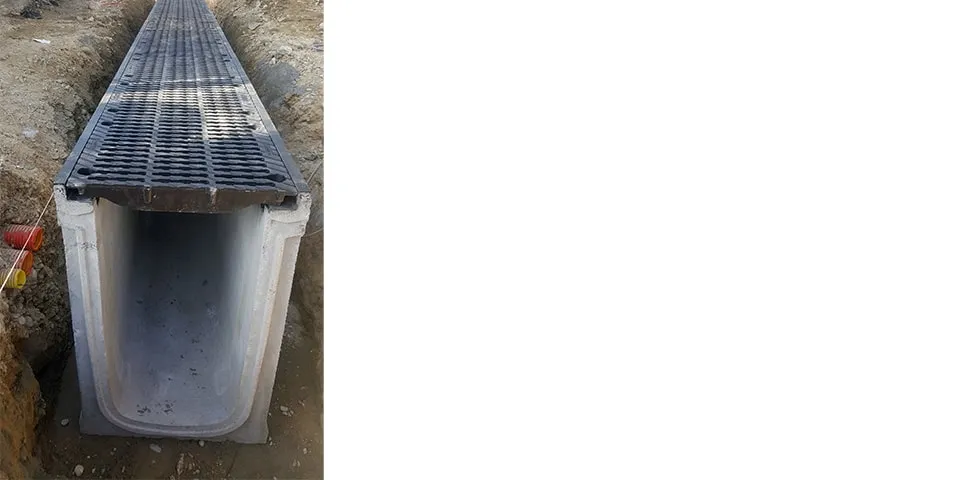
Installation at a car wash in France.
Proven technology that takes things a step further
Bongers says we need to think differently about drainage. “We have to dare to look beyond existing channel systems. There are no risks with Max-i, because everything has been designed and built using proven technology. The concept has simply been explored in greater depth, both literally and figuratively.” Nering Bögel Max-i is available in various widths and depths, depending on the requirements of the site. Bongers concludes: “Thinking differently is essential, but then you also benefit from a genuine solution. We believe this can make a big difference, initially at airports, ports and logistics centres. Of course, people tend not to like what they do not know. So I would like to invite anyone interested to visit us at Dag van de Openbare Ruimte 2020, on 30 September and 1 October 2020 at Jaarbeurs Utrecht, or earlier at RioleringsVakdagen 2020 in Gorinchem, on 17, 18 and 19 March this year.”
Question about this story? Ask your question
Keep following this
Get an email when a new story is published. No account needed.
- SubjectSpecials







