









Highly efficient drainage for an architectural bus bridge
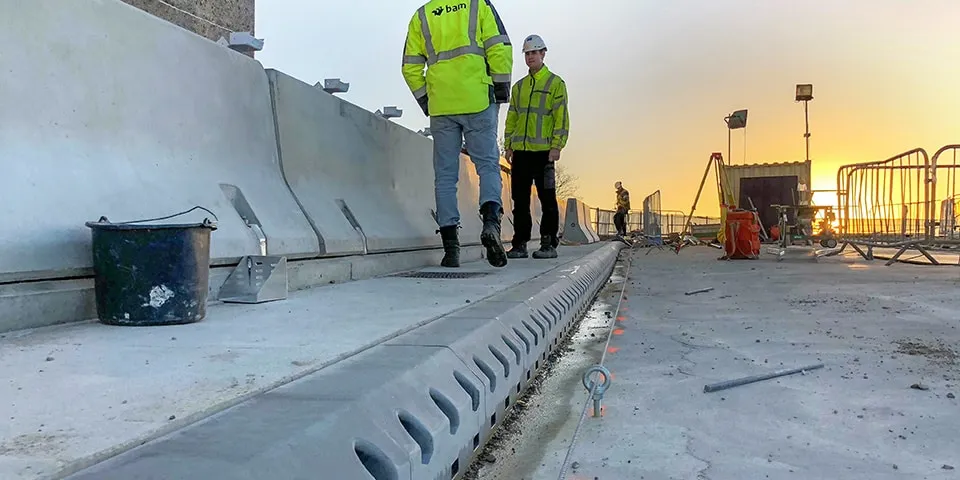
Zwolle will soon have a true “landmark”. From early 2019, buses from the city centre and the north of the city will be able to use the new bus bridge to carry passengers quickly and comfortably to and from the new bus station. The elegant, sinuous design of this architectural bus bridge is an impressive feat of engineering, with highly efficient drainage playing its part.
The new bus bridge was designed by BAM Infra and ipv Delft creatieve ingenieurs and, according to Mark Visschers of IDS, is one of the most beautiful bridges currently under construction. The bridge is 254 metres long, winds over a large number of railway tracks and is supported by two abutments and just four slender intermediate piers. BAM Infra contacted IDS at an early stage to discuss the drainage design. “Tristan Wolvekamp of BAM Infra knew our unique EnviroBridge drainage product from international projects in Ireland and Great Britain and thought it could also make a significant contribution in Zwolle.”
Maintenance and aesthetics
The new bridge is being built under a UAV-gc contract that also includes maintenance. “A traditional drainage system, with pipework beneath the bridge, would detract from its slender design and have major implications for maintenance,” Visschers explains. “Because the bridge winds over several railway tracks, train services would have to be suspended during maintenance work. Every year. That was not an option. By installing EnviroBridge drainage units on the bridge itself, there is no need to worry about maintenance. Since our product was included in the initial design during the tender phase, it made a substantial contribution to achieving the maximum EMVI score.”
The 254-metre-long bus bridge is fitted with EnviroBridge drainage units on both sides.
D400 load class
The 254-metre-long bus bridge is fitted with EnviroBridge drainage units on both sides. A total of 1,016 units have been incorporated into the bridge. The monolithic composite drainage products are made from 60% recycled plastic and 40% calcium. Visschers says: “Each drainage unit takes the equivalent of 520 recycled plastic bottles to manufacture. In other words, no fewer than 529,000 bottles have been recycled for this project. The units comply with EN1433, the European standard for linear drainage, and are certified by Lloyd’s Register. The EnviroBridge units used here in Zwolle meet load class D400, have an RWS profile with a sloping edge and are exceptionally strong. They can withstand loads of up to 40 tonnes when freestanding. They need to be, as buses will be crossing the bridge continuously and could therefore drive over our units.”
According to Visschers, IDS worked very closely with the client throughout the project. “Together, we worked out the layout plan and installation method. The results speak for themselves. The continuous line of drainage openings has been very well received, including in terms of design.” The bridge is expected to open to bus traffic in early 2019. No fewer than 1,200 bus journeys will cross it each day.
Question about this story? Ask your question
Keep following this
Get an email when a new story is published. No account needed.
- ThemeFlood protection and climate-resilient water management
- SubjectSpecials







