









GW Leidingtechniek presents sewer heat innovation at Aqua Nederland in Gorinchem
GW Leidingtechniek will be exhibiting at Aqua Nederland at Evenementenhal Gorinchem on 17, 18 and 19 March. As a contractor specialising in underground pipeline construction, we look forward to meeting existing contacts and making new connections in the water sector.
The exhibition is a valuable opportunity for us to showcase our expertise and innovations in pipeline technology. We consider discussions with industry peers and partners just as important. Sharing knowledge and experience is precisely what leads to fresh insights and better practical solutions.
Will you be at Aqua Nederland? We look forward to welcoming you at stand C36.
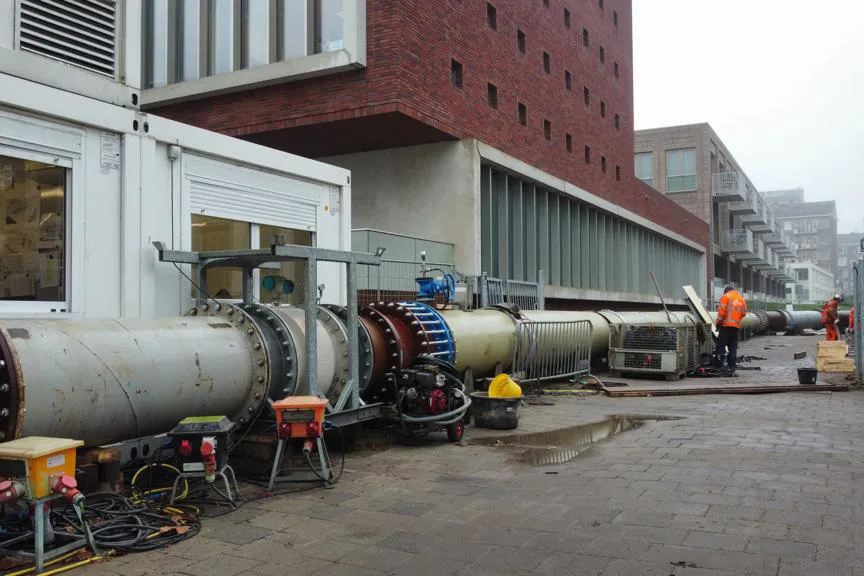
At the exhibition, we will be presenting our latest innovation in sewer heat recovery. At our stand, we will show a scale model and a video clearly explaining how it works and where it can be used. We would be delighted to tell you more.
Would you like to find out more about this development in advance? Below is the article previously published in the De Bouw Maakt Het Slim supplement to Bouwend Nederland magazine.
GW Leidingtechniek BV in ‘De bouw maakt het slim’ (Bouwend Nederland)
Innovation is high on the agenda at GW Leidingtechniek. In collaboration with the municipality of Rotterdam, the Helmond-based company has developed a new sewer heat recovery solution for pumped sewer mains. Its patented method uses heat from sewage as a sustainable energy source.
GW Leidingtechniek designs, installs and renovates underground pipeline infrastructure, making a direct contribution to clean drinking water and wastewater services in the Netherlands. The company works sustainably and uses modern techniques. According to Rob Hoogervorst, director of business development, the market is changing: ‘Clients are increasingly looking for partners who can contribute from the design stage as part of an integrated project team. That suits us well.’ Jaap Peters, project manager at Ingenieursbureau Rotterdam, sees the same trend. The bureau has been designing and delivering public infrastructure for 170 years and has extensive expertise, including in sewage pumping stations, bridges and quay walls. This expertise is much needed, as Rotterdam, like other municipalities, faces major challenges such as the energy transition, urban densification, housing construction and greening. It is essential to innovate while keeping projects moving.
Sewage is surprisingly warm A combination of circumstances brought the two parties together. ‘In 2021, we had a trainee with a physics background,’ says Hoogervorst. ‘Around that time, the municipality of Rotterdam invited companies to contribute ideas for sustainable applications. That gave us the idea of investing in a heat exchanger that extracts heat from sewage.’ Around 30 per cent of the energy entering a home goes down the drain. As a result, sewage is relatively warm. Sewer heat recovery, part of aquathermal energy, which extracts heat from wastewater, drinking water and surface water, uses this residual heat as a sustainable, gas-free energy source. This is an interesting prospect for Rotterdam, which owns the city’s wastewater system. Peters says: ‘We are already investigating how to extract heat from water systems at several locations. So we were keen to work with GW Leidingtechniek to take their idea further.’
Ideal test site
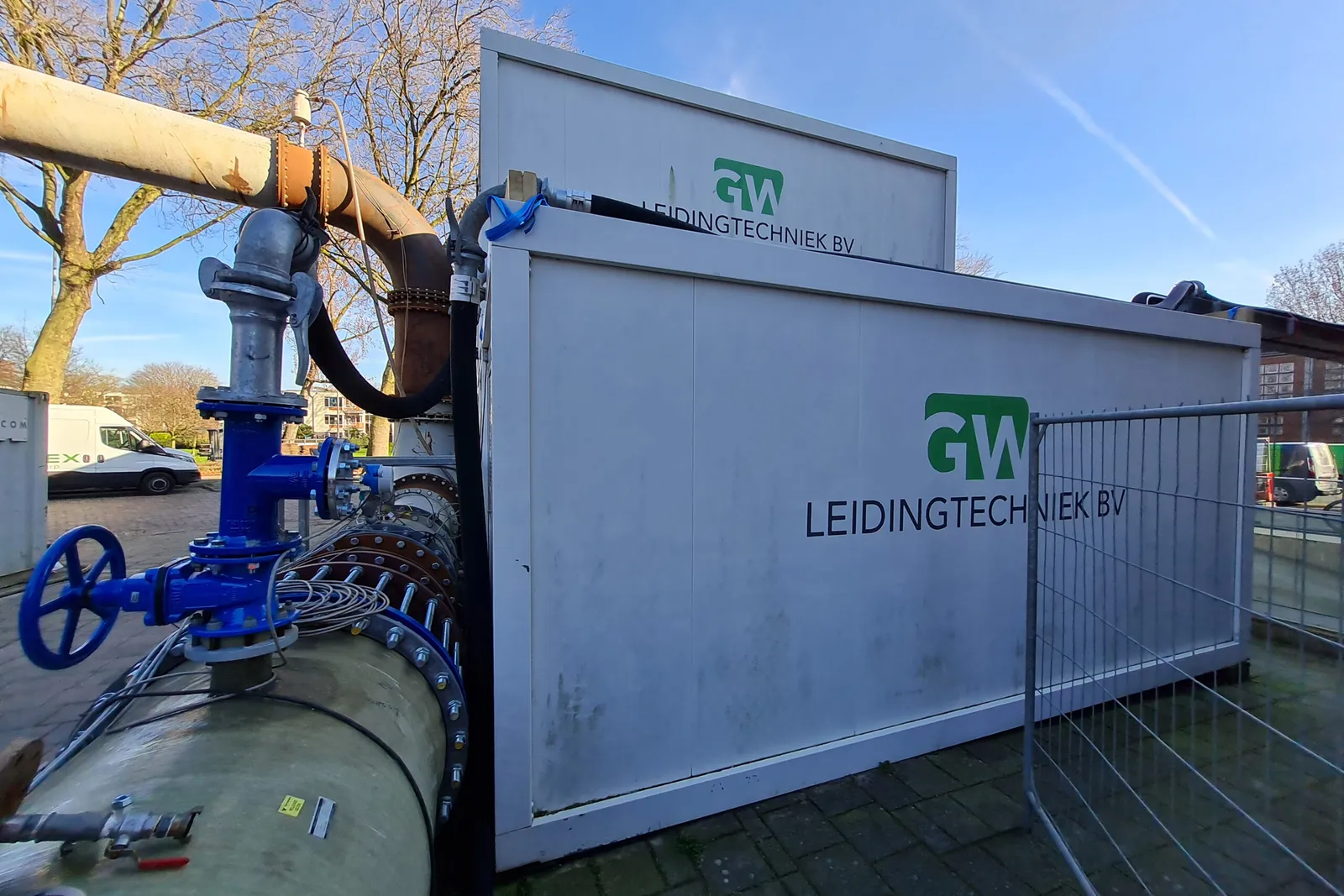
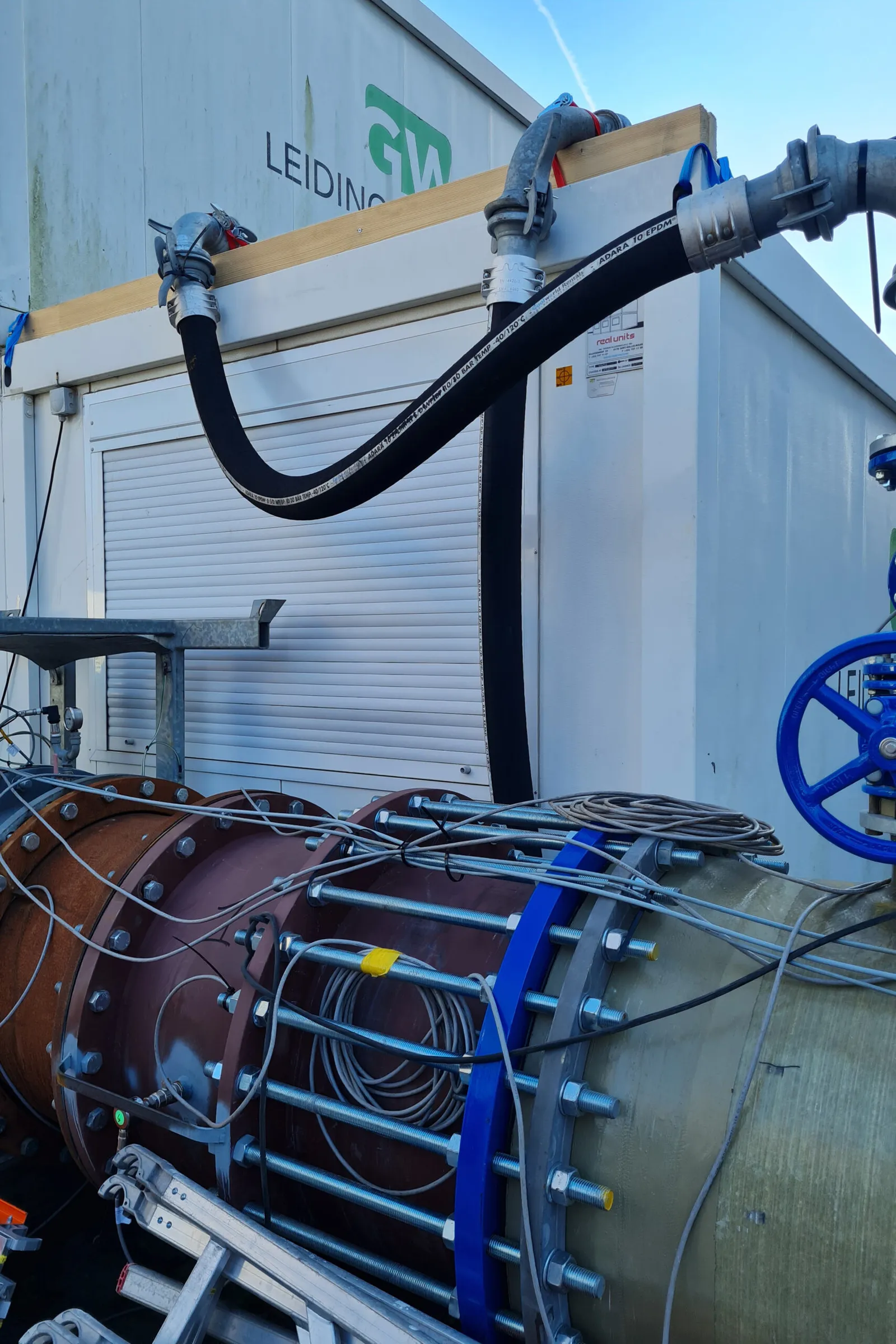
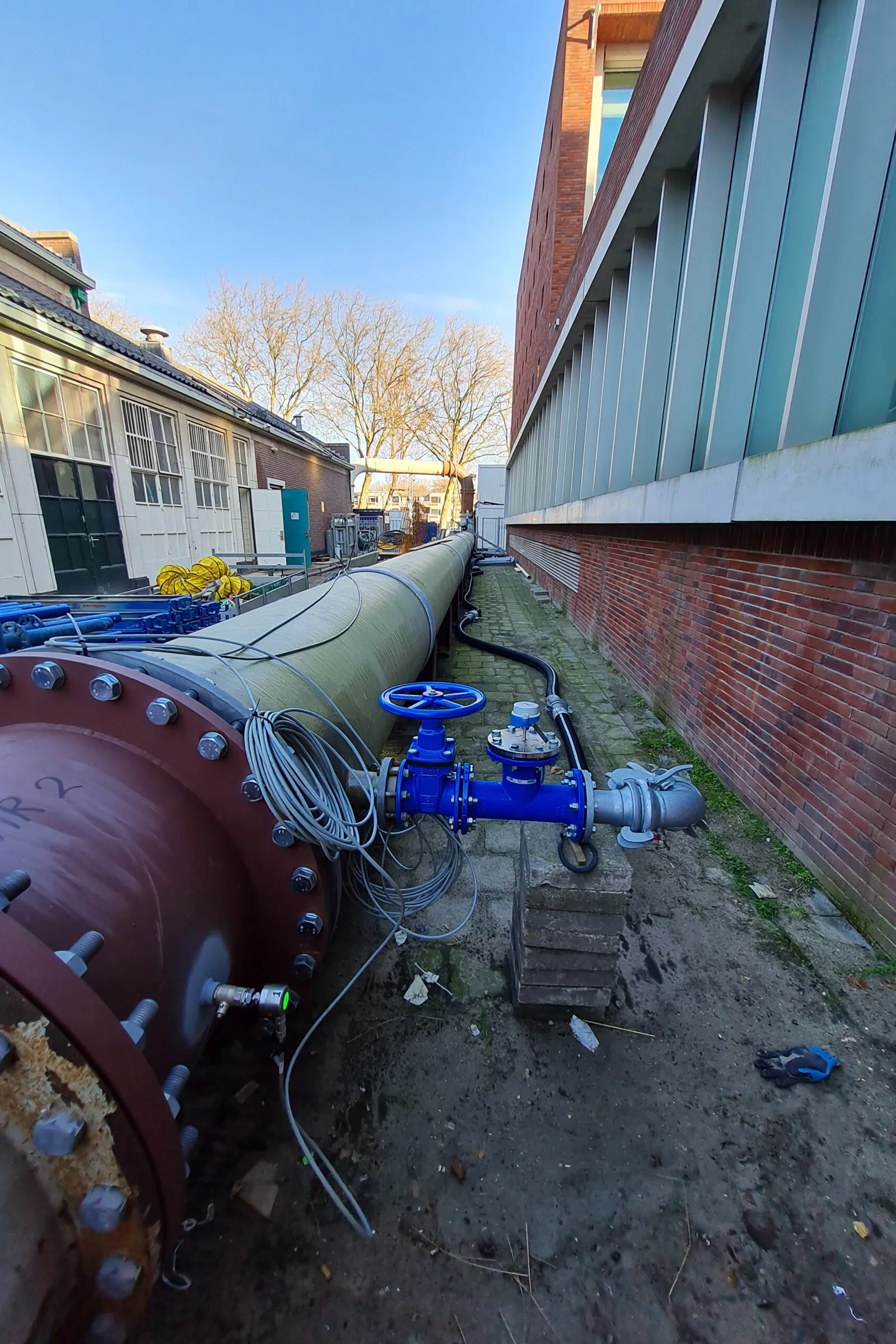
Together, they developed the Rotterdam Energy Recovery Tube (RERT), a new type of heat exchanger. Its double-tube construction, with a coated steel inner pipe and a GRP outer pipe, is easier to install and cheaper than existing solutions from abroad. Heat is transferred to a second pipe containing fluid, after which a heat pump raises its temperature to 45 to 55 degrees. The system can also provide cooling in summer. The renovation of one of the largest and oldest pumping stations in the heart of the city, on Willem Schürmannstraat, provided an ideal opportunity to test the innovation. An above-ground temporary bypass was installed for the works. The test ran for about a year to measure seasonal effects; an intensive week of measurements took place in March, when the sewage temperature was around 15 degrees. For a length of 36 metres and a diameter of DN800, the system delivered thermal output of between 96 kW and 180 kW, well within the expected output range of 160 kW to 250 kW.
Promising for the future
The system was specifically developed for pumped sewer mains that remain full of water. The thermal output transferred is therefore logically greater than in gravity sewers. Rotterdam has around 400 kilometres of pumped sewer mains, says Peters. ‘They often run alongside facilities such as swimming pools, schools and hospitals, places that could benefit greatly from this heat. There is interest, but questions remain: who owns the heat in the pipeline network, what would a contract for decentralised heat supply look like, and will parties opt for this while gas remains relatively cheap? Even so, I see great potential. Low-temperature networks are already being installed in new neighbourhoods, and these can make use of this technology.’ Hoogervorst adds: ‘We also see opportunities with drinking water companies. The underground is crowded, and other pipes emit heat. Drinking water companies struggle to remove that heat from their pipes. Our technology can help.’
Going the extra mile
Now that the pilot has been completed, GW Leidingtechniek has set up a working group to further develop both the technology and its governance. As well as staff from GW Leidingtechniek, the group includes public-sector clients and Rotterdam Engineering. Hoogervorst stresses that new partners are welcome: ‘The more we understand both the issue and the technical possibilities, the better.’ The team is highly enthusiastic. Peters says: ‘Innovations like this need people who are intrinsically motivated and willing to go the extra mile to advance their field. Fortunately, we have brought together a team like that here.’ Hoogervorst adds: ‘It is great to see experienced professionals and young trainees working together, combining the best of two generations.’
Around 30 per cent of the energy entering a home goes down the drain. Sewer heat recovery uses this residual heat.
Een zakelijke vraag aan GW Leidingtechniek BV? Get in touch
Companies in this story
Keep following this
Get an email when a new story is published. No account needed.
- ThemeUnderground construction
- SubjectSpecials
- CompanyGW Leidingtechniek BV







