









Ground stabilisation across the Netherlands
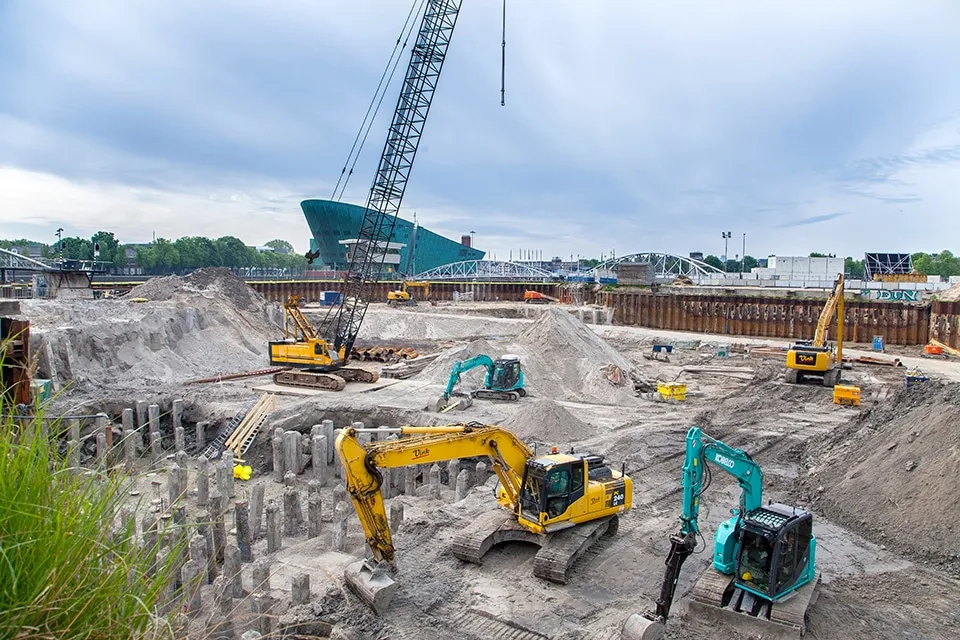
Ground and soil injection techniques are gaining ground in the infrastructure sector. They are tried-and-tested methods for strengthening the ground, keeping an excavation pit dry or tackling leaks in excavation pits, for example.
And all without having to bring in heavy equipment or causing disruption to the surrounding area. We talk to Torben Kastelein of Grondinjectie Nederland about the many possibilities.
Grondinjectie Nederland is a relatively young organisation, established in 2017, but it has a long history behind it. “We had been doing this work for much longer, albeit on a smaller scale, as part of my father’s company,” says Kastelein. “In 2017, we decided to separate this division from the ‘parent company’ and continue as an independent business. That decision is paying off. Demand for our expertise is particularly strong in the infrastructure sector. We work on a wide range of projects throughout the Netherlands and Belgium. Our high-tech waterglass injection equipment enables us to inject in carefully controlled quantities, with a high degree of precision and efficiency.”
From flour mill to excavation pit
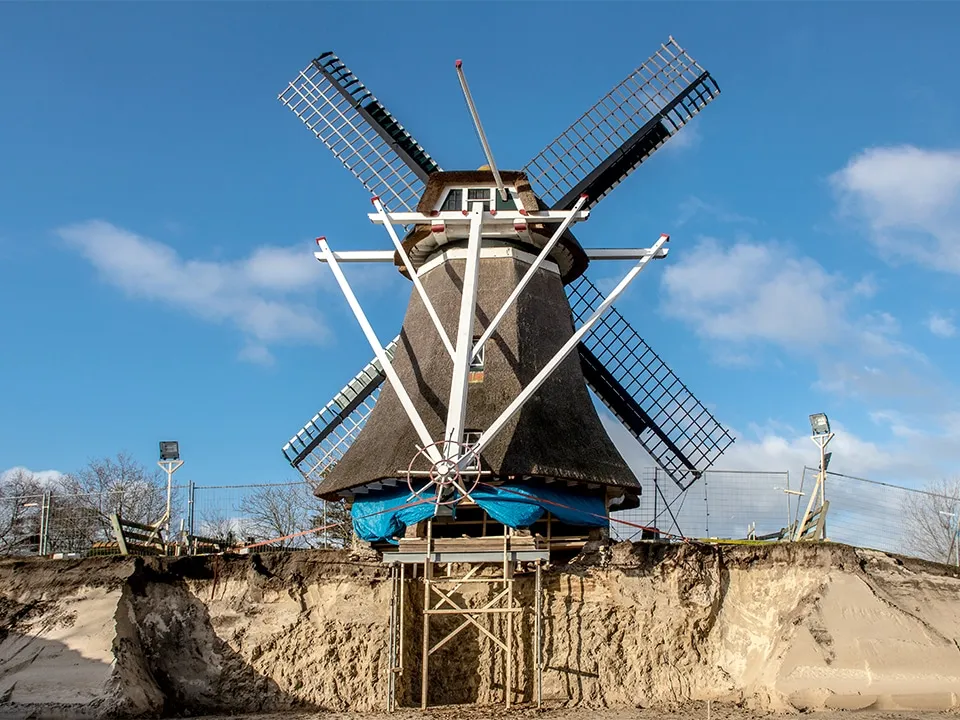
Ground and soil injection techniques have a wide range of applications. “We are called in for projects where we create a water-retaining layer in an excavation pit, reducing the need to pump out groundwater,” Kastelein explains. “Dewatering cannot be carried out without restrictions at every location. We also stabilise and improve the ground around existing foundations, and use our techniques to seal leaks in excavation pits, such as leaks caused by sheet piles that have come out of their interlocks, as well as leaks in car parks, for example. We can also ‘solidify’ a layer of sand, making it easy to excavate without affecting the surrounding buildings. We are now doing this on a large scale across the country. A good example is the new basement being built right next to the centuries-old flour mill ‘De Phenix’ on Ameland. Here, too, we solidified the layer of sand using our injection techniques. The grains of sand bind together, as it were, to form a solid mass. This allowed the contractor to excavate the 3-metre-deep basement right next to the mill without any problems.”
According to Kastelein, Grondinjectie Nederland’s greatest strength is its wealth of knowledge and experience in ground and soil injection techniques. “The compact nature of our technique means we can provide a solution virtually anywhere, with little disruption to the surrounding area and the environment. We use only environmentally friendly products.”
Question about this story? Ask your question
Keep following this
Get an email when a new story is published. No account needed.
- ThemeUnderground construction
- SubjectSpecials







