









From dredged sediment to dike clay: “Building with Nature”
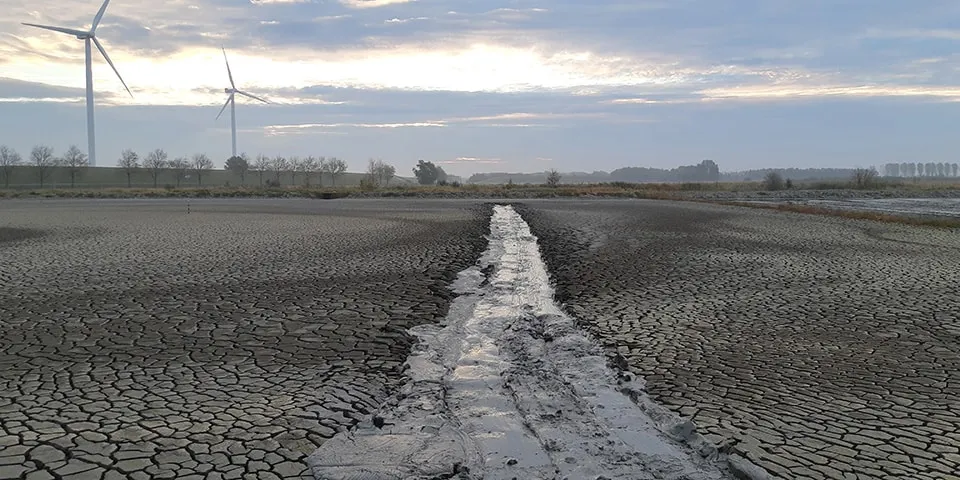
At Delfzijl, clay made from dredged sediment from the Eems-Dollard is being left to mature on a site of around 15 hectares. This pilot project, the “Kleirijperij”, was conceived and carried out by a consortium comprising Ecoshape (Van Oord, Boskalis, Arcadis, RHDHV, Witteveen+Bos, Wageningen Marine Research and Deltares), Groningen Seaports, Rijkswaterstaat, Het Groninger Landschap, Provincie Groningen and Waterschap Hunze en Aa’s.
The aim of this pilot? To produce usable clay that can be used to strengthen a disused sea dyke along a length of 12.5 km. We discuss this unique project with Marcel van den Heuvel, Technical Manager, Kleirijperij and Engineering Specialist at Van Oord, and Erik van Eekelen, Programme Manager at EcoShape and Lead Engineer Environmental at Van Oord.
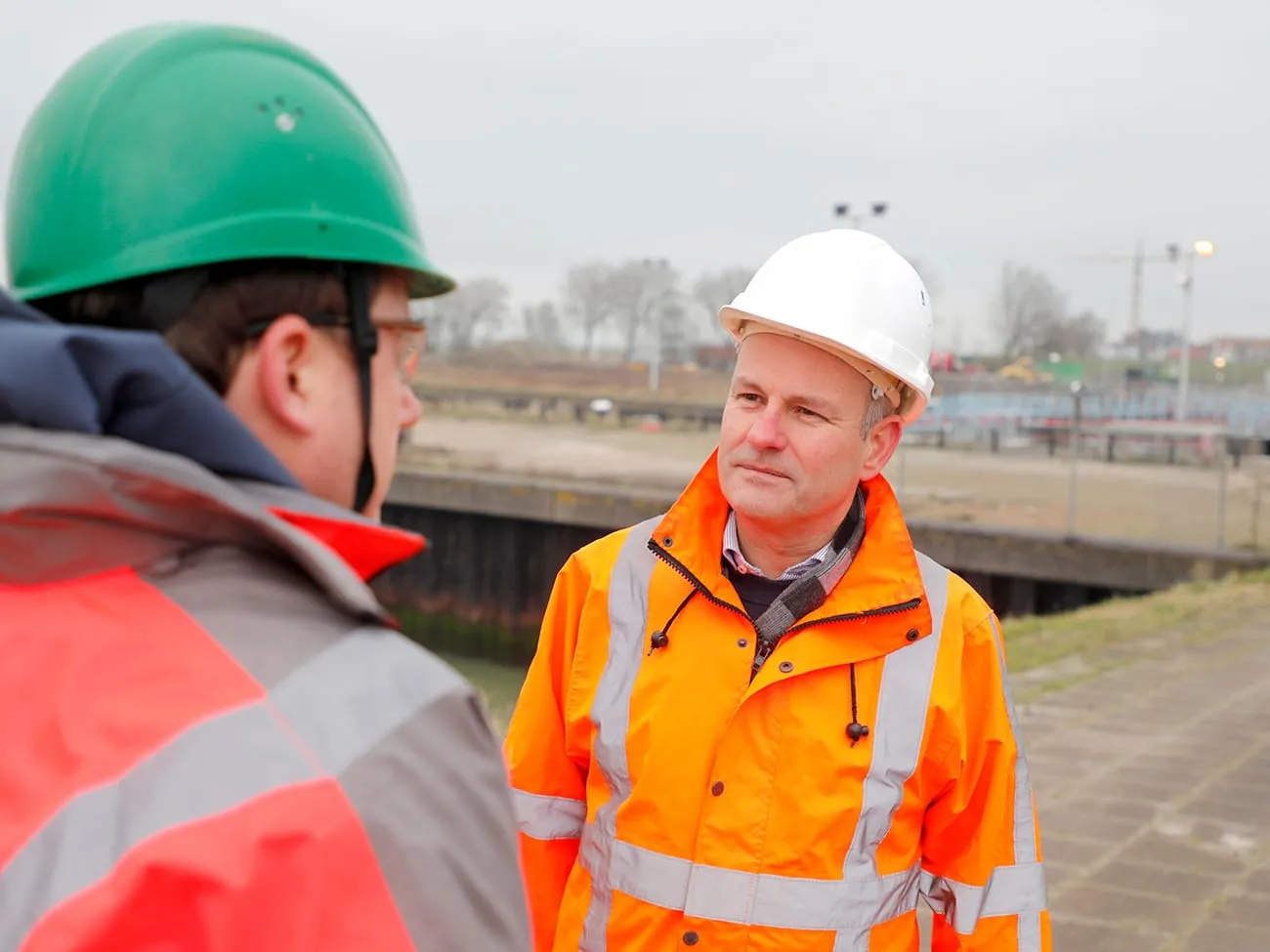
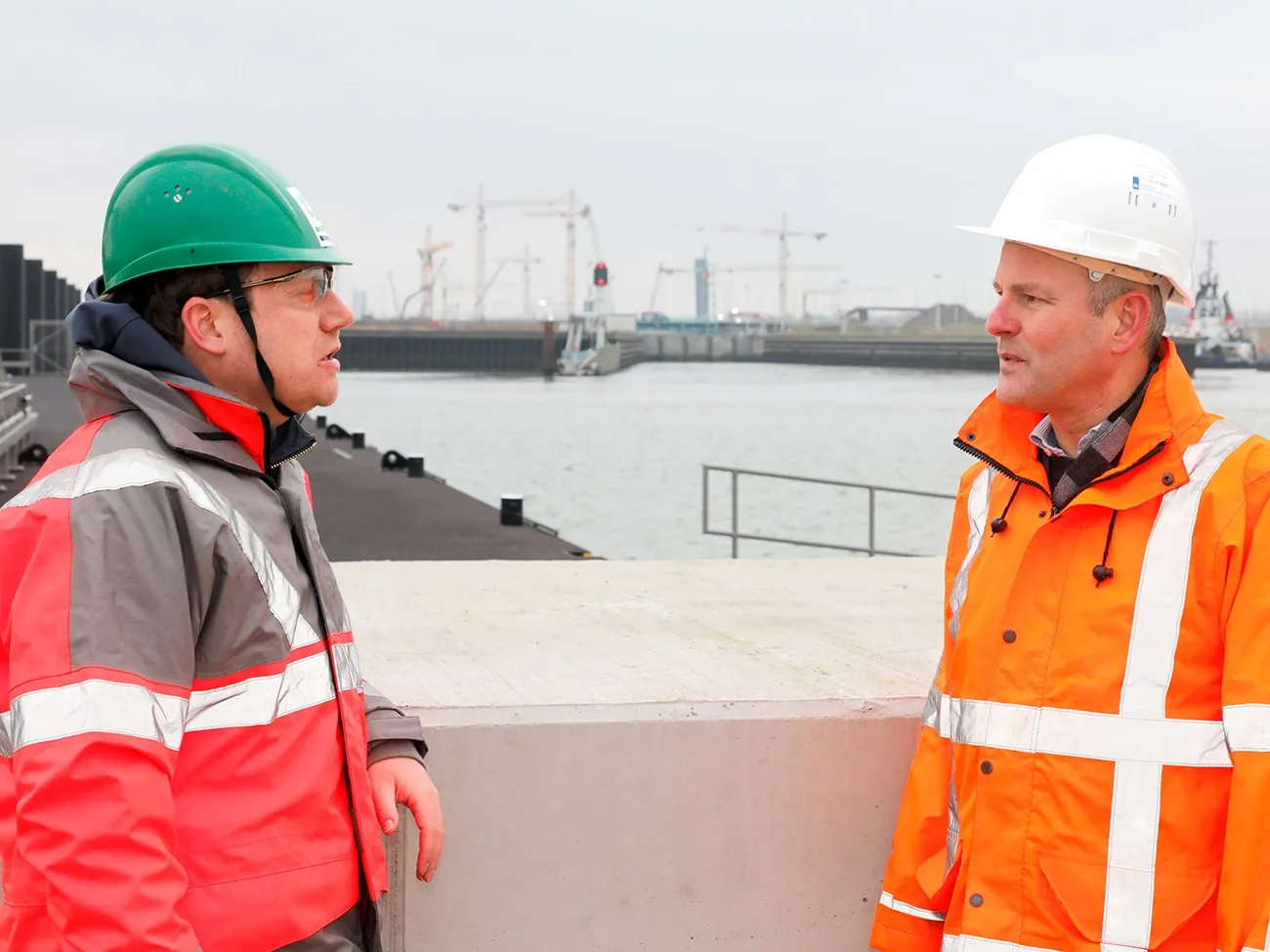
Erik van Eekelen, Programme Manager at EcoShape and Lead Engineer Environmental at Van Oord, on the left, and Marcel van den Heuvel, Technical Manager, Kleirijperij and Engineering Specialist at Van Oord, on the right.
A major step forward for the hydraulic engineering sector
We ask why Van Oord is involved in Ecoshape. Van Eekelen explains: “Van Oord attaches great importance to Building with Nature. Innovative developments that contribute to greater sustainability in the hydraulic engineering sector matter to everyone. We are happy to share our knowledge in this area so that everyone can benefit. This helps make hydraulic engineering projects better and, in turn, more achievable. Through the Building with Nature principle, we want to think proactively about using natural resources in ways that have a positive effect on the ecosystem. This is of great societal importance, not just for Van Oord as a contractor, but for the entire Dutch hydraulic engineering sector.”
100% green construction material
The Kleirijperij Pilot in Delfzijl contains dredged sediment from the Eems-Dollard. Through a natural process, the sediment is expected to consolidate and ultimately produce firm clay. “The great thing is that something in surplus in one place, dredged sediment, can ultimately be used to solve a shortage elsewhere, namely a shortage of clay. The embattled dyke can soon be strengthened with mature clay in a 100% green way,” says Van den Heuvel. “Because there is no need to transport clay from distant areas, this approach is even more sustainable. Better still, using clay as a natural construction material means the dyke retains its green character. Where asphalt would otherwise have been used, we will instead have a 100% green material to reinforce it.”
July 2019: the maturing sediment is already developing a real clay structure. (Image: Deltares)
Pilot follows an initial trial
“The idea first emerged in 2014, when EcoShape launched a programme with the collaborating Wadden Sea ports, all of which have problems with sediment. A relatively large amount of maintenance dredging takes place, but drastic intervention is not possible because the Wadden Sea is a UNESCO World Heritage Site. Together, we defined projects, including the Delfzijl salt marsh trial and the sediment engine in Harlingen. Sediment management is a major issue. EcoShape partners were already working on the Eems-Dollard problem when the water boards approached us about dyke strengthening and sought an alternative to traditional asphalt. Green dykes have landscape value, which is why there is such a great need for clay,” continues Van Eekelen. “In 2015, we got together to discuss our ideas, which we wanted to test at full scale. In July 2017, we signed an agreement with 6 parties to carry out this trial. We have now laid out a few hectares, and the clay maturation site is up and running. The first sediment arrived at the depot on 5 April 2018.”
The 15 test cells, or depots, each measure just under 100 x 100 metres and have an average depth of 1.5 metres. “Everyone was surprised by how quickly a crust formed on the depots, which had been filled with liquid sediment with a consistency similar to chocolate milk. The crust soon reached a thickness of 30 to 40 cm. The clay dries out through shrinkage and consolidation, allowing more oxygen in,” explains Van den Heuvel. “It is partly a physical and partly a chemical process. Water, salt and organic matter (algae, etc.) have to be removed to produce dike clay that meets the applicable guidelines for density, salt content and organic matter.” Van Eekelen adds: “The requirements for dike clay have been translated directly into the pilot.”
Second site now operational
A second site has since been added, bringing the total number of test cells to 25. “No two cells are the same. We vary the layer thickness; some have a draining sand layer, while others have more active treatment layers. We also allow some cells to become vegetated, and one cell is half-filled with fresh water to influence salt removal. The pilot will be a success if we can make a sound business case,” says Van den Heuvel.
For Van Oord, it is important to map the processes that can be used to convert other types of sediment. “If the technique can be tailored to sediment in specific areas anywhere in the world, clay can be produced close to the source. This could be an excellent solution in some parts of the world. That is why we need to find out how to identify the type of sediment, what kind of clay is needed and which process is appropriate,” explains Van Eekelen. “For Van Oord, the key is making this approach more widely applicable. This is a technical undertaking, but it is also very much about stakeholder management, with nature as an essential component of the overall picture.”
Have a business enquiry for Van Oord? Get in touch
Who worked on Kleirijperij
- consortiumWageningen Marine ResearchMentioned in From dredged sediment to dike clay: “Building with Nature”
- Technical manager Kleirijperij
 van den HeuvelMentioned in From dredged sediment to dike clay: “Building with Nature”
- consortiumHet Groninger LandschapMentioned in From dredged sediment to dike clay: “Building with Nature”
- consortiumProvince of GroningenMentioned in From dredged sediment to dike clay: “Building with Nature”
- consortiumWaterschap Hunze en Aa'sMentioned in From dredged sediment to dike clay: “Building with Nature”
Keep following this
Get an email when a new story is published. No account needed.
- ProjectClay ripening facility
- ThemeFlood protection and climate-resilient water management
- SubjectSpecials
- CompanyVan Oord
- CompanyBoskalis Nederland
- CompanyVan den Heuvel







