









First nationwide NEN 7201 Self-Declaration: ‘Static load testing of foundation piles’
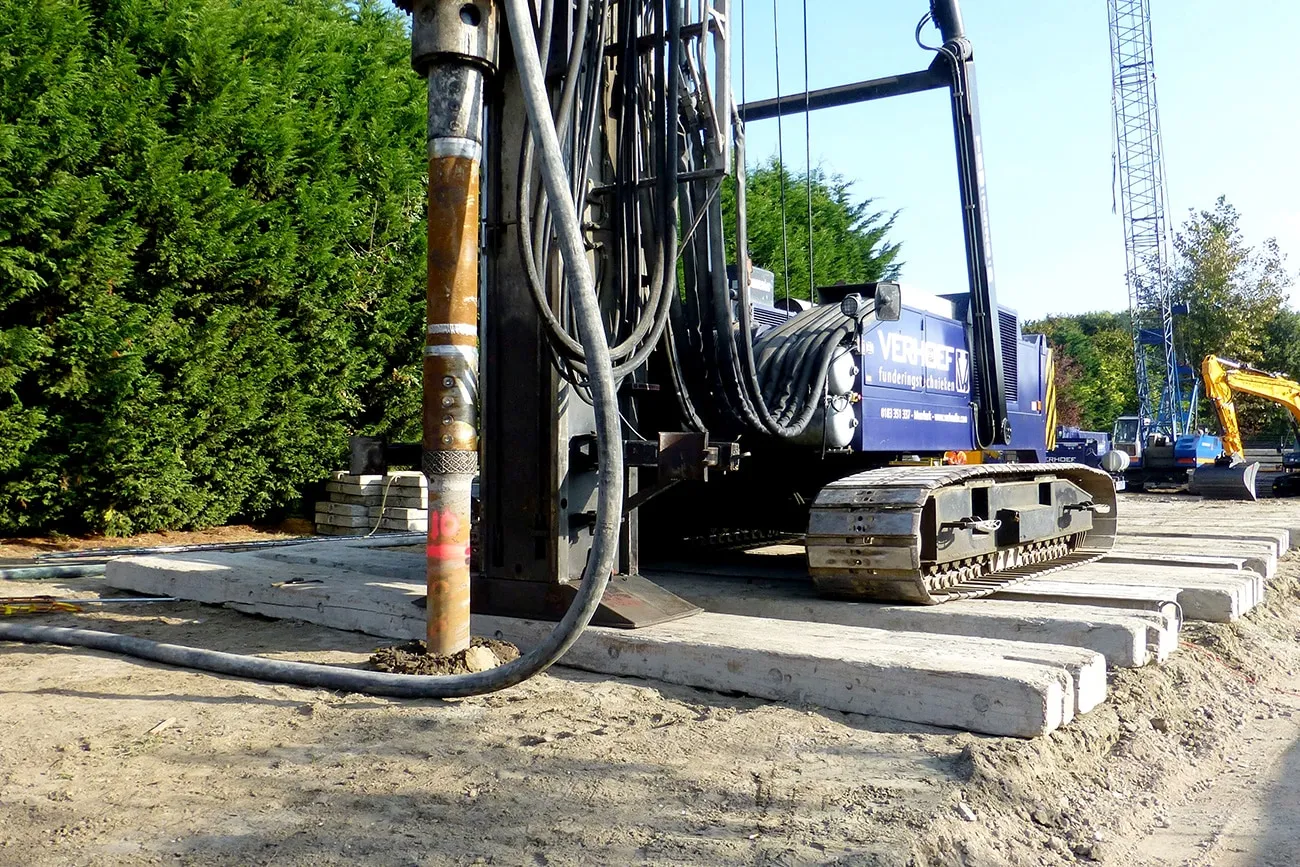
On 1 January 2017, the Geotechnics Standards Committee reduced the pile class factors for the pile toe (αp) for all pile types by 30%, because tests showed that the design values used up to that point could not be demonstrated to guarantee the reliability level required by law. In other words, foundation piles may have less load-bearing capacity than assumed. There is, however, an exception to this rule. Where load tests are carried out, the higher pile class factor values derived from them may be used. Together with All Piles Testing Services (APTS), Verhoef Funderingstechnieken carried out all the required load tests and, at the end of 2022, became the first to receive the nationwide NEN 7201 Self-Declaration ‘Static load testing of foundation piles’ for its Olivier piles.
Calculations of the load-bearing capacity of piled foundations are based on the requirements of NEN 9997-1 (Eurocode 7 with National Annex). Since 1 January 2017, the pile class factors for the pile toe for all pile types have been reduced by 30%. This was decided by the Geotechnics Standards Committee, which represents the entire geotechnical sector in the Netherlands. “This means that since then, designs may only use different, higher pile class factors if these are justified by load tests,” says Gilliam de Nijs, director of All Piles Testing Services (APTS), which carries out 150 to 200 pile tests each year.
NPR 7201
Broadly speaking, the pile tests mentioned fall into two categories: tests whose design values are valid only for the specific project site where the tests were carried out; and a combination of tests whose design values are valid nationwide and can therefore be used at any project site in the Netherlands. “The Geotechnics Standards Committee has drawn up a guideline to establish uniform test procedures for different test types (test classes). The result is set out in NPR 7201,” explains De Nijs. “This guideline provides instructions for carrying out, processing and interpreting in situ load tests using axial forces on foundation piles. Depending on the test type selected, the results can be used to determine, for example, the maximum compressive and tensile load capacity; the pile class factors; the characteristic load-settlement and load-heave behaviour of the piles for the design of the piled foundation; and to check the load-settlement and load-heave behaviour of the piles in the foundation under investigation.”
Two tests
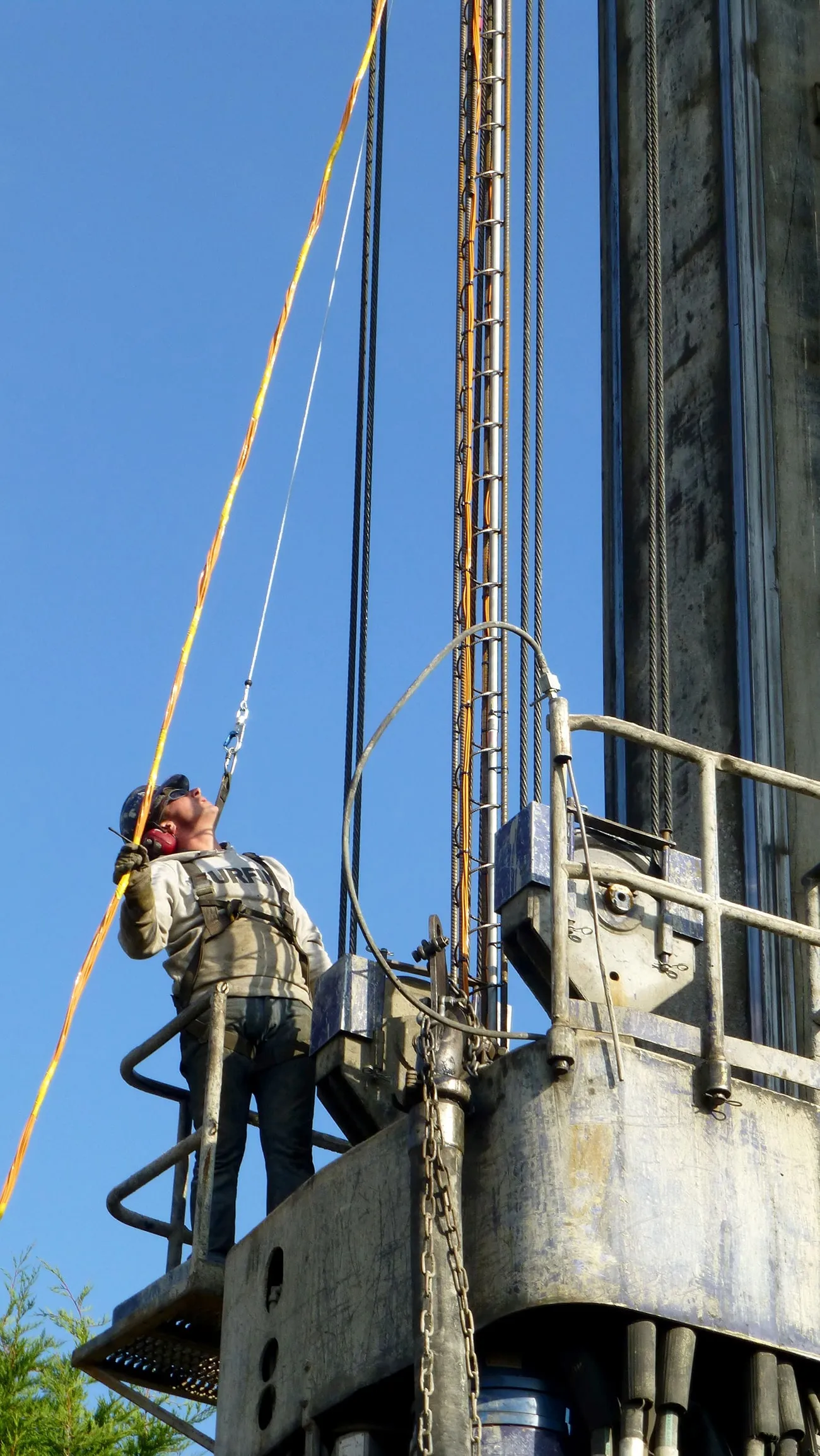
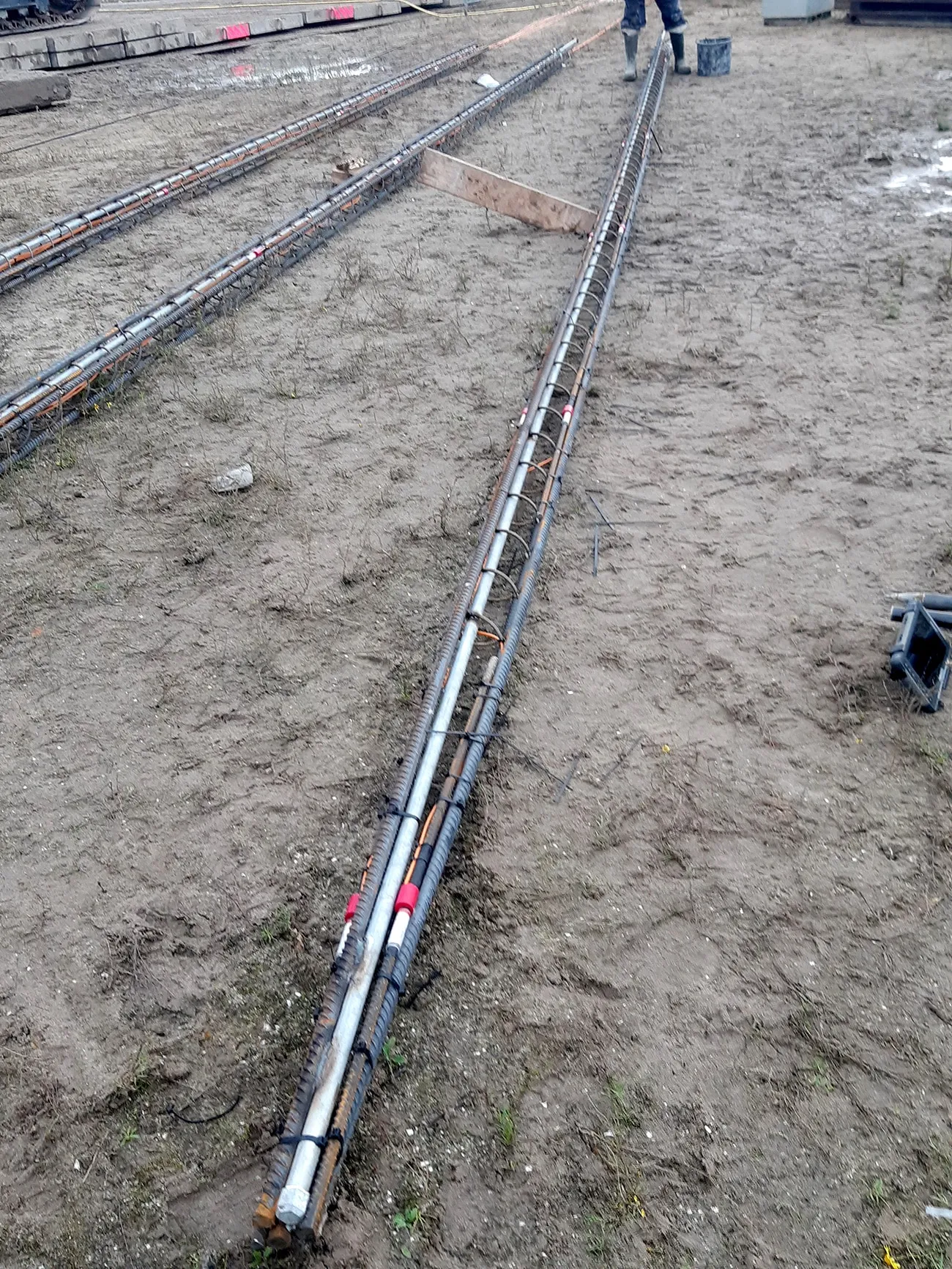
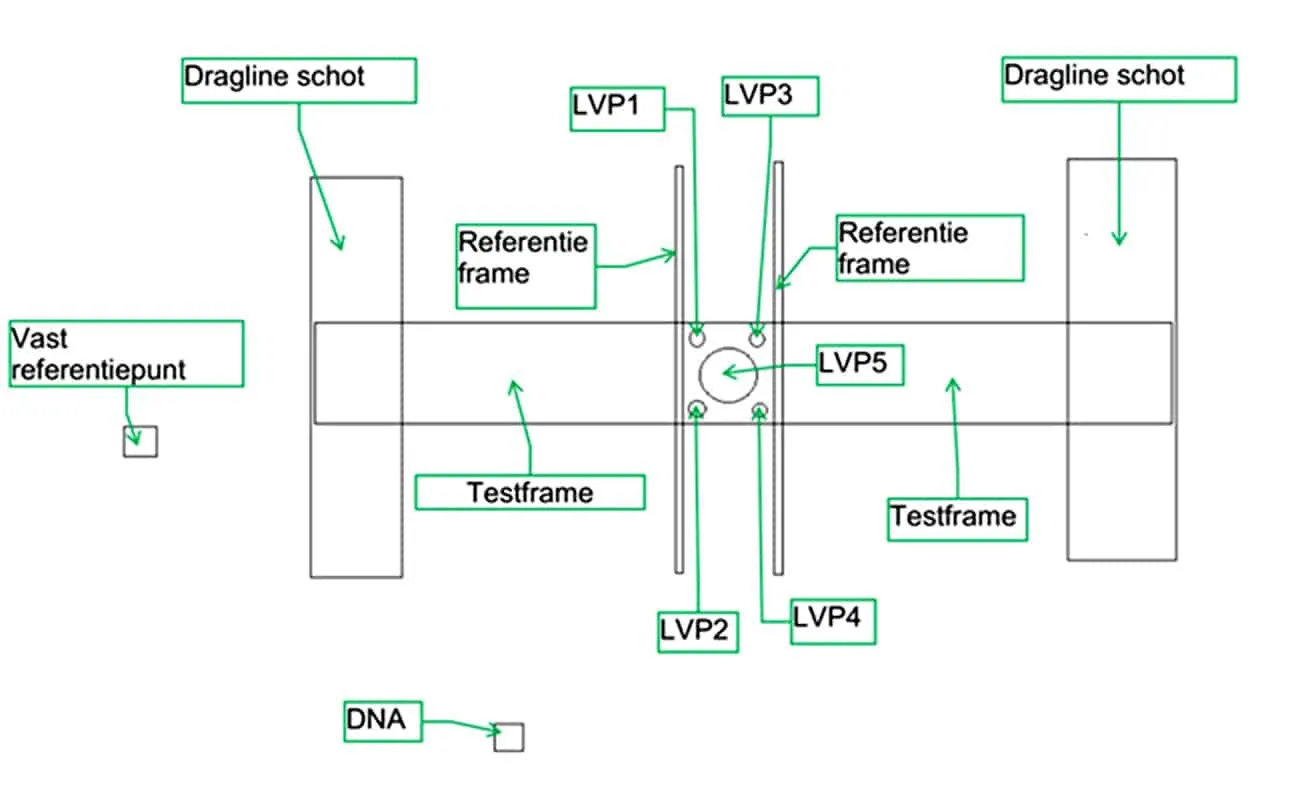
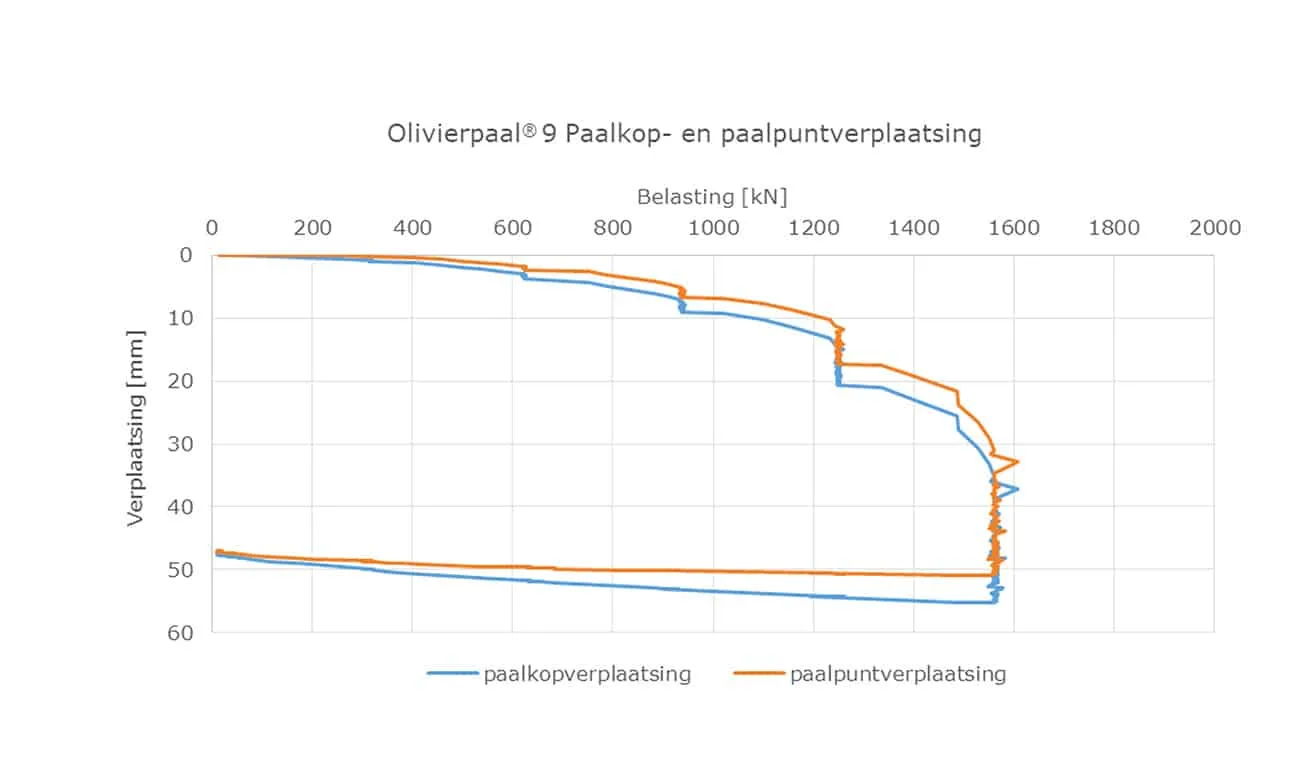
In response to the planned reduction in the pile class factor for the pile toe (αp), Verhoef Funderingstechnieken decided at an early stage to test its Olivier piles in accordance with NPR 7201. The aim was to establish clear, nationally applicable pile class factors for this specific pile system. With this in mind, and under the supervision of APTS, the class A1 tests described in NPR 7201 were carried out at two locations in the Netherlands: a load test on three Olivier piles (310/460) in Terneuzen in 2016, followed by tests on three Olivier piles 360/560 in Utrecht in 2021. De Nijs says: “At the Terneuzen site, the test piles were loaded monotonically, while a cyclic loading schedule was used in Utrecht. In addition, given the distinctive shape of an Olivier pile, considerable attention was paid to determining the actual concrete E-modulus of the piles tested. One of the piles was therefore extracted. It was cut into 1.5-metre sections, which were then tested in a compression testing machine using the same loading steps as during the class A1 load test. This made it possible to determine an extremely reliable axial stiffness EA for the concrete in the test pile, and thus reliable pile class factors.”
Optimum safety without overdesign
The load test results have yielded valuable knowledge about the load-settlement behaviour of Olivier piles and have also established new nationwide pile class factors: an αp value of 0.5338 relating to the core diameter and an αs value of 0.01132 relating to the helix diameter. De Nijs says: “The conclusion is that the load-settlement behaviour of the Olivier pile system matches exactly the load-settlement curve 1 in section 7.6.4.2 of NEN-EN 1997-1+C2-2017. A foundation design based on nationally recognised pile class factors therefore guarantees an optimum level of safety without overdesign. It also optimises the sustainability of the foundation design, since no more material than necessary for a safe design is driven into the ground. The Olivier pile is the first to be listed on the NEN website with the new nationwide factors based on A1 tests, but it certainly will not be the last. As ATPS, we are pleased to assist you with this.”
Question about this story? Ask your question
Keep following this
Get an email when a new story is published. No account needed.
- ThemeUnderground construction
- SubjectSpecials







