









Circularity and sustainability in road construction and road maintenance
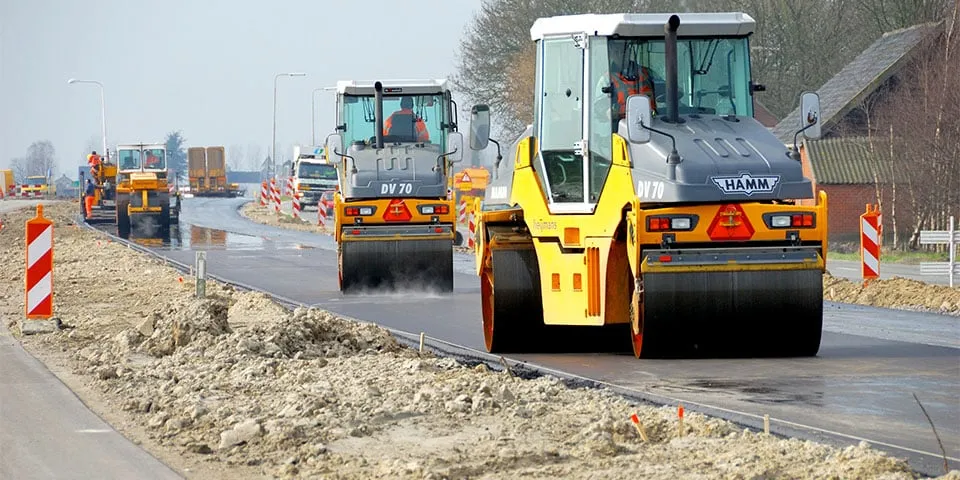
“Asphalt is (in principle) 100% circular. We throw nothing away, we reuse everything, with the exception of tar-containing asphalt.” That is the view of Ron Wesseling, Manager of the Bituminous Works Group at Bouwend Nederland. “However, tar-containing asphalt is removed from the chain in a responsible way, after which some of the cleaned materials can be reused. The point is that we have not agreed on a definition of circularity. In road construction, we produce more asphalt than we mill from the road. So is that still circular? Of course, we use as much recycled asphalt as possible. That does not change the fact that, as long as more asphalt is needed than becomes available, producing new asphalt will always be necessary.”
GWW Magazine talks to Bouwend Nederland
Joining forces through ‘Asfalt-Impuls’
Wesseling continues: “In the coming years, road authorities, asphalt contractors, suppliers, designers, quality assurance bodies and knowledge institutions will face major challenges. These include putting the circular economy into practice, the Climate Agreement and the Green Deal Sustainable GWW 2.0. Ideally, all this would be achieved at lower cost, with less disruption and with due consideration for the economic interests of companies that produce and lay asphalt. That is why the sector has joined forces in the ‘Asfalt-Impuls’ programme. Only by working together can we, as a sector, find solutions to all these issues.”
The partners that have joined forces within Asfalt-Impuls are Rijkswaterstaat, the 12 provinces, municipalities, CROW, TU Delft, Universiteit Twente, Bouwend Nederland (Bituminous Works Group), independent asphalt producers and contractors, Eurobitume, TNO, Aveco de Bondt, Sweco, Kiwa Nederland, Kiwa KOAC and De Wegenscanners. “Together, we are looking for ways to make asphalt more sustainable,” explains Wesseling. “Sustainability is an ongoing process. However, innovations must be accepted as solutions. In some cases, regulations stand in the way of innovation. The requirement to use ‘proven technology’ creates a chicken-and-egg situation. An innovation can only become proven technology once it has been used in practice.”
Agreeing clear definitions
In road construction, sustainability is understood primarily as making asphalt last longer and reducing CO2 emissions. Wesseling says: “But how do you know whether you are acting sustainably if there are no clear agreements on what that means? What if you develop an asphalt mix that lasts 10 times longer on the road, but produces more CO2 emissions to manufacture? Is that acceptable? We want answers to questions like these. Through its Bituminous Works Group, Bouwend Nederland acts as a facilitator in this debate. We hold the discussion without any commercial agenda. In fact, we are neutral Switzerland among the group of partners. Bouwend Nederland serves a greater purpose: not only our own sector, but also the Netherlands as a whole and the public. We promote safe working practices and a level playing field, and aim to set standards and define terms, while working sustainably and circularly wherever possible. The benefits lie in being able to work more efficiently, which means cutting costs.”
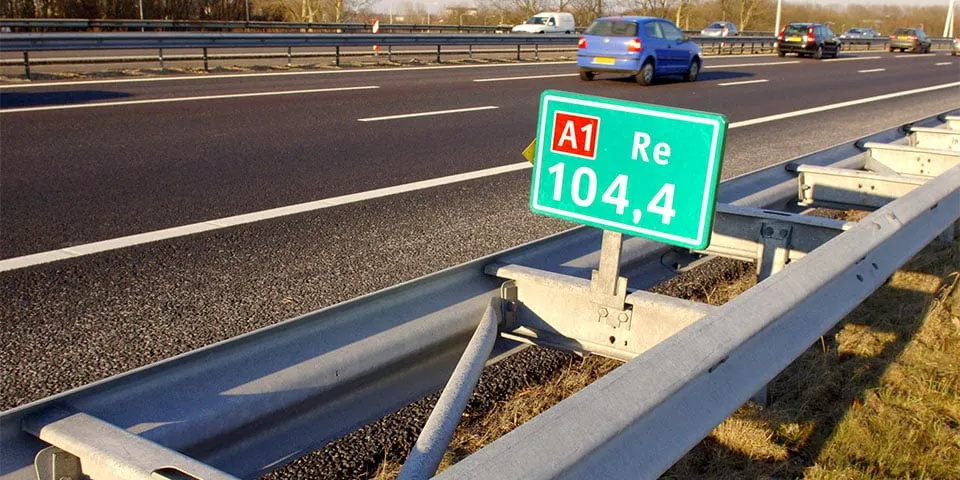
Old systems will be dismantled, and any components that meet the procedure’s requirements will be reused.
The nitrogen debate
Johan Asscheman, Secretary of the Civil Engineering Concrete Construction and Specialist Road Construction Group at Bouwend Nederland, weighs in on the issue of CO2 emissions. “Bouwend Nederland is discussing this with the government, because such discussions can only be held with representative organisations. We represent our sector. The question we ask is: ‘What is at stake?’ The nitrogen debate is being led by the Ministry of Agriculture, which is responsible for the issue. We are in talks with both the Ministry of Agriculture and the Ministry of Infrastructure and Water Management. The problem, however, cuts across ministerial boundaries, which is why we welcome the study by the Remkes committee. A threshold value for construction needs to be set. The government has tasked Minister Carola Schouten with addressing this,” says Asscheman. “Bouwend Nederland urges the minister to incorporate the recommendations in Remkes’s final report into policy as soon as possible and to set a threshold value.”
Sustainability in safety barriers
On the subject of sustainability and safety barriers, Addy van Doorn, chair of the Safety Barrier Committee of Bouwend Nederland’s Specialist Road Construction Group, explains: “RWS has set up a working group to look at how existing safety barriers can be recycled. A new procedure has been introduced to demonstrate that the current model is safe and meets the CE standard. Old systems will be dismantled, and any components that meet the procedure’s requirements will be reused. This allows us to work as circularly as possible.”
Maintenance of asphalt roads
From a sustainability perspective, it is preferable to extend the life of existing asphalt rather than replace it. Ton Kneepkens of Arcadis (technical partner to Bouwend Nederland’s EAB committee) explains: “We have been using emulsified asphalt concrete for some time to improve the surface course of asphalt roads. Traffic and weather wear down the asphalt surface, often causing texture damage and deformation. Emulsified asphalt concrete can be used to repair the surface course. It is essentially a bituminous coating that improves the road. The road in question must not have serious structural damage, as we use emulsified asphalt concrete as a preventive measure. The better the underlying surface, the longer the new coating will last. On average, we are talking about a service-life extension of around 7 years or more. This is a cold technique: the mix is made on site in a mobile processing unit. The quantity is measured out, so there is no waste. By saving the energy needed at an asphalt plant to produce hot asphalt, avoiding energy-intensive transport and not having to heat the material on site, we significantly reduce the CO2 footprint. And the best part? The emulsified asphalt concrete surface course is trafficable after an average of just half an hour. That is what you call less disruption…”
Question about this story? Ask your question
Companies in this story
Keep following this
Get an email when a new story is published. No account needed.
- ThemeExtending the life of roads and civil engineering structures
- SubjectSpecials
- CompanyKiwa Nederland B.V.







