









Utrecht province cuts emissions from road marking work
Text Chris Elbers Beeld Track Line
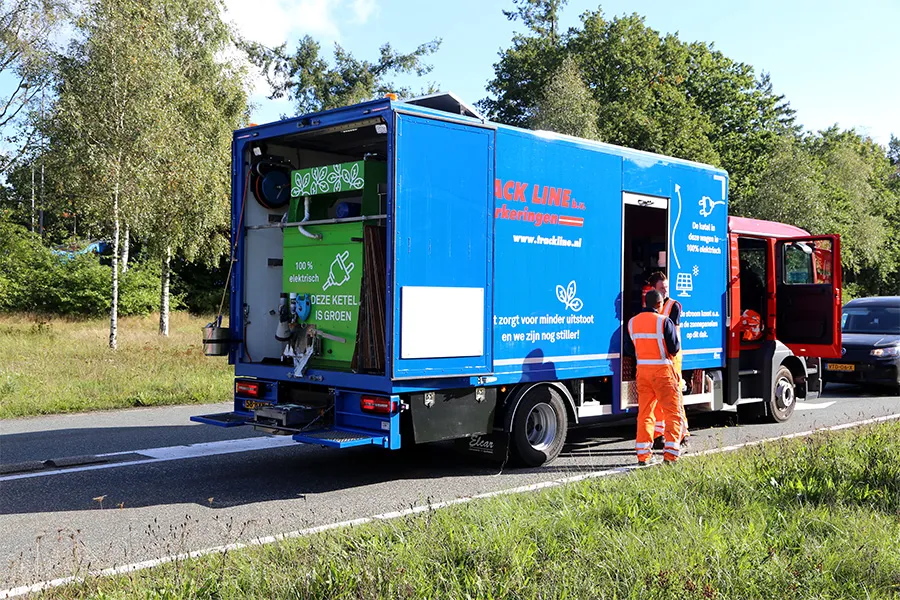
Ambitions for sustainability and a spirit of innovation sometimes come together in a particularly effective way. Take Utrecht province, which last year said it wanted to make further progress on sustainability in connection with roadworks across the province, especially when it came to reducing CO2 emissions. Leerdam-based Track Line saw an opportunity to contribute. It responded to the province’s request by developing a globally unique innovation: an electric boiler that makes road marking work within the province significantly more environmentally friendly. This invention deserves to be rolled out more widely, both nationally and internationally.
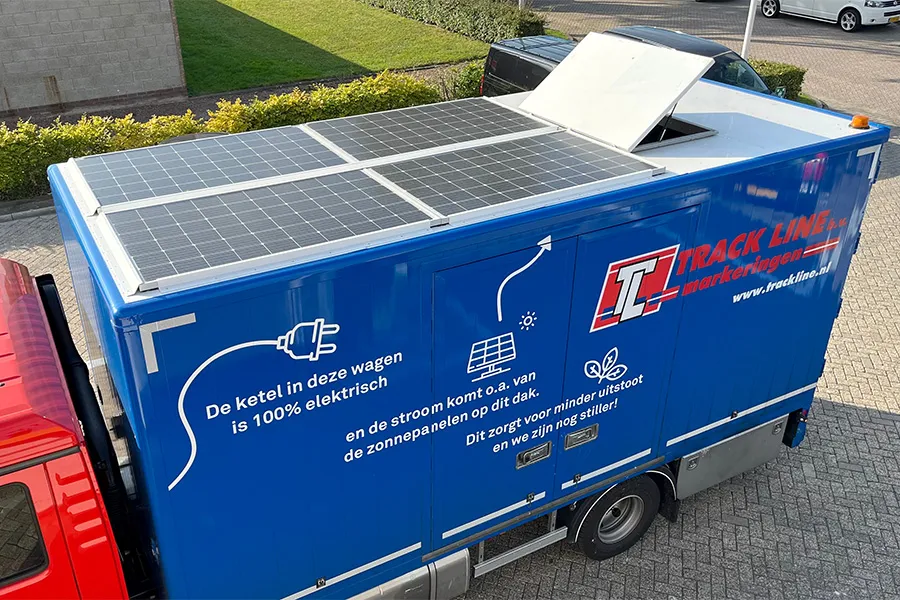
The electric boiler developed in-house by Track Line changes everything. Above all, it is cleaner and quieter. “The material used for road markings is usually thermoplastic,” says Jan-Reint Vink, Track Line’s operations manager. “It has to be heated to over 180 degrees Celsius before use. Previously, this was always done using gas- or diesel-fired burners.” Since October 2023, that has all been history. Track Line now uses a fully electric boiler, with a number of clear benefits. First, it cuts emissions compared with a boiler powered by fossil fuels. Some of the electricity needed is also generated by solar panels on the truck’s roof. And another welcome benefit is that applying the markings is much quieter than it used to be. “We had our premiere on 17 October 2023,” says Jan-Reint, looking back with justifiable pride. “That was the first time the boiler was used to apply road markings on the N238 in Huis ter Heide.”
Developed in-house
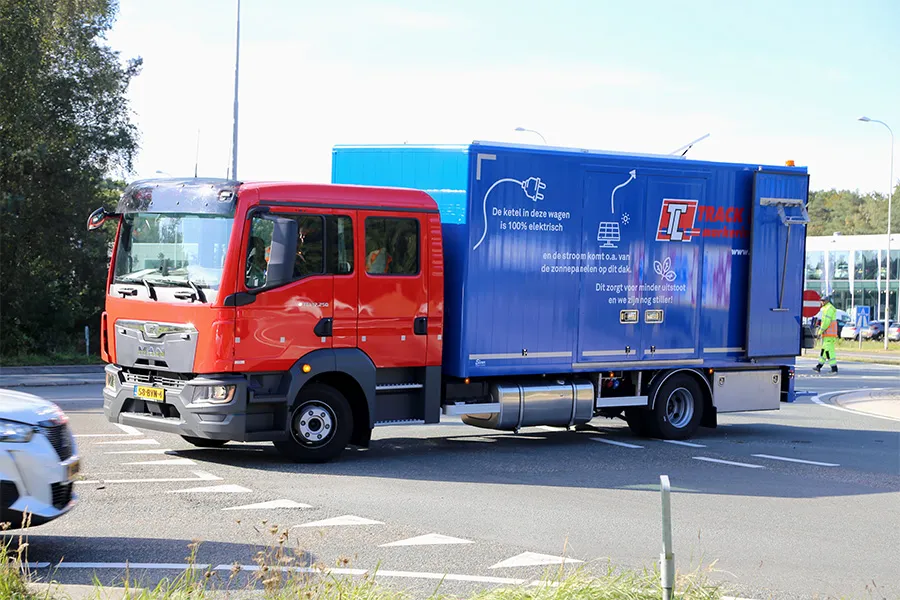
At Track Line, innovation is always on the agenda. So it did not take long to respond to the province’s plans to make sustainability a greater priority in its tenders. “The province’s focus on sustainability gave us the idea of heating the material we use for road markings with electricity,” Jan-Reint continues. “But that presented us with a major challenge. We couldn’t buy a boiler like that, simply because none existed. There are boilers that can be partly heated electrically, but they still rely on gas or diesel as their primary fuel. So in the end, we decided to develop a fully electric boiler ourselves.”
Collaboration
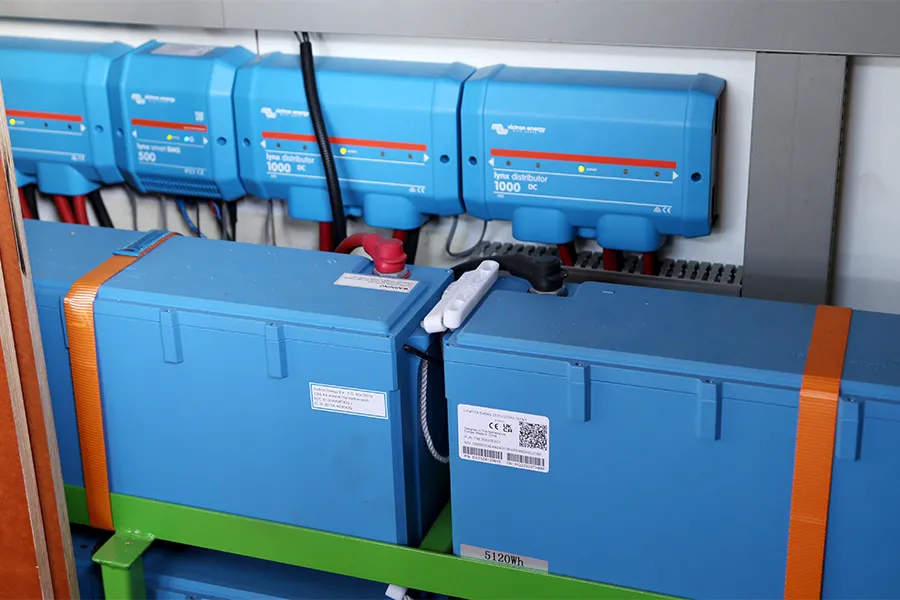
It was an intensive, exciting and complex process. Track Line knows road markings, but the small SME is not exactly known as a boiler manufacturer. The company’s own mechanics, who maintain its fleet of equipment, proved invaluable. “They were very willing to contribute ideas and help develop the boiler. They deserve a great deal of credit,” says Jan-Reint. “The whole process took about six months, at which point we had a working product. But that wasn’t the end of it. The boiler still had to be fitted into our truck. We also needed to install solar panels on the roof and equip the vehicle with very heavy-duty batteries for energy storage. The supplier of the truck body gave us excellent support with that. In the end, we managed to get the job done together.”
Next steps
Track Line now uses its electric-boiler truck not only for Utrecht province, but also for other clients across the country. The boiler is preheated overnight using mains electricity. When Track Line’s road marking teams set off the next day, the system switches to the truck’s battery. This keeps the boiler at temperature during the work, with support from four solar panels mounted on the roof. “They currently provide around 10 to 15 per cent of the total energy required,” Jan-Reint explains. “In the future, that could be more. We’re looking into moving the ventilation hatch, which would make room for another two solar panels.” Asked about plans for the next stage, Jan-Reint ends on a positive note. “We’ll gradually equip our other trucks with electrically heated boilers too. We’ll continue to focus on making our work processes as environmentally friendly as possible.”
Experienced road marking specialist
Since 2001, Track Line has specialised in applying markings and coatings using a wide range of materials. The environmentally conscious company also carries out visibility measurements of road markings and produces moulds and stencil designs. Track Line provides bespoke services to municipalities, sports and recreational clubs, airports, racing circuits, businesses and factories.
Question about this story? Ask your question
Keep following this
Get an email when a new story is published. No account needed.
- ThemeLower emissions and more reuse
- SubjectRoad construction







