









Towards future-proof, sustainable railways through circular track renewal
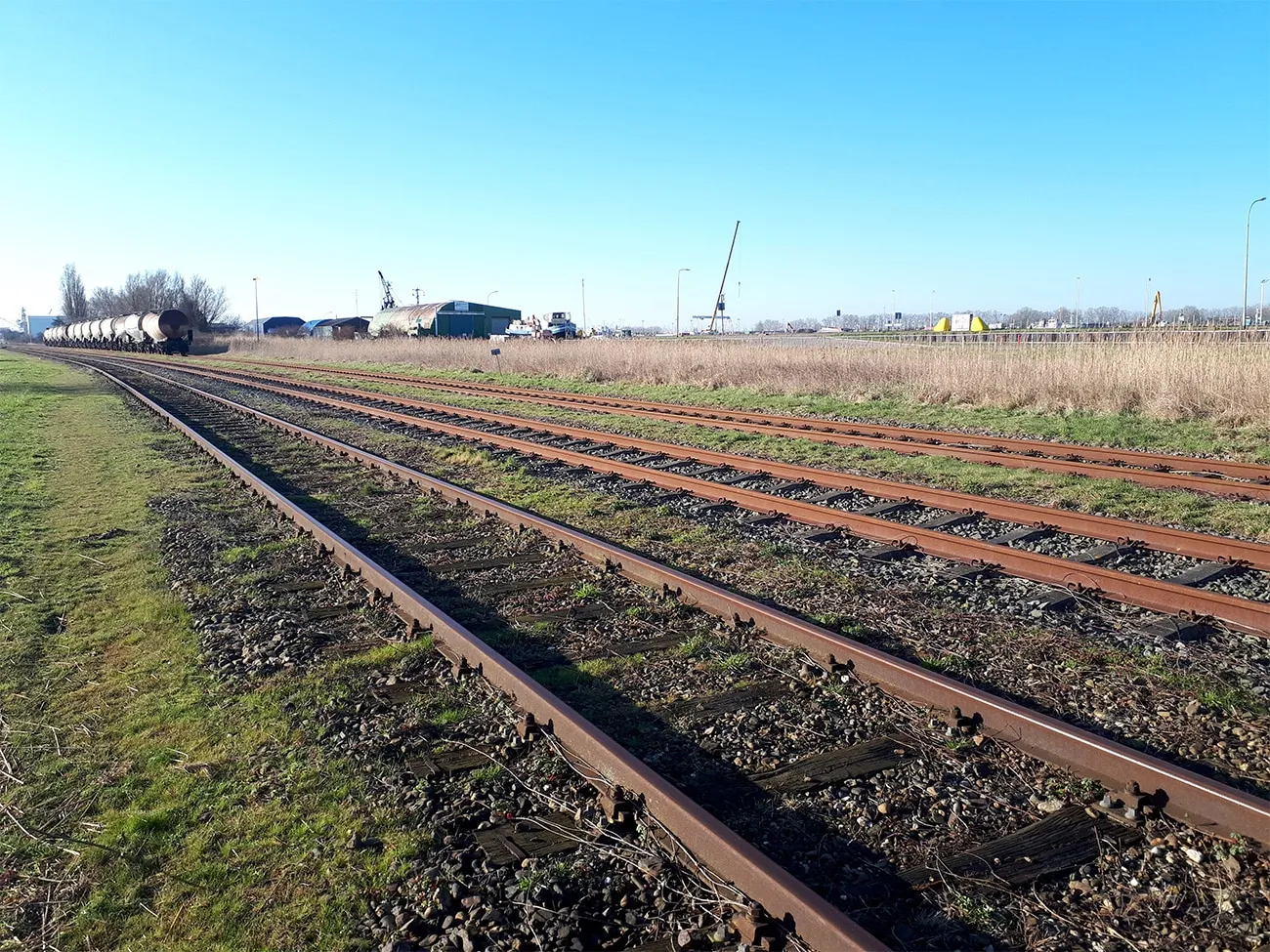
Contributing to a sustainable society, including by enabling more people to choose the train. This is one of ProRail’s ambitions. The number of rail passengers is expected to grow significantly in the coming years. To meet this increased demand for rail capacity and ensure the network is fit for the future, the railway will undergo major works at many locations in the coming years. This includes the necessary track renewals (BBVs), which present a technical challenge but also offer scope for greater sustainability.
Conventional track renewal
A track renewal involves replacing the entire track superstructure at a location. The track superstructure consists of the rails, sleepers and ballast. Current regulations (OVS00056-5.1 and, 6.1) set out numerous requirements concerning the rail grades and types to be used, sleeper types and the required thickness of the ballast layer. For a ‘standard’ track renewal, the designs and other documents and plans required to carry out the work are prepared in accordance with these regulations. Depending on the project, Iv-Infra acts as the site supervisor, supporting ProRail and advising it on its assessment of the documents, plans and designs prepared by the contractor. Alternatively, as a recognised engineering consultancy, Iv-Infra can support the contractor in preparing the necessary documents, plans and designs.
Sustainable track renewal in Zeeland and West Brabant
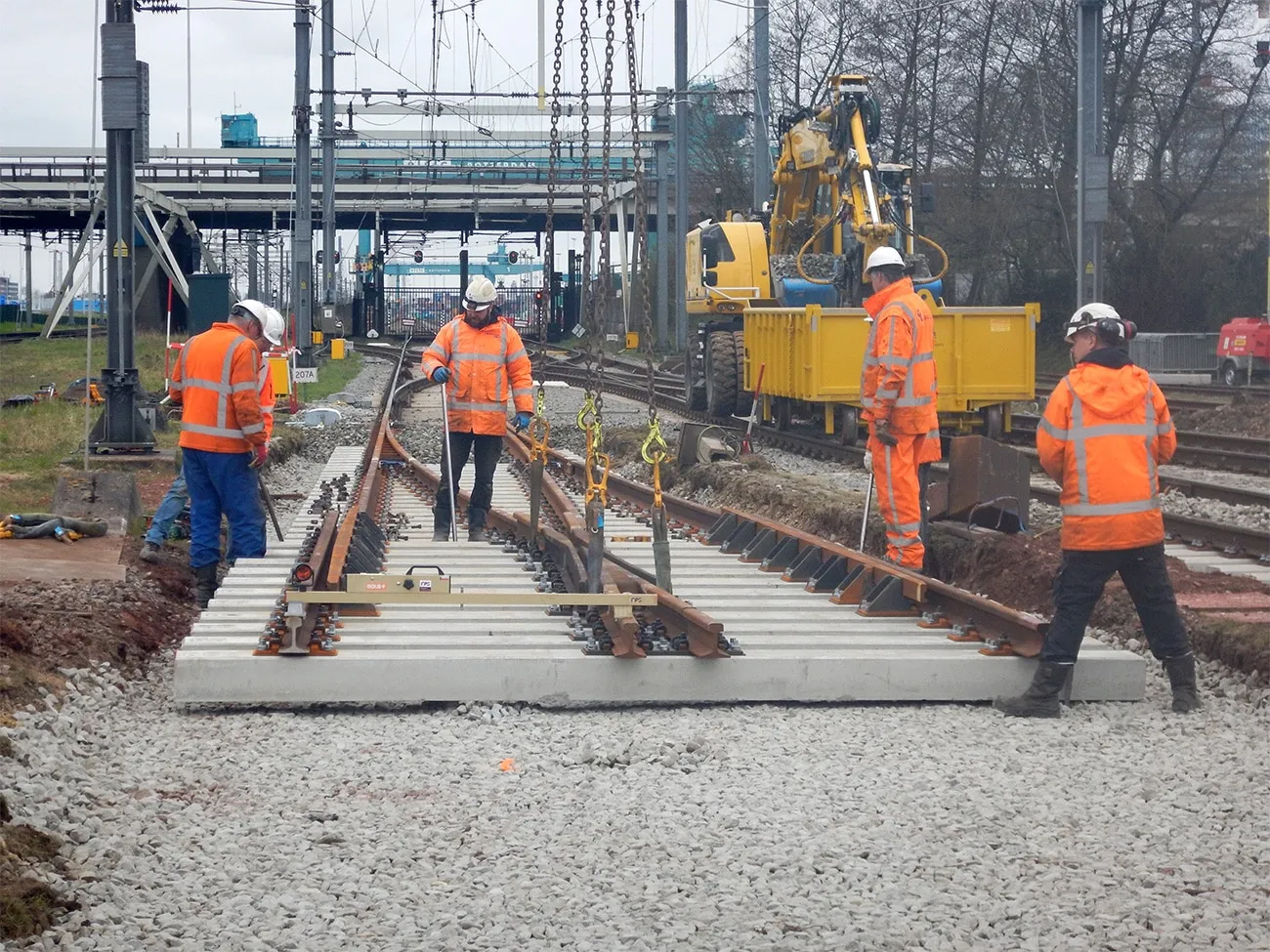
ProRail aims to work in an increasingly sustainable and circular way. To put this ambition into practice, the ‘pioneering project’ for circular track renewal in West Brabant and Zeeland was launched. Under this project, track will be ‘renewed’ at four locations on industrial lines with less frequent traffic, using reused materials. The aim is to use as little new material and as few new components as possible, instead making smart use of materials recovered from other track renewals. The project is also intended to serve as an example for future track renewals.
This may sound simple: just put the used materials back in place and the job is done. But it is also important to keep the track safe and ensure that its remaining service life is sufficient to make reuse genuinely worthwhile. The current regulations for track renewals were therefore examined closely to establish whether they could be justifiably and responsibly departed from. Following consultation with ProRail’s technical specialists, a series of measures was agreed to meet the sustainability ambitions.
Some of the measures adopted
ProRail’s guideline RLN00412 sets out requirements for reusing track superstructure materials (BBM). The main problem with this guideline is that its conditions are too strict for the industrial lines covered by this track renewal project. Train movements are much less frequent and line speeds are lower than on the main lines, so iron components (rails and switch components) wear much more slowly. To achieve an acceptable remaining service life, rails and switch components with more wear than RLN00412 permits can still be used. This means there is greater scope for reuse on these lines. Some rails and switch components recovered during standard track renewals can therefore still be reused perfectly well at locations with fewer train movements.
The same principle applies to recovered sleepers. If no defects are found, a sleeper can be reused without issue. Nor is it always necessary to use a heavy sleeper type, such as the 14-0XX sleepers. With fewer train movements, a lighter type of sleeper, such as the NS90 or twin-block sleeper, can often be used instead. This reduces the amount of new concrete required, partly because more used NS90 and twin-block sleepers are available.
Given the low number of train movements on the industrial lines in this pilot project, a thinner ballast layer is sufficient. The existing ballast can also be screened, with only the fine fraction (< 22 mm) removed. Here too, the scope for reuse has been widened compared with current regulations. This means less new ballast needs to be delivered.
To use reused materials, they need to be collected and refurbished where necessary. Materials are currently being collected from various track renewal projects in the Zeeland and West Brabant area and stored at a so-called ‘materials hub’.
Finally, the use of alternative materials has been considered. Olivine, a mineral that absorbs CO2, will be used for the inspection paths instead of the usual porphyry. On some tracks, an alternative sulphur-concrete sleeper will also be used, with a lower environmental impact than cement concrete.
Iv-Infra’s role
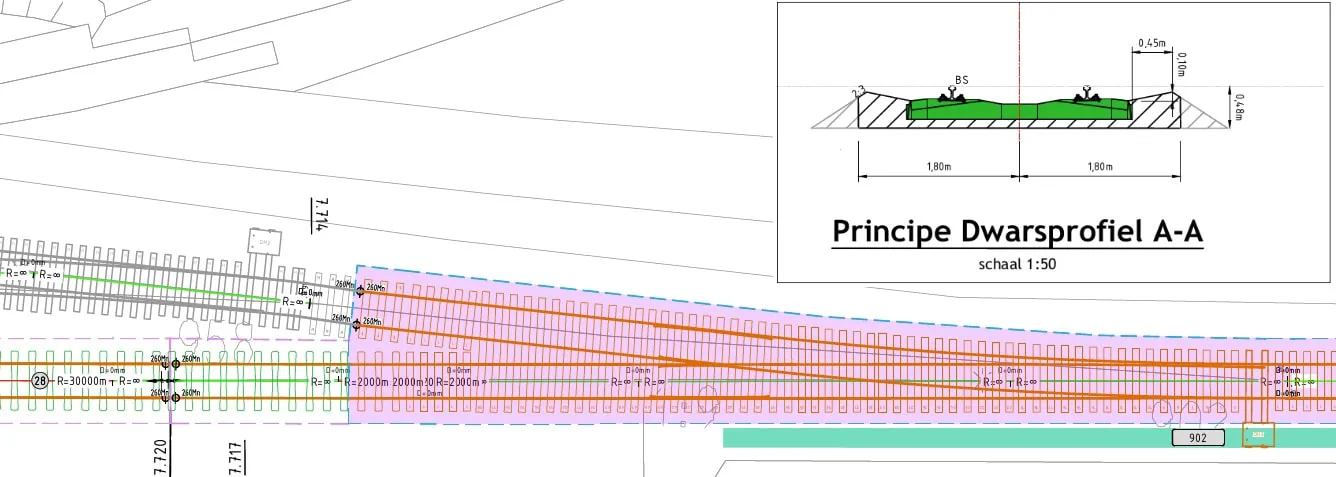
Iv-Infra is involved in the circular track renewal project in Zeeland and West Brabant as site supervisor. However, given the unusual nature of this project, the site supervisor’s role is also different. As well as advising on the assessment of documents prepared by the contractor, Iv-Infra will need to contribute much more to shaping these plans from a technical perspective. The result is a much more integrated team comprising the contractor, ProRail, the site supervision team and additional external advisers. Rather than simply reviewing plans, the team needs to engage with the contractor and ProRail to agree on an acceptable approach together, while also achieving the sustainability ambitions.
Now that all the plans, designs and necessary documents have been completed, incorporating the sustainability measures, the circular track renewal project in Zeeland and West Brabant is due to start in 2022.
Question about this story? Ask your question
Keep following this
Get an email when a new story is published. No account needed.
- ThemeLower emissions and more reuse
- SubjectRoad construction







