









‘Today’s asphalt will no longer be available to buy in 2025’
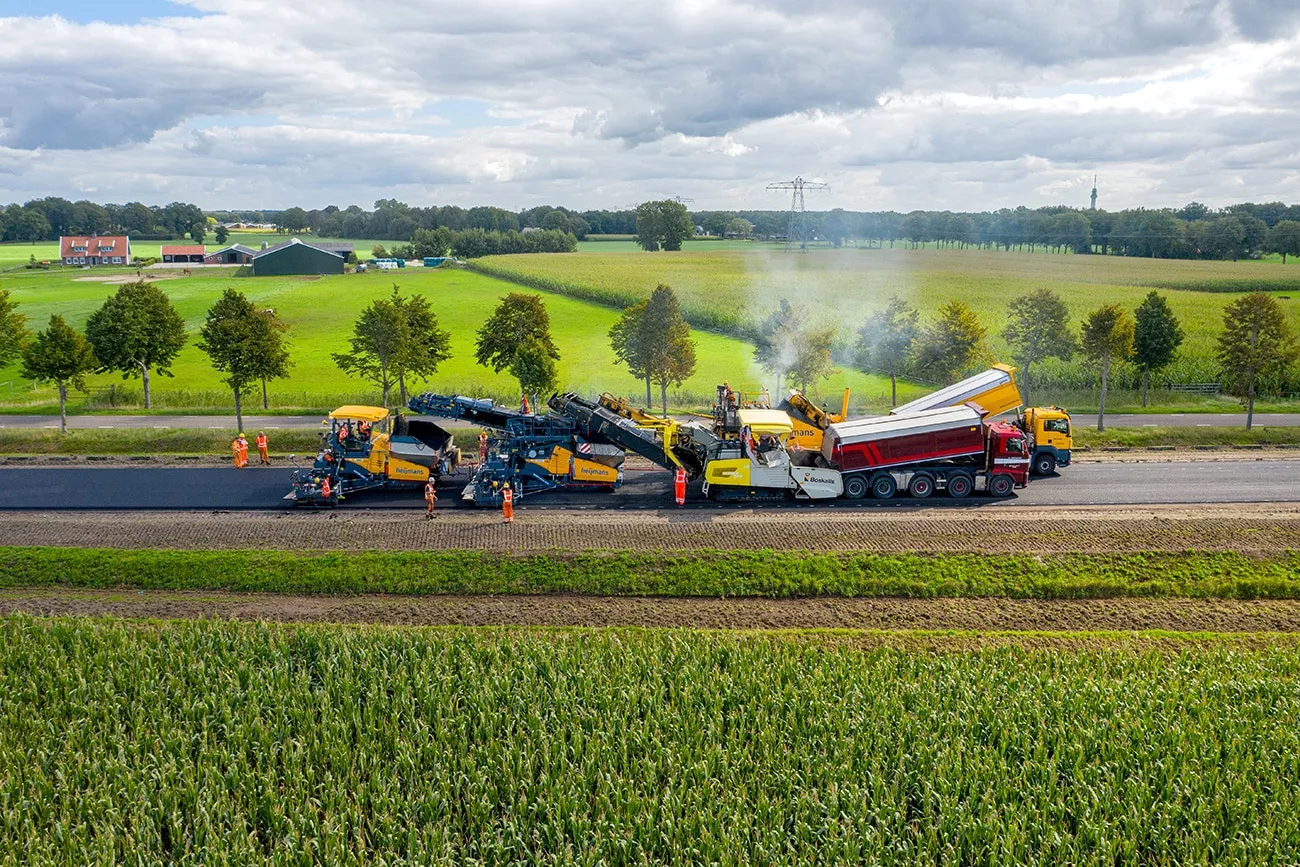
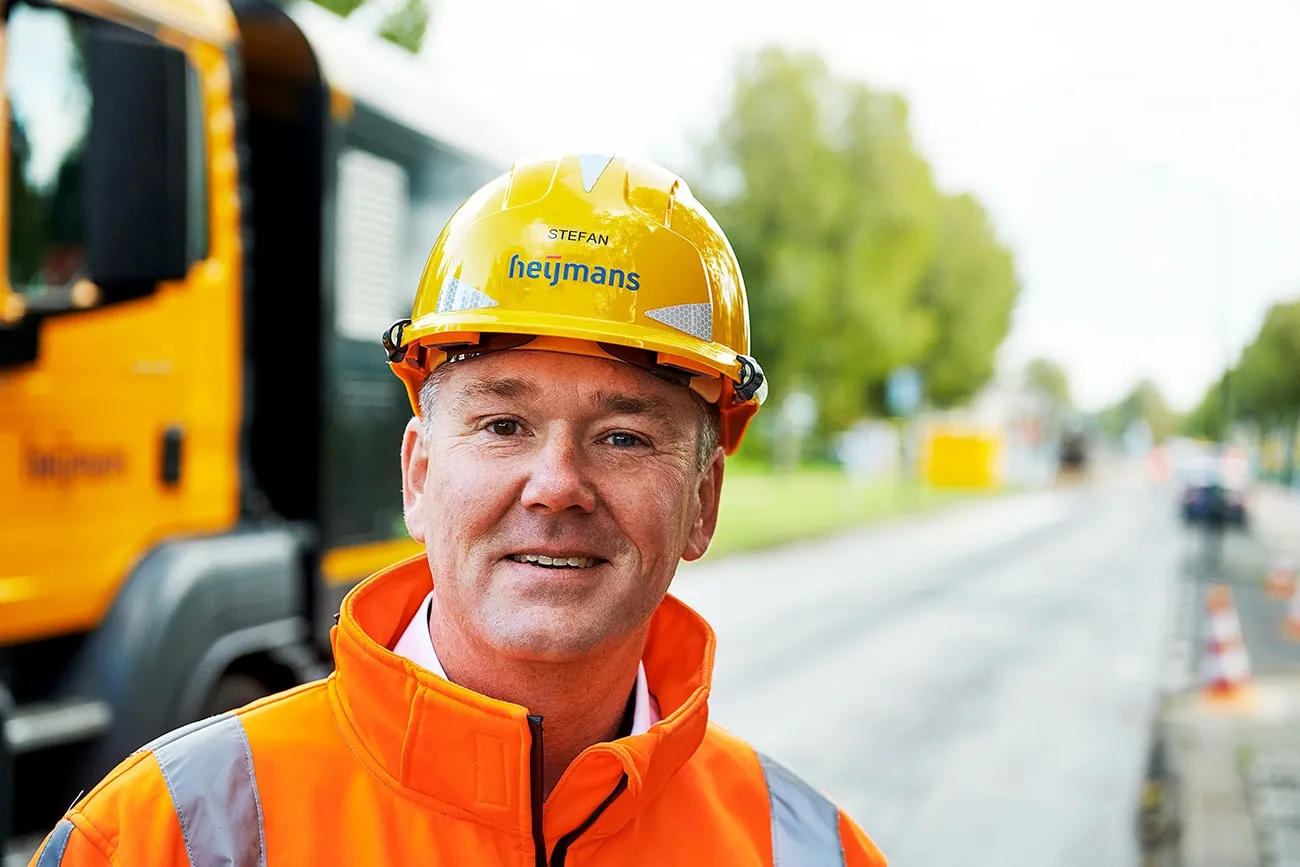
The Dutch asphalt sector is a world leader in making asphalt more sustainable and continually sets itself new targets. For example, the decision was made a year and a half ago to phase out the current hot mix asphalt mixtures. This means that today’s asphalt will no longer be available to buy in 2025. An ambitious decision, considering that more than 300 different asphalt mixtures are currently used in the Netherlands. Stefan de Munck, chair of the Vakgroep Bitumineuze Werken of Bouwend Nederland, brings us up to date on the latest developments in making asphalt more sustainable.
Many roads lead to sustainable asphalt
The Vakgroep Bitumineuze Werken comprises members of Bouwend Nederland who both produce and lay asphalt. The group promotes the use of asphalt, contributes to (European) regulations, focuses on the environment and provides information about asphalt as a product. “A year and a half ago, as part of the sustainability challenge, we unanimously decided to phase out the current hot mix asphalt mixtures,” says De Munck. “We were quite early in doing so, because with a few exceptions, clients have only seriously started looking at making construction projects more sustainable over the past year. This is already paying dividends for our sector, particularly with the latest market developments around PFAS still fresh in our minds and the current nitrogen issue. To be able to deliver projects at all in the coming years, it is essential to accelerate the emissions-free delivery of construction projects.”
14,000 tonnes of CO2 savings
According to De Munck, asphalt production uses an average of around 9 m3 of gas. “The biggest savings in both emissions and CO2 footprint can be achieved by reducing the temperature. Warm Mix Asphalt is therefore the sustainable alternative and the next step in making asphalt more sustainable by 2025. In fact, all asphalt plants have been working on this for some time. One producer may focus more on the hardware, using different technologies in the plant, while another looks more to adding additives to enable production at a lower temperature.” By way of comparison, current hot mix asphalt is produced at a temperature of around 160 degrees Celsius, half-warm mix at 140 degrees Celsius and warm mix at 100 to 110 degrees Celsius.
Lowering the production temperature saves around 14,000 tonnes of CO2 emissions a year, based on 7 million tonnes of fresh asphalt laid annually in the Netherlands on roads, car parks and runways.
Sustainable mix design
Making asphalt more sustainable also means recycling even more of the asphalt removed from existing roads. “That means putting the milled asphalt back into the new mix, at as high a percentage as possible,” De Munck explains. “The Netherlands is a leader in this, incidentally. Reusing milled asphalt has been fairly common practice here for some thirty years, having arisen from the limited availability of raw materials. After all, we have no quarries or mountains here. Raw materials have to come from far away. What we have seen in recent years, though, is a further focus on this here too, with the share of milled asphalt growing steadily. On average, the reuse rate for milled asphalt is 50%, but some mixes already contain 70% or more.” From a sustainability perspective, there is also a focus on optimising the binders in the mix. De Munck says different approaches are being explored here too. “These include developing bio-based binders or adding additives. It is a fairly long development process, which can sometimes make things difficult. Additives, for example, can cause problems with emissions from the stack. The final quality also has to stand the test of time. It may work for now, but how will the asphalt perform in the longer term? These are all issues that need to be investigated.”
Emission-free plant
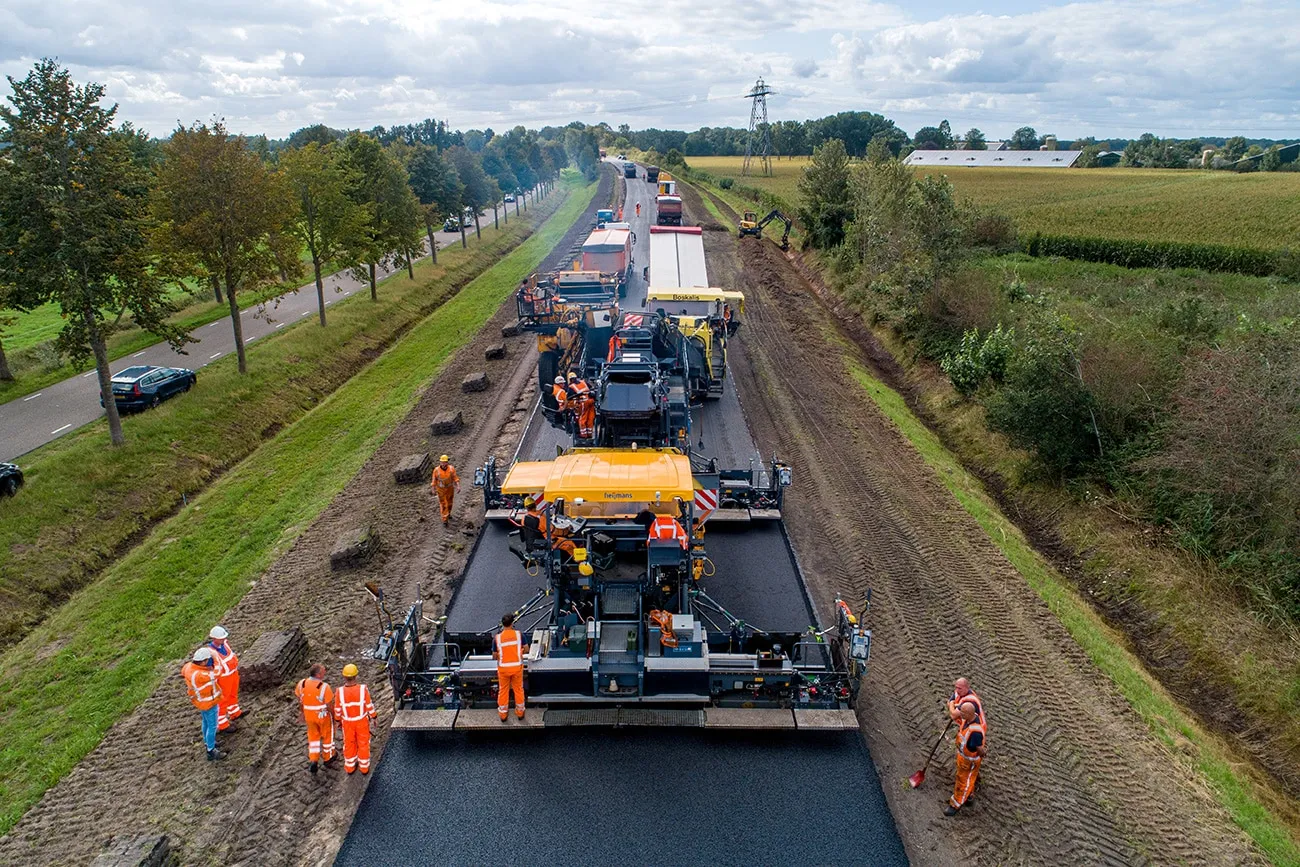
Laying asphalt without emissions is a logical step in making the sector more sustainable. De Munck says: “It is an issue for every road builder and the solution is much the same: invest in electric excavators, asphalt pavers and rollers. One small detail: an electric machine costs at least twice as much as a standard machine. This is partly because such machines are not yet being produced in large numbers. Here too, the Netherlands is top of the class. We have been used to investing in cleaner plant for years, such as Stage V Euro 6 engines. Apparently, this is not really on the agenda elsewhere in the world. Diesel engines that we stopped using ten years ago are still being manufactured. Two years ago, no manufacturer was working on electrifying machines. It was, and sometimes still is, quite a challenge to convince them that emissions-free operation really is the future, whether electric or hydrogen-powered.”
The investment in emissions-free plant does have to be ‘covered’ by projects, De Munck acknowledges. “The operating model has to add up. Our members invest in plant to deliver projects without emissions, but they need to be able to recoup that investment. The hourly rate for such much more expensive machines is significantly higher. Clients therefore need to be on board and, above all, open to it. They often claim to want to take a sustainable approach to projects, but say it must not cost more. That is the bind we are in now. The latest market developments do, however, favour companies that have already invested in emissions-free plant. They have a head start, because projects coming onto the market now will definitely be tendered with limited emissions.”
Broadening the framework
To accelerate the drive for sustainability, the Vakgroep Bitumineuze Werken is also engaging with clients. “If we want to make progress, we may need to step off the beaten track in some areas,” says De Munck. “The framework needs to be broadened. With the current contract requirements, few contractors are willing to stick their necks out and, for example, trial bio-based binders entirely at their own risk. No, you also need clients involved, with a healthy sharing of risk and adjustments to the framework and regulations. Many contractors have been developing lower-temperature asphalt for fifteen years or more. At the time, this sparked quite a debate, because the contract documents stipulated that asphalt could only be called asphalt if it had been produced at a temperature of 160 degrees Celsius. Fortunately, that is now a thing of the past and awareness has grown, but the example shows that sometimes you have to step off the beaten track and even amend contract documents. Otherwise, you stand in the way of innovation and, therefore, sustainability.”
Even colder mixes
From 2025, the current hot mix asphalt mixture will no longer exist. “That is quite soon, given that we announced it a year and a half ago, but it is realistic,” says De Munck. “Warm Mix Asphalt can be produced at existing asphalt plants. It does require investment in hardware to add additives, but that investment is still fairly manageable. The next step is much bigger, because Warm Mix Asphalt is of course not the end of the road. Further innovation towards even colder asphalt mixes will probably not be possible at existing plants. Knowing that the existing plants will not be decommissioned tomorrow, the main challenge is finding a balance between making investments and continuing to improve sustainability. But we will succeed in that too, in the end. Although the Netherlands is a relatively small country and is certainly not among the biggest consumers of asphalt, we are the most innovative in the world. It is worth noting that we aim for a very high quality standard for our mixes, with a service life of at least ten to fifteen years.” So many roads lead to sustainable asphalt. To be continued, no doubt!
Question about this story? Ask your question
Keep following this
Get an email when a new story is published. No account needed.
- ThemeExtending the life of roads and civil engineering structures
- SubjectRoad construction







