









Sustainable widening of the A1 between Apeldoorn and Twello
Text Roel van Gils Images Heijmans
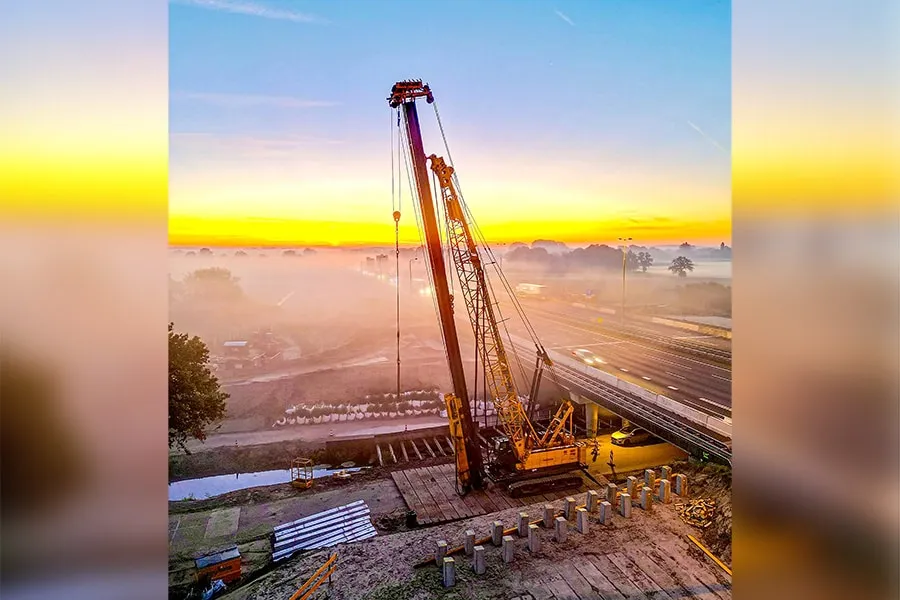
Zero-emission, circular and using new technologies
Heijmans and Rijkswaterstaat share the ambition of working towards climate neutrality and a healthy living environment. They are putting this into practice on the widening of the A1 between Apeldoorn and Twello. The project is being carried out with as few emissions as possible, existing project materials are being salvaged and reused, and there is even scope to deploy product innovations and new technologies. It is truly a unique road construction project on the world stage, attracting considerable international interest.
The widening of the A1 between Apeldoorn and Twello is the second phase of the widening between Apeldoorn and the Azelo interchange, which began in 2018. Widening the A1 will improve links between economically important areas in the Netherlands and abroad. Rijkswaterstaat is working with the provinces of Overijssel and Gelderland and the Regio Stedendriehoek. Construction company Heijmans is carrying out the work. Phase 1, between Twello and Azelo (40 kilometres), has now been completed. Heijmans is currently working on the 15-kilometre section between Apeldoorn and Twello. “Although the phase 2 section is considerably shorter, the contract value is comparable to that of the previous phase. The work is much more complex, with many more structures and entry and exit roads, often in built-up areas,” explains Erik Steenbergen, technical manager at Heijmans.
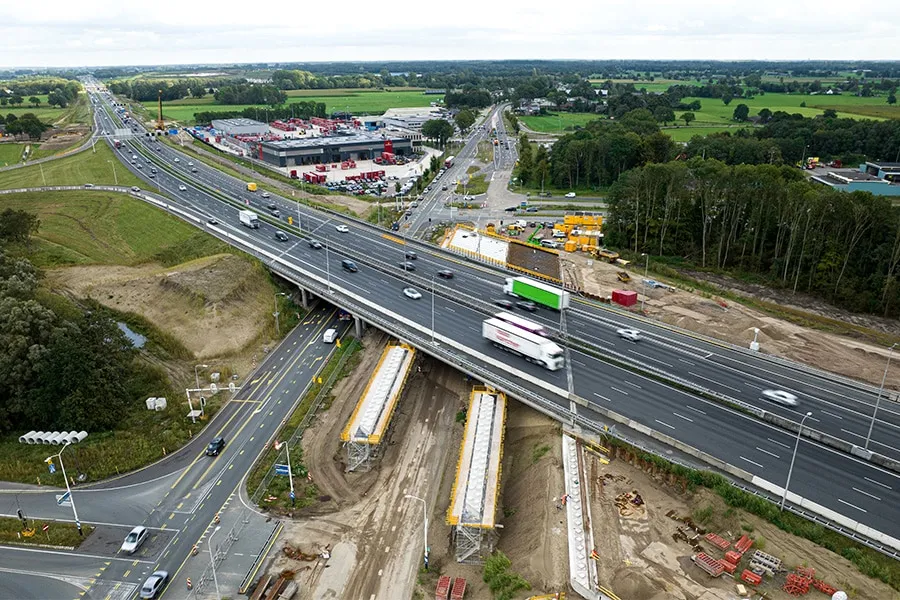
Climate-neutral by 2030
The second phase of A1Oost stands out from phase 1 primarily for its strong focus on sustainability. “We also asked for standard sustainability measures on the previous section, which resulted in, among other things, the construction of a solar park and the use of bamboo traffic signs. But for phase 2, we’re going a step further,” says Jasper Middelkamp, technical manager at Rijkswaterstaat. “Rijkswaterstaat’s ambition is to work in a climate-neutral and circular way by 2030, using clean, zero-emission equipment. We are working towards this, among other things, by making the Environmental Cost Indicator (MKI) a mandatory award criterion. When tendering for the second phase, we also asked bidders to go beyond standard sustainability measures and make the works as zero-emission as possible, to build momentum.”
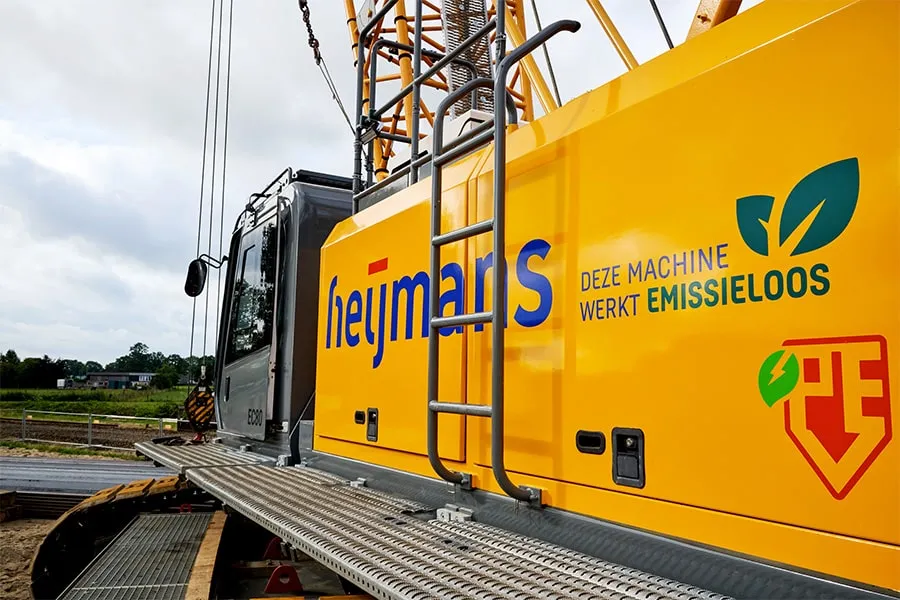
Showcase
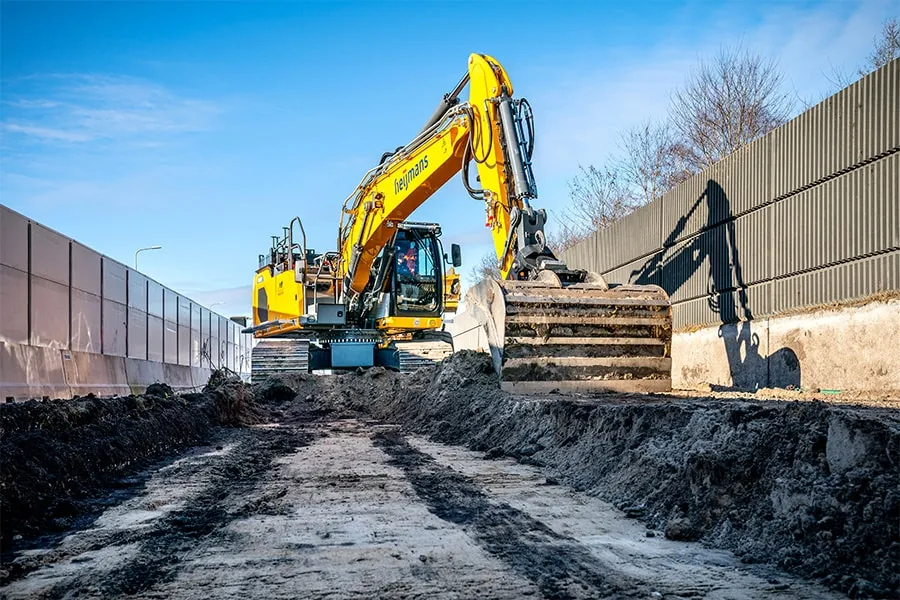
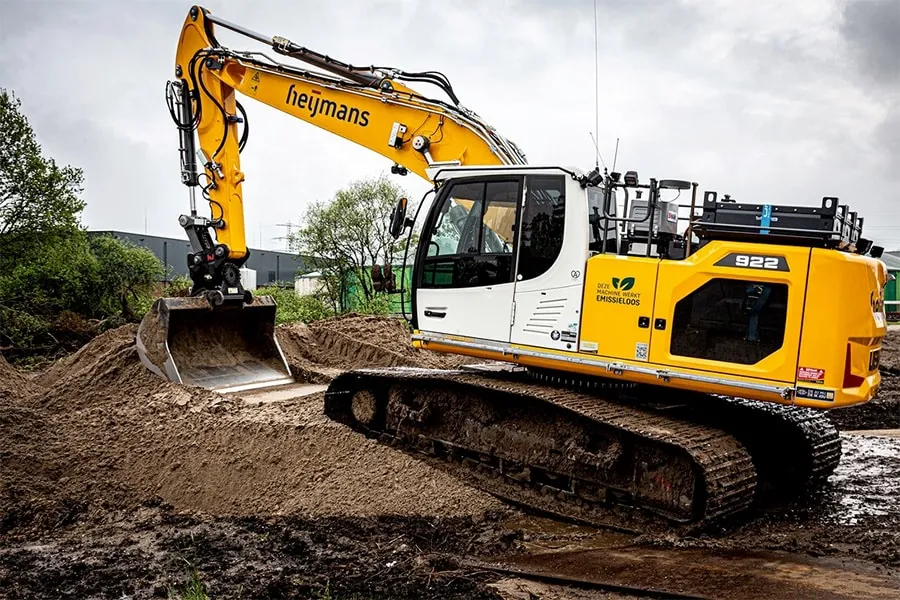
Initially, five candidates had registered for this second phase of the A1 project. Following a shortlisting process, the number of bidders was reduced to three. “We then entered into competitive dialogue and broadened the sustainability brief, focusing not only on electric equipment but also on reusing existing materials,” says Jasper. “This ultimately resulted in three excellent bids, but Heijmans came out on top.” Erik adds: “These are the kinds of projects that suit our organisation, with a lot of civil engineering and asphalt work, and a strong focus on the surrounding area and the environment. We are ‘builders of a healthy living environment’, and we make that clear to a wide audience. As a pioneer, Heijmans has made additional funding available to invest in zero-emission equipment, and this project is a showcase for that. The use of 48 (!) electric machines on a single project, including twenty lorries, crawler cranes, telehandlers, loaders, drilling rigs, asphalt equipment and a cable crane, is unprecedented.”
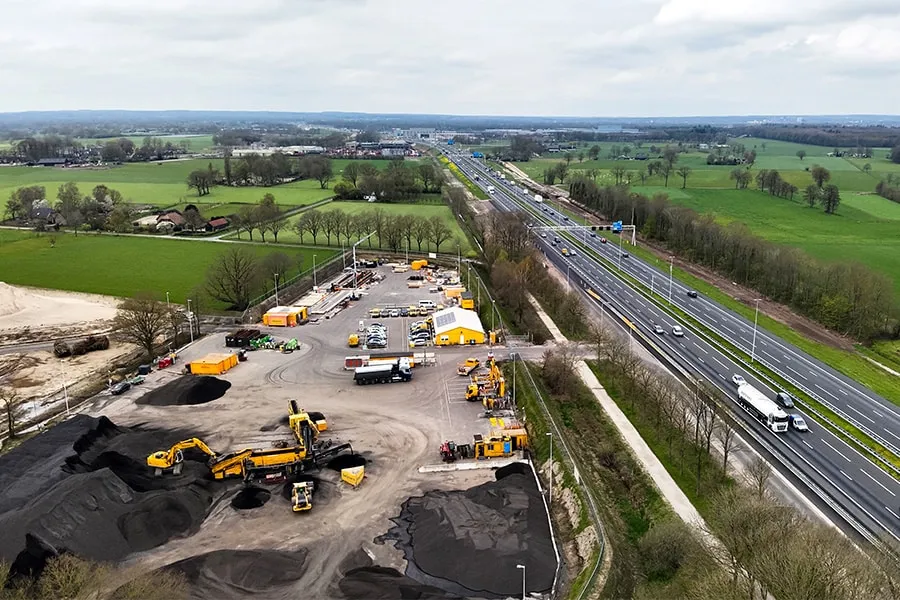
Giving materials a second life
In addition to using zero-emission equipment, Heijmans is taking many other sustainability measures. “We are using innovative techniques and product innovations to achieve a lower MKI. For example, many materials from the existing road infrastructure are being salvaged, sorted, processed and reused,” says Erik. “That includes standard materials such as asphalt and concrete, as well as gantries, cables, noise barriers and even the guardrail, all of which are being given a second life.” Another unique feature is the in-house production of 32 concrete beams for the extension of five structures, as a sustainable alternative to mass-produced precast concrete beams. “Instead of striking the formwork after one day, we allow 28 days for curing. This means we don’t need to use additives and can use less cement, as well as choosing a type with a lower environmental impact. Together, these measures deliver an 18% reduction in the MKI.”
Capacity on the electricity grid
According to Jasper, the use of innovative techniques and product innovations has so far never held up the project. “Heijmans deserves credit for that. On the one hand, they are introducing innovations, while on the other, it’s business as usual.” That said, it can be quite a challenge to keep the electric machines running for a full day, Erik acknowledges. “Both the lorries and the cranes have to be recharged during the day.” Fortunately, installing charging facilities was not a problem on this project. “We got in early,” says Jasper. “There was capacity available on the electricity grid at this location. But that can no longer be taken for granted, and we are aware of that as the client.”
Speed limit changes during roadworks
The A1 between Apeldoorn and Twello is a “busy little corner of the Netherlands”, with a high volume of international freight traffic. “One major challenge here is keeping part of the road open while ensuring the work can be carried out safely. That’s not unique to a road construction project, but it does demand our full attention,” says Jasper. “In consultation with the police and the Public Prosecution Service, Rijkswaterstaat is looking at how we can improve road users’ attitudes and behaviour around roadworks. Sometimes a campaign helps to stop drivers ignoring red crosses, but often firm measures such as speed checks are needed. On this section, for example, the Public Prosecution Service has deployed a so-called flexflitser, a mobile speed camera that is regularly moved.” Heijmans has also installed narrowed and shifted lanes so that road workers can work safely. To keep road users safe too, a 90 km/h speed limit has been imposed along the entire section, in accordance with the applicable guidelines.
Considerable interest from abroad
Heijmans began work on site in early 2023. The road is scheduled to open at the end of April 2025. “This is currently one of the most sustainable road construction projects in the Netherlands,” says Jasper. “With all its sustainability measures, Heijmans has managed to halve the MKI compared with the reference MKI. That’s a unique achievement.” And it has not gone unnoticed. “People are genuinely interested in how we’re doing things here, how we’re handling charging facilities and so on. That makes the project very engaging. We regularly give presentations, and an international delegation is even coming to visit soon. That shows we’re doing innovative work,” Erik concludes.
Question about this story? Ask your question
Who worked on A1 Apeldoorn – Twello
- construction companyHeijmansIn this story
- clientRijkswaterstaatIn this story
- geotechnical ground investigationVWB Het VeldwerkbureauMentioned in Geotechnical ground investigation by local specialist
- temporary road lightingLokhoffMentioned in Safety above all, thanks to smart temporary road lighting
Keep following this
Get an email when a new story is published. No account needed.
- ProjectA1 Apeldoorn – Twello
- ThemeLower emissions and more reuse
- SubjectRoad construction
- CompanyHeijmans
- CompanyRijkswaterstaat







