









Sustainability in practice: the figures
Text Kris VandekerckhoveImage KWS
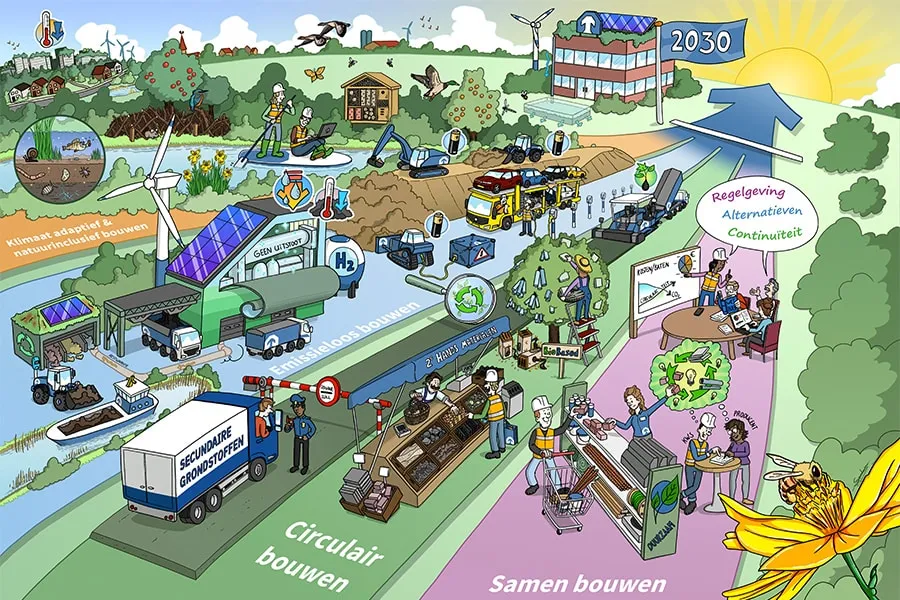
The route to emission-free, circular and nature-inclusive construction
In a world where sustainability is becoming increasingly important, KWS is leading the way in the civil engineering, infrastructure and water management sector with innovative, environmentally conscious initiatives. The construction company has set itself the goal of being a pioneer in sustainable construction, with ambitious targets for the coming years. Its ambition is to deliver its projects almost entirely emission-free, circular and nature-inclusive by 2030, in phased steps.
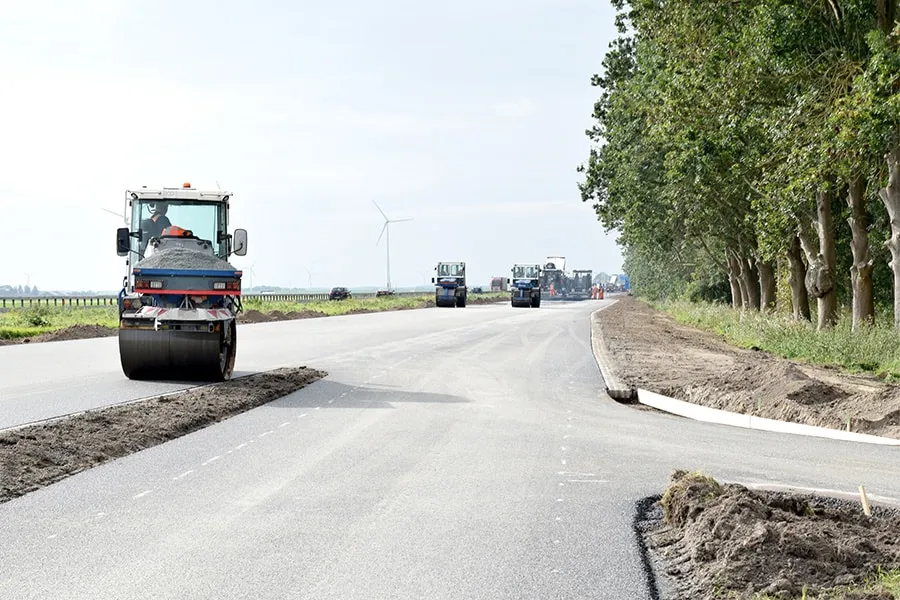
Casper Tuinstra, KWS business unit manager: “We specialise in remediation, drainage, sewerage, hydraulic engineering and foundations. We carry out a wide range of projects for central government, including Rijkswaterstaat and ProRail, as well as for provinces, municipalities and water authorities. We also have private-sector clients. The company, which is part of VolkerWessels, has several offices in the Netherlands and operates a decentralised structure so that it can stay close to its clients and remain rooted in local communities. We find that speaking the ‘local language’ can make a big difference to efficiency and effectiveness, however large our projects may be.”
Working together for a greener future
Collaboration and partnerships are central to KWS’s efforts to innovate and improve sustainability. KWS works closely with clients, regulators, the supply chain, knowledge institutions and other partners to promote sustainability innovations. These partnerships enable KWS to keep working together on the shared challenge of transitioning to sustainable, circular construction methods.
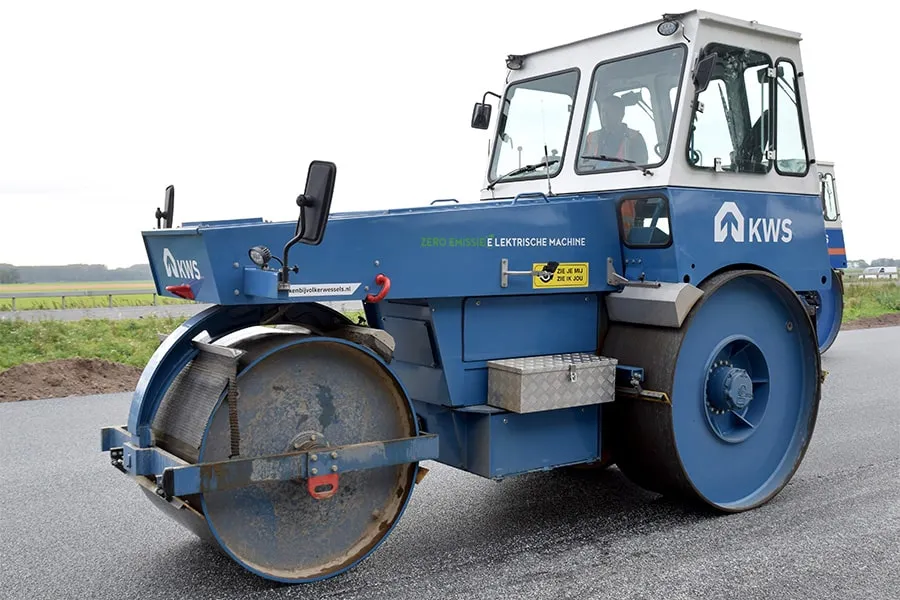
Joost Bos, KWS Sustainability and Innovation Manager: “KWS’s strategy centres on three main themes: emission-free construction and production, circular construction, and climate adaptation and nature-inclusive construction. To achieve our ambitions, we are focusing on reducing CO2 and nitrogen emissions, among other things by purchasing green electricity, reusing materials and electrifying our equipment. KWS has already made significant progress, including with zero-emission construction sites and electric asphalt machines, enabling projects to be delivered carbon-neutral or even carbon-negative.”
A three-part sustainability strategy
Thomas Neef, KWS communications: “We have set out our ambitions for the three pillars, emissions, circularity and nature-inclusion, in a number of clear figures. This year, we have equipped 10% of our projects with a materials passport, made circularity measurable, and developed a circularity scan and nature-inclusive building blocks. We will be working hard to put these into practice over the coming years.”
“By 2025, KWS aims to have 100% electric leased cars, 25% electric company cars, 37% of its equipment running on HVO, 25% electric equipment in use, and a hydrogen-powered asphalt plant established. In terms of circularity, our targets are for 80% of projects to have a materials passport, 95% waste separation, a circularity scan for 50% of projects and 50% secondary raw materials. In addition, by then, 20% of our projects will use nature-inclusive building blocks.”
“Finally, by 2030, 50% of our company cars will be electric and we will use 100% electric equipment. In addition, 100% of projects will be carried out with a circularity scan, we will work with secondary raw materials for 80% of projects, and 60% of projects will use nature-inclusive building blocks. We know these are ambitious figures, but we are confident we will achieve them, and more!”
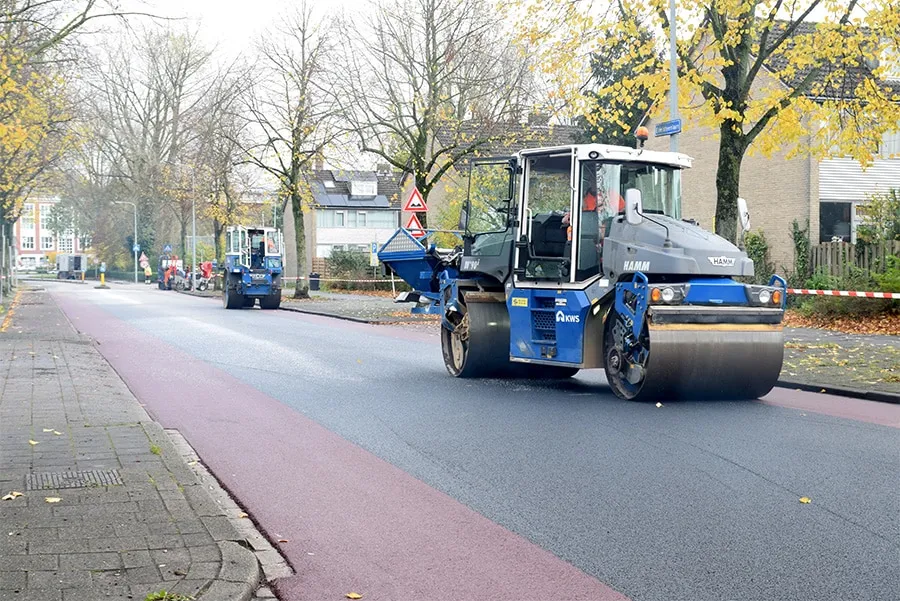
Innovation in Groningen: GemGroReflection
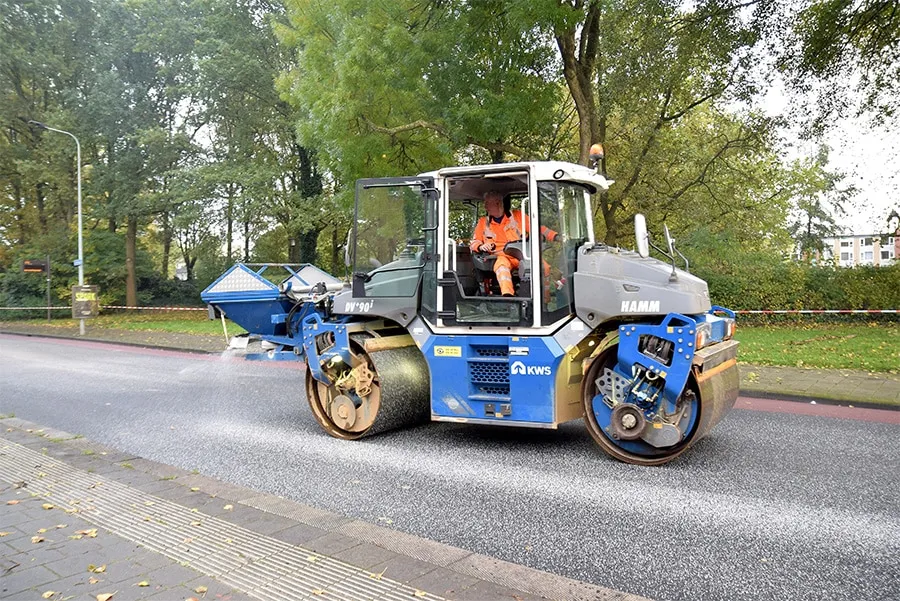
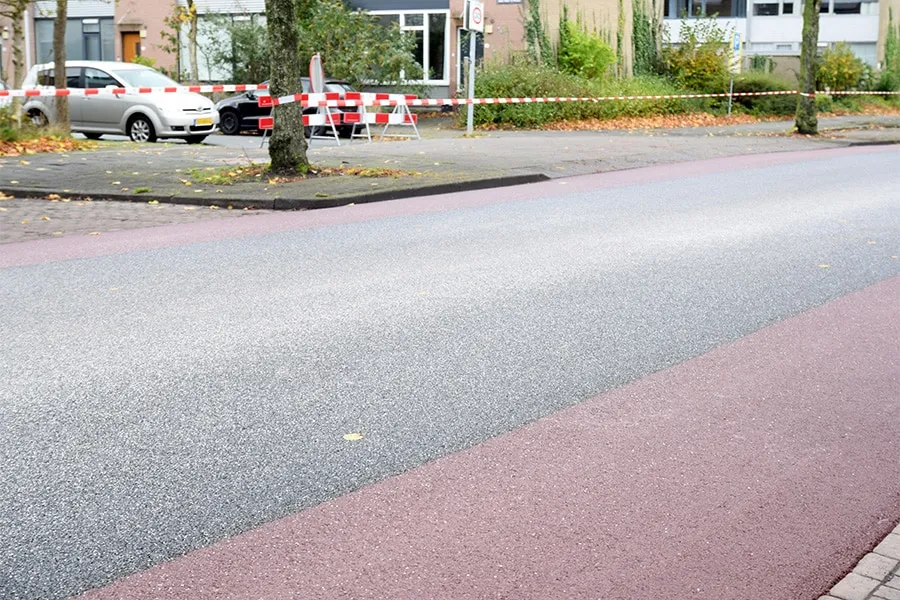
In a noteworthy project in Groningen, KWS developed the innovative GemGroReflection asphalt mix in collaboration with the municipality of Groningen. The mix stands out for its lighter colour, which helps lower surface temperatures and therefore reduces heat stress in urban areas. GemGroReflection is produced more sustainably, resulting in a 2% reduction in CO2 emissions and lower gas consumption. The mix also improves social safety through better visibility and reflection of street lighting. This innovation is an example of how KWS is helping to create more sustainable and safer urban environments.
Have a business enquiry for KWS? Get in touch
Companies in this story
Keep following this
Get an email when a new story is published. No account needed.
- ThemeLower emissions and more reuse
- SubjectRoad construction
- CompanyKWS







