









Sustainability in materials and processes
Text Tony VosImage HKV
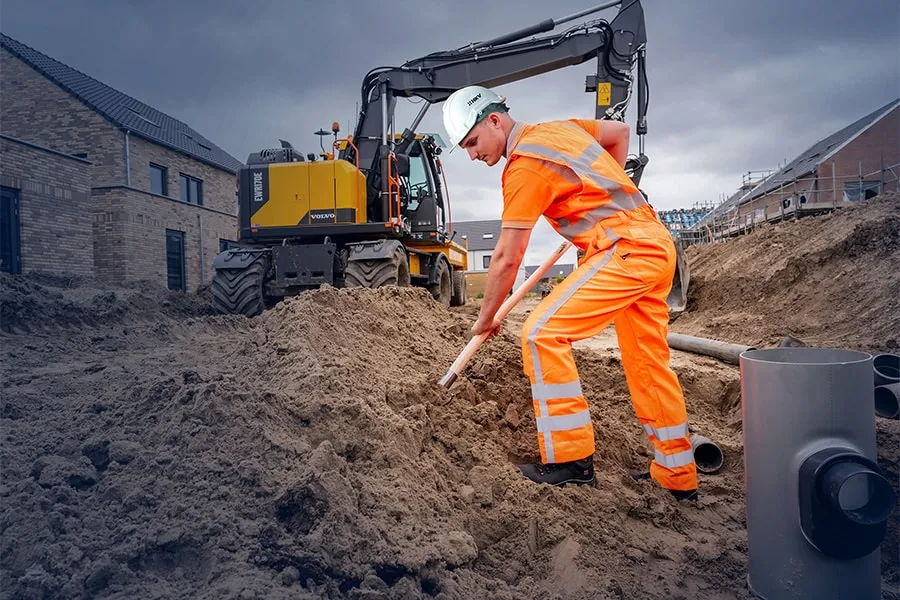
More and more aspects of road construction are becoming sustainable and even circular. Workwear specialist HKV demonstrates just how far this can go, supplying a range of products made from recycled materials. And it goes beyond clothing alone, as senior account manager Joost van Welie explains.
More and more products are made wholly or partly from reused materials. HKV is leading the way in this area and keeping pace with the latest developments. Joost: “We actively inform our customers about our sustainable options. Take, for example, our T-shirts from the RWS clothing range, made from organic cotton combined with recycled polyester. The collection includes T-shirts, polo shirts, sweatshirts, work trousers and softshell jackets, in both women’s and men’s sizes.”
“When putting together our range, we make conscious choices about the most sustainable and safe raw materials and processes. We also work with our suppliers to gain a clear understanding of the textile supply chain and improve working conditions in factories.”
Reuse
HKV goes a step further, as Joost explains: “It is important that the clothing we supply is returned to us at the end of its service life and used as a raw material for new products. The possibility of reuse is already considered during the design phase. We collect the clothing from our customers.”
Each garment has a label specifying the materials used and the relevant certifications (ISO 20471, UV protection). The Oekotex 100 certificate, for example, indicates that no harmful chemicals were used in production. The recycled polyester yarn is made from PET bottles and has a lower environmental impact. This material therefore carries Global Recycling Standard certification.
The longer a garment lasts, the lower its environmental impact. Polygiene Service Fresh technology means materials can be worn more often before the clothing starts to smell. Washing less also benefits the environment. In addition, the material can be washed up to fifty times without losing compliance with the standard.
Rice husk traffic signs
Of course, it is not just about the environment. Joost: “We also ensure optimum quality and comfort. We use more stretch fabrics and printed striping instead of stitched striping. This gives greater flexibility, improves breathability and provides a better fit.”
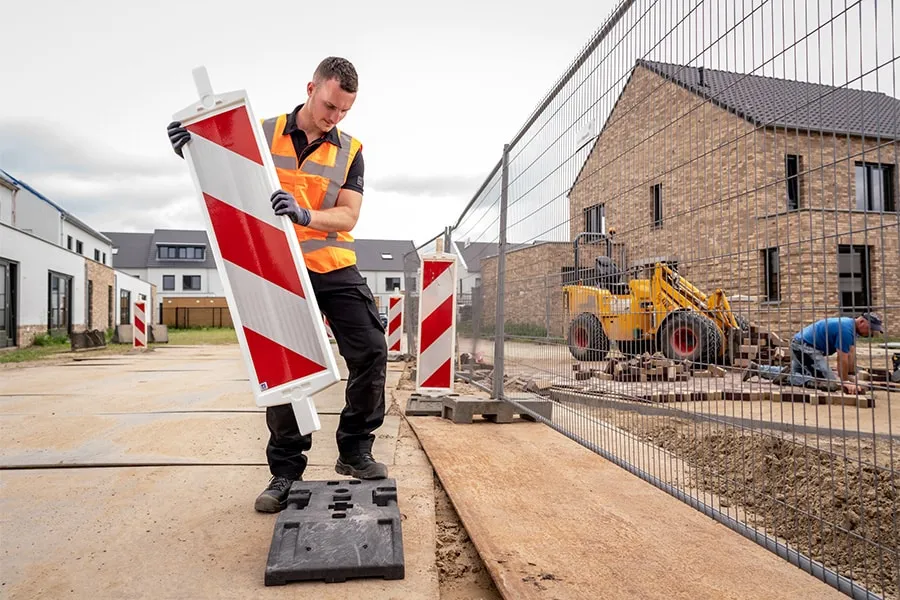
HKV also supplies traffic cones (class 3 with reflective markings) and traffic delineators made from reused plastics. Rice husk traffic signs also deliver significant environmental benefits: the base material is waste from rice production and does not need to be heated. They last longer and are resistant to moisture, rot and mould. The retroreflective sheeting is printed with solvent-free ink.
Question about this story? Ask your question
Keep following this
Get an email when a new story is published. No account needed.
- ThemeLower emissions and more reuse
- SubjectRoad construction







