









Road construction in Arnhem more sustainable than ever: as much equipment as possible will be electric
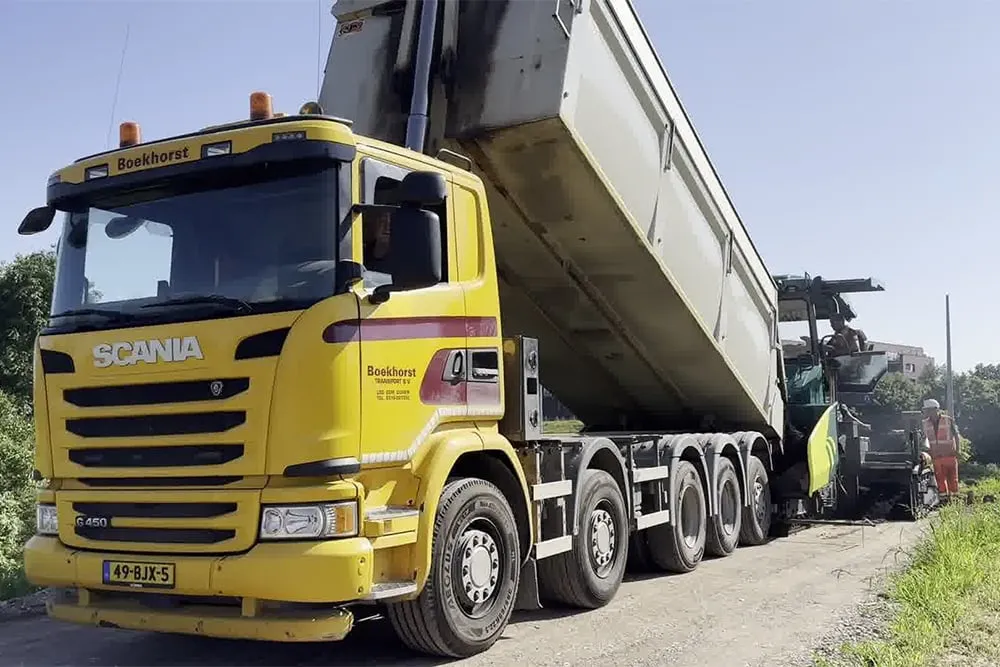
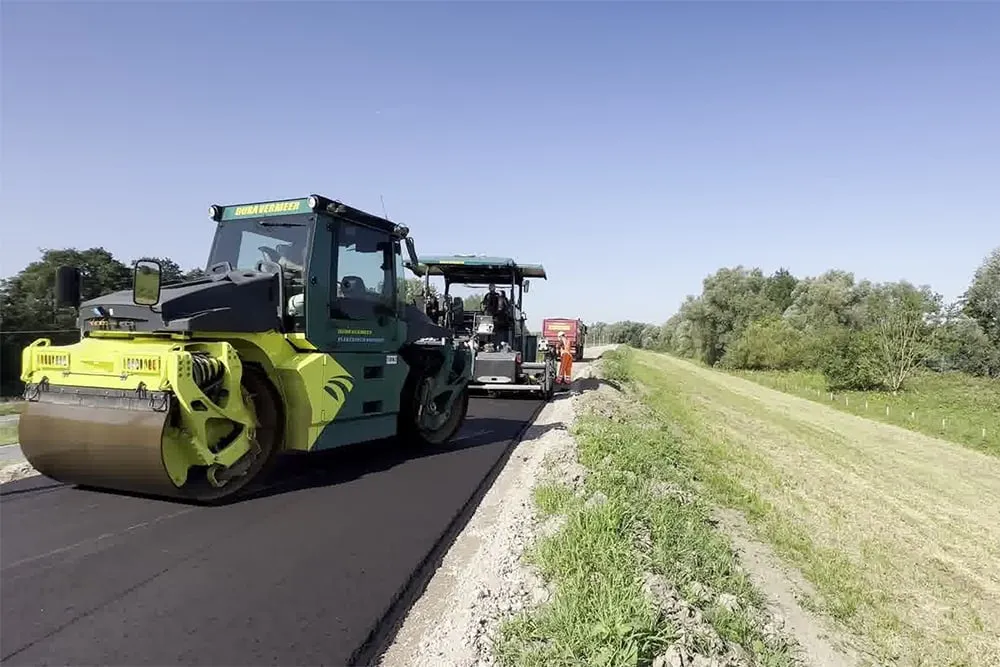
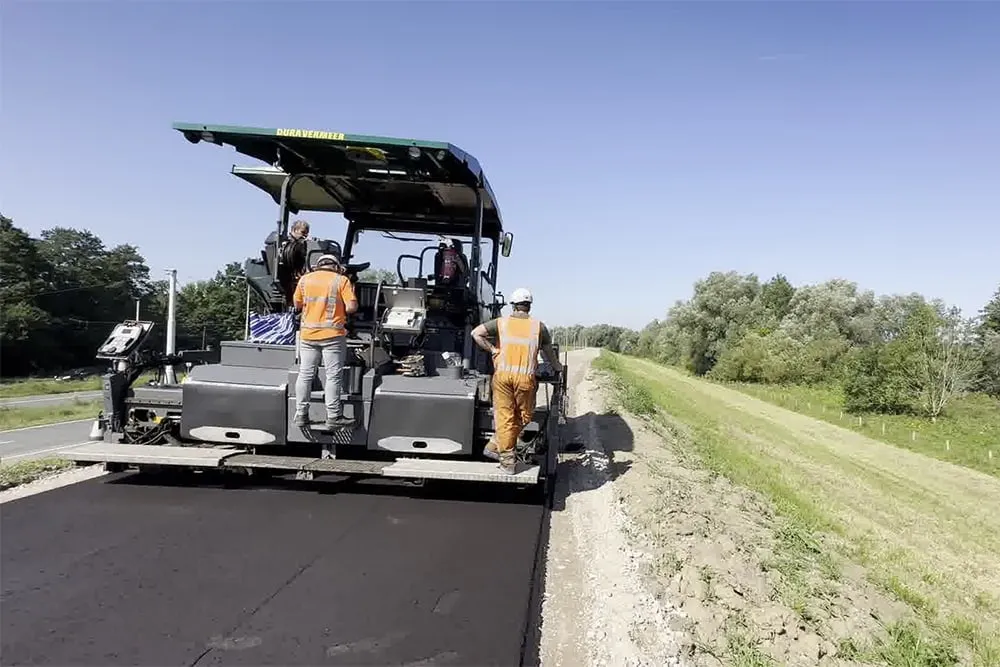
Arnhem will use as much electric equipment as possible when building or redesigning roads. This will improve air quality in the city and make things much quieter for local residents and road workers. Small plant such as vibrating plates, mini-excavators and small loaders will have to be electric. Where possible, mobile cranes, lorries and even an entire asphalt paving train will also be electric. This is the approach being taken, for example, in the construction of the Grote Griet cycle path in Arnhem-Zuid.
Large electric plant
Electric cars are now a familiar sight on the streets, as are electric trolleybuses, another well-known feature of Arnhem. With more and more electric plant, including heavy equipment, becoming available for road construction, Arnhem wants to make the most of it. For road construction or improvement projects, the use of ‘smaller’ plant, with a power output of up to 37 kW, must therefore be electric. In some cases, additional requirements apply to larger electric plant. Alderman for sustainable mobility Nermina Kundić says: ‘This means we are making a significant contribution to cleaner air in the city. And it cuts a lot of noise. That’s a win-win.’
45 tonnes less CO2 emissions
The ‘zero-emission requirements’ have been in force since this year. In 2024, eight major projects are already being carried out using as much electric equipment as possible. These projects will achieve a substantial reduction in CO2 emissions. At Grote Griet, reductions of 45 tonnes of CO2 are expected. That is equivalent to the amount of CO2 absorbed by 1,793 trees in a year, or the annual savings made by 320 solar panels compared with conventional electricity.
‘Industrial’ charging point
One of the challenges is where to charge electric excavators and lorries. A standard car charging point is generally not suitable for large road construction equipment. Nor is it desirable for, say, a large lorry or mobile crane to spend the whole night charging in a residential area. Kundić says: ‘We have set up a dedicated “industrial” charging point for this purpose at Kleefse Waard business park. Its capacity is five to ten times that of a standard electric car charging point. They can charge there without any problems.’
Clean and quiet
The Grote Griet cycle path runs along the dike between Meinerswijk and the Batavierenweg and Eldensedijk. It is an ideal place to work more quietly and cleanly. Meinerswijk is teeming with wildlife, including grey herons, greylag geese and Canada geese. Foxes and beavers also live in the wild there. The existing narrow cycle path is being widened to twice its current width and will also be lit. The lighting is ‘smart and energy-efficient’: when it gets dark, it comes on at 10 per cent brightness. The lights only switch to full brightness when a cyclist approaches. ‘The lighting effectively moves along with the cyclist, making it much more energy-efficient. This will make the cycle route between Zuid and Noord much more comfortable and cycling an increasingly attractive alternative,’ Kundić concludes.
Question about this story? Ask your question
Keep following this
Get an email when a new story is published. No account needed.
- ThemeConstruction equipment and transport in motion
- SubjectRoad construction







