









R. Breure bv: 40 years of specialist expertise and innovation
Text Roel van Gils Beeld R. Breure bv
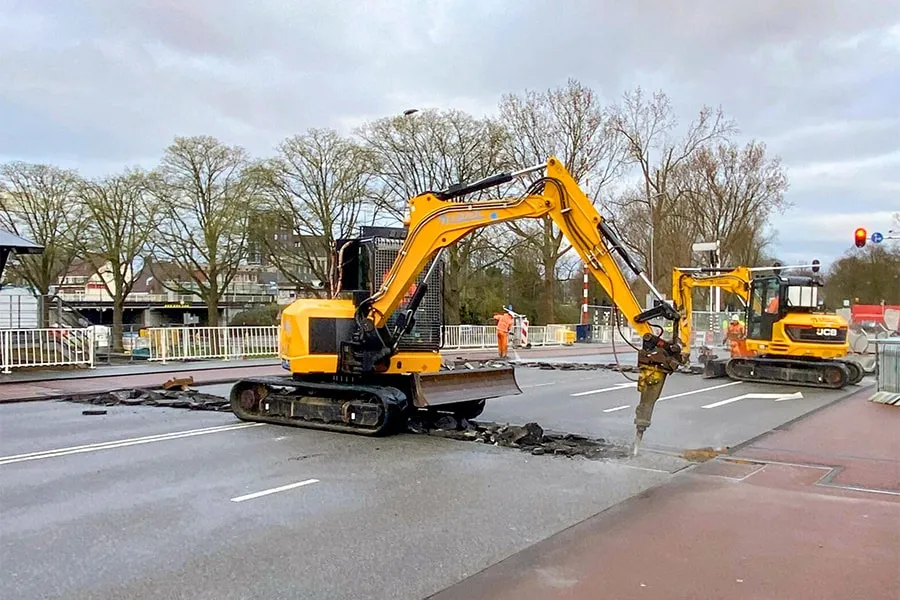
As a groundworks, road and waterworks contractor, R. Breure bv has been characterised by specialist expertise and innovation for 40 years. The first Dutch unanchored bituminous expansion joint was developed by the family-run business in Zwanenburg, which is also fully committed to electrifying its young fleet. Its latest addition is an 8-tonne tracked excavator, electrified in-house and now successfully deployed on zero-emission projects.
R. Breure was founded on 1 March 1984 and turns exactly 40 this year. “I started out by hiring myself and a mobile crane out at Schiphol,” says Ruud Breure. “We have grown steadily ever since. We now have more than 30 employees and a sizeable fleet, and work on a wide range of infrastructure projects. Our work ranges from milling bridge decks and demolishing the associated expansion joints to major earthworks. We also specialise in asphalt repairs, such as filling cracks and applying wearing courses, and have even developed our own expansion joint. The Breure FPEJ (Flexible Plug-in Expansion Joint) is the first Dutch bituminous expansion joint with a proven long service life that requires no anchoring into a structure.”
Leading the way
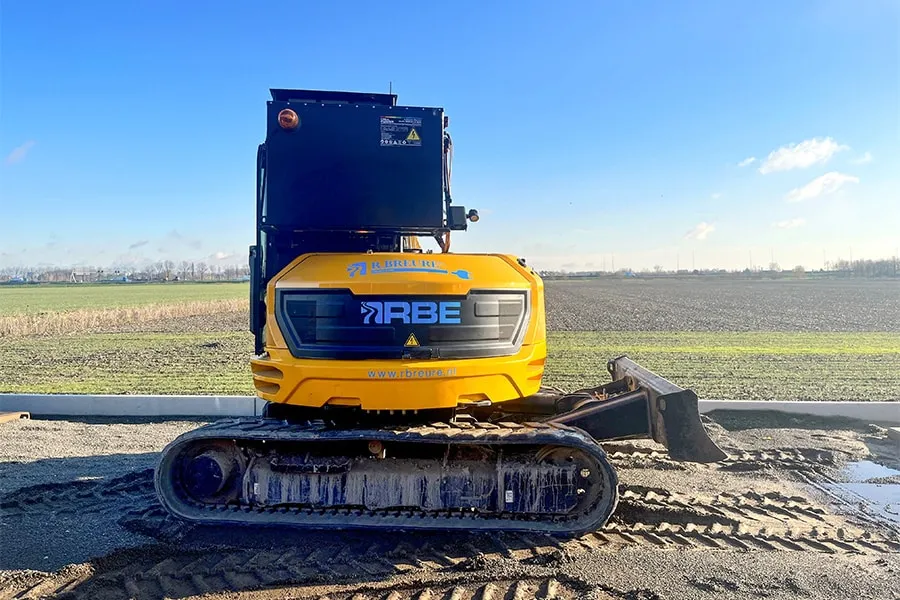
In recent years, R. Breure has invested heavily in electrifying its fleet. “We want to lead the way and take responsibility for reducing our CO2 footprint,” says Ruud. “Our equipment includes a 2-tonne electric excavator and a 2-tonne electric wheel loader, and all our tools are now electric. Battery packs have replaced the diesel generators, and we are electrifying our bitumen boilers in-house. We also collect all the rainwater from our site, so that we use as little mains water as possible. And of course, we use solar panels and drive electric vehicles wherever possible. Each year, we are becoming a little ‘greener’, often working with and relying on the expertise of local partners.”
RBE 85
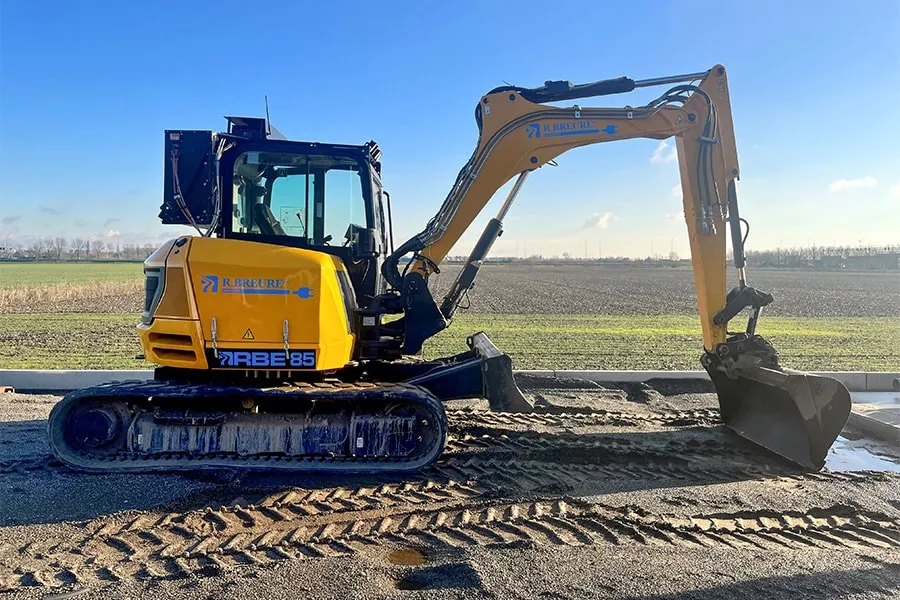
The latest development is an 8-tonne electric tracked excavator. “There wasn’t an electric machine in this class,” says Ruud. “As we received more and more requests to carry out projects with zero emissions, we decided to convert a machine in-house. The aim was to make no compromises on the performance or comfort of the donor machine, a JCB that was just two years old. Together with Stefan van der Hulst, an expert in equipment electrification, we designed and built the RBE 85 in-house using electrical components from Elsto Smart Solutions.” The conversion process was monitored and assessed by an independent organisation, and the machine was awarded CE marking. R. Breure is now officially the machine’s manufacturer.
Backpack
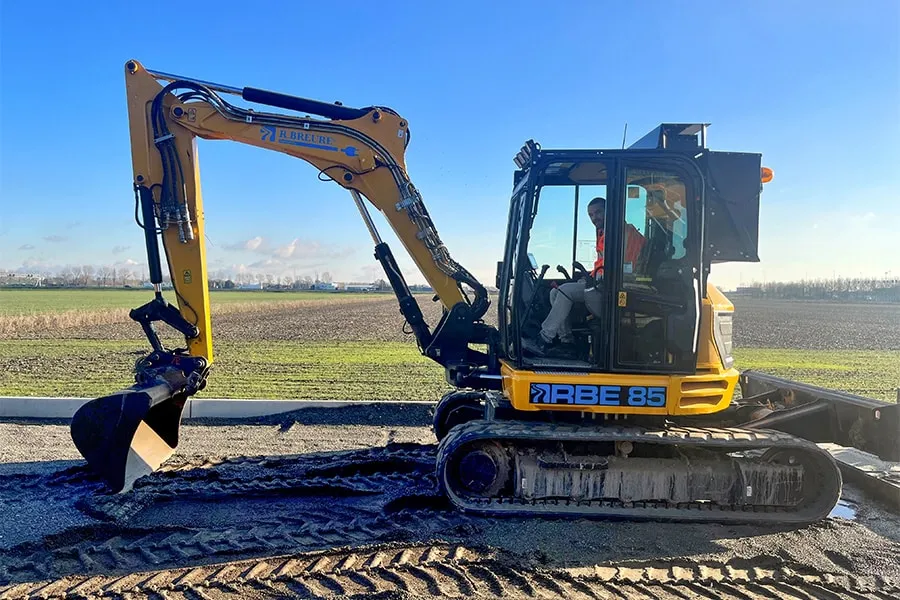
According to Ruud, the donor machine has been kept as intact as possible: only the diesel engine and fuel tank have been replaced with an electric motor and battery pack. “That would usually make the rear end considerably bulkier, but we deliberately avoided that. The electrical components have been integrated into the original design. The bodywork and all the covers have remained unchanged. The RBE 85 can in fact be identified only by the ‘backpack’ on the cab, which houses an extra battery pack. This allows us to run the machine for more than nine hours.” After an extensive testing period, the RBE 85 is now being used for all regular operations, from milling bridge decks to laying cables and pipes. “Even the most critical operators find it a pleasure to work with the electric RBE 85.” There will no doubt be more to come!
Question about this story? Ask your question
Keep following this
Get an email when a new story is published. No account needed.
- ThemeLower emissions and more reuse
- SubjectRoad construction







