









Paving industry steps up its sustainability efforts
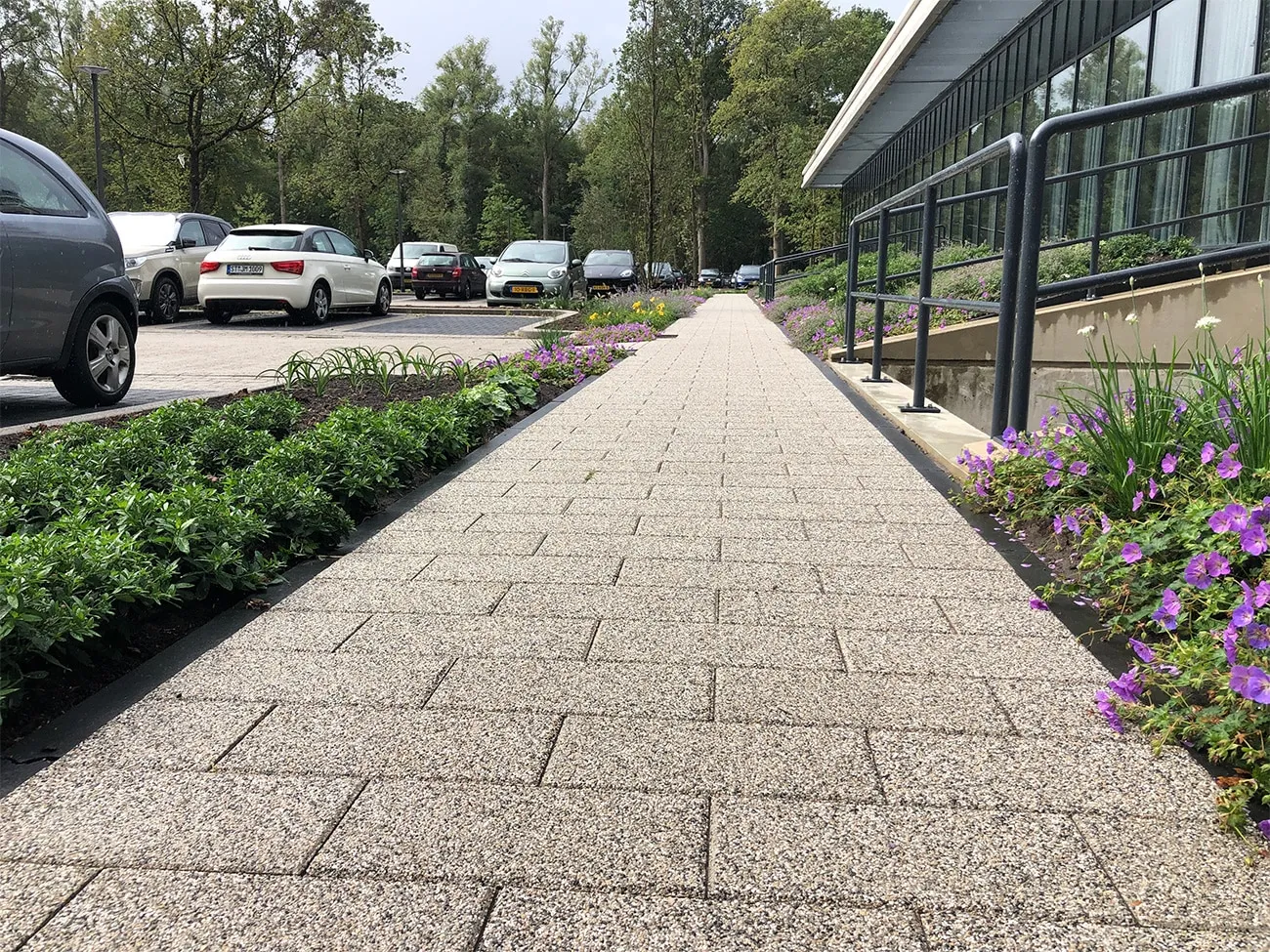
Higher energy prices, low river levels making it harder to supply raw materials, and labour shortages are just some of the challenges facing the concrete industry. The biggest challenge for the sector, however, is sustainability. “The paving industry is well aware of the importance of meeting climate targets,” says Taco van den Broek, secretary of Betonhuis Bestratingen. “Initiatives are being taken across the sector to reduce CO2 emissions and increase circularity. There are several ways to do this.”
One way is to reduce the cement content in concrete. “Using alternative binders means you need to use less cement, or no cement at all, in concrete. This is already being done for some products in the sector. Paving products are generally made from unreinforced concrete, which makes it easier to use alternative binders. After all, there is no need to account for structural safety over a longer period or to wait for the concrete type to be included in a certificate.”
Using recycled materials
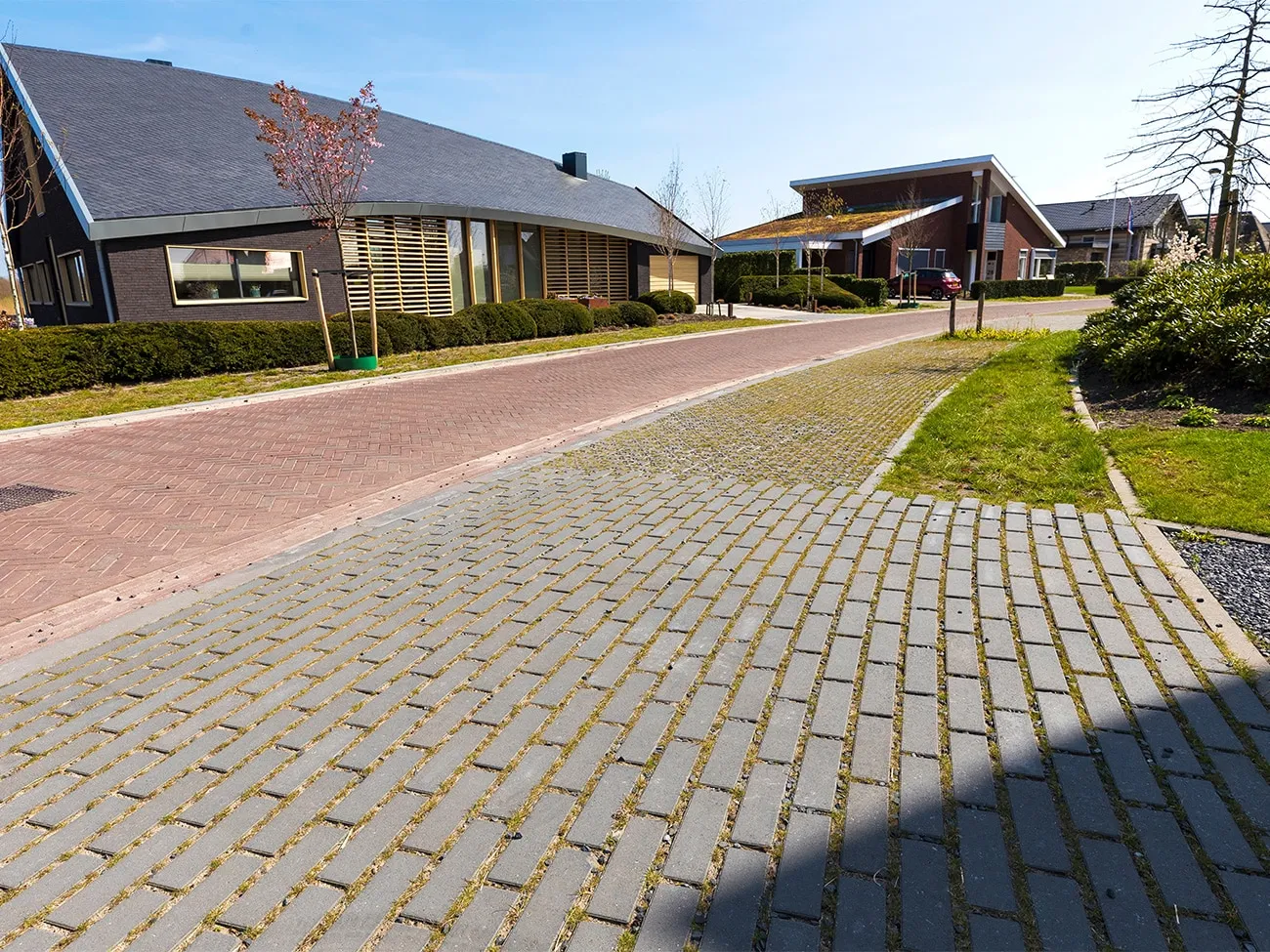
Another approach is to use recycled materials in paving products. “This helps save raw materials. Today, concrete can contain 30 per cent or more secondary material. Even cleaned gravel from asphalt is now used to produce paving materials.”
Rethinking street design
CO2 emissions can also be reduced by rethinking how paving materials are used. “Often there is a pavement more than 1.5 metres wide on either side of a street. But it is worth asking whether such a wide pavement is needed on both sides, especially if there is a green strip alongside it. Narrowing the pavement slightly means fewer pavers and slabs are needed. That also results in a substantial reduction in CO2 emissions. Reusing paving materials is also becoming more common. Giving used paving a second or even third life makes the best possible use of existing slabs, setts and paving stones. Work on these developments is ongoing.”
Climate-resilient paving
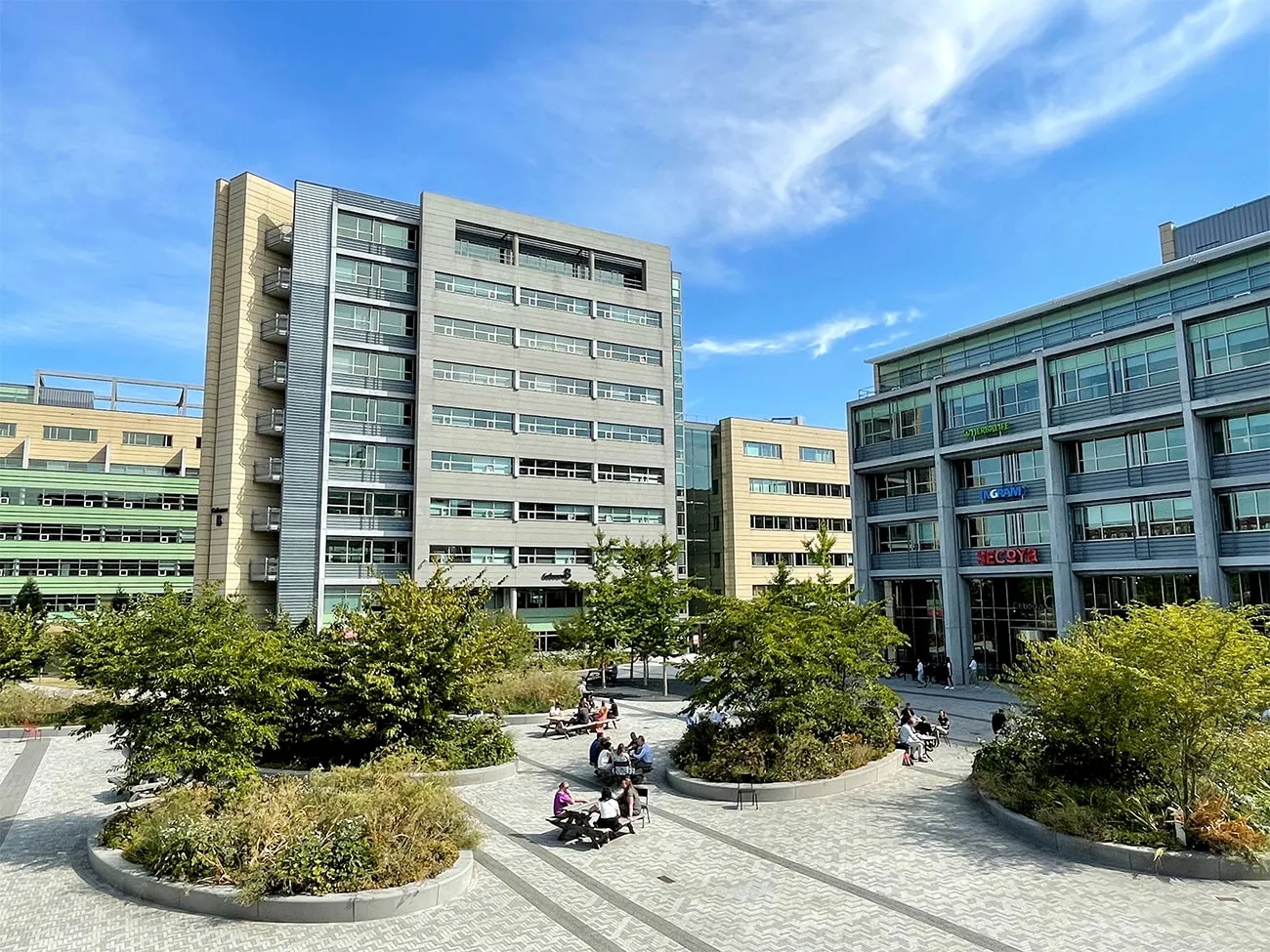
Choosing a different type of surfacing is another option. “As cities become more paved and temperatures rise, the risk of heat stress increases. Anyone walking through a city on a summer’s day can already feel the effects of the heat. Municipalities would do well to start adding greenery now. As well as heat stress, we will also face heavier downpours in the future, with large amounts of rain falling in a short time. To adapt to this change, we need to make our built-up and rural areas climate-resilient and water-robust. Cities must also be designed to adapt to climate change. The paving sector offers a range of solutions, including permeable and water-passable paving. Water can seep into the ground through the gaps between these pavers. Grass-concrete blocks are another good solution, particularly for car parks that are not used intensively. Some office buildings have car parking spaces that stand empty for most of the week. Using grass-concrete blocks in these areas kills two birds with one stone: water can drain away more easily, and the area becomes greener.”
The benefits of grass-concrete blocks are clear, but grass can also be sown in the joints of water-passable paving. It all looks fresh and green. Grass growth is limited only by the traffic passing over it, from pedestrians to cars. But there is more, says Van den Broek. “It is easy to create planting beds in squares, with concrete edges that can also be used as seats. Many school playgrounds have already been designed with green areas. Planting trees is also worthwhile. Do you remember the old tree-lined avenues? This requires changes to the paving so that rainwater can easily reach the tree roots. The sector offers a range of specialist products to give trees enough space.”
Nature-inclusive and climate-adaptive construction
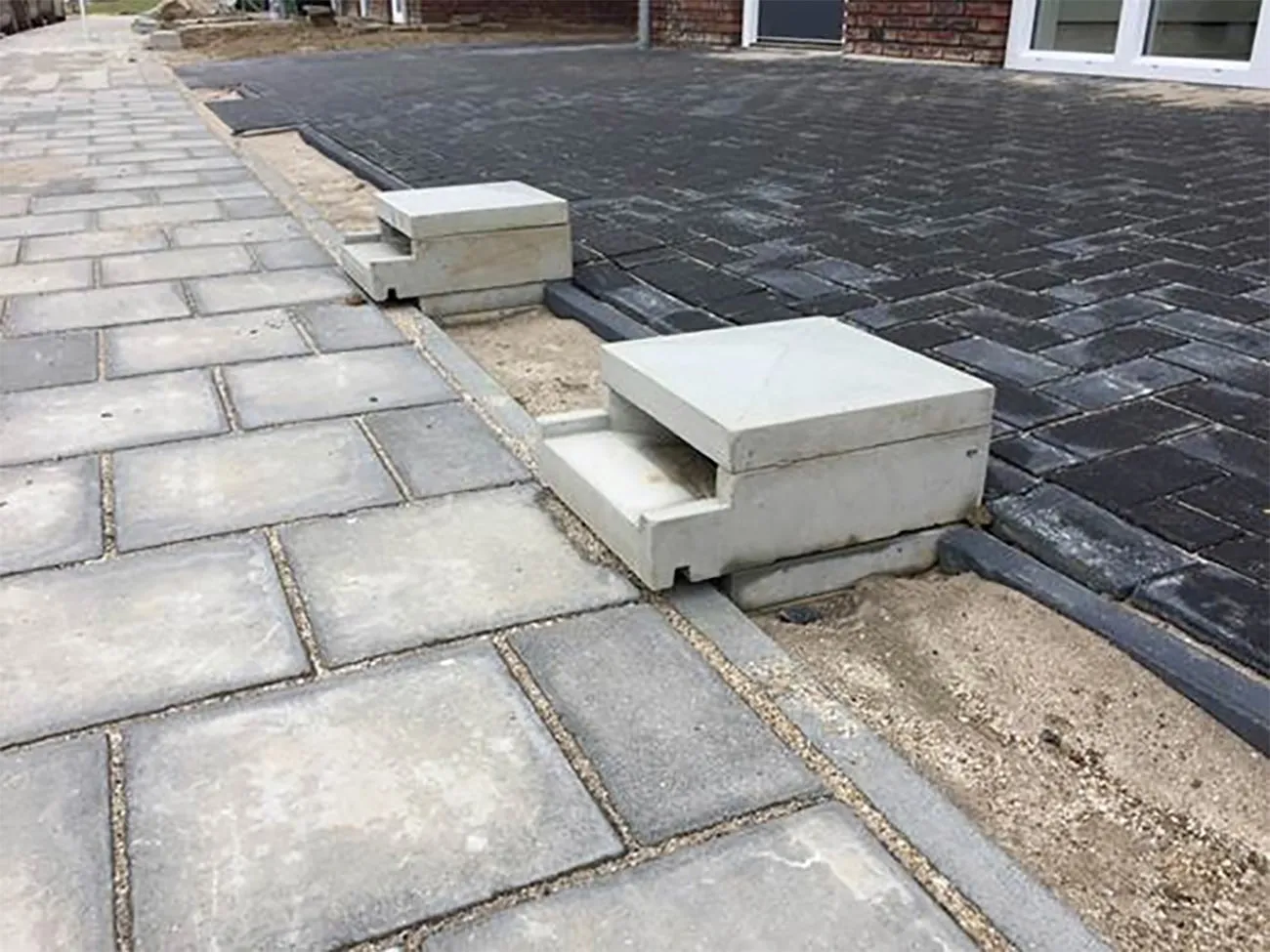
Companies affiliated with Betonhuis Bestratingen are actively working on nature-inclusive and climate-adaptive construction. Sustainability efforts are not limited to products. The sector is also working to provide transparency for clients who place a high priority on sustainability. Through various assessment guidelines and certification programmes, the sector is working to demonstrate that production is environmentally friendly, sustainable and responsible. To this end, Betonhuis has developed BRL KL11002. “The introduction of this Assessment Guideline, ‘Generating Environmental Profiles for Concrete Infrastructure Products’, gives clients in the civil engineering sector a practical, consistent way to assess products. Whatever environmental profiles a municipality specifies for concrete paving blocks, concrete slabs, concrete kerbs, grass-concrete slabs, sewer pipes and ready-mixed concrete, that is what the municipality will actually receive on site.”
Question about this story? Ask your question
Keep following this
Get an email when a new story is published. No account needed.
- ThemeLower emissions and more reuse
- SubjectRoad construction







