









More freight by rail in 2030, and more sustainably too!
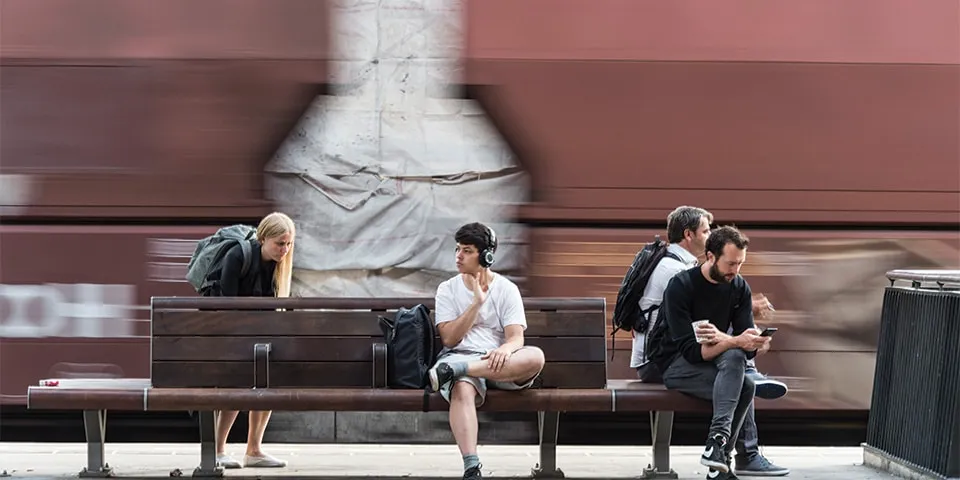
Our rail network is congested and currently not competitive enough as an alternative to road and water. The freight sector in particular is affected by this. As a result, companies are switching to conventional road transport, which creates more danger and does not contribute to a more sustainable world.
To improve its competitive position and make transport more sustainable, the rail freight sector, along with ProRail, has an ambitious goal: to carry up to 45 per cent more freight by rail in 2030. ProRail is serious about this, as we learned in a conversation with John Voppen, Director of Operations at ProRail.
Freight and passenger transport are not comparable
“This is the eternal dilemma we face. Freight and passenger transport have one thing in common: they use the same railway. That is where the comparison ends,” Voppen begins. “With passenger transport, we think in terms of averages. Passenger trains can be scheduled a year in advance. Freight transport, by contrast, is highly dynamic, with some journeys scheduled just a day in advance. Both markets are growing, however, and we now have the welcome but very challenging task of providing more capacity. And that is exactly what we are going to do.”
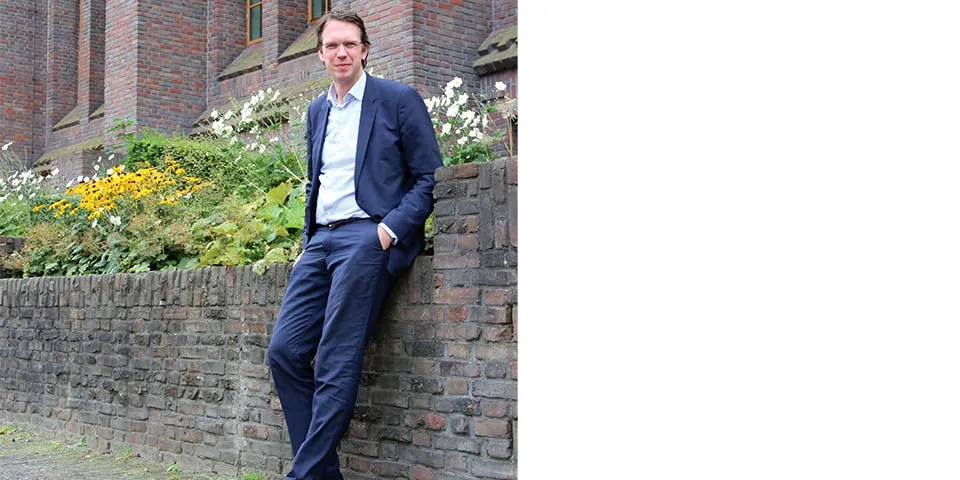
John Voppen, Director of Operations at ProRail. (Image: ProRail, Maarten Kleingeld)
Extensive digitalisation opens up a world of new possibilities
Voppen is determined to make ProRail’s plans a success. “A number of things are crucial if we are to increase capacity. On the one hand, we will have to switch to fully digital working; on the other, we will need to work together across the entire transport sector that uses the railway. Fortunately, we are not alone, and organisations such as the Port of Rotterdam and Port of Amsterdam are driving forces behind the development of these plans. They recognise the enormous importance of our plans for the Dutch economy. We will need a different mindset. We must know what shippers want and be able to state exactly what product we will deliver to them. We will continue to improve our services for freight operators, for example by enabling longer trains (740 metres).”
It is no small undertaking. The magic word for putting these plans into practice is CAPACITY. In the longer term, ERTMS, or the European Rail Traffic Management System, will provide more capacity. “The current train protection system, ATB (automatic train protection), works well, but is outdated and has reached its maximum capacity. Over the coming decades, we will replace ATB with EMRTS, the international standard for train protection. So we are moving from copper wiring to the cloud. In the short and medium term, in addition to sufficient infrastructure and availability, digitalisation, seamless cooperation across the sector and a change in mindset towards freight are essential to achieving the intended growth. We will link port logistics to rail logistics by connecting the systems. Legislation and regulations will have to adapt to this new way of thinking. We are already operating beyond the border, receiving trains and routing them through to the Netherlands. In particular, improvements will be needed to infrastructure, with more and better track, bridges and so on, and better use of the Betuweroute, including a good connection between the Betuweroute and the northern border crossings. The quality of our critical freight infrastructure, such as the port railway line in Rotterdam, will be significantly improved in the coming years.”
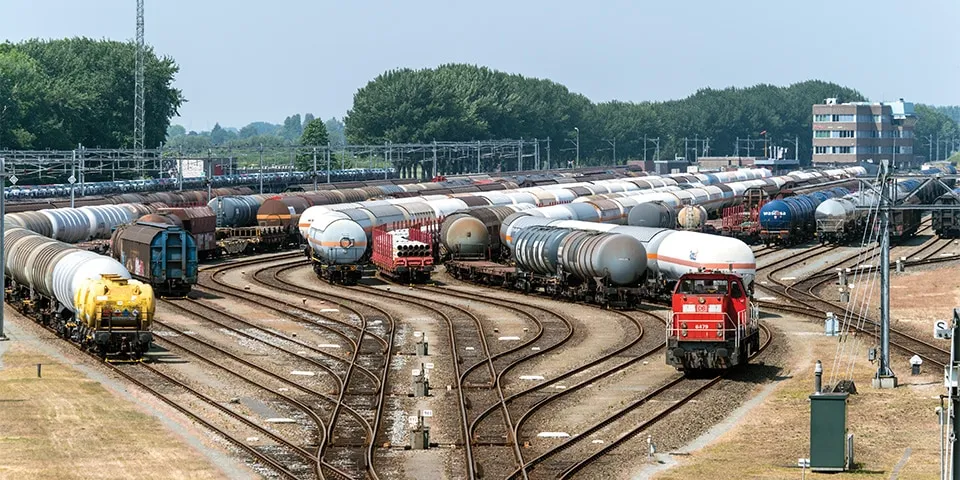
Kijfhoek freight yard, seen from the Munnikensteeg overpass.
Taking a hard look at ourselves
There is broad support, both nationally and internationally. “The benefits speak for themselves. This approach will boost the competitiveness of rail freight and bring down the price per container. That is because containers will account for most of the growth in the coming years. Rail freight is therefore an excellent mode of transport, capable of taking volume from road and water. Although ProRail is very much a ‘driving force’, we are also prepared to take a hard look at ourselves. There is plenty to improve, and we never turn a blind eye to that. In the coming years, we will deploy additional capacity to make those improvements,” Voppen concludes.
Question about this story? Ask your question
Keep following this
Get an email when a new story is published. No account needed.
- ThemeLower emissions and more reuse
- SubjectRoad construction







