









Micro-surfacing with emulsion asphalt concrete
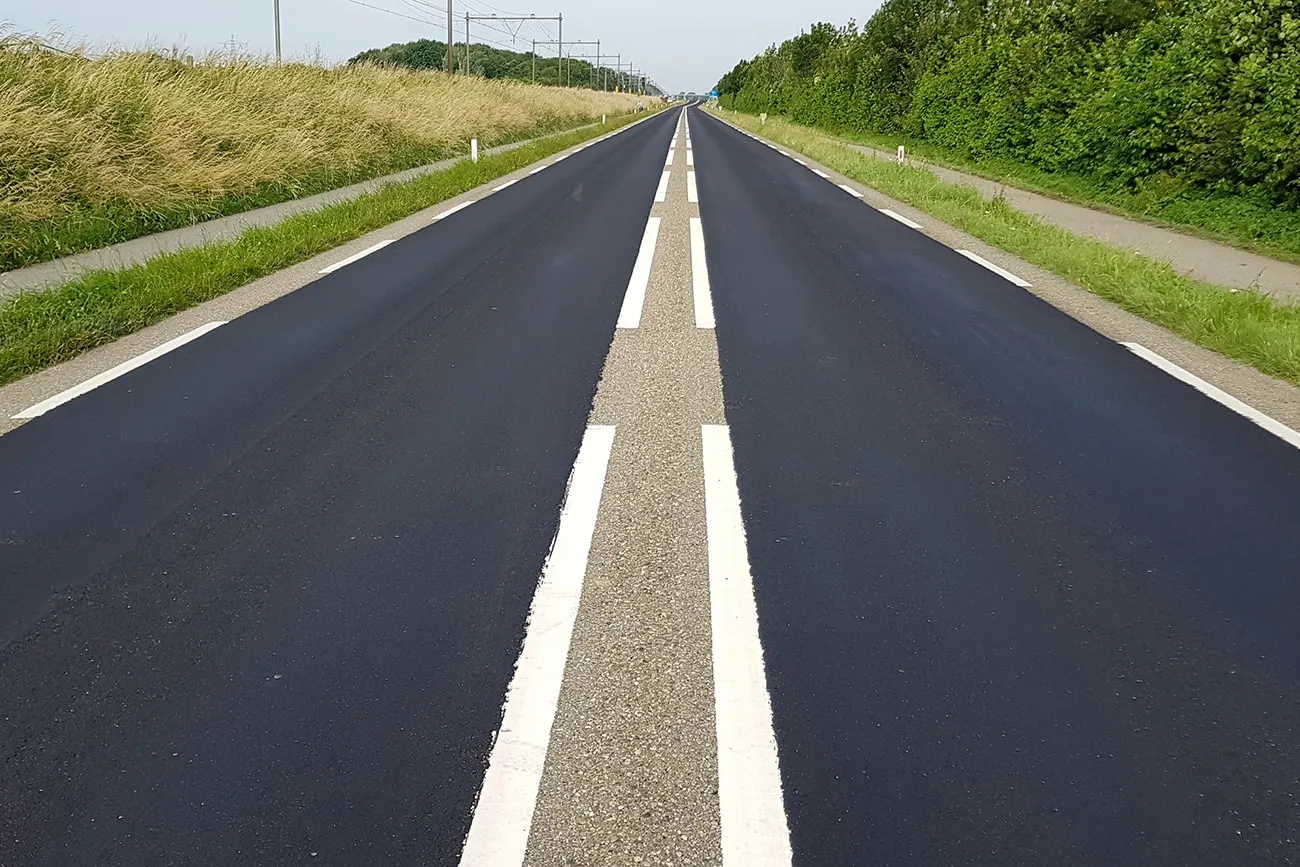
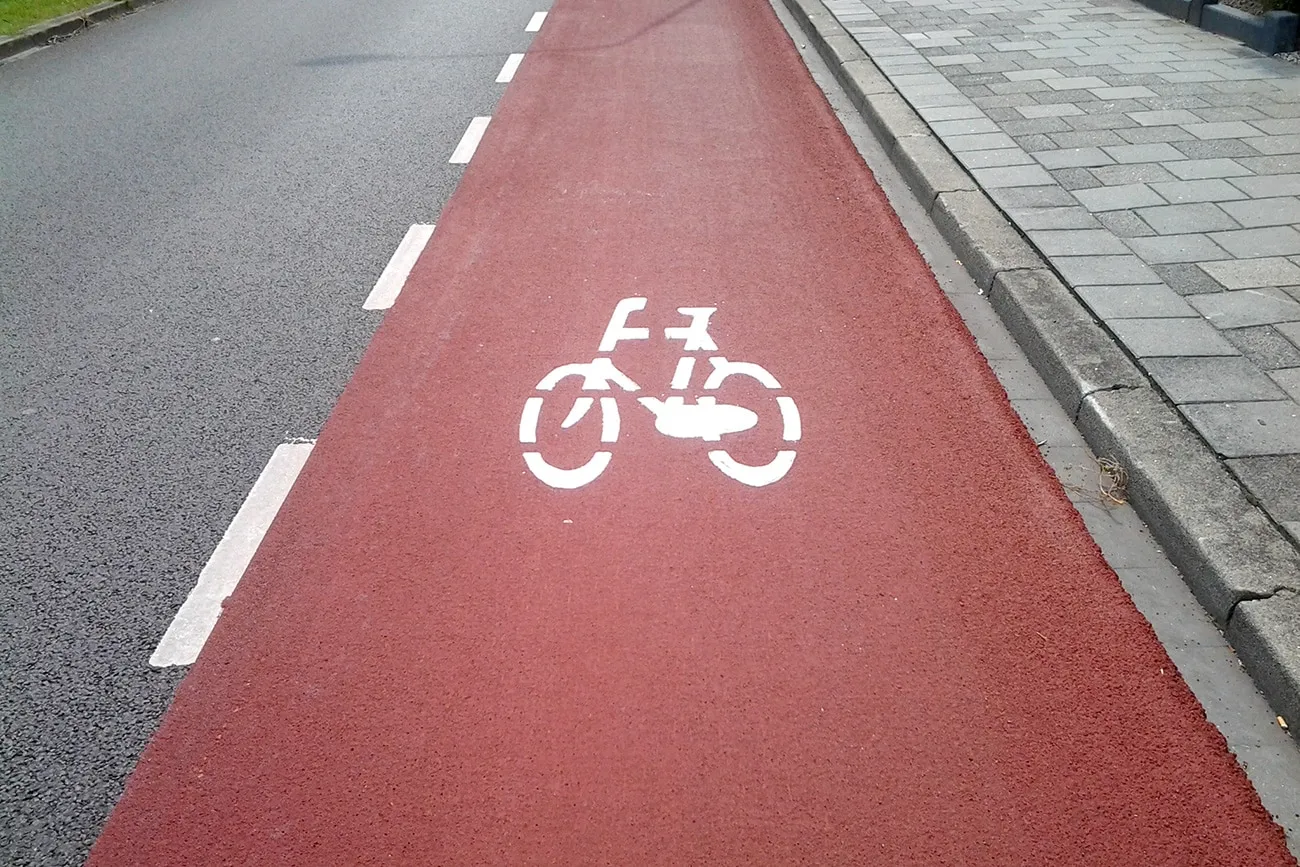
Asphalt roads generally have a long service life. Intensive use and changing weather conditions eventually cause wear to the surface course. In the past, the entire surface course would then be replaced. This has a considerable impact on traffic, the environment and costs. Emulsion asphalt concrete (EAB) offers a far more efficient and sustainable solution. It can be easily applied to all kinds of asphalt roads, whether municipal, provincial or national. It can also be used on red cycle lanes, with a high-quality, more sustainable black bitumen that is easy to recycle. This is a first for Rapid Asfalt, an EAB specialist for over 30 years.
Efficient and sustainable asphalt maintenance
Emulsion asphalt concrete is ideally suited to maintenance that extends the service life of an asphalt road. “Over time, an older road starts to become lean and loses aggregate,” says Bert Boekholt, operations manager at Rapid Asfalt. “That’s when you apply EAB to preserve the surface course. The product we apply binds the aggregate again and effectively ‘seals’ the surface layer, giving the road another seven to ten years of service. Over a 30-year cycle, this saves one application of new asphalt. And at the end of its service life, the EAB is 100% recyclable as conventional asphalt.”
Favourable environmental cost indicator
EAB is made from a mineral sand mix (crusher sand) sourced from quarries in Norway, cement, water and a bitumen emulsion. “During application, a chemical reaction takes place: the mix ‘breaks’ and the moisture is drawn out,” Boekholt explains. “The materials are mixed on site in the vehicle. You could say we have our own mixing plant on board. The mix is then laid cold in a 0.5-centimetre layer across the full width of the road.” Thanks to its low use of primary raw materials, cold application and thin layer, EAB has a favourable environmental cost indicator (MKI). Rapid Asfalt estimates savings of 32-45% compared with an overlay of hot-mix asphalt. “Another great thing about this application is how quickly it hardens. This means road closures are short, as traffic can use the road again very soon. In fact, traffic is encouraged to do so, as it helps to further compact the EAB.”
Black binders
The Bituminous Works Section (see page 76, ed.) recently decided to phase out the use of clear binders. Rapid Asfalt is already ahead of the curve, with black bitumen as a sustainable alternative. “We no longer use clear binders, which have a very heavy environmental impact, making Rapid Asfalt unique in this respect,” Boekholt says proudly. It is a genuine first, and a product currently in high demand. “Combine the favourable MKI with strong LCA performance, and it’s clear that governments and municipalities will choose this from now on.”
Question about this story? Ask your question
Keep following this
Get an email when a new story is published. No account needed.
- ThemeExtending the life of roads and civil engineering structures
- SubjectRoad construction







