









Making efficient use of space along the A10 Zuid
Text Roel van Gils Images Franki Grondtechnieken
A unique approach using soil nailing
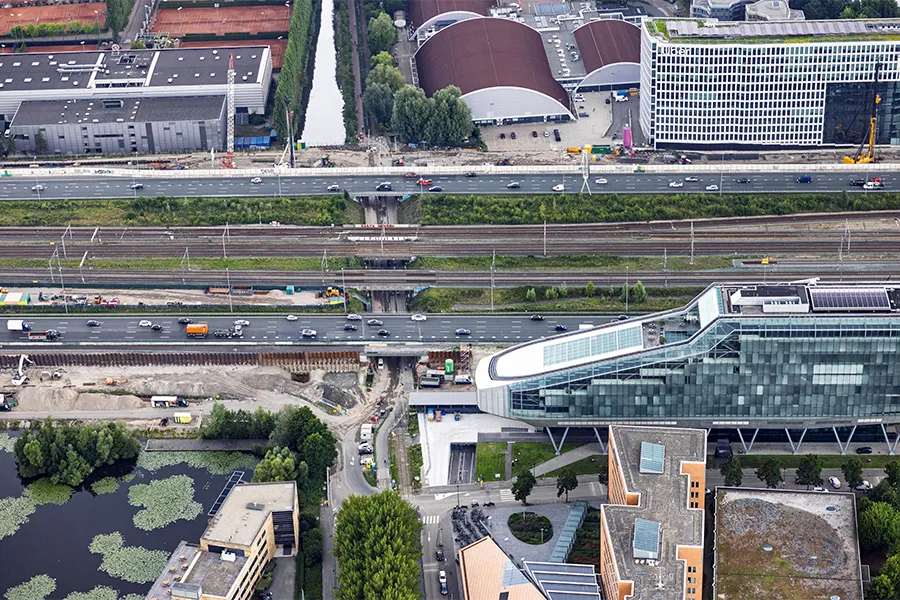
The reconstruction of the De Nieuwe Meer interchange on the A10 Zuid, part of Zuidasdok, is one of the most challenging infrastructure projects in the Netherlands. Construction consortium TriAX is working here on a parallel road system that separates through traffic from local traffic. Given the scale of the project, two foundation specialists have joined forces as Funderingscombinatie Franki, Heijmans (FCFH). Their combined expertise in sheet piling, drilling techniques, anchoring and soil nailing makes it possible to use space efficiently in the confined area alongside the A10.
Widening the route means that existing structures along it must be widened (viaducts) or partly replaced (bridges). “Particularly at the Schinkel river, additional abutments and foundations are needed. The work often takes place in confined spaces and during night-time closures to minimise disruption to traffic,” says Jan Leen van der Vlies, director of operations at Franki Grondtechnieken.
Soil-nailed slopes
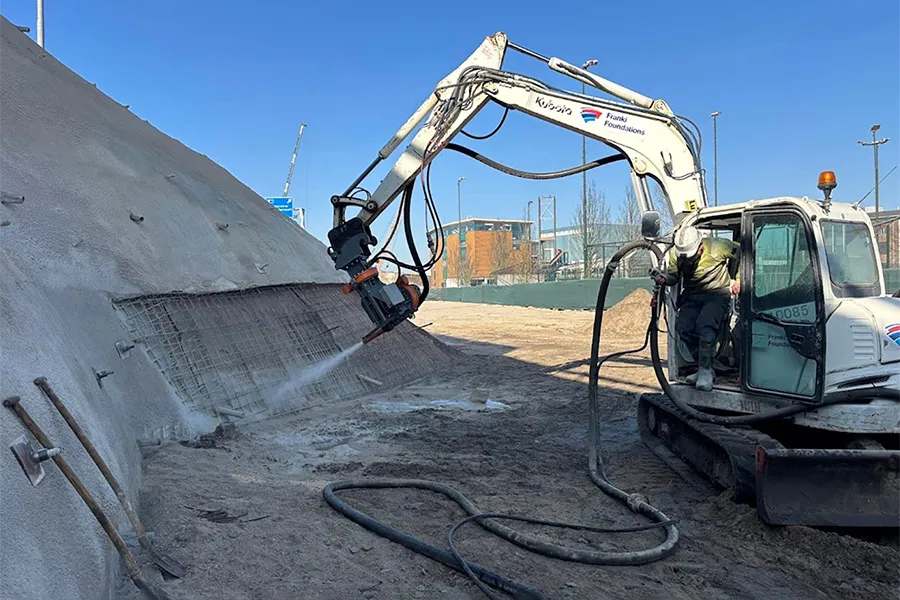
A distinctive feature of this project is the use of soil nailing with sprayed concrete. “It is a method used more widely internationally, but it is virtually unique in the Netherlands,” says Van der Vlies, adding that it is one of Franki Grondtechnieken’s areas of expertise. “The new parallel road must meet the existing A10 Zuid at the same level. The A10 Zuid is at a reasonable height above ground level. Because of the adjacent buildings, there is not enough room to create a conventional 45-degree slope. The solution is to excavate the existing slope a little at a time, then install anchors and apply sprayed concrete. We repeat this process about six times to create an almost vertical retaining wall, 6 metres high and at an angle of 80-85 degrees. This gives us working space for the foundation equipment very efficiently, without disrupting the existing motorway.”
Foundation for the road embankment
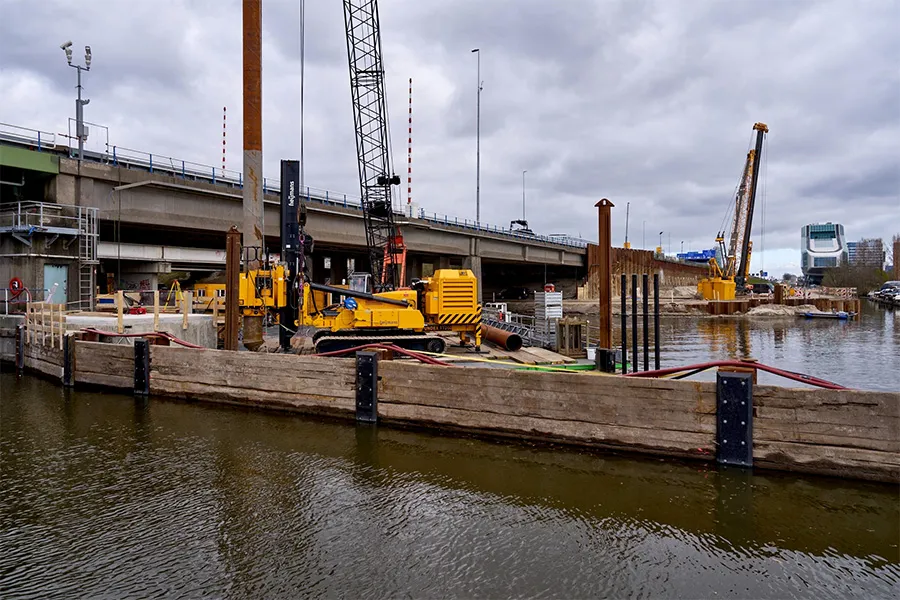
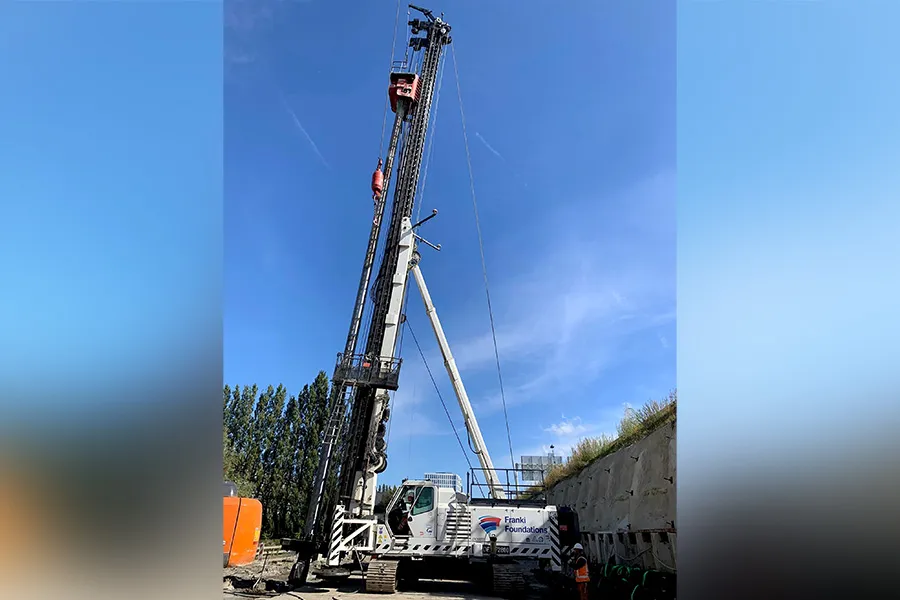
FCFH began installing the temporary sheet-pile walls along the A10 Zuid around the middle of last year, followed by the soil-nailed structures in October 2024. “Since March 2025, we have been installing seven rows of piles on both sides along the full length of the route, to support the pile mattress. In total, we are drilling around 4,500 foundation piles, entirely without vibration,” explains Van der Vlies. “Concrete pile caps will be built on top, with the reinforced soil structure placed on them. This raises the new section of road to the required level and ensures a seamless connection to the existing road embankment. This approach allows a great deal of work to be carried out in a single construction phase, while maintaining traffic flow.”
Working safely
Much of the foundation work at the Schinkel is carried out from pontoons on the water, as there is not enough space on land. Van der Vlies says: “Piles and sheet piles are brought in mainly by ship and installed on site. This logistical solution minimises disruption to the city and provides a safe working environment.” On the subject of safety, he adds: “Working right next to a busy motorway involves significant risks, including falls and proximity to traffic. Safety is therefore central to both the work itself and its preparation. 3D models and BIM were used to plan every construction step, the deployment of machinery and the logistics in detail,” Van der Vlies assures us.
The partnership between the two foundation specialists has proved successful. Heijmans brings experience in sheet piling and piling techniques, while Franki Grondtechnieken specialises in anchoring, soil nailing and large-diameter bored piles. “We complement each other very well, which enables us to apply innovative methods and tackle complex challenges.”
Question about this story? Ask your question
Keep following this
Get an email when a new story is published. No account needed.
- ThemeUnderground construction
- SubjectRoad construction







