









First hydrogen-powered asphalt paver
Ambitious contractor aims to be the first to put a zero-emission asphalt paving train on the road
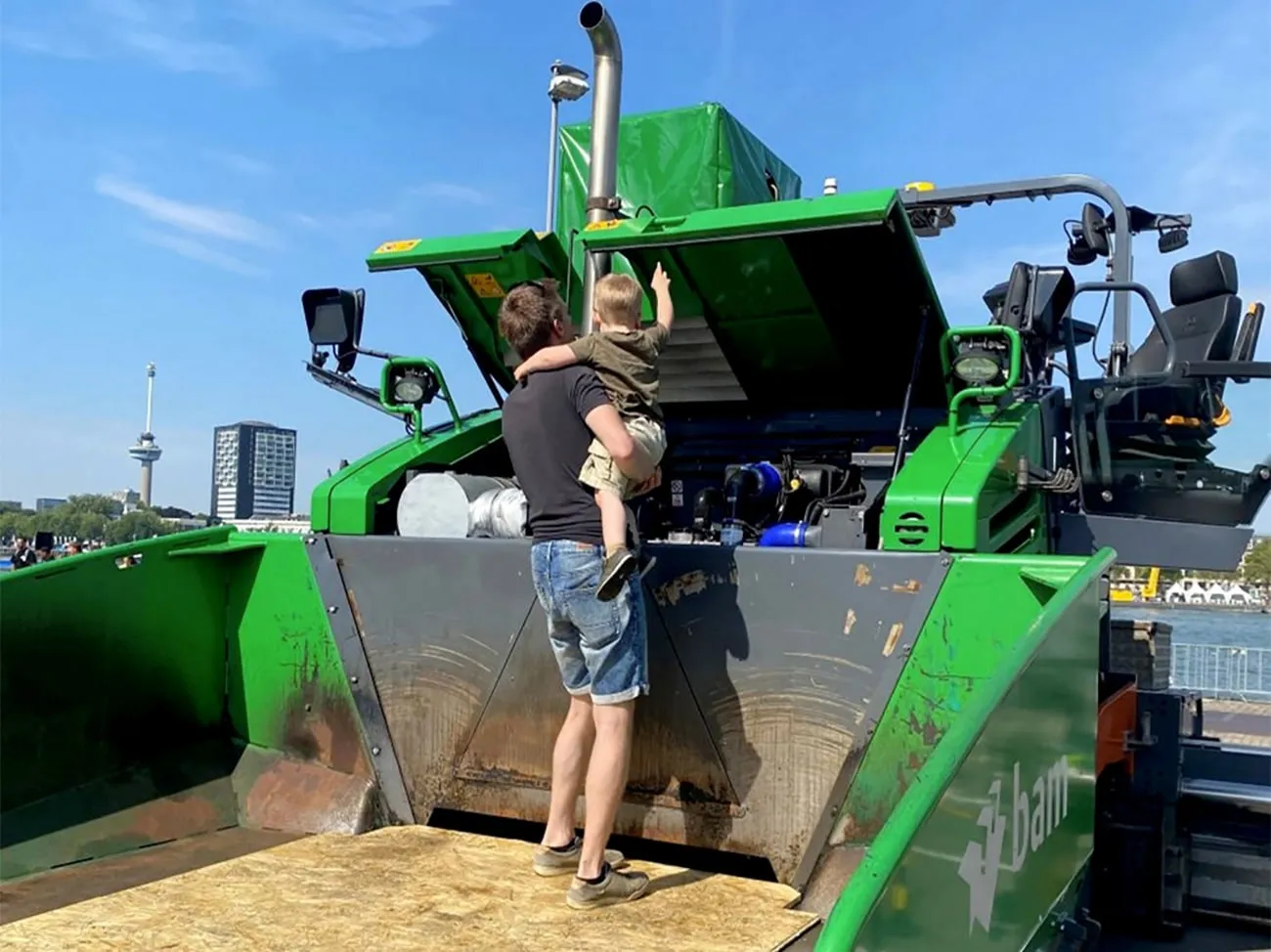
Together with Koninklijke van Twist, BAM Infra Nederland has succeeded in converting a diesel-powered asphalt paver to run on a hydrogen combustion engine. Earlier this year, the Netherlands’ largest contractor also converted an asphalt paver to run entirely on electricity. This demonstrates BAM’s ambition to build roads with zero emissions as soon as possible.
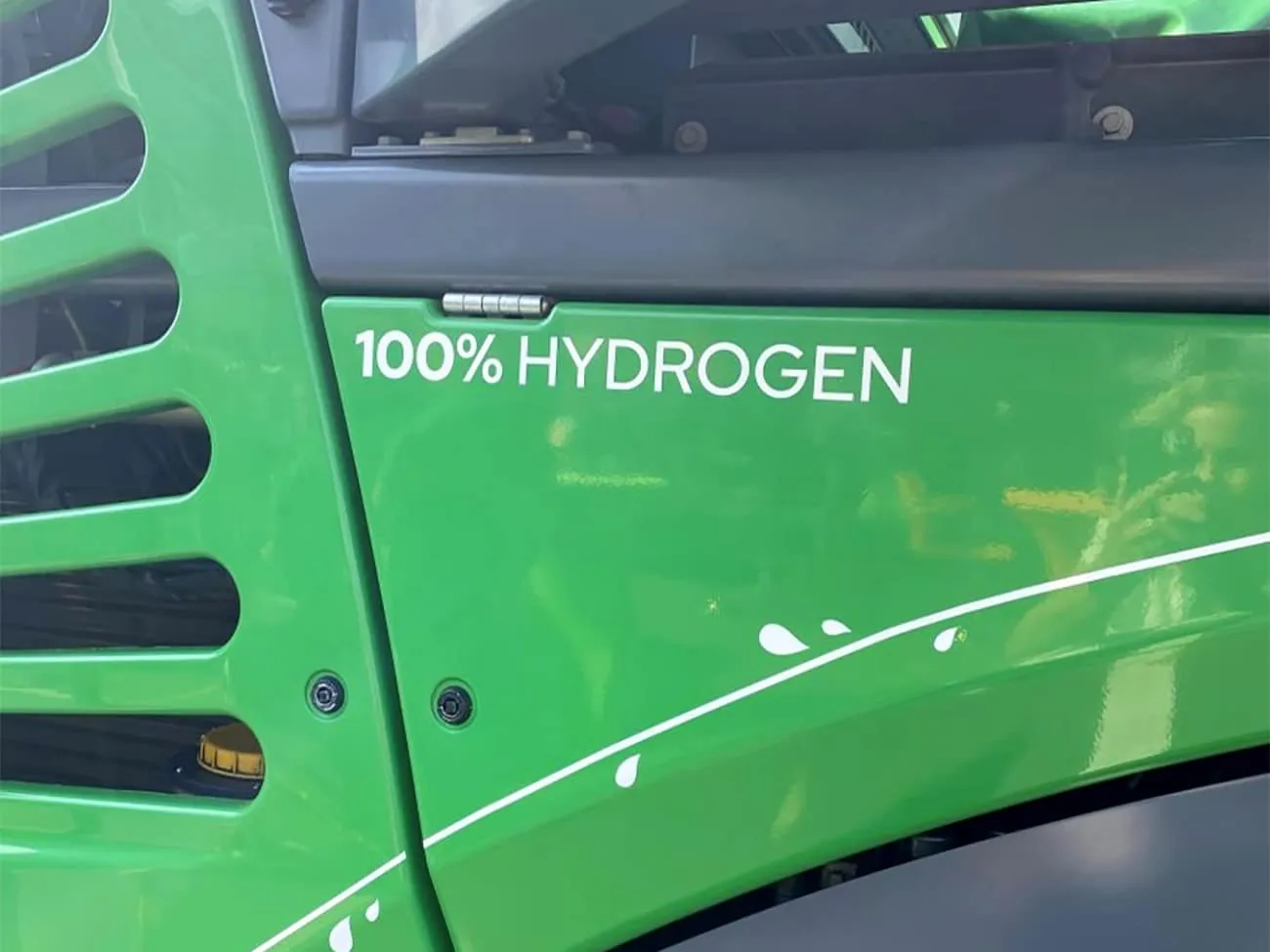
The asphalt paver unveiled to the world by BAM Infra in early September is the first construction machine to run on a hydrogen combustion engine. Using the paver saves around 150 litres of diesel over an eight-hour working day. This equates to a reduction of more than 80,420 kilograms of CO2 and virtually no nitrogen oxide emissions per year. The hydrogen tank can be refilled in 10 to 15 minutes.
Hydrogen is most commonly used in a fuel cell. BAM Infra, however, has opted for a hydrogen combustion engine. Unlike a fuel cell, a hydrogen combustion engine is not dependent on the quality of the hydrogen. This means the asphalt paver can run on hydrogen of any quality, avoiding the need to purify hydrogen during production and allowing residual hydrogen streams to be used as fuel.
Fully electric
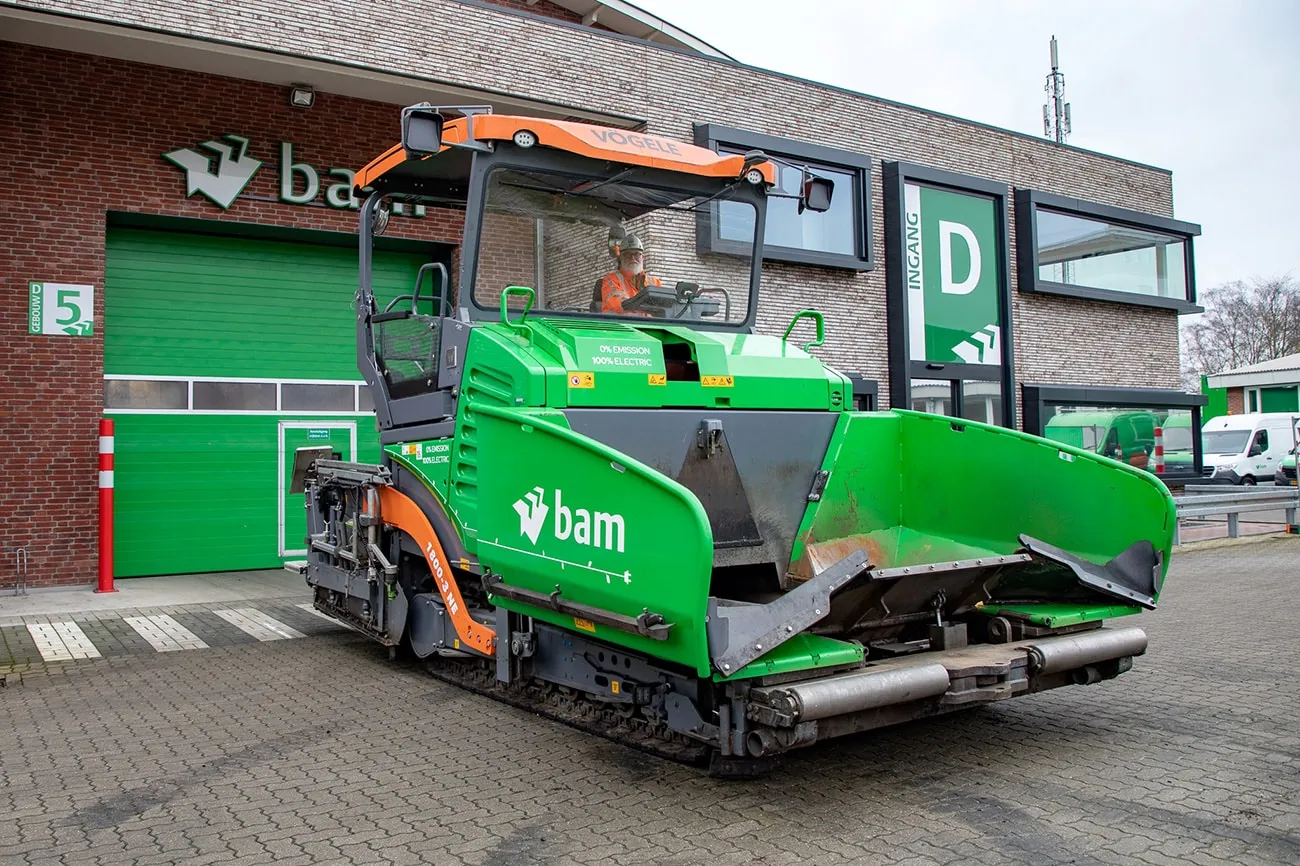
Alongside the hydrogen-powered paver, BAM also unveiled an all-electric asphalt paver earlier this year. Working with partners Wirtgen and New Electric, BAM replaced the Stage V diesel engine with an electric drive comprising a fixed 270 kWh battery and two intelligently controlled electric motors. With a second 270 kWh battery, the machine can go straight on to its next job after a long working day. The swappable battery can also be used in other machines.
Using the electric asphalt paver saves around 150 litres of diesel over an eight-hour working day. This equates to a reduction of more than 93,000 kilograms of CO2 and 115,000 grams of nitrogen oxide per year. With fully charged batteries, the electric asphalt paver can operate for eight to 10 hours. As well as reducing emissions, it is considerably quieter than current machines.
Sustainable
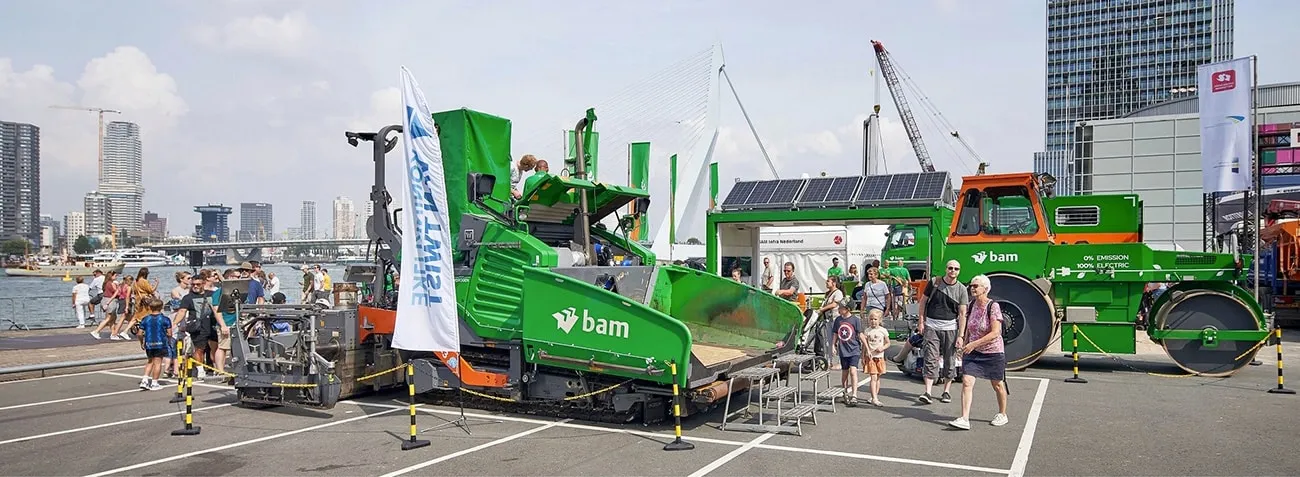
Converting diesel-powered civil engineering machines to zero-emission alternatives demonstrates the ambition of the Netherlands’ largest contractor. Sustainability is one of the central themes in BAM’s strategy. With this new machine, the company, based in Bunnik, aims to help reduce nitrogen emissions in the Netherlands. It continually looks for ways to make a positive environmental impact. For every project, it works with clients and partners to meet sustainability targets through creative and innovative solutions.
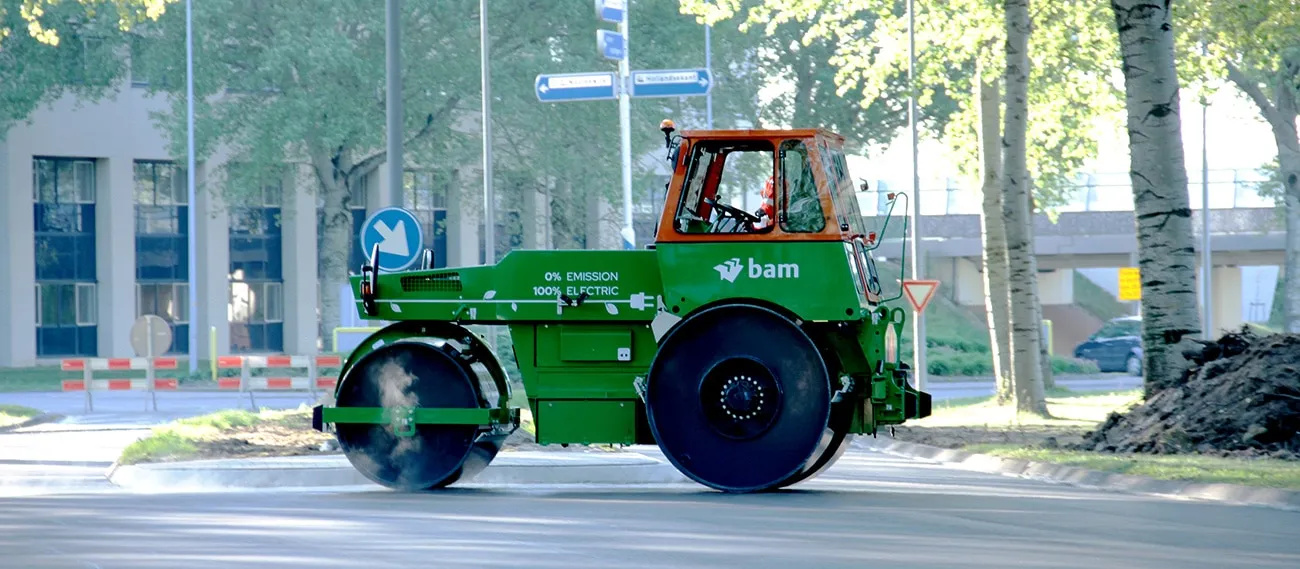
In terms of equipment, BAM is doing this by training employees in ‘the new way of operating’, investing in the electric supply chain and, earlier, building the world’s first electric roller in 2020.
Ninety per cent of BAM Infra Nederland’s fleet currently runs on Stage V engines fuelled by HVO. BAM aims to be the first contractor to have a completely zero-emission asphalt paving train on the road.
Question about this story? Ask your question
Companies in this story

Keep following this
Get an email when a new story is published. No account needed.
- ThemeExtending the life of roads and civil engineering structures
- SubjectRoad construction
- CompanyNew Electric B.V







