









Electric plant and sustainable asphalt mixes
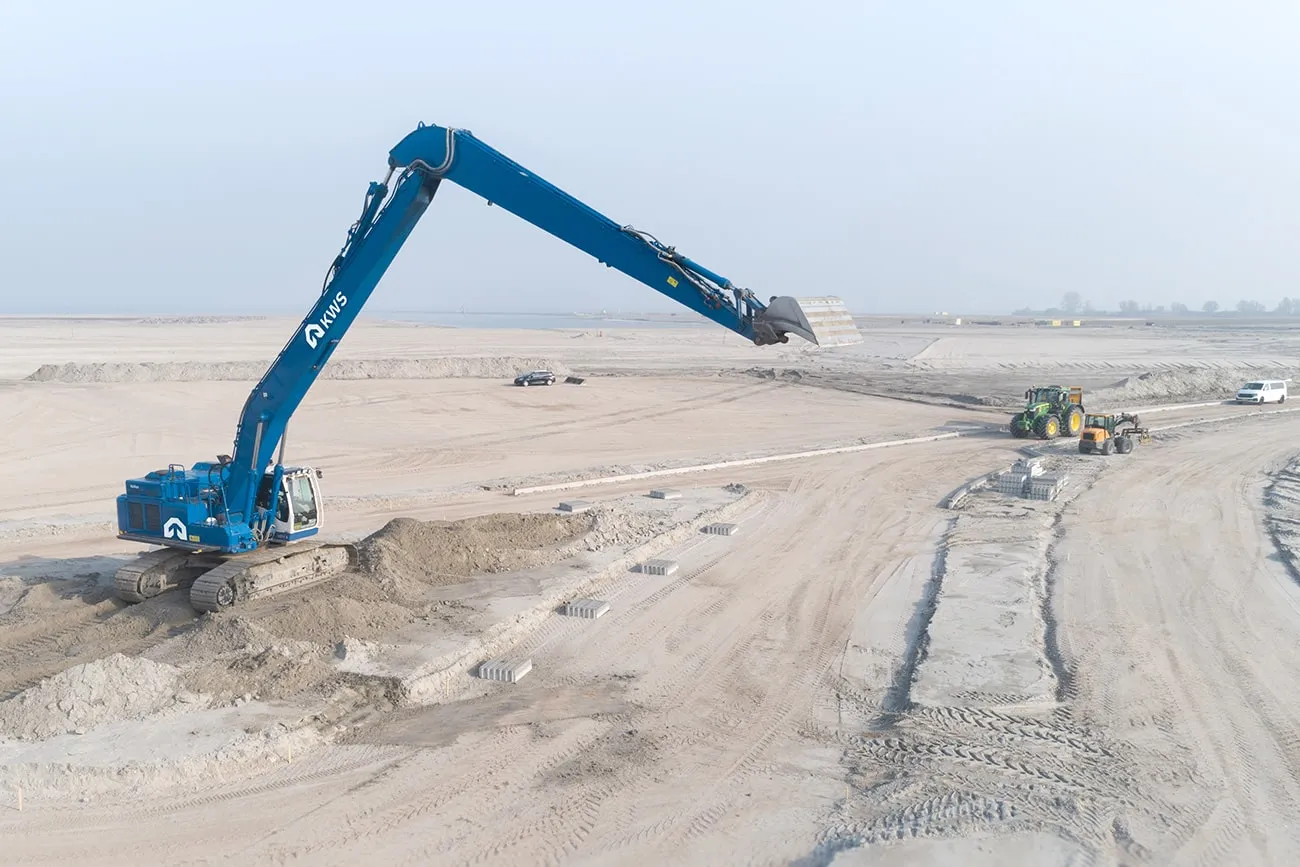
KWS is the market leader in road construction and asphalt production in the Netherlands and, like its parent company VolkerWessels, has ambitious sustainability targets: zero emissions by 2030 and 100% circularity by 2040. Ambitious? Definitely. Achievable? Absolutely, say Raymond van de Stadt and Pepijn Kok of KWS.
On infrastructure projects in Amsterdam
“The Netherlands is leading the way in the use of electric plant, and the infrastructure sector is becoming more sustainable rapidly compared with other sectors,” says Van de Stadt, director of KWS’s asphalt business and the driving force behind electric asphalt plant at KWS. “All our clients want to become more sustainable, but the major international machinery manufacturers are lagging behind. With our front-runner approach, we are trying to speed things up, and where progress is not fast enough, we convert machines ourselves.”
Innovative electric plant
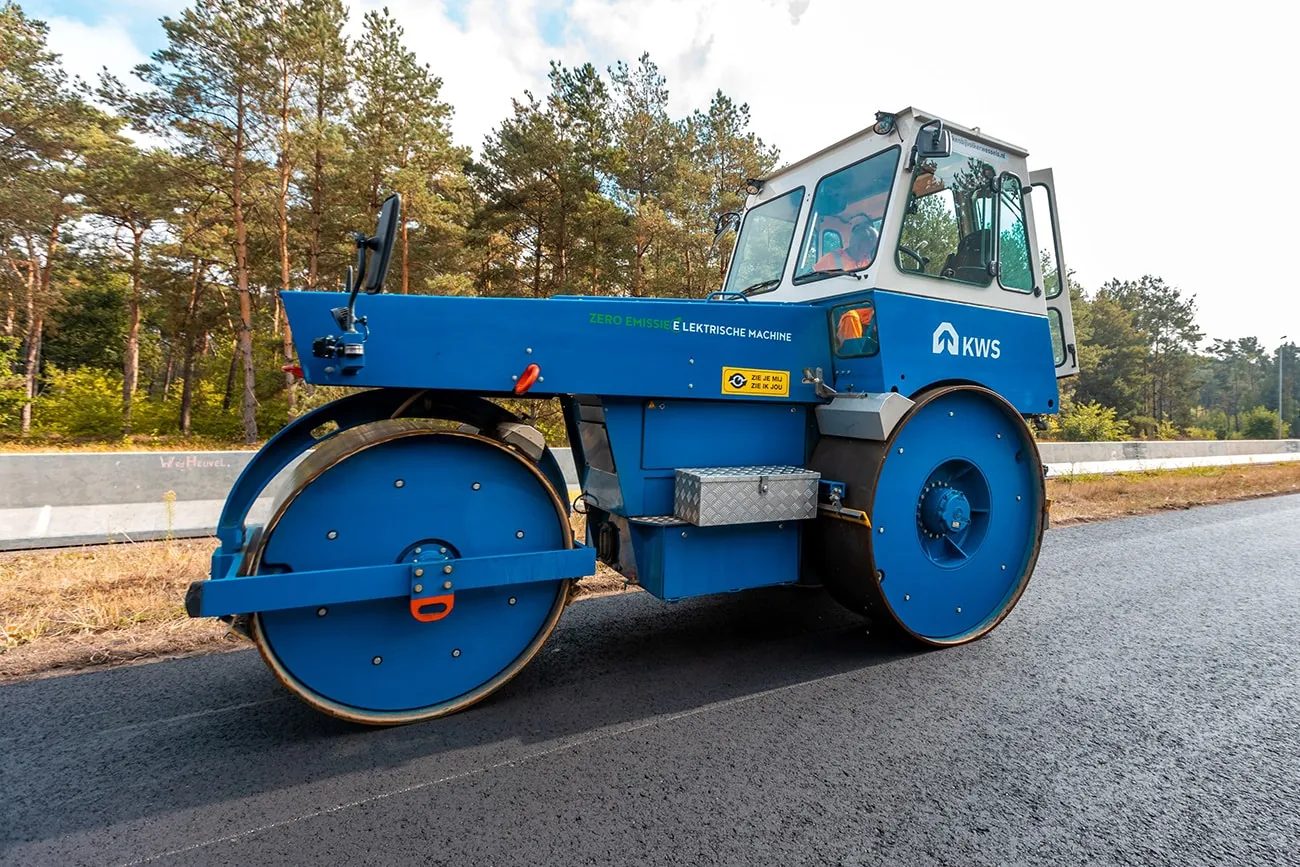
KWS has already converted an asphalt paver and five static three-wheel rollers. It has also built a mobile fast-charging station that recharges all the machines during breaks. “Becoming more sustainable requires a tailored approach. Fortunately, we have the people, resources and expertise in-house to do this kind of innovative work.” More and more manufacturers, as well as Rijkswaterstaat, are seeing how far KWS is prepared to go and how continuously the company invests in sustainability. “We are gaining a lot of experience now, and when this becomes commonplace, we will already have secured a strong position.”
Investing in sustainability
Kok, branch manager at the Amsterdam-Utrecht branch, finds that the gap between the average client and a contractor at the forefront of electrification is still very wide. “We are investing now for the future of our clients and for the viability of our business. Ultimately, that is good for the economy as a whole.” Alongside the extensive use of electric plant, KWS is also focusing on sustainable asphalt mixes. “These are the two areas where we can make the biggest strides in our sector,” says Van de Stadt.
Sustainable asphalt mixes
To achieve its sustainability ambitions, KWS is investing in the best available technologies for asphalt production, enabling it to produce 100% circular asphalt at low temperatures. “We reuse the material released during road renovations and carry out our projects as sustainably as possible. So we no longer make promises, we deliver a genuinely circular, zero-emission product,” says Kok, “with the total cost of circular, zero-emission working not necessarily any higher than that of traditional methods.”
Making infrastructure projects more sustainable
A good example of making infrastructure projects more sustainable is the asphalt maintenance work in Amsterdam’s West district, following the recently completed successful project in Oost district, which also included the IJburg beach project, featuring a 750-metre-long urban beach. This was the first project KWS completed with a net-negative CO2 footprint. Kok concludes: “We have a cooperation agreement with the municipality of Amsterdam, among others, which gives us scope to deploy and test new sustainable innovations. This allows us to keep developing and innovating, because ultimately we all want the best for the future.”
Have a business enquiry for KWS? Get in touch
Companies in this story
Keep following this
Get an email when a new story is published. No account needed.
- ThemeExtending the life of roads and civil engineering structures
- SubjectRoad construction
- CompanyKWS







